
Affiliate disclosure: We may earn a commission when you buy through links in this post.
Seasonal decorating can make a small home feel welcoming, but too many displays compete for limited surfaces and walkways. The answer is not to give up rustic character. Instead, choose a few natural materials, change a small number of details with the season, and give every decorative piece a clear place. These ideas for seasonal rustic decor for small spaces keep the room useful and uncluttered while adding a fresh, lived-in feel.
Start with what already works in your room: a wood grain, woven texture, muted color, or handmade object. Then add one or two seasonal accents rather than building a new display from scratch. The result can feel considered without requiring extra storage or a larger home.
The Look To Aim For: Seasonal Rustic Decor For Small Spaces
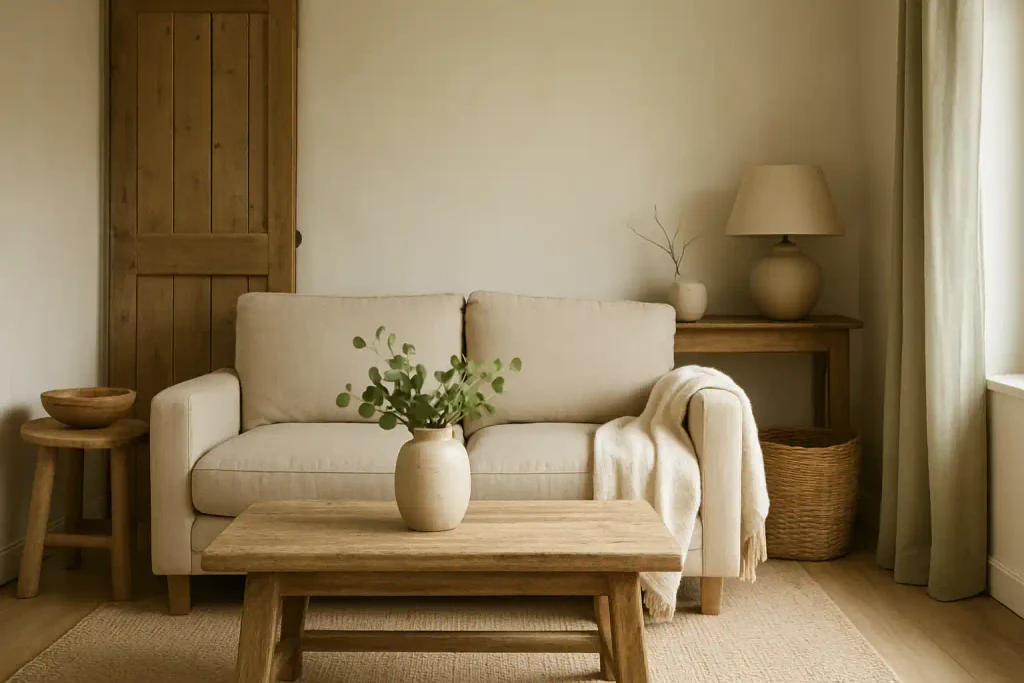
Rustic style often draws on natural finishes, tactile materials, useful objects, and a sense of age or craft. In a compact room, those qualities are most effective when they are edited. A single weathered frame or a small woven basket can bring character; a collection of unrelated signs, jars, and greenery may feel busy.
For seasonal rustic decor for small spaces, treat the room’s everyday pieces as the foundation. Keep core furnishings and larger objects relatively steady, then rotate lightweight accents such as a pillow cover, a branch arrangement, a table runner, or a bowl of seasonal produce. Repeating one or two colors across those details helps the changes feel connected to the room.
Think in terms of contrast, not quantity. Pair rough wood with soft fabric, dark metal with pale greenery, or a nubby textile with a smooth ceramic vessel. Leave some open surface around each grouping so the objects remain visible and everyday tasks stay easy.
Ideas To Try With Seasonal Rustic Decor For Small Spaces
1. Seasonal Rustic Decor For Small Spaces With A Focused Centerpiece
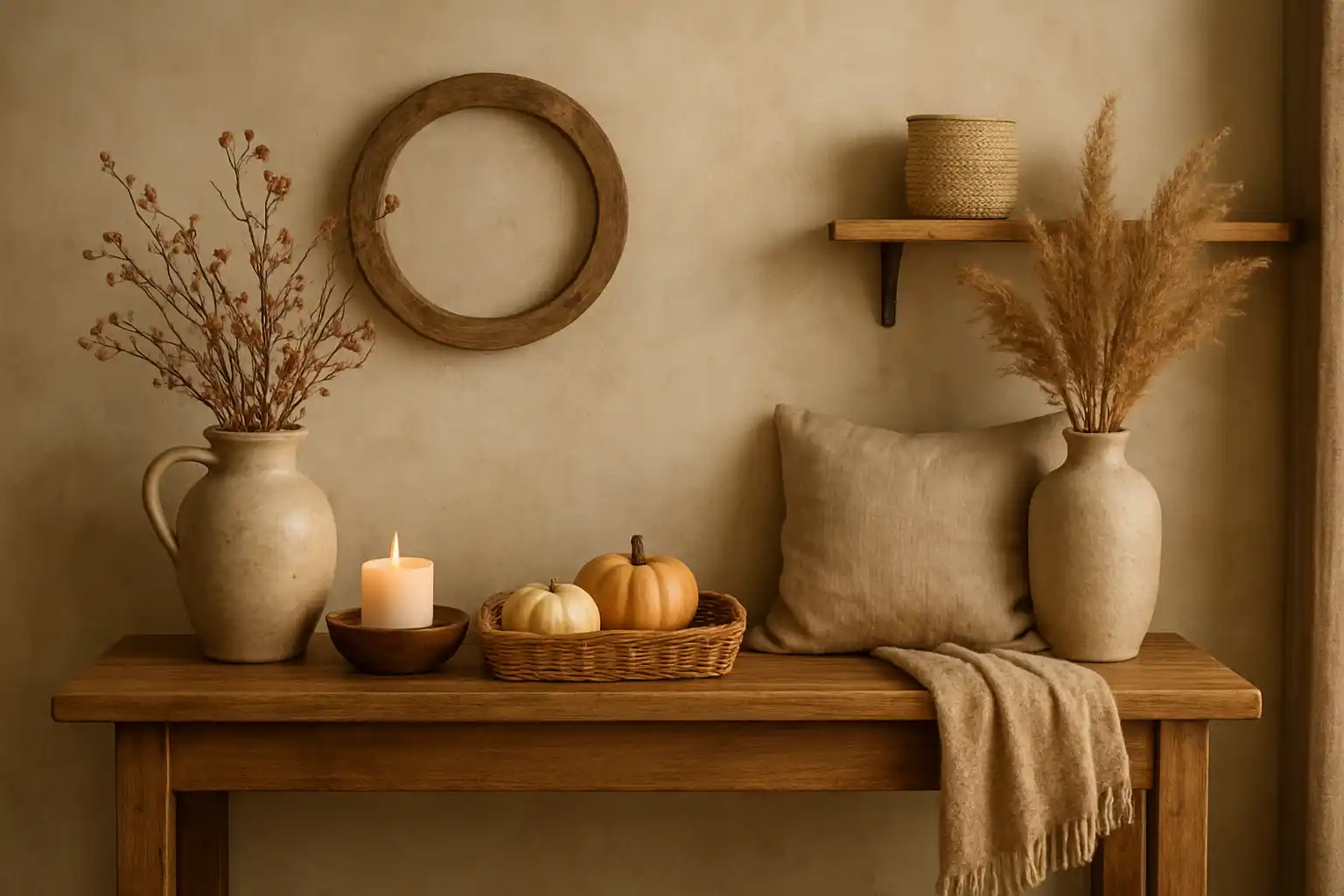
A small centerpiece gives the season a visible home without spreading decor across every surface. It works because a contained group reads as one arrangement rather than several competing objects. Try a low wooden tray or shallow bowl with a candle, a few pinecones, or clipped greenery. Keep the arrangement low on a dining table or entry console where it will not block sightlines.
Pro tip: Before buying or making anything, take one small seasonal item away. If the room feels calmer and the remaining pieces still tell the story, use that simpler arrangement as your starting point.
For seasonal rustic decor for small spaces, choose a container that can return to everyday use after the season changes. A tray can hold keys or serve snacks, while a simple bowl can remain on display. Avoid tall branches in narrow walkways, and keep open flame away from greenery, fabric, and anything that could be knocked over.
2. Swap Textiles Instead Of Furniture
Textiles are an easy way to change a room’s mood because they add color and softness without taking up much floor space. Rotate a pillow cover, folded throw, or narrow runner in a season-appropriate texture. For autumn, a warm neutral or muted rust can sit comfortably beside wood; in spring, a lighter linen-like fabric can make the same room feel airy.
Use this idea on a sofa, bed, or dining surface, not all three at once. Check the textile’s care needs and how it will be used. A delicate throw may look good draped over a chair but is less practical in a busy entry where it can catch dirt.
3. Make A Small Wall Display Seasonal
A wall can carry seasonal character without using a tabletop or narrowing a path. Change one framed print, hang a modest wreath, or arrange two or three natural materials in a frame or wall pocket. The idea works best when the display relates to something already in the room, such as the wood tone of a shelf or the colors in a nearby rug.
Keep the scale modest above a small console or beside a doorway. Before hanging anything, consider door swings, hooks, and the space needed to pass comfortably. If you rent or prefer not to make holes, use an existing rail or a shelf that is already securely mounted.
4. Use Seasonal Finds In An Everyday Vessel
A familiar ceramic jug, glass jar, or sturdy basket can hold different natural details through the year. Try bare twigs, dried stems, clipped foliage, or a few seasonal branches, depending on what is available and safe for the room. This brings a rustic note through texture and shape instead of relying on a large themed display.
Place the vessel where it will not be brushed by a door or sleeve. Keep arrangements short in a compact kitchen, and choose non-fragrant or unscented materials if strong scents are unwelcome. For seasonal rustic decor for small spaces, the vessel’s everyday usefulness matters as much as the seasonal contents.
Pro tip: Take a quick photo of a finished arrangement. When the season changes, the image can help you remember what to keep, what to store, and which pieces can be reused in a different spot.
5. Build A Miniature Seasonal Shelf
A single shelf can become a small rotating vignette. Combine one useful object, one natural texture, and one seasonal detail, such as a candle beside a small wood bowl and a few dried leaves. The mix feels grounded because each item has a distinct role, and the shelf keeps the display contained.
Leave a little empty space rather than filling the shelf edge to edge. Secure fragile pieces, especially if the shelf is near a door or in a busy room. If the shelf already holds books or everyday items, move only a few pieces temporarily instead of creating another place that needs dusting.
Bringing It Together
Before arranging anything, choose a simple palette from the room. Start with one existing neutral, such as cream, brown, charcoal, or a natural wood tone, then add one seasonal color and one supporting texture. Limiting the palette helps unlike objects feel related, even when they come from different places.
Use a small grouping formula: one larger anchor, one smaller companion, and one natural or tactile detail. For example, a low bowl, a folded napkin, and a few seed pods can make a compact table arrangement. Adjust the sizes to suit the surface, and keep the pieces close enough to read together without blocking its useful area.
Seasonal rustic decor for small spaces works best when it respects the room’s daily rhythm. Check that drawers open, chairs pull out, and commonly used items remain easy to reach. If a display makes a surface awkward to use, move it to a shelf or remove one piece. A seasonal touch should add atmosphere, not create a daily obstacle.
Also consider how the decor looks beside existing finishes. Repeating a wood tone or woven texture is often more cohesive than introducing several new materials. If you use greenery, keep it tidy and remove dried or damaged pieces as needed. A small, cared-for arrangement usually feels more intentional than a larger display left to crowd the room.
Budget And Space Adaptations
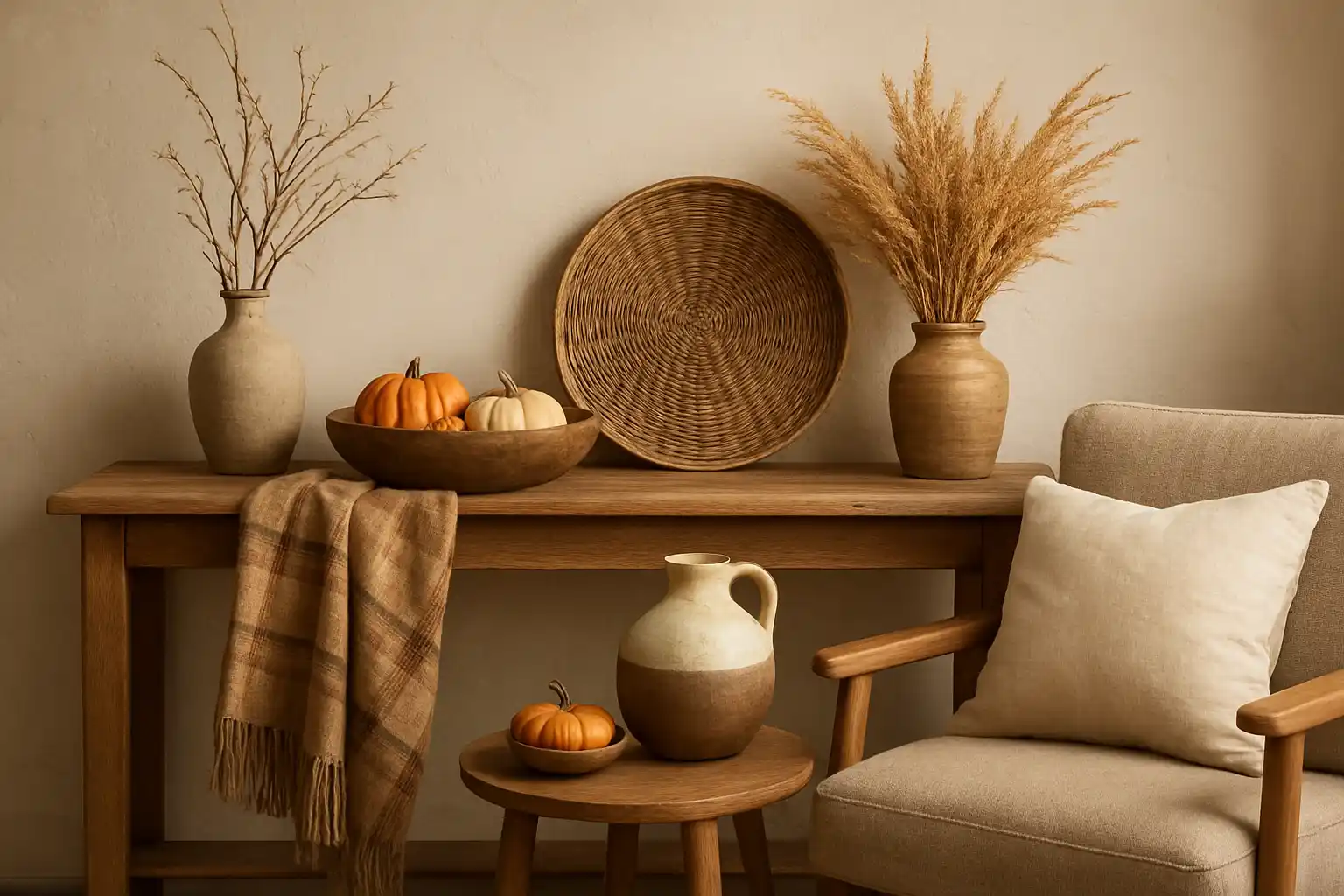
Begin with what you own. A serving board can become a tray, a clean jar can hold stems, and a pillow cover can change the feel of a sofa without replacing the cushion. Look for items that can serve more than one purpose throughout the year, then store seasonal-only pieces together in a small, labeled box.
When making a new display, use a limit before you shop or craft. Set a maximum number of objects, choose a surface that needs a seasonal refresh, and work within the colors already present. This makes seasonal rustic decor for small spaces easier to maintain and helps prevent duplicate purchases that have nowhere to live.
For very tight rooms, use vertical space selectively. A small wall hook for a wreath or a narrow ledge can free a table, but avoid adding shelves where they make a passage feel crowded. In shared rooms, choose decor that can be moved quickly or folded away, such as a runner or pillow cover, rather than a fragile arrangement that needs a permanent safe spot.
Key takeaways:
- Keep larger furnishings steady and rotate a few small accents.
- Repeat the room’s colors and textures to make seasonal details feel cohesive.
- Choose useful containers and leave clear space for everyday tasks.
- Store seasonal pieces together so the next refresh is easy to manage.
Natural materials do not have to be elaborate. A few clean fallen branches, dried grasses, or garden clippings can provide texture when gathered responsibly and used in a stable container. Check for insects, sharp ends, and shedding, and do not bring in material that may stain or damage a surface. Reuse the container and change only what it holds.
Your Next Step
Choose one small area to refresh first: a bedside table, entry shelf, kitchen counter corner, or the center of a dining table. Remove the current decor, decide what must stay for daily use, and add only a few seasonal details that echo the room’s existing materials. That simple reset is a practical way to try seasonal rustic decor for small spaces without committing to a full-room makeover.
Once the display feels balanced, stop there. A restrained change can still mark the season, especially when it uses materials that already belong in the room. Keep what works, put away what crowds the space, and let the next seasonal update build on that simple foundation.
Looking for options for this space? Explore Seasonal rustic decor and choose what suits your needs.