Affiliate disclosure: We may earn a commission when you buy through links in this post.
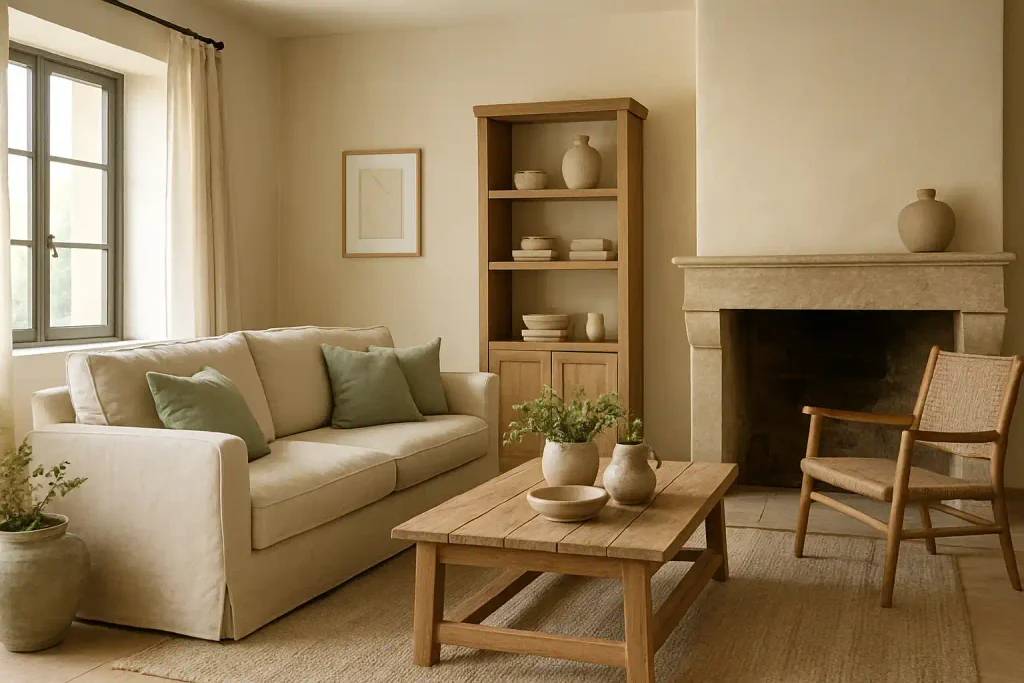
Traditional rustic style brings together natural materials, familiar forms, and a sense of age without making a room feel like a themed cabin. Think warm wood, tactile textiles, useful furniture, and a restrained mix of old and new. To create the look, choose a grounded color palette, prioritize a few substantial materials, and leave enough open space for each piece to feel considered.
The style works in country homes, city apartments, and anywhere you want rooms to feel relaxed and welcoming. The key is balance: rustic character should come from honest materials and thoughtful details, not from filling every surface with distressed finishes or antiques.
The Look To Aim For In Traditional Rustic Style
Traditional rustic style feels connected to the landscape and to everyday use. Wood may show grain, knots, or a softly worn finish. Stone, iron, leather, wool, linen, and ceramics add texture and contrast. Furniture tends to have straightforward shapes and a sturdy presence, while small imperfections help a room feel collected rather than showroom-perfect.
Start with a quiet base: warm white, cream, taupe, muted green, or soft brown on the largest surfaces. Then add deeper shades through wood, upholstery, rugs, and accessories. A room does not need every rustic material at once. A timber table and woven rug may be enough to establish the direction, especially if the architecture already has exposed beams or a stone fireplace.
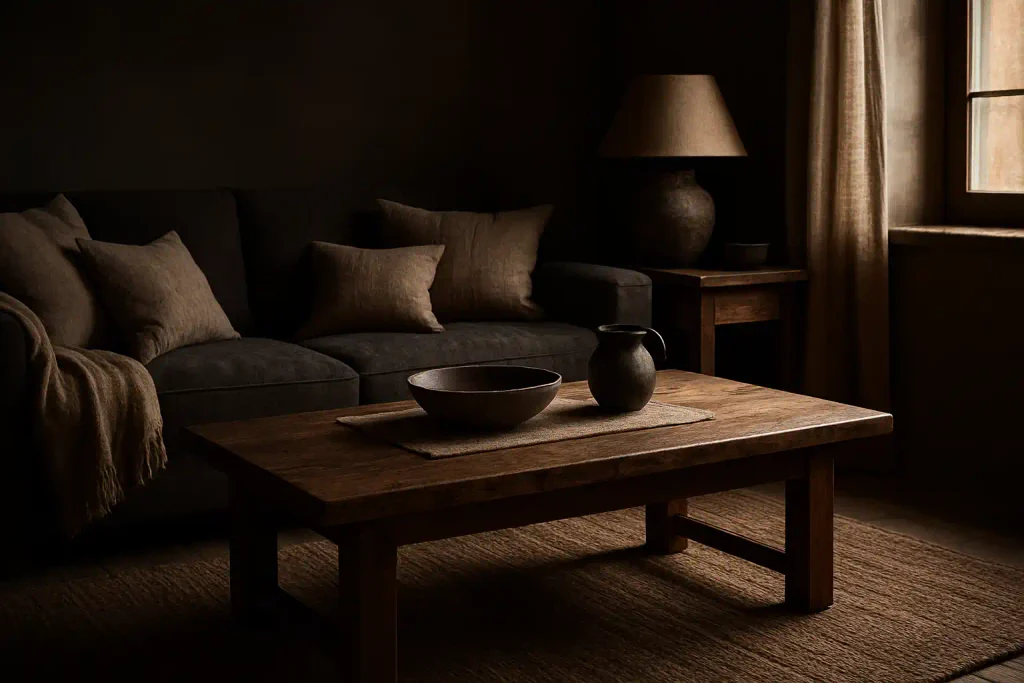
Scale matters as much as finish. One substantial cabinet can anchor a room more effectively than several small decorative pieces. Mix that weight with softer shapes and fabrics so the space does not feel heavy. In a smaller home, choose lighter wood tones, open-legged furniture, and a limited number of dark accents.
Ideas To Try With Traditional Rustic Style
1. Choose One Grounding Wood Piece
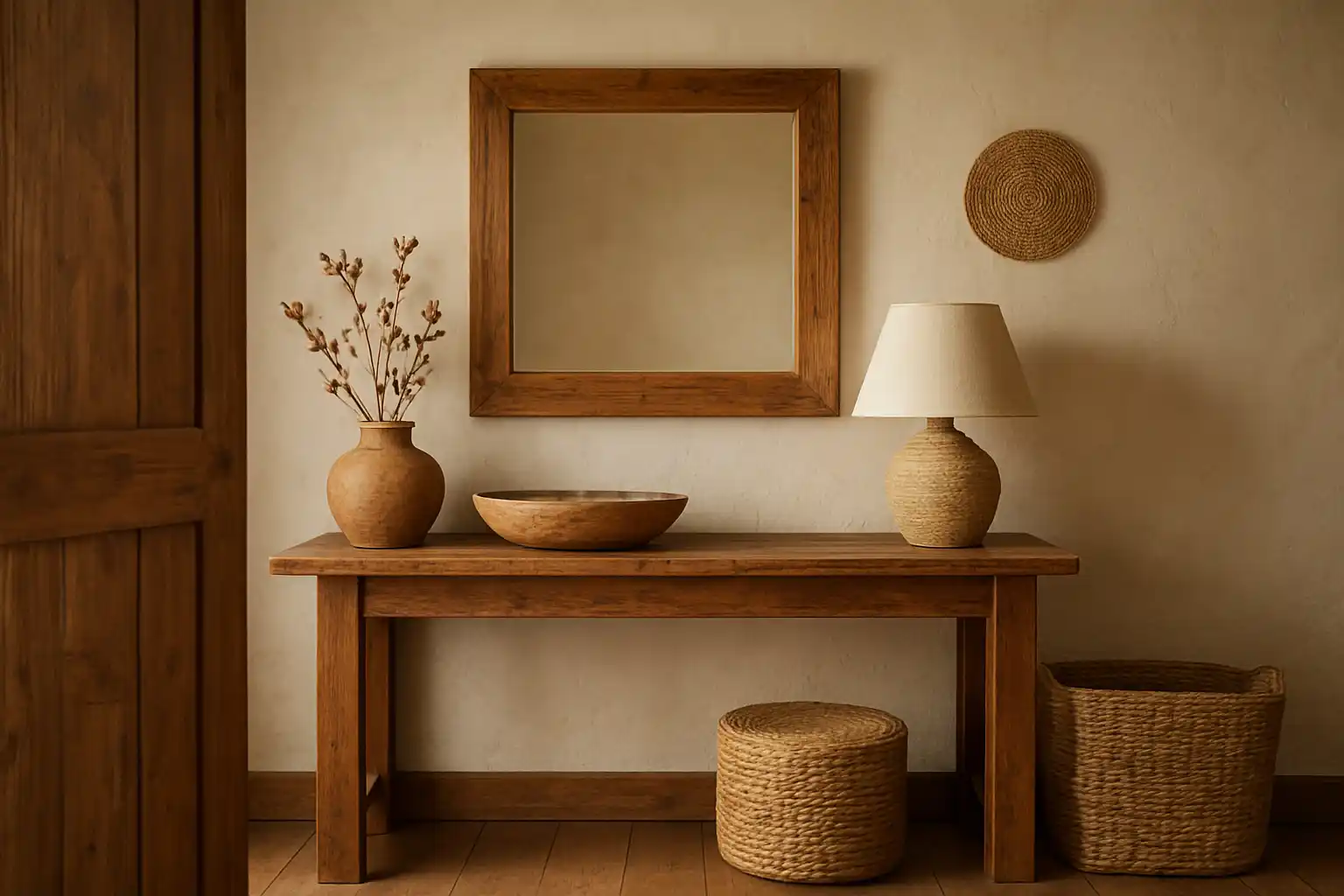
A dining table, bed frame, or wide console can give a room its rustic foundation. Look for solid-looking proportions, visible grain, and a finish that suits the room’s existing colors. A gently aged surface can add character, but it should still be practical for the way you use the piece. In an open-plan living area, a wooden dining table can connect the kitchen and lounge without requiring matching furniture throughout.
Check dimensions before buying and allow room to move around the piece. Deeply carved edges or oversized legs may be difficult to clean around, and a heavy finish can overwhelm a compact room. If the item is vintage or secondhand, inspect joints, drawers, and the underside for signs of damage that affect use.
Pro tip: Before shopping, photograph the room in daylight and note its fixed finishes, such as flooring, trim, and counters. Use those colors to guide wood and fabric choices, rather than trying to match every item exactly.
2. Layer Natural Textures
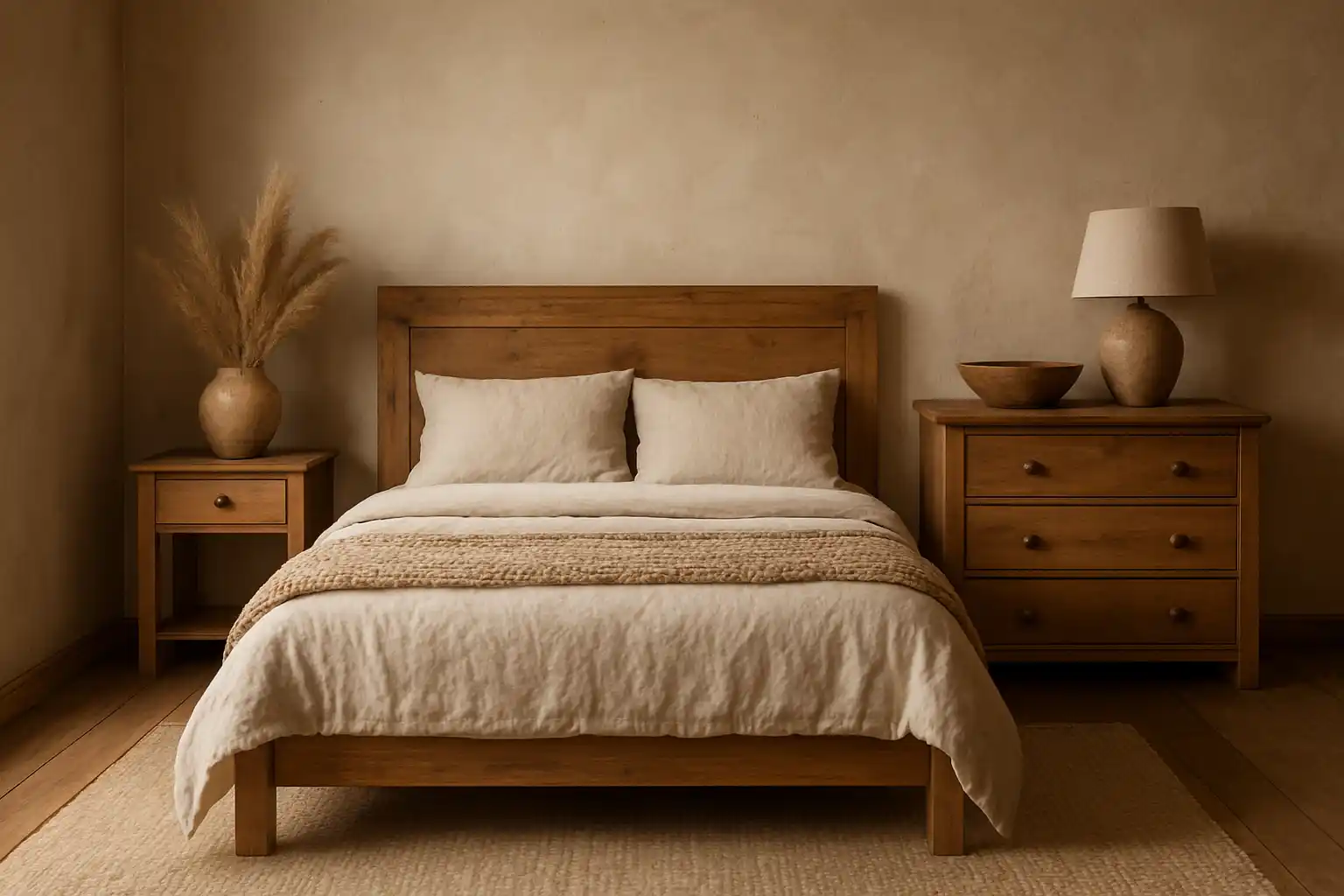
Texture keeps a neutral palette from feeling flat. Combine a woven rug with linen curtains, a wool throw, or a leather cushion. Choose two or three contrasting textures rather than adding every material at once. This works especially well in bedrooms and living rooms, where soft layers make hard wood and stone feel more inviting.
Think about maintenance as well as appearance. A flat-weave rug may be easier to manage in a busy dining area than a thick shag style. If you have pets or children, removable covers and washable throws can make the room easier to live with. Test fabric swatches in the room if possible, since natural light can change how colors read.
3. Bring In Aged Metal With Restraint
Blackened iron, aged brass, and muted bronze can add definition to warm wood and pale walls. Try a pair of simple wall lights, cabinet pulls, a mirror frame, or a practical hook rail. Repeating one metal finish in a few places helps the room feel cohesive, while mixing too many shiny finishes can distract from the quieter materials.
Choose metal accents for a purpose as well as their appearance. A wall-mounted hook rail can keep coats organized in an entry, and sturdy cabinet hardware can refresh a plain dresser. In a small room, keep the metal details fine in scale so they do not compete with the furniture.
4. Use Pattern In Small, Useful Doses
Checks, stripes, simple florals, and woven motifs can bring a traditional note without making the room feel busy. Use patterned fabric on a cushion, bench seat, curtain, or one small upholstered chair. Keep the surrounding pieces relatively simple, and repeat a color from the pattern elsewhere so it feels intentional.
Pattern is especially useful when a room has a lot of plain wood or painted walls. However, large-scale prints can dominate a narrow space, and a delicate fabric may not suit a frequently used seat. Consider the room’s light and traffic before committing to a full set of curtains or a large upholstered item.
Pro tip: Lay out a small group of proposed finishes together, such as a wood sample, fabric swatches, and paint color. Compare them in the room at different times of day before making a larger commitment.
5. Display Everyday Objects As Decor: Traditional Rustic Style
Traditional rustic rooms often feel personal because useful objects are visible: pottery, woven baskets, books, wooden bowls, or a well-made lamp. Group a few items by material or color on a shelf, sideboard, or kitchen counter. Leave gaps between groups so each object remains easy to see and use.
This approach works in almost any room, but it can turn into clutter if every surface becomes a display. Give small items a home in baskets or drawers and keep frequently used pieces within reach. The best choices are objects that serve a purpose or carry meaning for your household, not accessories bought just to fill a shelf.
When selecting pieces, traditional rustic style benefits from a mix of ages and finishes rather than a matched set. Pair one vintage-looking object with clean-lined basics, and check that the materials and colors relate to something already in the room.
Bringing It Together
A cohesive room needs a clear order of decisions. Begin with the largest fixed or expensive elements, then fill in around them. If the floor is dark, lighter upholstery and walls can prevent the space from feeling too enclosed. If the room is mostly pale, a deeper wood table or cabinet can provide useful contrast. Traditional rustic style is less about collecting a checklist of materials than about making those materials feel balanced.
- Set the palette: Pick a main neutral, a wood tone, and one or two accent colors.
- Choose the anchor: Decide which substantial piece will establish the room’s scale and character.
- Add comfort: Bring in practical textiles, lighting, and seating before adding small decor.
- Edit the details: Keep only the objects that contribute texture, function, or personal meaning.
Lighting can help connect the elements. Use a mix of general light and focused light for reading, cooking, or working. Lamps with simple fabric shades soften a room, while metal fixtures can echo hardware or other accents. Check the light’s placement and spread before choosing a fixture based on its finish alone.
Repeat materials thoughtfully. The same wood tone does not need to appear everywhere, but a common warm or cool undertone can make different pieces sit comfortably together. Likewise, a repeated fabric color or metal finish can tie separate zones together without making them identical.
Budget And Space Adaptations
You do not need to replace a whole room to create a rustic feeling. Begin with a change that has a clear purpose, such as a durable rug, a secondhand side table, new cushions, or improved lighting. Shop your home first: a wooden stool, woven basket, or framed landscape may already suit the room. Refreshing a piece you own can be more useful than buying several decorative items.
When shopping secondhand, check measurements, stability, odors, and the condition of drawers or upholstery. A worn finish can be appealing, but structural problems or difficult-to-clean fabric may make an item impractical. For new furniture, compare construction details and care instructions, not just the surface color. Set a spending limit before browsing so attractive extras do not displace the essentials.
In a small space, use fewer, more versatile pieces. A storage bench can provide seating and a place to put away blankets; a narrow console may offer a landing spot without blocking a walkway. Choose open space around furniture deliberately, since circulation is part of the design. In a rental, removable textiles, lamps, and freestanding storage can add warmth without permanent changes.
Key takeaways:
- Use natural materials and warm, restrained colors as the foundation.
- Anchor the room with one appropriately scaled piece, then layer in texture.
- Choose decor for function or meaning, and leave room for the materials to show.
- Check measurements, condition, care needs, and budget before buying.
For a larger room, define areas with rugs, lighting, and furniture arrangement rather than filling every wall. A room with several zones can still feel connected if the palette and materials repeat. Keep the route between doors and frequently used furniture clear, and consider how easily each piece can be moved or cleaned.
Your Next Step
Before making a purchase, write down what the room needs most: storage, seating, warmth, better light, or a stronger focal point. Then measure the space and choose one item that addresses that need. This keeps traditional rustic style practical and helps you avoid buying decor that has no clear place.
Build the room gradually, checking each addition against the palette, scale, and daily needs you identified. A few well-chosen pieces usually create more character than a full room of matching rustic accessories. With a thoughtful plan, traditional rustic style can feel settled and welcoming while still working for the way you live.
Looking for options for this space? Explore Rustic styles and choose what suits your needs.