Affiliate disclosure: We may earn a commission when you buy through links in this post.
A warm, character-filled wall starts with a clear focal point, not a collection squeezed into every inch. Large rustic wall decor might be one substantial artwork, a planned gallery, or a mix of framed pieces and natural textures. The right choice depends on the wall, the furniture below it, and the atmosphere you want in the room.
Before choosing anything, measure the usable wall and note nearby windows, doors, lights, and walkways. Then decide whether the space needs a stronger focal point, more texture, or a calmer balance. These checks help large rustic wall decor feel connected to the room rather than added as an afterthought.
The Look To Aim For
Rustic style draws on natural materials, visible texture, and a relaxed sense of history. You do not need every object to look old, and finishes do not need to match. Warm wood, woven fibers, muted artwork, aged-looking metal, and handmade details can all contribute. A display tends to feel more intentional when it uses a few related elements rather than every rustic motif at once.
Start with visual weight. A broad sofa or substantial sideboard can support a wide display, while a slim entry wall may suit a taller arrangement. Center the display in relation to the furniture or architectural feature it belongs with, rather than automatically centering it on the entire wall. Leave some visible wall around the arrangement so it has room to breathe.
Use color as a connecting thread. Choose one or two tones already present in the room, then introduce a contrasting texture. A warm wood frame might relate to a timber table, while a quiet landscape or woven accent softens the look. Scale and texture often give a wall more presence than adding extra colors or objects.
Ideas To Try With Large Rustic Wall Decor
Choose an approach based on the wall’s shape, the furniture below it, and how you use the room. Each idea can be adapted to pieces you already own. For large rustic wall decor, a clear starting point is more useful than buying several items before you know how they will fit together.
Pro tip: Cut paper templates to the size of the pieces you are considering and tape them to the wall. View the outlines from the doorway and the main seating area before deciding on a layout.
1. Choose One Piece As The Focal Point: Large Rustic Wall Decor
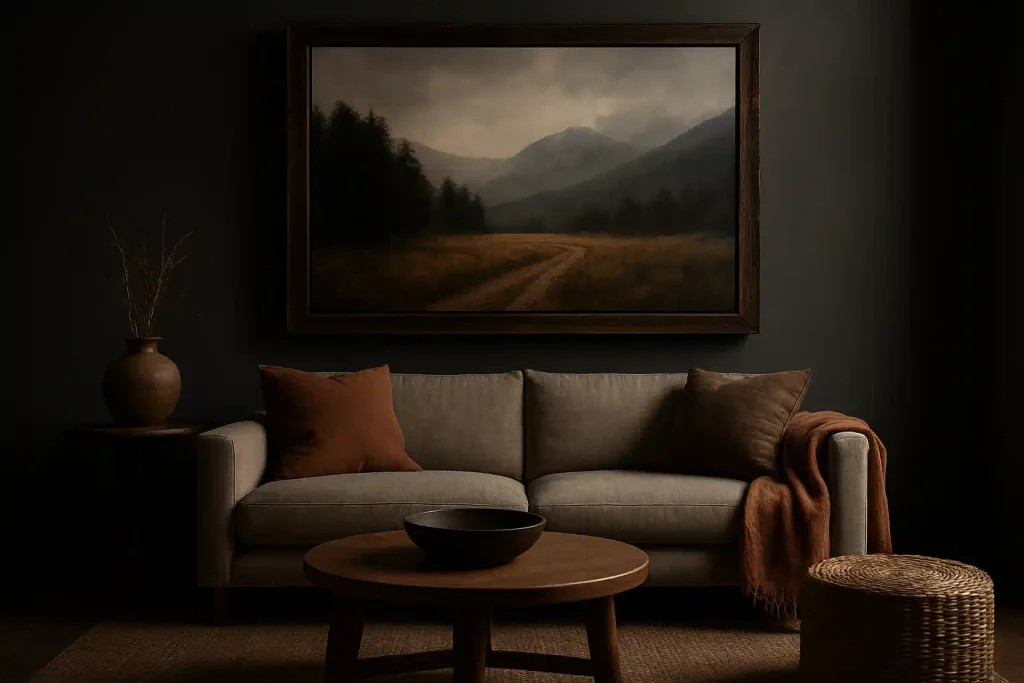
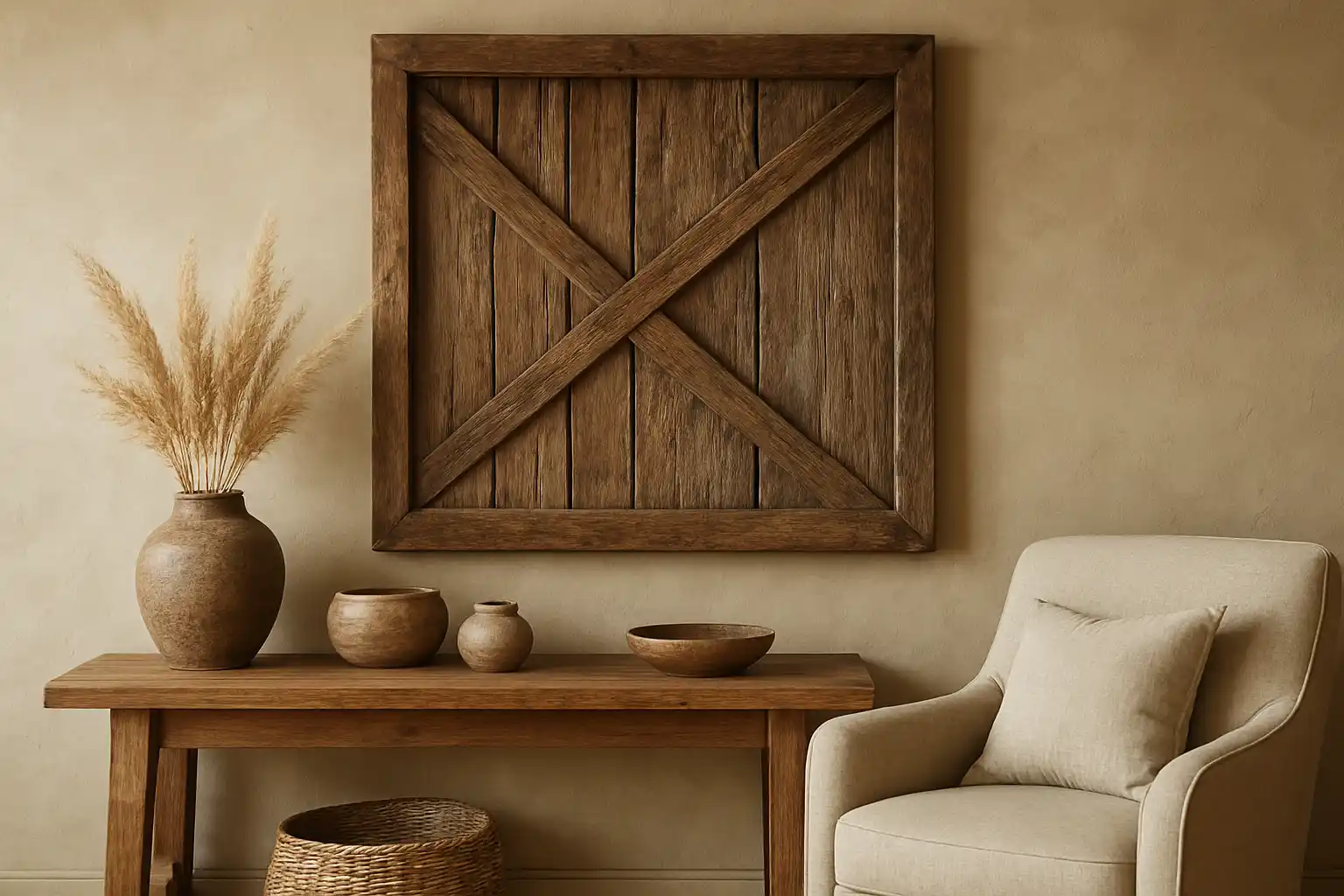
A single substantial piece gives a blank wall an easy-to-read center. Consider a framed landscape, a carved wood panel, a mirror with a simple frame, or a broad textile. This approach works well over a sofa, bed, fireplace, or sideboard because the furniture below provides a natural visual base.
Choose a size that relates to the furniture without overwhelming it. Center the piece over the sofa or sideboard, then check the spacing from the main viewing position. A tall item may suit a narrow wall better than a wide one. Large pieces can be heavy, so check the item’s weight, your wall type, and the hardware requirements before installation.
2. Layer Art With Natural Materials
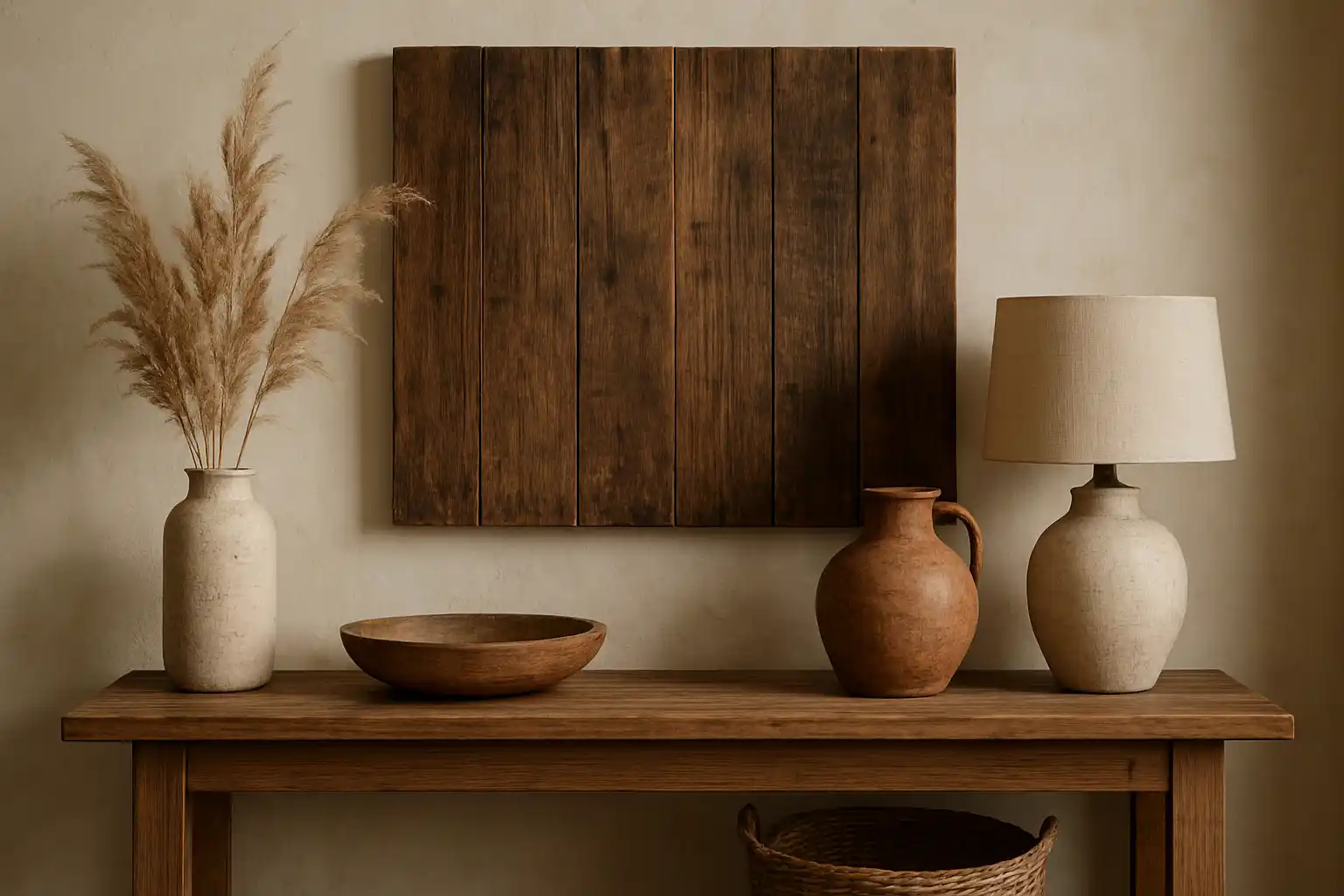
Layering adds depth without requiring a large collection. Pair framed art with a narrow wood shelf, a woven accent, or one or two understated metal details. Vary shapes and surfaces, but repeat a finish or color so the display reads as a composition rather than a set of unrelated objects.
This approach suits a living room, dining nook, or entry where people can see the details up close. Keep shelf objects low enough not to cover the art, and avoid putting fragile items where they could be knocked in a busy walkway. Secure shelves and wall objects properly, and make sure the arrangement does not interfere with doors, lamps, or other features.
3. Build A Gallery Around A Clear Anchor
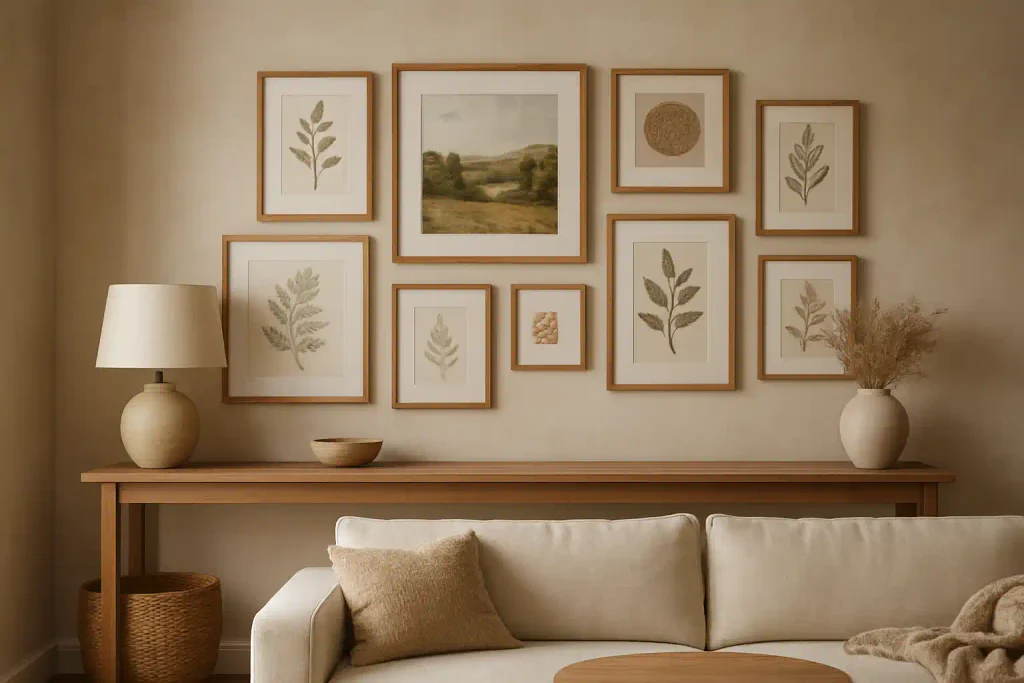
A gallery wall can feel relaxed and personal when one larger piece establishes the scale. Surround it with smaller framed prints, a modest mirror, or a few objects that share a material, frame color, or subject. The pieces do not need to match, but repeating one or two details helps the eye move across the grouping. This version of large rustic wall decor works well on a broad wall with enough room to see the full arrangement.
Explore Rustic wall decor for options to consider.
Pro tip: Take a straight-on photo of your paper-template layout. A photo can make uneven spacing or an off-center arrangement easier to spot before you put holes in the wall.
Arrange the pieces on the floor first, or make paper templates and test them on the wall. Keep gaps fairly consistent for a tidy effect, or allow slight variation for a more informal arrangement. A gallery takes more planning and uses several pieces, so it may not suit a wall that needs a quick, simple update.
- Choose one focal piece for a calm, uncomplicated wall.
- Add a small number of related textures when the room feels flat.
- Use a gallery arrangement when you have several pieces that belong together.
Bringing It Together
Once you have chosen a direction, connect the display to the room without making every finish identical. A weathered-looking wood frame can echo a coffee table, while a dark metal detail might relate to a lamp or cabinet hardware. Repeating a material or tone creates a visual thread; exact matching can make the wall feel overly coordinated.
Consider what else draws attention in the room. A bold fireplace, patterned rug, or strong view through a window may already be a focal point. In that case, quieter art can balance the space. If the room is simple and spare, a more textured or detailed piece may add character. Large rustic wall decor works best when it supports the room’s existing mood instead of competing with everything around it.
Check the display from near and far, and at different times of day. Natural and artificial light can change the appearance of colors and textures, while framed glass may reflect a nearby window or lamp. If glare is distracting, try a different position or adjust the light source. Keep decor away from damp areas and heat sources where appropriate, and follow the hanging guidance for the item and wall type.
Budget And Space Adaptations: Large Rustic Wall Decor
A warm display does not depend on filling a wall with new purchases. Begin with pieces you already own, then identify what is genuinely missing. You might reuse a frame with a different print or rearrange a small collection around one larger item. If you are considering secondhand pieces, inspect the frame, backing, and hanging hardware before using them.
For a lower-cost approach, start with one well-proportioned focal piece and add other items gradually. A simple natural-material accent or a shelf can add texture without requiring a large collection. Large rustic wall decor can also work in a compact room, but it should not crowd the furniture or narrow a walkway. Try a taller arrangement or a smaller anchor rather than filling the full width of the wall.
Key takeaways:
- Measure the wall and the furniture below it before choosing a focal piece.
- Repeat a few colors or materials to connect the display to the room.
- Test the arrangement with templates, and choose suitable mounting hardware.
- Leave open space so the display feels considered rather than crowded.
In a rental or any home where you want to limit wall holes, keep the arrangement light. Use removable hanging products only on surfaces they are designed for and within their stated limits. A framed piece can also lean on a stable shelf if it cannot tip or block a path. In a narrow area, editing the display often works better than layering on more objects.
Your Next Step
Pick one wall and measure its usable space, including the furniture below and nearby doors or windows. Decide whether a single focal piece, a layered display, or a gallery with a clear anchor suits the room. Mock up the sizes before hanging anything, then adjust the layout from your main viewing spots. With a little planning, large rustic wall decor can bring warmth and character while still letting the room feel open and lived in.