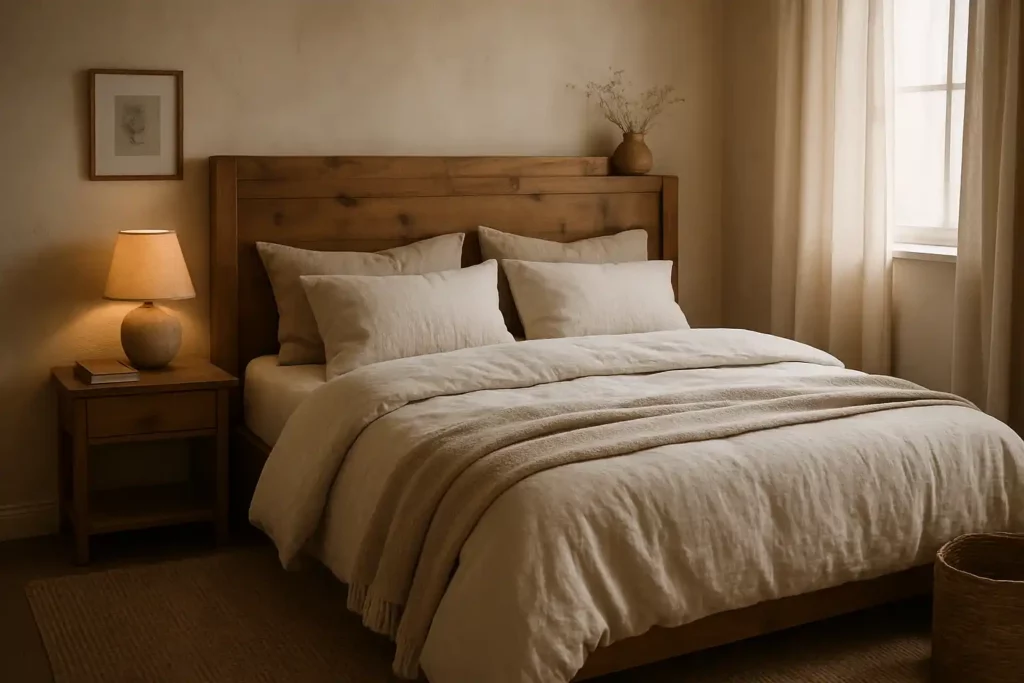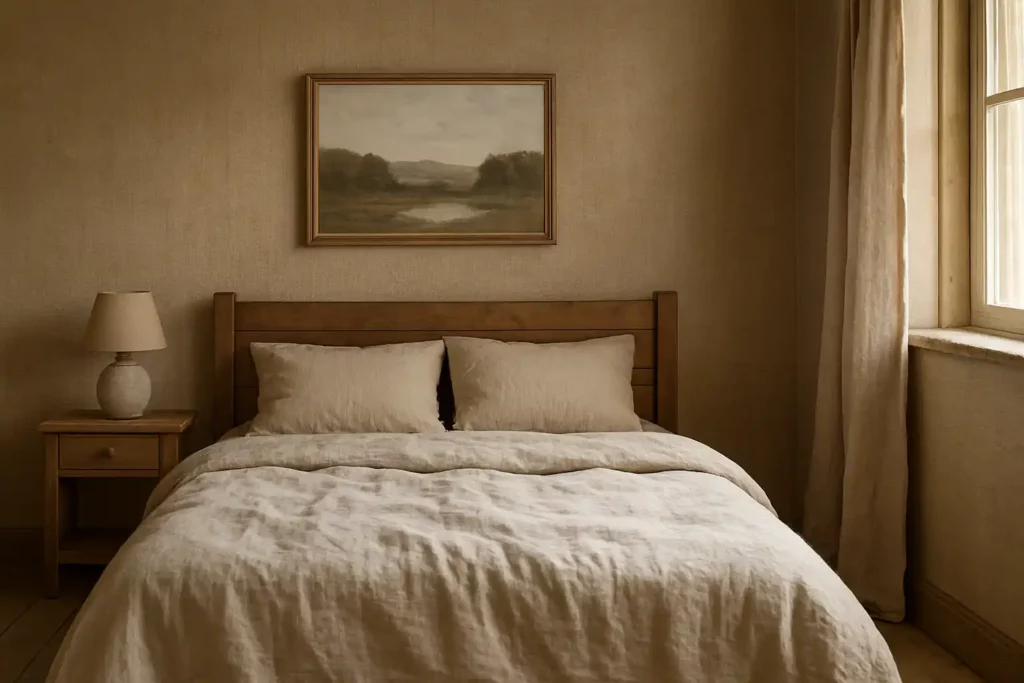
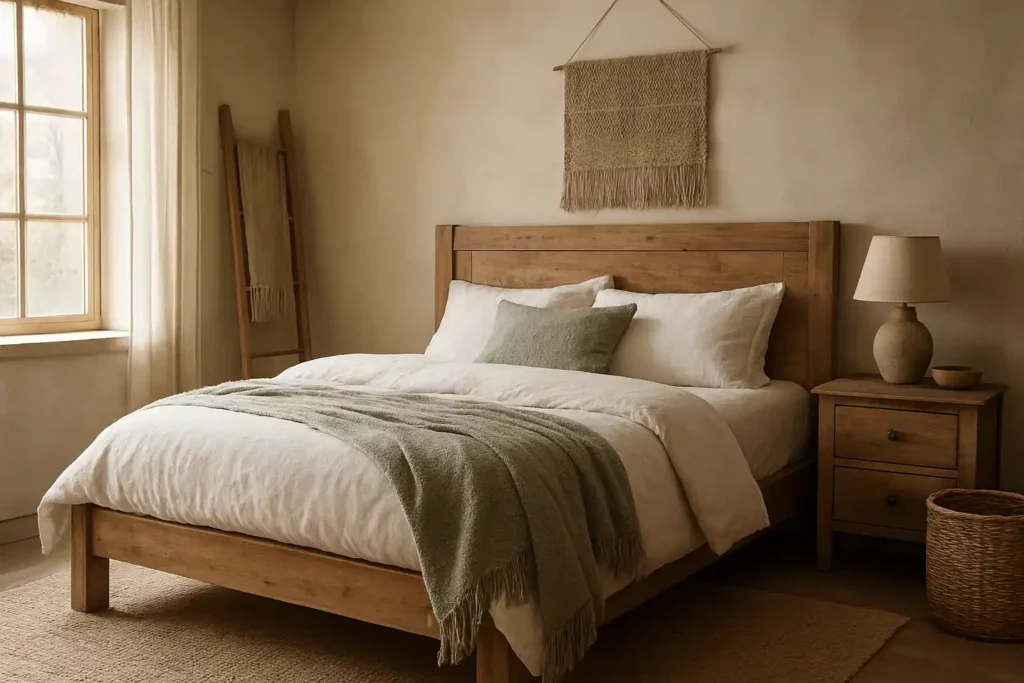
Rustic bedroom color schemes feel warm and personal when they work with the materials already in the room: wood grain, woven fabric, stone, metal and natural light. Brown and beige are not the only options. Muted green, dusty blue, clay and charcoal can also suit a rustic bedroom when the overall palette feels balanced and comfortable to live with.
For a practical starting point, choose a light or mid-tone base, add one earthy supporting color, then use a deeper shade sparingly. Before buying paint or replacing textiles, compare your choices with the floor, bed frame and other large finishes. This simple approach helps rustic bedroom color schemes look intentional rather than assembled from unrelated pieces.
The Look To Aim For: Rustic Bedroom Color Schemes
Rustic style is not about making every surface dark or distressed. It is about letting natural textures and materials contribute to the room’s character. A restrained palette gives a timber headboard, linen duvet or woven rug space to stand out. Color sets the mood; texture adds dimension.
Think in three color roles instead of trying to coordinate every object individually:
- Base: A flexible color for large areas, such as warm white, oatmeal, pale greige or soft putty.
- Supporting shade: A muted natural color, such as sage, dusty blue, clay or mushroom.
- Accent: A deeper note, such as forest green, charcoal or tobacco brown, used in a few considered places.
Existing finishes count as part of the palette. A wood floor may already supply warmth and visual pattern; a stone wall or dark iron bed frame may provide contrast. Treat these fixed elements as colors to work with, not obstacles to cover. The more prominent they are, the fewer additional shades you may need. When planning rustic bedroom color schemes, start with what cannot easily be changed.
Pay attention to undertones. A creamy white can look yellow beside a cool gray floor, while red-toned timber may make some pinkish neutrals feel stronger. Put paint and fabric samples next to the finishes they need to suit, then view them in daylight and lamplight. A shade that seems subtle in one setting can look quite different in your bedroom.
Key takeaways:
- Build a palette around fixed finishes, using a base, a supporting shade and a limited accent.
- Check paint and fabric samples beside wood, flooring and other large features in different light.
- Use texture and repeated accents to add character without crowding the room.
Ideas To Try: Rustic Bedroom Color Schemes For Different Moods
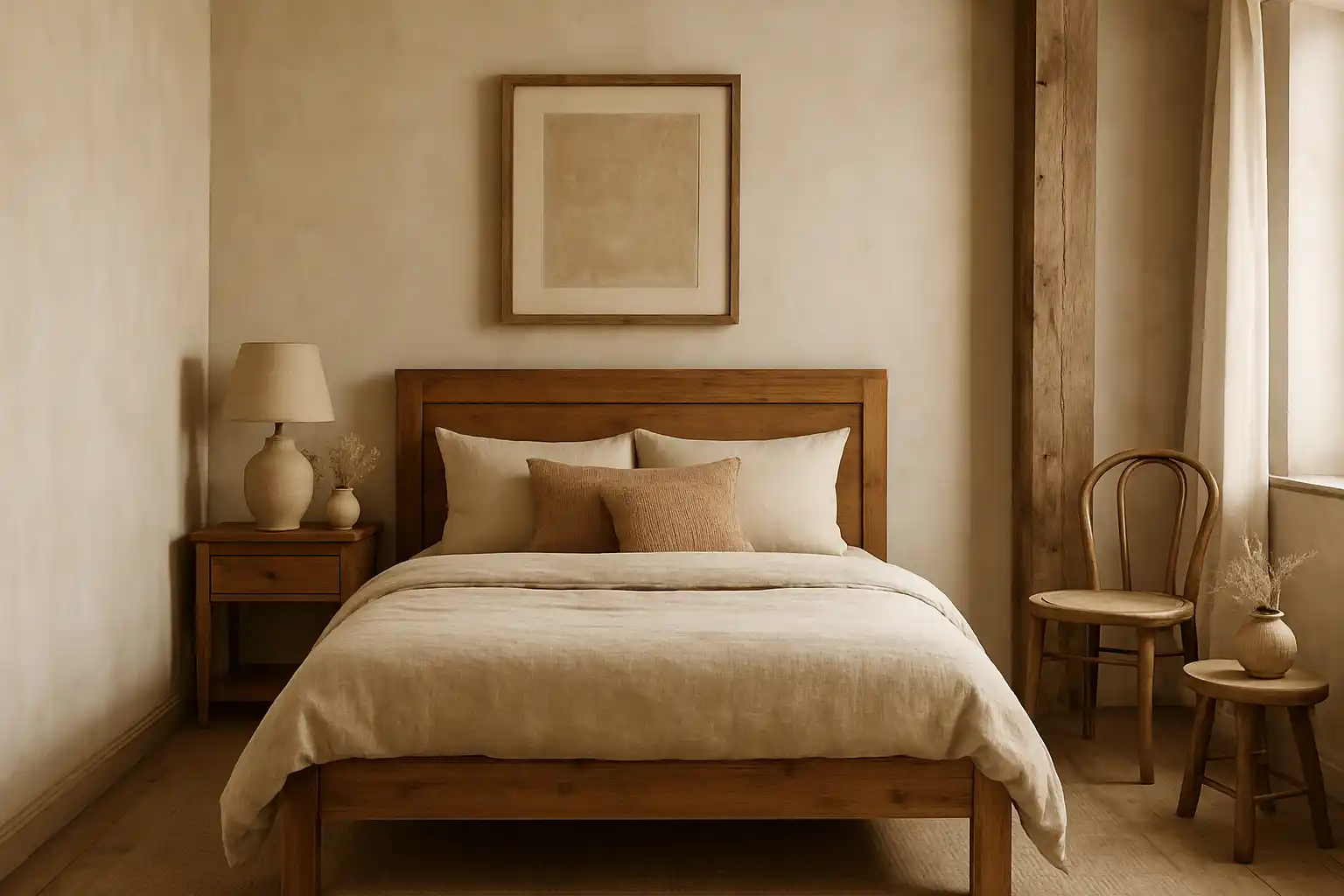
Use these combinations as adaptable starting points, not strict formulas. Adjust a shade’s depth or use it on a smaller surface to suit the room’s light, size and existing furniture. These rustic bedroom color schemes can be built gradually, beginning with bedding or a paint sample rather than a full room makeover.
1. Warm White, Oatmeal And Weathered Wood
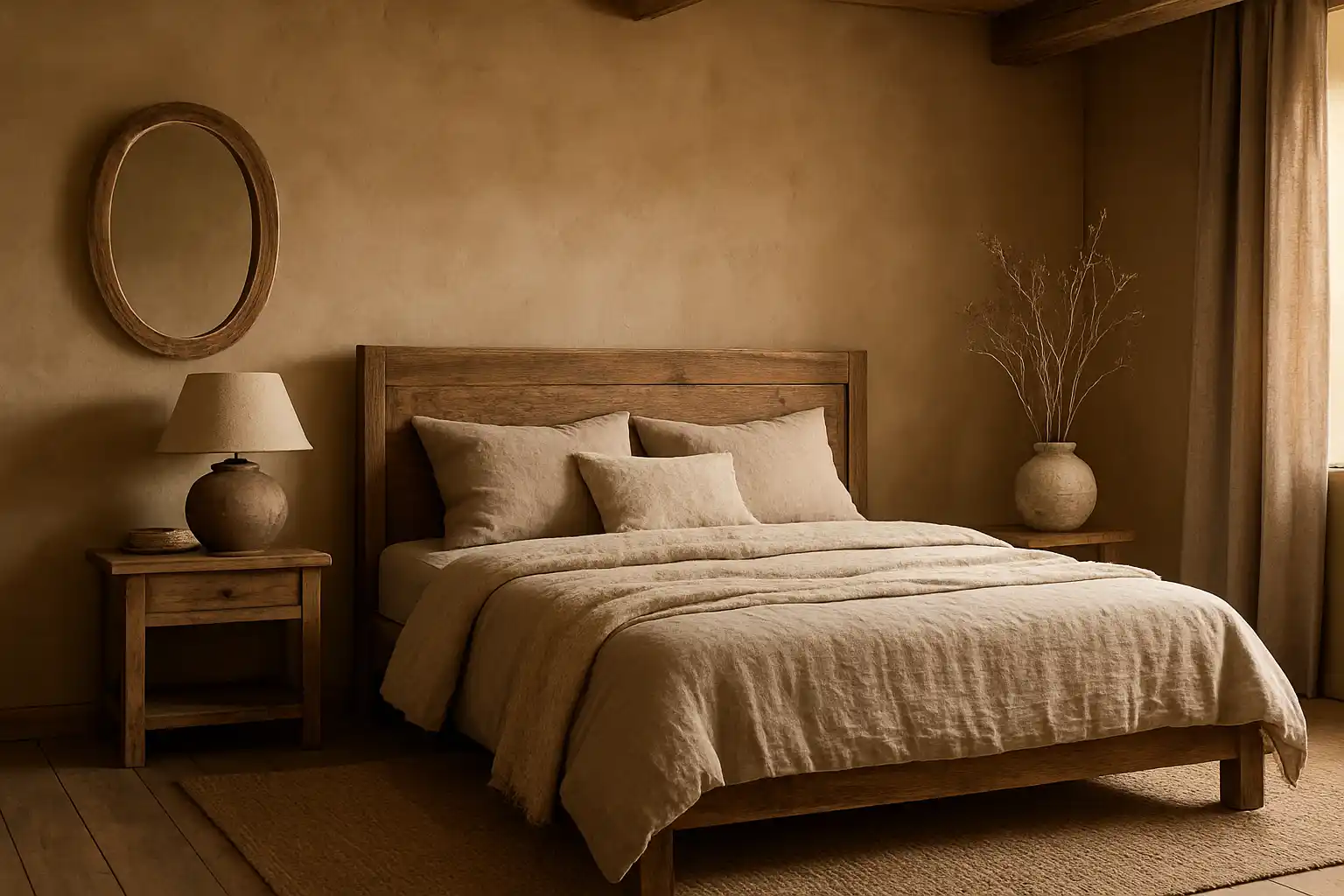
This light combination lets timber and woven materials provide most of the visual interest. Try warm white on the walls, oatmeal bedding and one or two darker wood details. It suits compact bedrooms, rooms with limited daylight and spaces with substantial wooden furniture, where a pale background can keep the overall effect from feeling crowded. The constraint is that pale, smooth surfaces can feel flat together. Add texture through linen, a wool throw or a woven rug instead of introducing several new colors.
2. Sage, Cream And Walnut
Sage adds a quiet natural note, cream softens the contrast and walnut provides depth. Use sage on one wall, a duvet cover or a small piece of furniture, then repeat cream in larger bedding or curtains. This palette suits a bedroom that needs color but should still feel restful. If the room is small or dim, try sage in a removable textile or limited area first; a large, saturated green surface may feel heavier than expected.
3. Dusty Blue, Warm Gray And Aged Timber
A muted blue brings contrast to warm wood without the brightness of a vivid blue. Pair it with warm gray or putty, then use aged timber to connect the cool and warm tones. This works well when a wood headboard or honey-toned floor is already part of the room. Watch the undertones: a very cool gray can look disconnected from warm wood. If you prefer neutral walls, use dusty blue in a quilt, cushion or small painted accent.
4. Clay, Ivory And Charcoal
Clay brings earthy warmth, ivory keeps it soft and charcoal gives the combination a clear outline. Try clay in a throw or on a modest accent wall, use ivory for larger bedding surfaces and reserve charcoal for a lamp base or frame. This can suit a room with pale walls that needs more definition. Clay shades may shift toward orange or pink in different lighting, so check a sample against your wood and fabrics. Keep charcoal limited if the room has little natural light.
Pro tip: Put paint swatches and fabric samples beside a photo or offcut of your floor and furniture finish. Check the group in the bedroom at different times of day before committing to a large painted area or textile.
5. Forest Green, Flax And Dark Metal
Deep green can create a sheltered mood, while flax-colored textiles and dark metal add softness and structure. Consider green behind the bed or in layered bedding, with flax curtains and a restrained metal detail. This is an option for a room with warm wood and enough light to balance the deeper color. In a smaller or dimmer bedroom, use green on a few removable pieces or a single surface and keep other large areas lighter.
Bringing It Together With Rustic Bedroom Color Schemes
Once you have a palette, repeat each shade in more than one place so the choices feel connected. A green cushion might relate to a small vase; a charcoal lamp can echo a dark frame. Repetition does not require matching everything. Let one piece carry a color clearly, then make a quieter connection elsewhere. This helps rustic bedroom color schemes feel cohesive without making the room look overly coordinated.
Build richness with texture before adding another hue. A smooth cotton duvet, a slubby linen pillow, a woven rug and visible timber can make a mostly neutral room feel layered. Different finishes also add interest: matte paint, grainy wood and woven textiles have distinct qualities even when their colors are close. Leave some breathing room around strongly patterned fabric or heavily grained furniture.
Look at the room from the doorway and from the bed. Notice which large surfaces draw your eye first, and whether a corner feels much darker than the rest. A lighter curtain, bedside lamp or throw may balance the view without changing the entire palette. Small adjustments are often easier to assess than adding another accent color throughout the room.
Budget And Space Adaptations
You can shift the room’s mood without replacing its main furniture. Keep a bed frame or dresser that works, then start with easy-to-change layers such as pillow covers, a throw, curtains or a bedside lamp. If painting is practical, a single wall can introduce a deeper shade without requiring changes to every surface. Rustic bedroom color schemes can evolve in stages as you decide what the room needs.
In a rental, establish the palette with movable items: bedding, a rug, framed artwork and fabric storage. Check your lease before using removable wall coverings or hanging hardware, and test a removable product somewhere inconspicuous if you are unsure how the surface will respond.
For a small bedroom, lighter colors on the largest surfaces can help keep the room feeling open. Add darker tones in compact doses, such as a cushion, lamp or narrow piece of furniture. In a larger bedroom, deeper shades may make the space feel more intimate, but balance them with lighter textiles or warm lighting. Scale matters, too: one patterned quilt is simpler to adapt than repeating a large pattern across several surfaces.
Key note:
- Adapt color placement to the bedroom’s size, light, budget and rental restrictions.
Let existing features lead. If the floor has a strong pattern, keep bedding quieter. If the furniture is dark, choose a lighter base and one muted accent to create contrast. This is a practical way to make the palette work with what you own instead of building the room around a costly replacement.
Your Next Step
Choose one feature you want to keep, such as a timber bed, a favorite quilt or the existing floor. Pick a base color that works beside it, then select one supporting shade to test. A few samples can help you judge whether the combination feels warm and balanced before you commit.
Build the room gradually: settle the largest surfaces first, add useful texture and finish with a small number of repeated accents. Rustic bedroom color schemes work best when they support the materials and objects you already value, rather than asking every part of the room to compete for attention.