The look to aim for in a cozy rustic bedroom
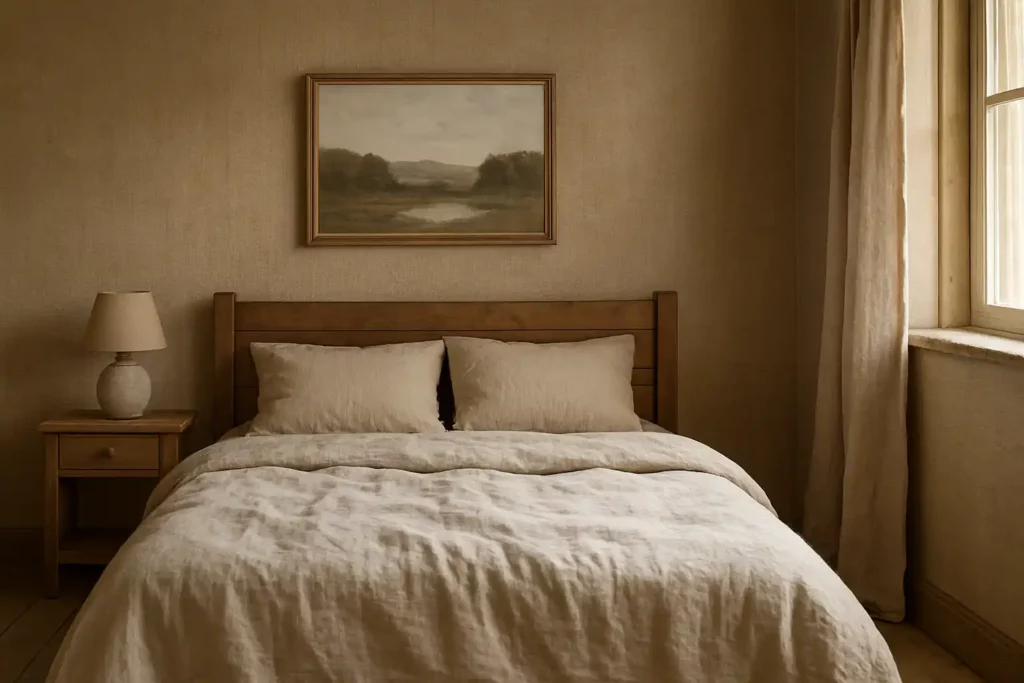
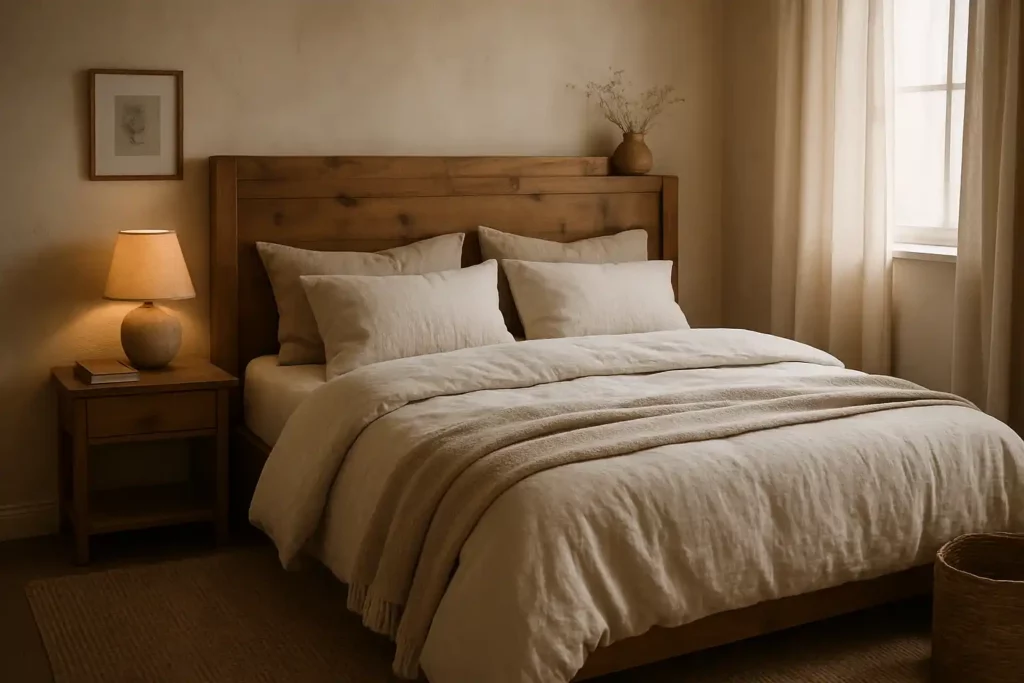
A cozy rustic bedroom feels warm, relaxed, and connected to natural materials. It doesn’t need to look like a cabin or rely on distressed furniture. Instead, combine tactile fabrics, wood or other honest-looking finishes, gentle lighting, and a few meaningful details. The goal is a room that feels settled and personal, not crowded with themed decor.
Start by choosing a simple foundation: a comfortable bed, a quiet color palette, and one or two natural textures. A cozy rustic bedroom works best when materials and colors support one another. Think of a weathered wood nightstand beside soft cotton bedding, or a woven rug grounding a bed with a clean-lined frame. You can create the same feeling in a modern home without changing every surface.
Rustic character comes from variation, not from making everything look old. Pair a smooth surface with a rougher one, and let a few small imperfections add warmth. Keep the main furniture useful and the decorative pieces selective. That balance gives the room personality while preserving calm, clear space for rest.
Ideas to try for a cozy rustic bedroom
1. Give the bed a natural focal point
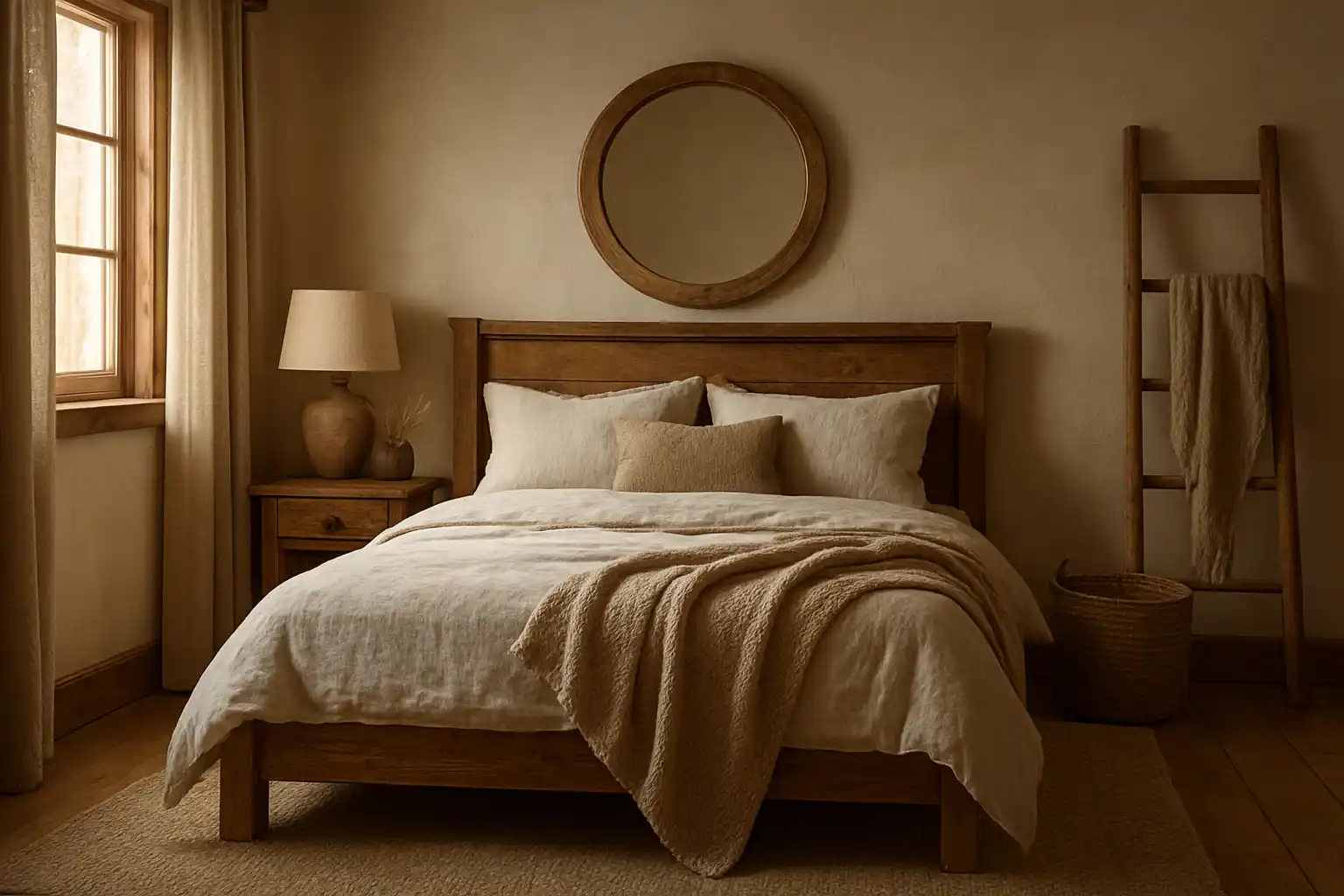
The bed usually anchors the room, so a headboard is an effective place to introduce rustic character. A wood headboard, a simple upholstered design in a natural fabric, or a sturdy frame with visible grain can add warmth without requiring a complete room makeover. Choose a shape and finish that suit the room’s scale: a tall, visually heavy headboard can overwhelm a small space, while a low profile can make a compact room feel more open.
Let the bed remain easy to use. Check that the headboard is comfortable to lean against and that bedside furniture still fits. If replacing furniture isn’t practical, make the bed the focal point with layered bedding and place a framed piece of art above it instead.
2. Layer bedding for softness and texture
Layers make a bed feel inviting and give a cozy rustic bedroom its relaxed character. Start with breathable sheets, add a quilt or coverlet, then fold a blanket across the foot of the bed. Linen, cotton, wool, and cotton knit can provide varied textures without relying on bold patterns. Keep the color family related so the layers feel collected rather than busy.
Use a pattern sparingly: a subtle stripe, check, or botanical print can work well beside mostly solid bedding. Consider the season and your own comfort before adding heavy layers; too many blankets can make the bed difficult to sleep in or maintain. A smaller throw is often enough to add texture without taking over.
3. Bring in natural materials with restraint
Wood, woven fibers, stoneware, and metal can add depth when they appear in useful objects. Try a wood stool as a bedside table, a woven basket for extra blankets, or a ceramic lamp base. These choices work because they bring different surface qualities into the room while still serving a purpose.
Choose a few materials and repeat them rather than collecting every rustic finish at once. For example, wood furniture and a woven basket may be enough; adding rough stone, several metals, and multiple distressed finishes could make the room feel visually crowded. In a rental, smaller movable pieces are a low-commitment way to introduce this look.
4. Use warm, layered lighting
Lighting changes how textures and colors read, and it helps the room shift from daytime use to winding down at night. Pair general room lighting with a bedside lamp or wall light, so you can avoid relying on one bright overhead fixture. Warm-toned bulbs can make wood and soft neutral fabrics feel inviting, while a shade diffuses light for a gentler effect.
Place a lamp where it is convenient to reach from bed, and make sure the shade directs light for reading without shining into your eyes. If space is tight, a wall-mounted fixture or clip-on reading light may free up the nightstand. Check that any fixture is installed and used according to its instructions.
5. Add a grounded rug and simple window layers — cozy rustic bedroom
A rug can soften the floor, help define the sleeping area, and bring another tactile layer into a cozy rustic bedroom. Choose a size that extends visibly around the bed where possible, rather than a small rug that floats beside it. Natural-looking textures and low-contrast patterns are versatile, but the rug should also suit the room’s traffic and cleaning needs.
For windows, combine privacy and softness without blocking useful daylight. Simple curtains in cotton or linen-look fabric can frame a window, while a shade underneath offers more control. Measure before buying and consider how far the curtains need to clear the floor or nearby furniture. A very heavy fabric may feel out of place in a small or sunny room.
6. Choose personal details, not a theme
Artwork, books, a small collection, or a framed photograph can make the room feel lived in. Select objects that matter to you and give them room to be noticed. A single landscape print or a small arrangement of frames can add character without turning the walls into a display of matching signs and motifs.
This approach works especially well when the furniture and bedding are understated. Keep surfaces functional: leave enough space for a glass of water, a book, or a phone. If you enjoy seasonal decorating, rotate a couple of small pieces rather than storing and displaying a large set of accessories.
Bringing it together in a cozy rustic bedroom
Once you have chosen the main pieces, look at the room as a whole. Repeat a color or material in two or three places: the wood tone of a nightstand might echo a picture frame, while a muted green in a throw could reappear in artwork. Repetition creates a sense of connection, but exact matching is not necessary. Natural materials often vary, and that variation is part of their appeal.
Before adding anything else, remove items that don’t support comfort, storage, or the atmosphere you want. Keep pathways clear, especially around the bed and wardrobe. A cozy rustic bedroom should still be easy to move through, clean, and settle into at night. Think about what you actually use within reach and store the rest out of sight.
- Choose a small palette of warm neutrals and one or two muted accent colors.
- Mix a few tactile materials, such as wood, woven fiber, and soft cotton.
- Use more than one light source for a calmer, more flexible room.
- Leave breathing room on bedside surfaces and around the bed.
Pro tip: Before buying decor, take a photo of the room and note what feels visually empty or crowded; this makes it easier to choose one useful addition instead of several impulse purchases.
Budget and space adaptations
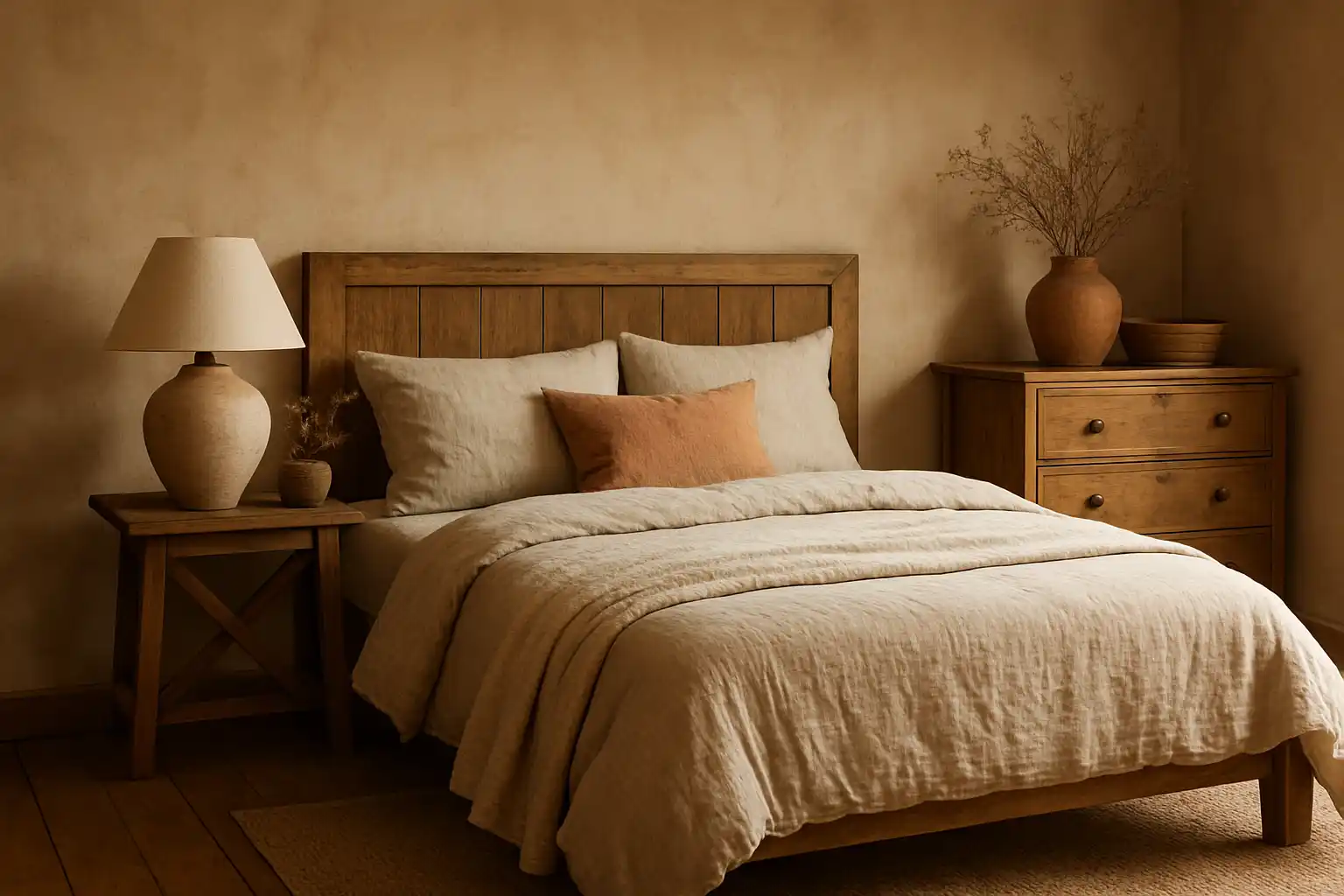
You can create a cozy rustic bedroom gradually. Begin with the pieces that make the biggest difference to daily comfort: bedding, lighting, or a rug. Reuse furniture you already own, and change its surroundings with a lamp, a textile, or a new arrangement before deciding it needs replacing. The result can feel considered even when the changes are modest.
In a small room, make each item earn its place. Choose a bedside table with a drawer or shelf, use under-bed storage if it suits your bed, and favor lighter visual weight where possible. A wall light can free surface area, and a single large textile may feel less cluttered than several small decorative pieces. Keep the palette simple so the room reads as calm, not sparse.
For a larger room, create a clear sleeping zone rather than filling every corner. A bench, chair, or basket can be useful if it supports how you use the space. Avoid buying furniture just to occupy floor area; open space can make a bedroom feel restful. In any room, prioritize items that can be cleaned and maintained with the time and tools you have.
When spending is limited, look first at what can be refreshed or rearranged. Wash and restyle existing bedding, move artwork to a more visible wall, or group a few useful objects on a tray. If you shop secondhand, inspect furniture for stability and practical condition, and check measurements before bringing it home. Let your room develop over time rather than trying to finish it in one weekend.
Key takeaways:
- Build the look from comfortable basics, natural textures, and warm light.
- Repeat a few colors and materials to make the room feel cohesive.
- Keep the layout practical and choose decor that serves a purpose or feels personal.
Your next step
Choose one change you can make this week: add a bedside lamp, layer a blanket over the bed, or clear a surface and display one meaningful object. Then live with the change before adding more. A cozy rustic bedroom is created through thoughtful choices, not a checklist of matching products. Let comfort lead, use materials you genuinely enjoy, and make the room fit your routines as well as your style.