Affiliate disclosure: We may earn a commission when you buy through links in this post.
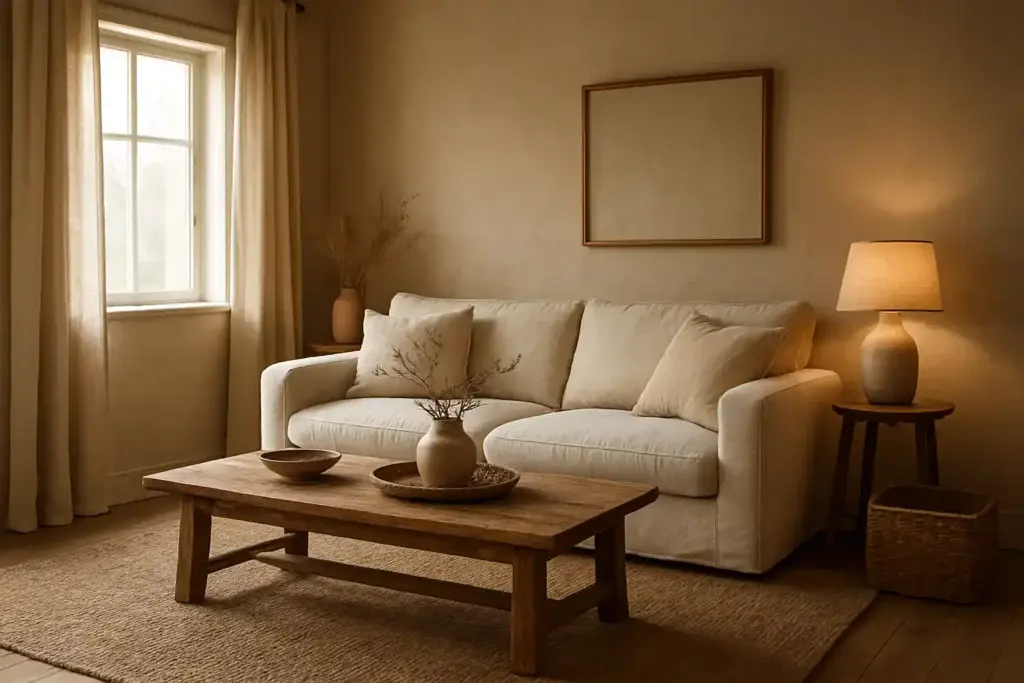
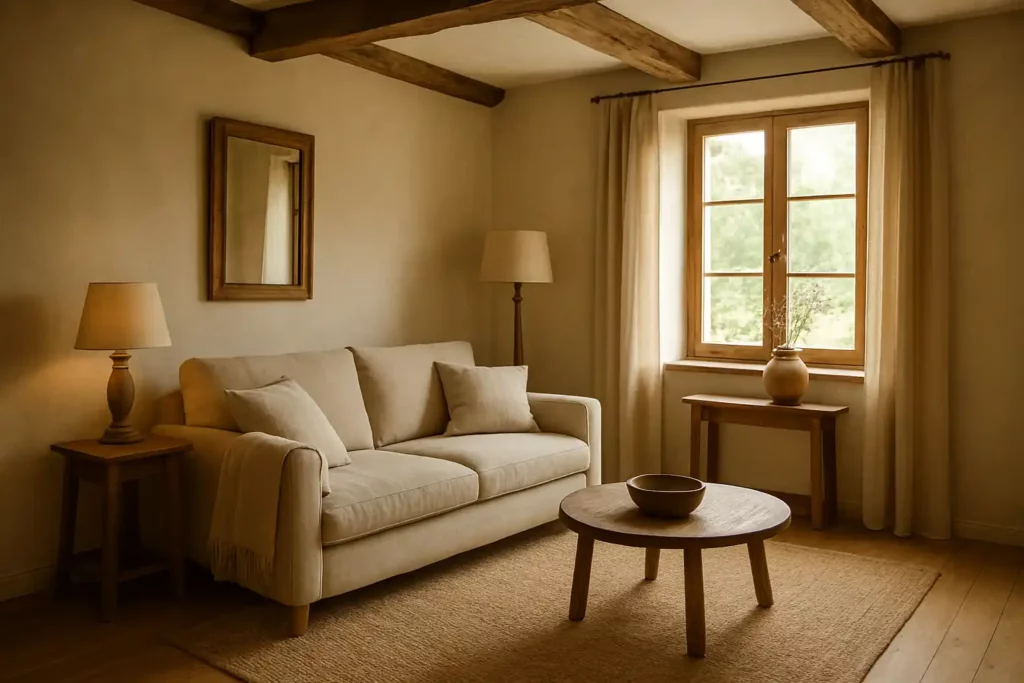
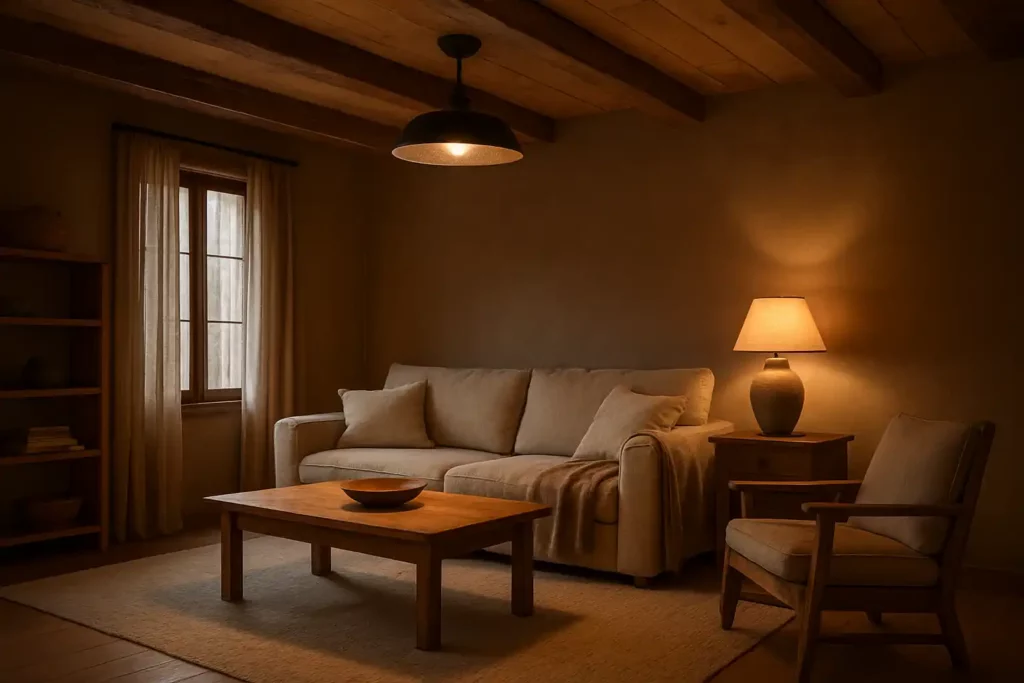
A welcoming rustic living room needs more than one handsome ceiling fixture. A mix of general, task and accent light makes the room comfortable for conversation, reading and evenings at home. These rustic living room lighting ideas cover 17 practical options, from easy lamp changes to fixtures that may need professional installation.
The look to aim for: rustic living room lighting ideas
Rustic lighting feels most at home when its materials relate to the room. Dark metal can echo fireplace tools, warm wood can pick up a beam or table, and woven or fabric shades can soften a space with stone and hard surfaces. Choose a small number of finishes; using every rustic material at once can make the room feel busy.
Think in three layers. Ambient light provides a general glow, task lighting helps with a specific activity, and accent lighting draws attention to a feature or display. The most useful rustic living room lighting ideas balance these roles rather than making every corner equally bright. Warm-toned bulbs and shades that conceal or diffuse the bulb can help reduce harsh glare.
Explore rustic living room decor for options to consider.
Before shopping, note where people sit, where daylight enters, and which areas feel dim after sunset. Check ceiling height, existing switches, outlets and junction boxes, too. These details affect what can be installed and where a lamp can stand without blocking a path.
Ideas to try: rustic living room lighting ideas
Use these 17 ideas as a menu, not a matching set. Pick options that suit your layout and routines, then repeat a finish, shape or material to make the mix feel intentional.
1. Build a layered lighting plan
Combine a central light with a floor or table lamp, then add an accent source only where useful. This creates different settings for relaxing, reading and hosting. It suits most room sizes, but check outlet locations before deciding where lamps will go.
2. Hang a wrought-iron chandelier
A simple iron chandelier can anchor a seating area and complement beams, stone or dark hardware. Choose a scale that leaves sightlines open and suits the ceiling height. In a low room, a compact flush or semi-flush fixture is usually easier to live with.
3. Choose a wood-and-metal ceiling fixture — rustic living room lighting ideas
A wood detail paired with dark metal can connect a ceiling fixture to existing furniture or architectural features. It works well as a focal point in a room with a suitable ceiling box. If the room already has prominent wood grain, keep the fixture’s wood accent modest.
4. Add wall sconces beside a feature
Sconces can frame a fireplace, brighten a doorway or free up a crowded side table. Choose shades that direct light where you want it and avoid shining into seated eyes. Hardwired models need suitable wiring; plug-in versions need a safe, tidy cord route. This is one of the rustic living room lighting ideas that makes good use of empty wall space.
5. Place a floor lamp beside a reading chair
An adjustable floor lamp brings task light close to a book or craft without changing the ceiling fixture. A fabric shade can make the light feel softer. Leave room around the base so it does not obstruct a walkway or catch on a door.
6. Try a lantern-style pendant
A lantern pendant gives a seating zone a defined focal point and suits farmhouse or cabin-inspired rooms. An open frame can look lighter than a solid shade, but exposed bulbs may cause glare. Check the fixture’s bulb requirements and choose a placement that does not interrupt conversation.
7. Add a table lamp near the sofa — rustic living room lighting ideas
A table lamp creates a convenient pool of light for an evening at home. Position it near a sofa arm or between seats, while leaving enough table space for everyday items. Keep its cord away from feet and consider a shade that hides the bulb from nearby seats.
8. Make a reading corner feel intentional
Pair a comfortable chair with a focused lamp, such as an adjustable floor light or a table lamp with a directional shade. The combination gives an unused corner a purpose. These rustic living room lighting ideas work best when the light reaches the page without shining directly into the reader’s eyes; test the position while seated.
9. Reveal brick or stone texture
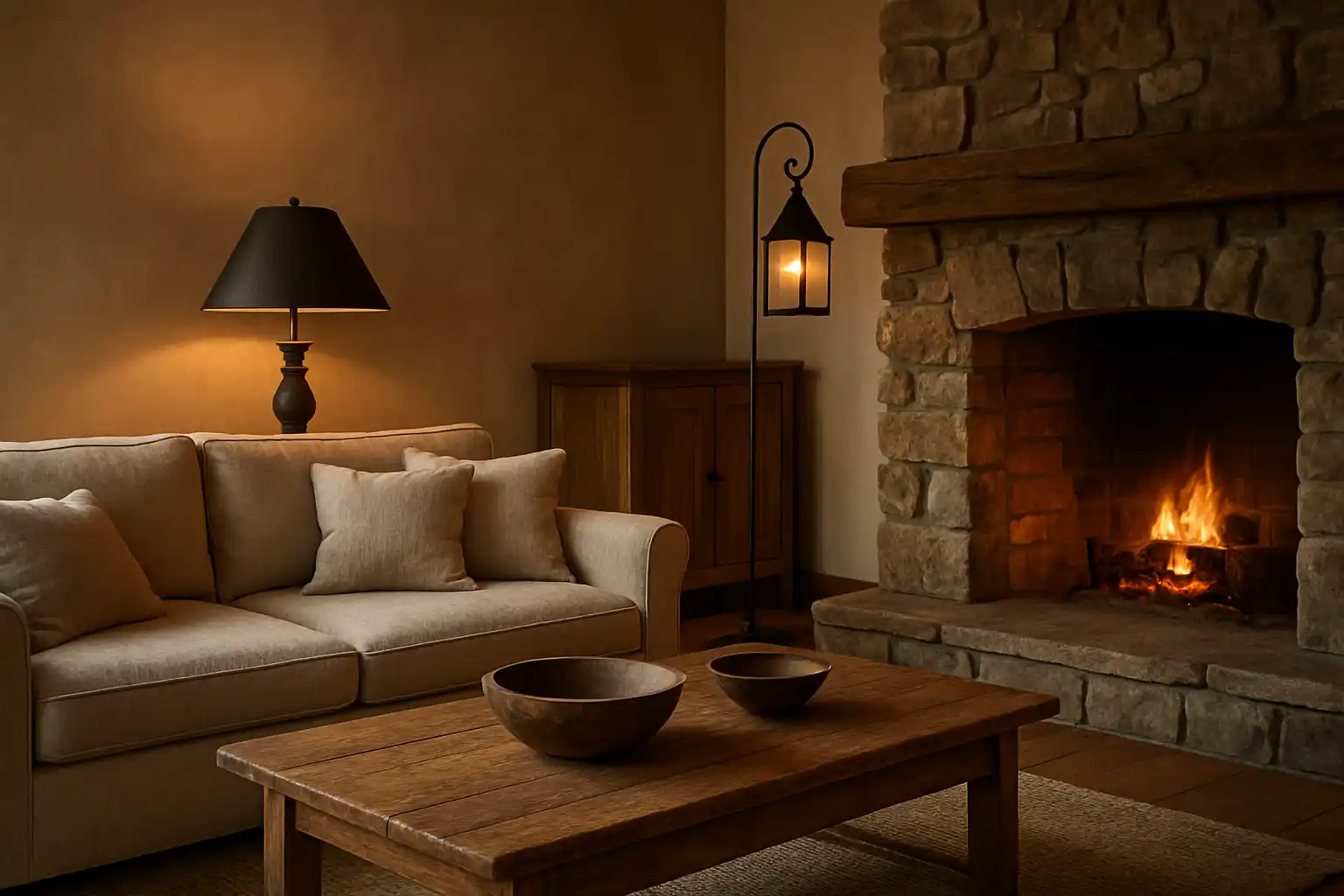
Aim a suitable accent source at a brick wall or stone fireplace to bring out its texture after dark. A nearby lamp may be enough, depending on the room. Avoid a strong beam that reflects off glass or shines toward a television or seating area.
10. Use a woven shade for natural texture
Rattan or another woven shade adds texture and may cast a gentle pattern of light. It suits rooms with linen, timber or jute details. Open weave can expose the bulb, so select a compatible low-glare option and avoid relying on it for precise reading light.
11. Soften the main light with a shade — rustic living room lighting ideas
A fabric or opaque shade can make general light feel less stark and balance an industrial-style fixture. This is useful above a gathering area where people look up or sit beneath the light. Check the shade’s size and cleaning needs, since textured surfaces can collect dust.
12. Put a compatible fixture on a dimmer
A dimmer can make a fixture more adaptable, allowing brighter light for activities and a lower level for winding down. First confirm that the switch, fixture and bulbs are compatible. Dimming cannot fix a poorly placed light, so keep task lamps close to the activities they serve.
13. Balance the room with a pair of lamps
Two related lamps on either side of a sofa or fireplace can create a calm, balanced look. They do not need to match exactly; repeating a shade shape or material is often enough. This idea needs two useful surfaces, so consider a floor lamp if a side table would crowd the room.
14. Bring light to built-in shelves
Small, discreet lights can make shelves easier to see and add a soft backdrop. Place them to illuminate objects rather than shine into the seating area. Plan for power access and keep bulbs away from anything that could be affected by heat.
15. Choose an antique-inspired focal fixture — rustic living room lighting ideas
A weathered-looking finish or aged-metal detail can add character without turning the whole room vintage. Let the fixture lead and keep nearby lights simpler. Finishes vary, so compare the design with existing hardware and wood tones before making a choice.
16. Adapt the lighting for a low ceiling
Flush mounts, compact semi-flush fixtures and wall lights can preserve headroom while still adding rustic character through shape and finish. Measure clearance, and account for doors, ceiling fans and tall household members. A long pendant may suit the look but feel awkward in a compact room.
17. Use candles or lanterns as occasional accents
Battery-operated candles or decorative lanterns can add a quiet glow to a mantel or shelf without new wiring. Treat them as accents, not the room’s main source of light. Keep open flames away from fabric and never leave a burning candle unattended.
Bringing it together
Start with the room’s main source of light, then place task and accent lighting according to how the space is used. Repeat a finish or shade material in a few places, but vary fixture heights so the room feels collected rather than overly coordinated. Rustic living room lighting ideas are most successful when decoration supports comfortable, useful light.
- Use a ceiling fixture or several lamps for general illumination.
- Place task lights beside reading seats and other activity areas.
- Use accent light selectively to highlight a feature or display.
- Check glare, switch access, outlets and walking paths before settling on positions.
Pro tip: Test a lamp in its intended spot after dark before adding another fixture. A temporary placement can reveal glare, shadows or cord problems that are easy to miss in daylight.
Key takeaways:
- Layer general, task and accent light to support different activities.
- Repeat a few rustic materials or finishes instead of matching every fixture.
- Let room size, ceiling height, wiring and outlet access guide your choices.
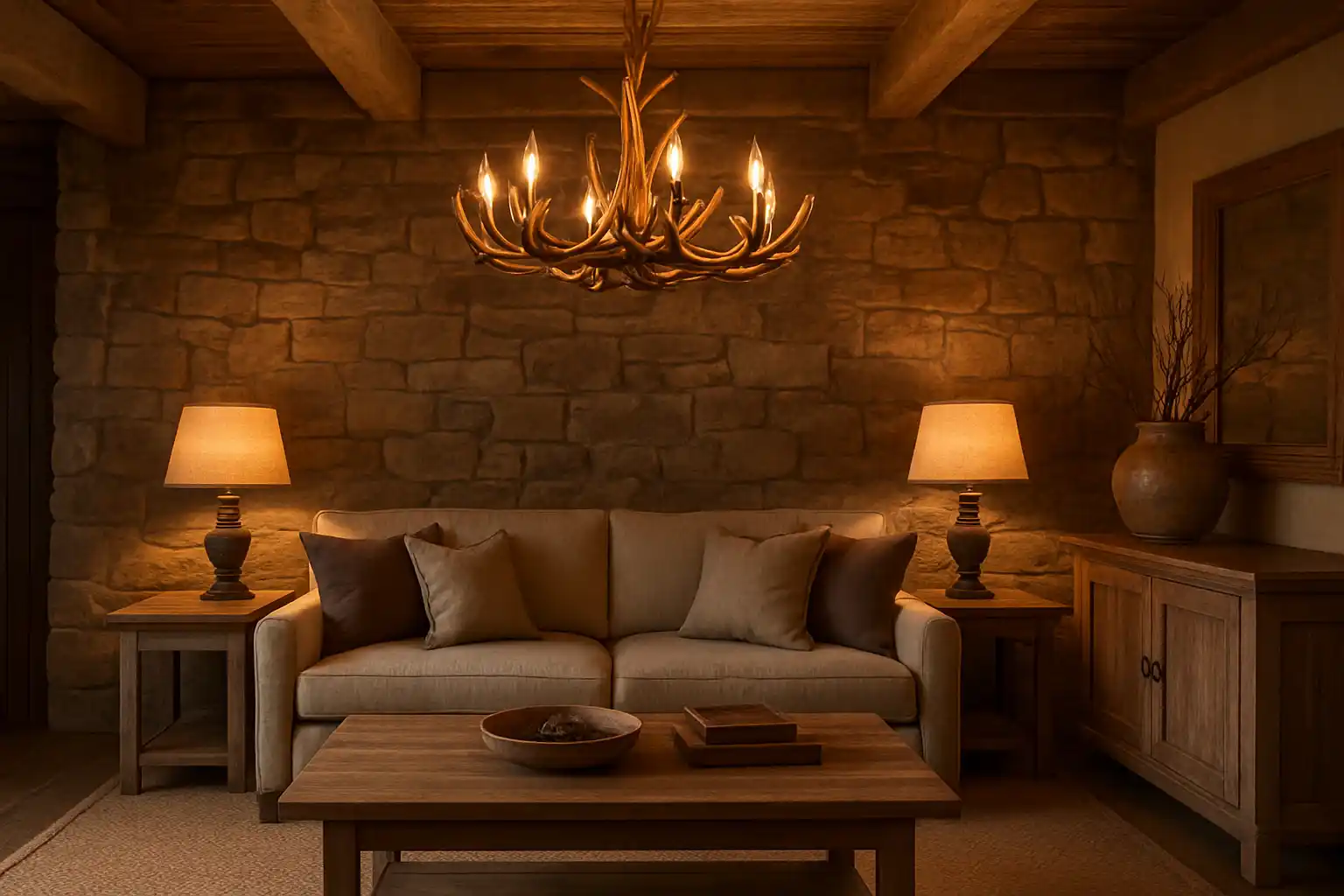
Budget and space adaptations — rustic living room lighting ideas
You can improve the room gradually. First move existing lamps to more useful positions, then add a task light or replace one fixture if coverage still feels inadequate. Rustic living room lighting ideas do not require a full makeover: a new shade or a lamp beside a chair may be a practical starting point.
In a small room, favor compact shades, wall lights or slim floor lamps that preserve clear paths and usable surfaces. In a large room, create several pools of light rather than expecting one ceiling fixture to reach every corner. Renters can focus on table and floor lamps or plug-in sconces; permanent wiring changes may require permission and qualified installation.
Set a simple priority: identify the darkest or least functional area, decide what type of light would help, then check the fixture’s size and power needs. If a project involves new wiring or a ceiling connection outside your skills, consult a qualified professional. A fixture is only a good fit if it can be installed safely and used comfortably.
Your next step
Walk through the room after sunset and note where the light feels harsh, dim or poorly placed. Make one change, then reassess before adding more. Use rustic living room lighting ideas as a flexible guide, not a strict formula; the right combination is the one that makes your home welcoming and supports how you use the space.