Affiliate disclosure: We may earn a commission when you buy through links in this post.
A modern rustic living room feels warm and welcoming without looking cluttered or overly themed. It pairs natural materials and comfortable textures with clean shapes, useful lighting, and a layout that suits everyday life. The best approach is to start with what the room needs, then add rustic character in measured layers.
For a modern rustic living room, balance matters more than any single finish. Wood, woven textiles, stone, and leather can all contribute, but they do not need to appear together. Use the 17 ideas below to add comfort, improve function, and make the style work in rooms of different sizes.
Explore rustic living room decor for options to consider.
The look to aim for in a modern rustic living room
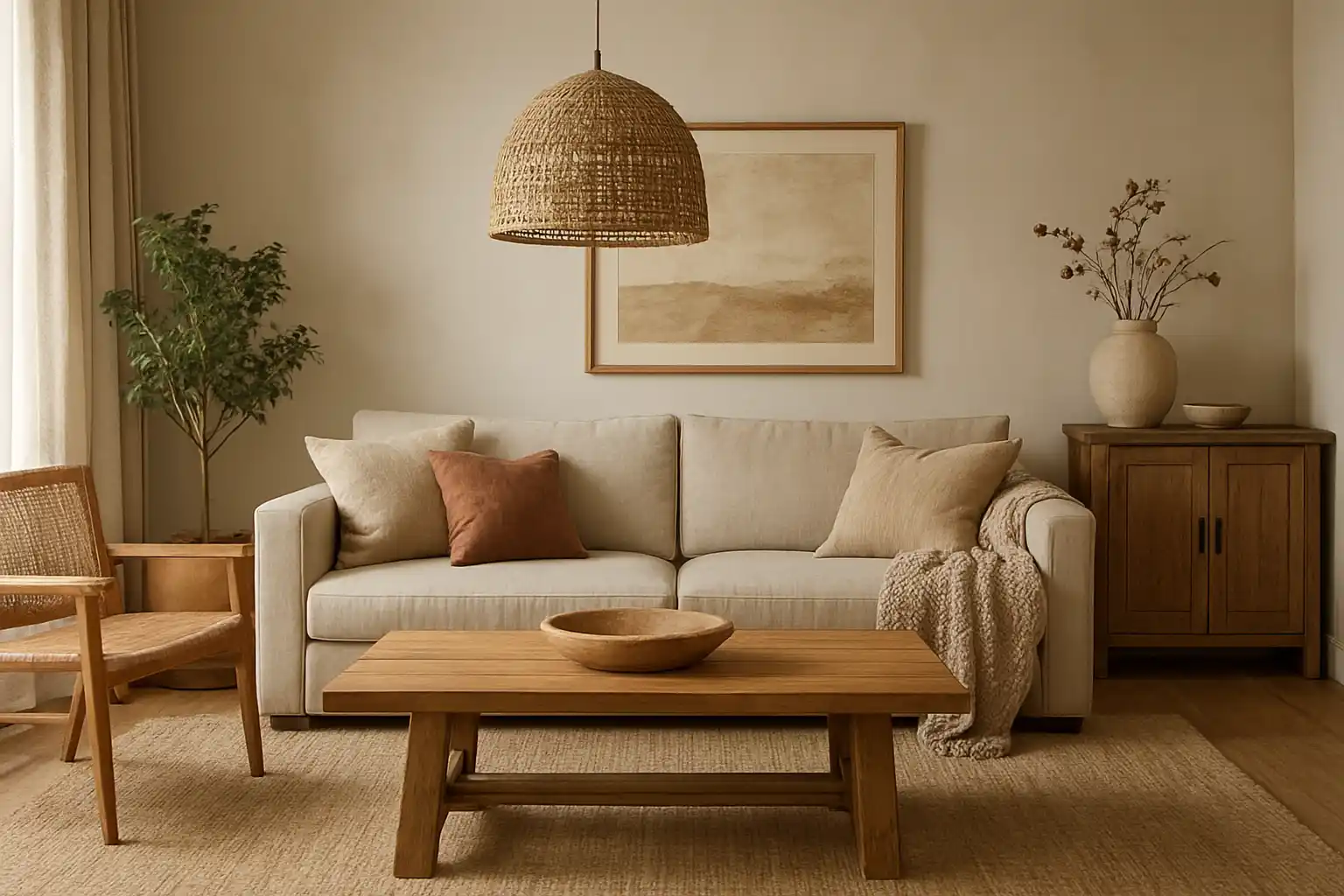
Think of rustic style as a source of texture, not a checklist of themed objects. A wood coffee table, woven rug, or stone detail can bring natural character. Simple furniture shapes and uncluttered surfaces keep the room feeling current. Choose a few materials that complement one another instead of introducing every rustic finish at once.
A restrained palette helps connect the mix. Warm white, taupe, earthy green, and charcoal work well alongside many wood tones. Use contrast with intention: a dark lamp against a pale wall or a light sofa over a textured rug gives the eye somewhere to rest. Let comfort and practical needs guide choices, too, from seating to easy-care fabrics.
Ideas to try in a modern rustic living room
Choose ideas that solve a real decorating or comfort need. Some add texture; others improve lighting, storage, or flow. Start with the changes that will make the biggest difference, and let smaller accents support them.
1. Anchor the seating area with a textured rug
A rug defines the seating zone and softens hard flooring. Try wool, jute, or a low-contrast pattern, sized so at least the front legs of the main seating can rest on it. Natural fibers may show wear or need particular care, so check cleaning requirements before choosing one for a busy room.
2. Choose a sofa with simple lines for a modern rustic living room
Clean arms and an uncomplicated silhouette provide a modern note, while warm neutral upholstery adds softness. Measure doorways and walking paths before settling on a size. Pale or delicate fabrics may need more frequent attention; a removable cover or deeper color can be a practical alternative.
3. Add a streamlined wood coffee table
Wood brings natural grain into the center of the room, and a simple shape keeps the table from feeling overly traditional. Choose a stable surface with enough space for everyday items. If circulation is tight, consider rounded corners. Strong distressing can dominate, so a restrained finish may be easier to combine with other details.
4. Layer light at different heights
A ceiling fixture, floor lamp, and table lamp give you more flexibility than one overhead source. Place a reading light near a seat and use shades that create comfortable illumination. Extra fixtures need outlets and space for their bases, so plan placement and cords before adding them.
5. Introduce a stone accent
A hearth, side table, or small decorative object can balance wood with a cooler surface. Keep the shape straightforward and repeat the stone tone elsewhere only if it helps connect the palette. In a modern rustic living room, a small stone accent is a lower-commitment way to try the look; larger pieces can be heavy and may need specific care.
6. Use woven baskets for everyday storage
Baskets make useful homes for throws, magazines, or toys while adding natural texture. Match their size to what they need to hold and where they will sit. They are not ideal for every item: use a cabinet for things that need protection and reserve baskets for easy-access storage.
7. Connect different wood tones
Several wood finishes can look collected rather than mismatched when they share a warm or cool undertone. Repeat one of the tones in a frame or tray to link larger pieces. Too many competing finishes can make a compact space feel busy, so keep the wood palette limited.
8. Soften the windows with curtains in a modern rustic living room
Textured curtains soften hard surfaces and can make a window feel more substantial. Hang the rod above the frame and let panels fall near the floor for a tailored look. In a dim room, heavy fabric may reduce daylight; lighter panels can add softness while preserving brightness.
9. Choose art that feels personal
Landscape photography, abstract work in earthy colors, or a handmade piece can add character without making the room feel themed. A simple frame lets the artwork stand out. Check the scale against the wall: small art can feel lost over a sofa, while a large piece needs breathing room.
10. Add leather in a small dose
A leather chair, ottoman, or cushion brings a smooth contrast to woven fabrics and wood. Use one piece as an accent rather than matching every seat. In a modern rustic living room, a single leather detail can add depth without taking over. Leather changes with use, and care depends on its finish, so check the maker’s guidance.
11. Style shelves with breathing room
Group a few books, ceramics, and natural objects, leaving visible gaps between them. Vary shapes and heights, then repeat a color already present in the room. Open shelves collect dust and can become cluttered, so display items you enjoy seeing or use regularly.
12. Bring in greenery
A plant adds fresh color and an organic shape to a mix of neutral materials. Choose one that suits the available light, and place it away from walkways. Larger plants need room and regular attention; a smaller plant or a few modest pots may be easier to accommodate.
13. Use a mirror to reflect light
Positioning a mirror opposite or near a window can reflect daylight and make a space feel more open. Check what it reflects before hanging it; a cluttered surface or bright screen may be distracting. Heavy mirrors need secure fixing, so consider the wall and mounting method.
14. Keep the fireplace area simple in a modern rustic living room
If the room has a fireplace, let its material and shape provide the main visual interest. Add a restrained arrangement of ceramics, art, or kindling rather than crowding the mantel. Keep decorations clear of heat and follow the fireplace’s safety guidance.
15. Add a textured throw
A woven or knitted throw makes seating more inviting and introduces texture in a small dose. Fold it over an arm or keep it in a basket where it is easy to reach. One or two are often enough; too many can hide the furniture and make the room feel untidy.
16. Pick a side table that fits the layout
A compact table beside a sofa gives a lamp, book, or drink a convenient place without adding another large piece. Try a rounded or open-base design where movement is tight. Measure what it needs to hold so the table is useful, not merely decorative.
17. Repeat one accent color
Choose a muted shade such as rust, olive, or deep blue and use it in a few places, such as a cushion, artwork, and small accessory. Repetition connects different textures. Keeping the accent limited lets natural materials remain the focus.
Bringing it together in a modern rustic living room
Before adding another object, look at the room from the doorway. Check that the largest pieces feel balanced, paths between seats are clear, and soft and hard surfaces are mixed. A modern rustic living room should work first; decorative layers can then make it warmer and more personal.
Use this checklist as you finish:
- Keep the palette to a few warm neutrals and one or two accent colors.
- Repeat natural materials without matching every wood finish.
- Leave open space on shelves and tabletops.
- Check seating, lighting, and storage against daily routines.
Pro tip: Take a photo of the room before shopping. Looking at the space on screen can make crowded corners, empty areas, and colors that need repeating easier to spot.
Key takeaways:
- Balance rustic textures with simple shapes and clear surfaces.
- Prioritize ideas that improve comfort, storage, or lighting.
- Measure furniture and check care needs before making a commitment.
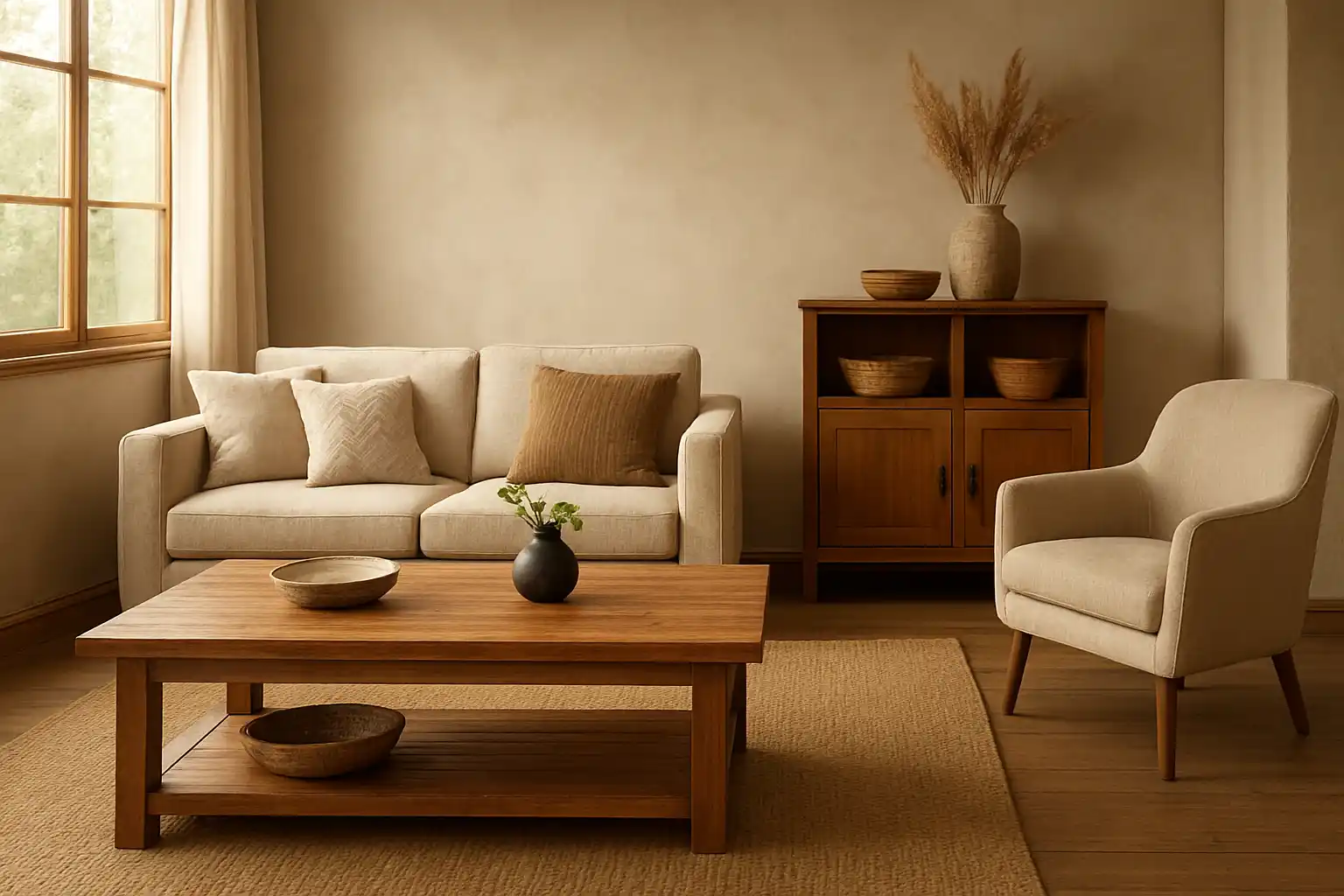
Budget and space adaptations for a modern rustic living room
You do not need to change every surface to make the room feel finished. Begin with one useful update, such as a rug, lamp, or curtains, and keep what already works. In a modern rustic living room, small additions like a wooden tray, a rearranged shelf, or a different cushion cover can refresh the space without adding another large piece.
In a small room, preserve sightlines with a leggy chair, narrow side table, or mirror placed to reflect daylight. Use vertical storage where it makes sense, but avoid filling every wall. In a larger room, arrange seating around a rug or table to create a comfortable zone rather than spreading furniture around the edges.
Set priorities before shopping: write down what the room lacks, measure the available space, and note the materials and colors you want to repeat. If an item will not improve comfort, function, or visual balance, wait before buying it. This keeps the plan flexible and reduces the chance of an awkward fit.
Your next step
Choose one idea that would make the room more comfortable or useful, then make a small plan around it. Note the measurements, colors, and materials already in the space. A modern rustic living room does not need to come together all at once: begin with a considered foundation, add a few natural textures, and leave room for everyday life.