The Look To Aim For With Rustic Bedroom Lighting
Good rustic bedroom lighting feels warm, useful, and connected to the materials in the room. Think wood, aged-looking metal, woven shades, and softly diffused light rather than a matched set of heavy fixtures. The goal is a bedroom that feels relaxed, not themed or dim.
Start with what you need the light to do. A ceiling fixture provides general illumination, bedside lamps or sconces support reading, and a small accent light can highlight a piece of art or a textured wall. Layering these sources makes the room easier to use than relying on one bright overhead light. For rustic bedroom lighting, the finish and shape matter, but placement and control matter just as much.
Choose a small group of finishes and repeat them with restraint. For example, a dark metal ceiling fixture can relate to a lamp base, while wood or woven details soften the look. A natural linen shade can keep the overall effect light, especially in a room with dark furniture or deep wall colors.
Ideas To Try With Rustic Bedroom Lighting
Use these ideas as starting points, then adjust the scale and materials to suit your room. A fixture should feel related to the bed and furniture without competing with them. When choosing rustic bedroom lighting, consider ceiling height, bedside space, and how each light will be switched on.
1. Hang A Simple Statement Pendant
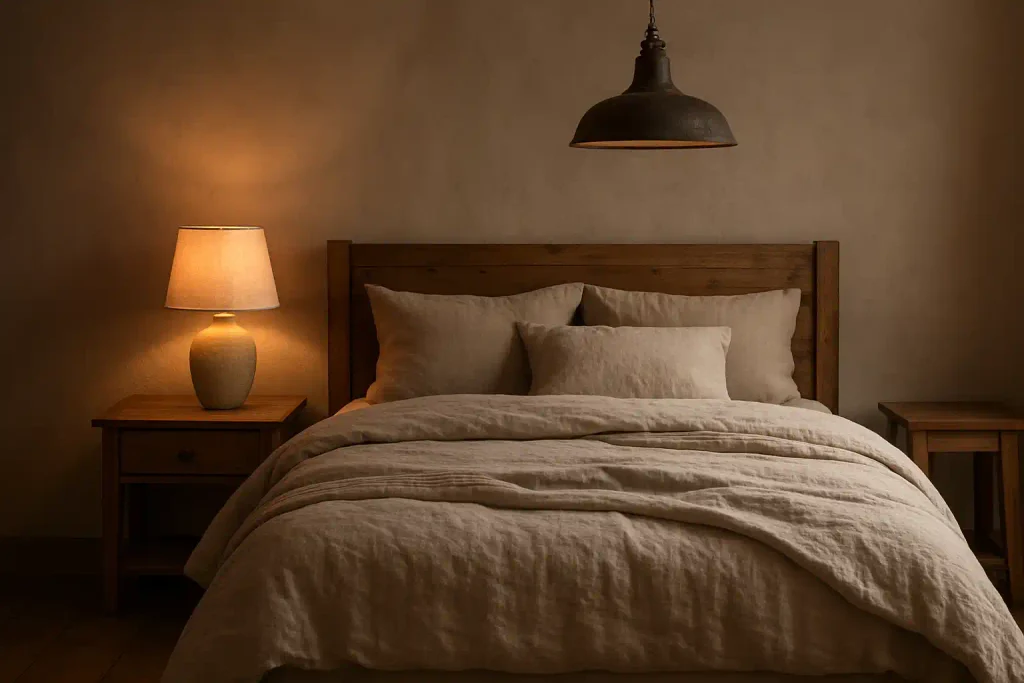
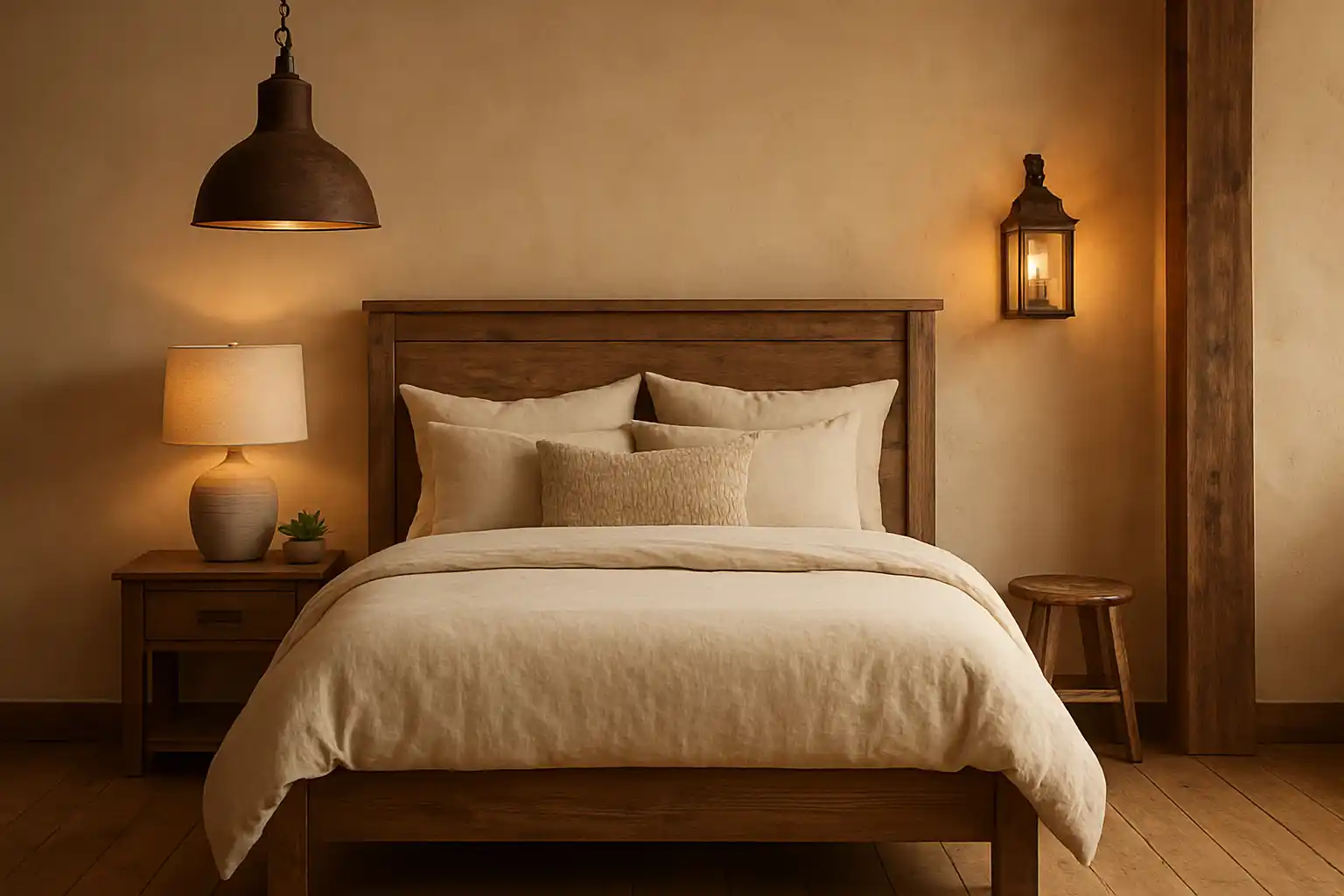
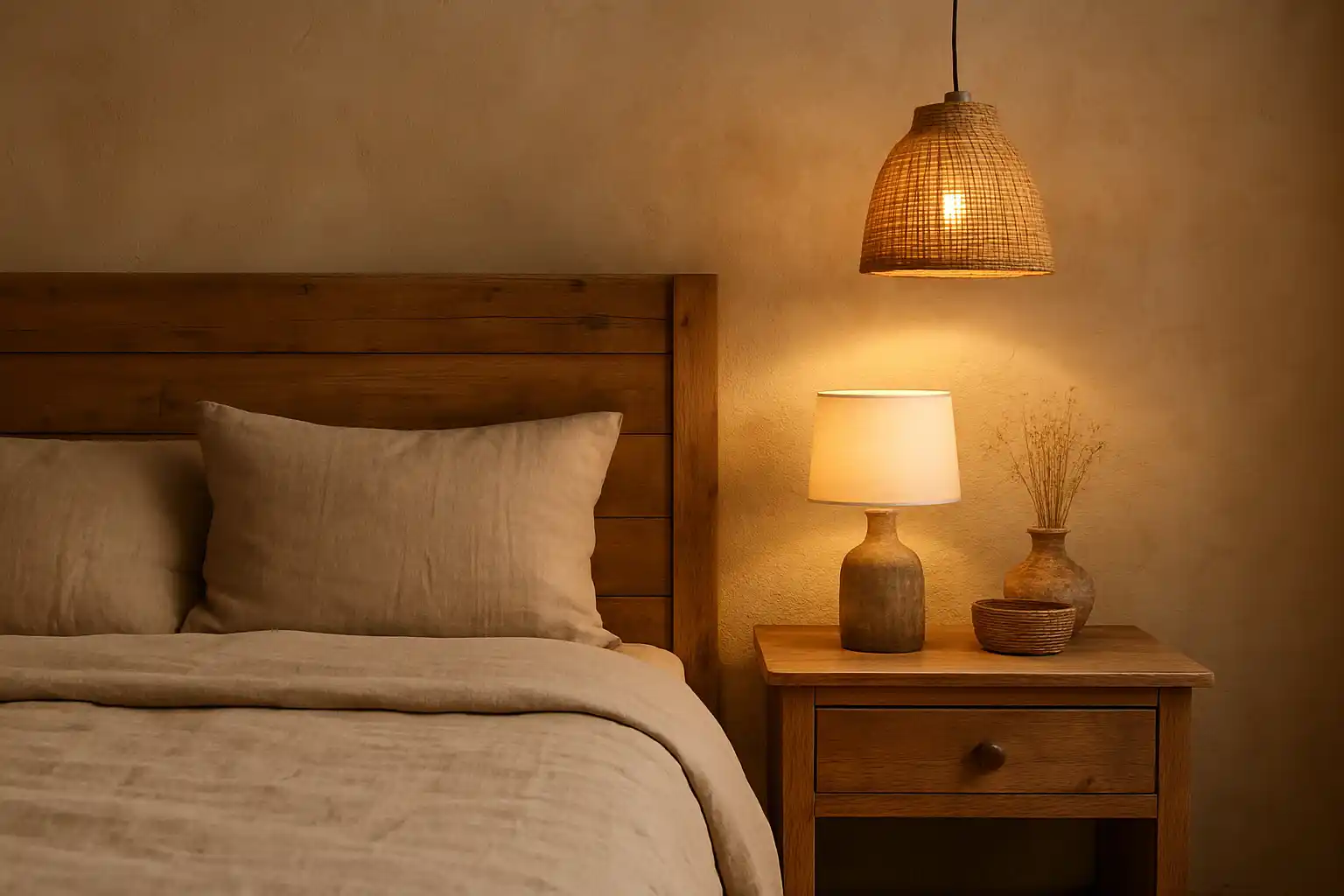
A pendant can give the bed a clear visual anchor and bring texture into a room with plain walls. Look for a straightforward silhouette with a wood, woven, or aged-metal detail. Place it where it illuminates the main area without hanging so low that it obstructs movement or sightlines. This works well when the ceiling has enough height and the fixture can be installed safely. In a low-ceiling room, a close-to-ceiling fixture is usually a more practical choice.
Pro tip: Before shopping, note where you read, get dressed, and move around at night. Those spots reveal where you need focused light and where softer ambient light is enough.
2. Pair Bedside Lamps With Natural Shades
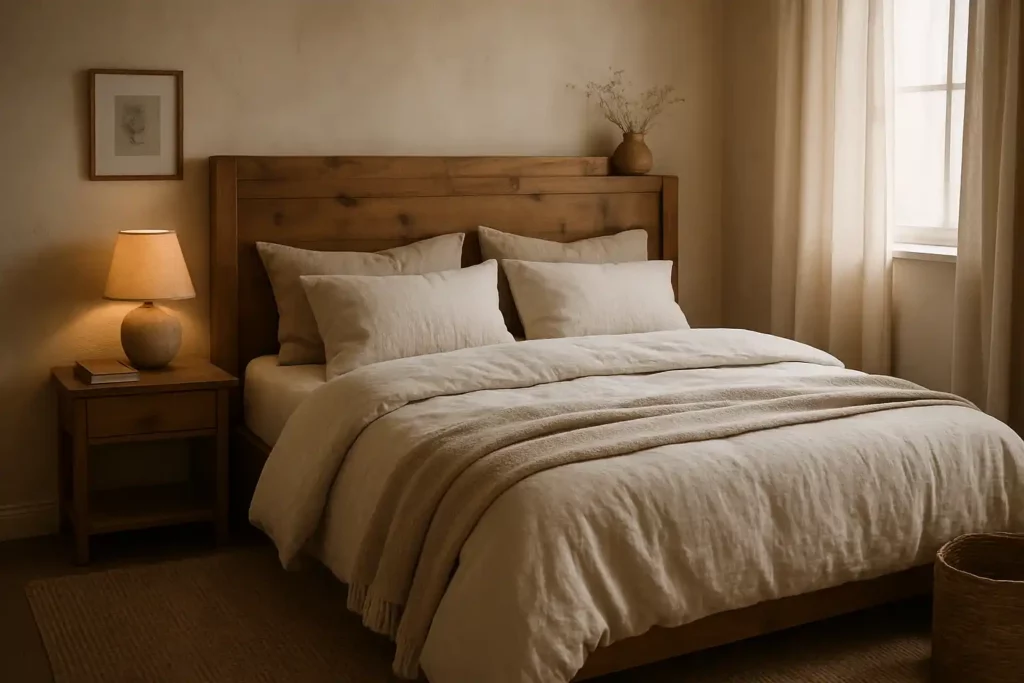
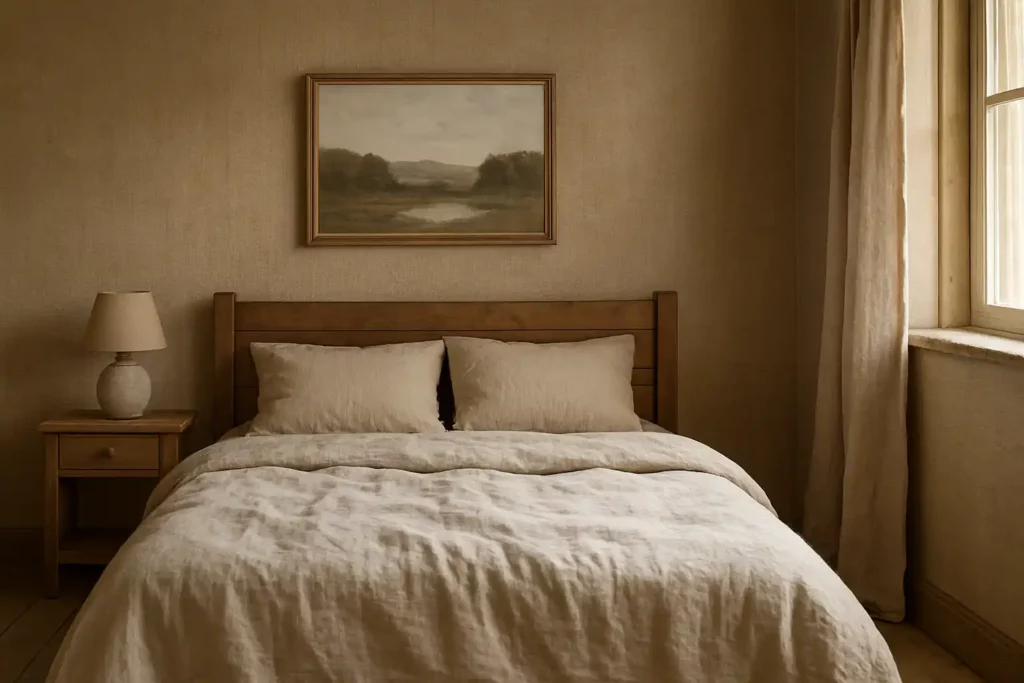
Table lamps are easy to reposition and bring light close to a book or notebook. A ceramic, wood, or dark metal base can add rustic character, while a fabric shade helps soften the light. Check that the lamp fits the nightstand and that its switch is easy to reach from bed. This is a flexible option for renters or anyone who does not want to change wiring, though a crowded nightstand may call for a wall-mounted alternative.
3. Use Wall Sconces To Free Up The Nightstand
Sconces can make a compact bedside area feel less cluttered and keep a useful reading light within reach. Choose a fixed or adjustable style according to how you use the bed, and position it so the light falls where you need it. Plug-in models can avoid in-wall wiring changes, but their cords need a tidy, safe route. Hardwired fixtures may create a cleaner appearance, though installation can require an electrician and may not suit every home.
4. Add A Lantern-Style Accent Light
A lantern-inspired fixture can echo farmhouse or cabin details without adding another large object. Use one as a bedside accent or in a corner where a little extra light is useful. Keep the design open and simple if the room already has prominent beams, patterned bedding, or ornate furniture. A decorative lantern is not a substitute for reading or general lighting, so treat it as one layer rather than the room’s only source.
Bringing It Together With Rustic Bedroom Lighting
Build a plan around three jobs: general light, task light, and accent light. You may not need three separate fixtures in a small bedroom, but identifying the jobs helps prevent dark corners and overly bright bedside areas. A dimmer on a compatible ceiling fixture can make the room more adaptable, while separate bedside controls let each person adjust light independently.
Pro tip: Compare fixture dimensions with the bed and nightstand before ordering. A quick paper outline at the intended size can help you judge whether a shade or pendant will dominate the space.
Coordinate materials rather than buying identical pieces. A black or bronze finish can repeat across a ceiling fixture and bedside lamps, while wood grain, woven texture, or soft fabric adds variation. Two lamps do not need to be twins if they share a similar height, visual weight, or shade color. This approach keeps rustic bedroom lighting cohesive without making the room feel like a showroom set.
Think about the light itself as well as the fixture. A warm-looking bulb can support a restful atmosphere, while a brighter, clearer light may be more useful near a wardrobe or dressing area. Check the bulb type and maximum wattage listed for each fixture, and choose compatible dimmable bulbs if you plan to use a dimmer. Diffusers and shades can reduce glare, but an opaque shade may direct less light into the room.
- Use a ceiling fixture for broad, general illumination.
- Put a lamp or sconce near each reading spot.
- Add an accent light only where it improves use or highlights a feature.
- Keep switches reachable and cords away from walkways.
Before finalizing the plan, consider installation and safety. Confirm that the fixture is suitable for its location, follow the manufacturer’s instructions, and use a qualified electrician for work beyond your skill or permitted scope. In a bedroom with a fan, sloped ceiling, or low clearance, check that the chosen fixture is designed for those conditions.
Budget And Space Adaptations
A considered mix can look more intentional than buying a full matching collection. Prioritize the light you use most, then add other pieces as the room’s needs become clear. If the ceiling fixture is already functional, a pair of well-positioned lamps may deliver a noticeable change without replacing every fitting. For rustic bedroom lighting on a limited budget, focus on shade texture, bulb warmth, and placement before adding decorative extras.
In a small room, choose fixtures with a modest profile and use vertical space where practical. Wall lights can leave the nightstand available for essentials, and a light-colored shade can help a dark corner feel less heavy. Avoid oversized lanterns or thick shades that crowd the bed. In a larger room, a single ceiling fixture may not reach every useful area, so supplement it with bedside and dressing-area lighting.
Renters can often make a substantial adjustment with portable lamps, plug-in sconces, and removable cord covers used according to their instructions. If you cannot change the ceiling fitting, pick a shade or lamp that relates to existing furniture and repeat its finish in small accessories. In a room with exposed beams or dark wood, balance those strong features with lighter textiles or a simple shade rather than adding more heavy-looking elements.
Key takeaways:
- Plan lighting by task: general, reading, and accent.
- Choose a few related finishes, then vary texture and shape.
- Measure the fixture and check installation requirements before buying.
- Use lamps or plug-in sconces when permanent changes are not practical.
Shopping online? Read the full dimensions, bulb requirements, mounting details, and return conditions before deciding. Look closely at finish descriptions and product images, since words such as “rustic” can describe very different styles. Check whether the fixture includes a shade, bulbs, or mounting hardware instead of assuming they are part of the package.
Your Next Step
Walk through your bedroom at the times you use it most and identify one area that feels too dim, too bright, or inconvenient. Measure that space, choose the type of light that solves the problem, and compare a short list of fixtures by size, finish, bulb needs, and installation. That simple plan makes rustic bedroom lighting easier to shop for and helps every new piece earn its place.