Affiliate disclosure: We may earn a commission when you buy through links in this post.
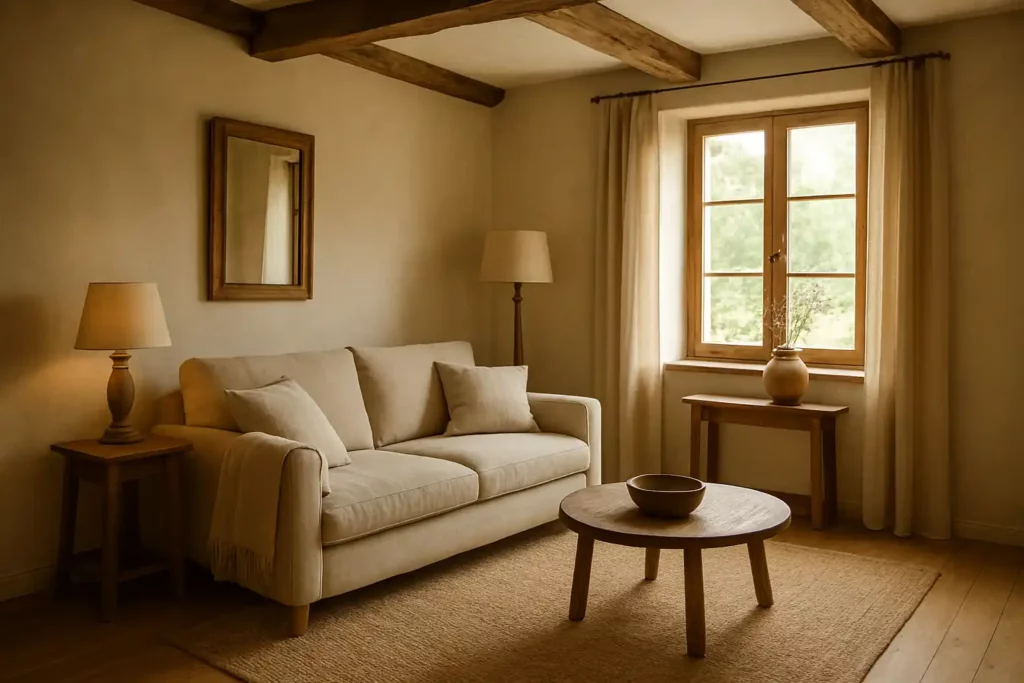
A welcoming rustic living room doesn’t need a cabin’s worth of dark wood or a collection of vintage antiques. The most successful rustic living room ideas balance natural materials, comfortable furniture, warm light, and personal details. The result can feel relaxed and grounded without looking heavy or themed.
Start with what you already have, then add a few well-chosen textures and finishes. Whether your room is spacious or compact, these practical choices can help it feel warmer, more cohesive, and easier to live in.
How rustic living room ideas start with a warm palette
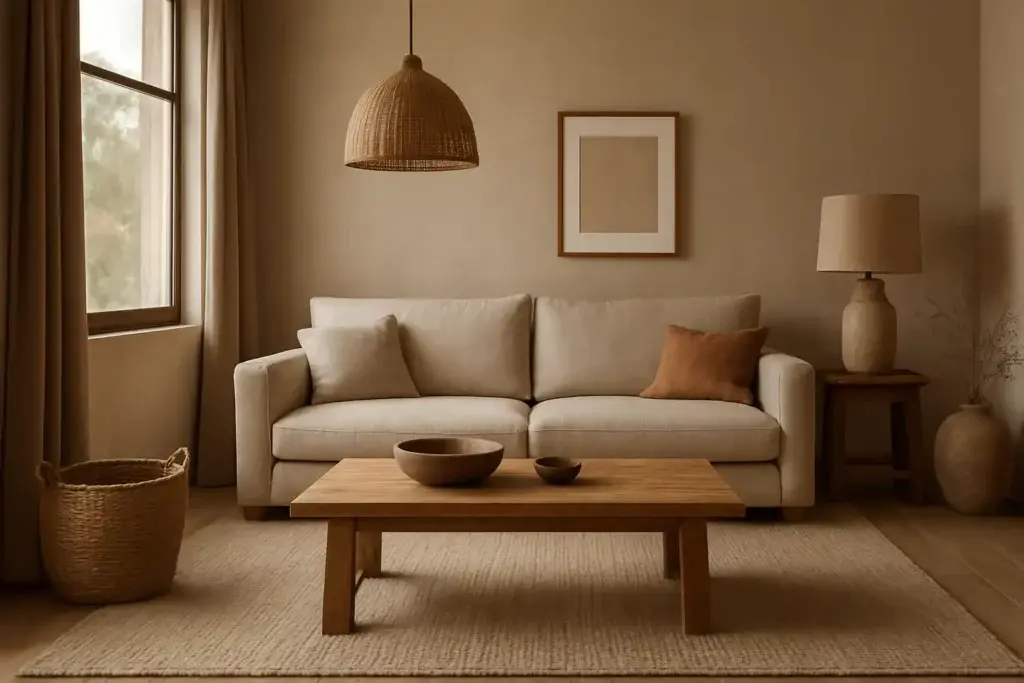
Begin with a simple color scheme drawn from natural surroundings. Cream, warm white, sand, taupe, and soft gray make an easy foundation. Add deeper shades such as forest green, rust, muted blue, or chocolate brown in smaller doses. A restrained palette lets wood grain and woven textures stand out without competing for attention.
Look at the room’s fixed features before choosing paint or accessories. A honey-colored wood floor, red brick fireplace, or stone wall already brings color into the space. Pull one or two tones from those features for cushions, a rug, or artwork. This creates a connection between the room’s permanent surfaces and the pieces you bring in.
For a room with limited natural light, use lighter wall colors and warm neutrals on larger pieces. You can still include dark wood or charcoal accents, but spread them around rather than grouping them in one heavy-looking corner. In a bright room, deeper earth tones can add definition while keeping the overall feeling calm.
Layer natural materials without making the room feel heavy
The most practical rustic living room ideas use texture to create warmth. Texture is central to rustic style, but using too many rough or dark finishes can make a living room feel crowded. Mix materials with different qualities: a smooth painted wall, visible wood grain, a soft wool throw, and a woven basket. The contrast makes each surface more noticeable while keeping the room comfortable.
Explore rustic living room decor for options to consider.
Wood can appear in furniture, trim, ceiling beams, or smaller accents. It does not all need to match. Pairing a pale oak table with a darker cabinet can look intentional when the finishes share a warm or neutral undertone. If the room already has prominent woodwork, keep additional wooden pieces simpler so the space doesn’t become visually busy.
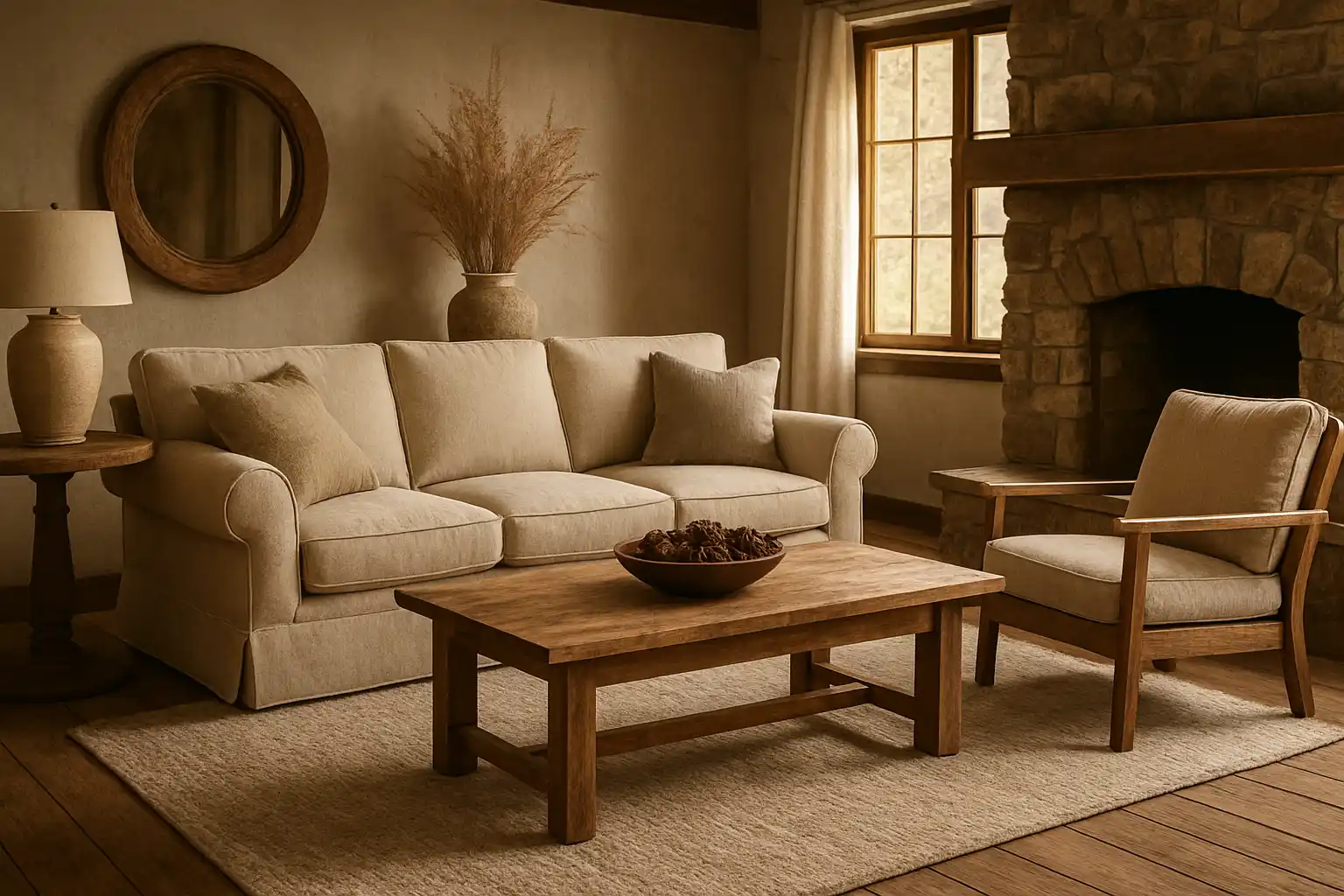
Stone, brick, leather, linen, cotton, wool, and jute can all contribute to a natural look. Choose a few, rather than trying to feature every rustic material at once. For example, combine a leather chair with a linen sofa and a wool rug, then use a wood coffee table as the visual anchor.
- Use soft textiles to balance rough wood, brick, or stone.
- Repeat one material in more than one place, such as wood in a table and picture frame.
- Leave some open surfaces so statement textures have room to stand out.
- Choose durable, easy-to-clean fabrics for furniture that gets daily use.
Choose furniture for comfort and proportion
The best rustic living room ideas put everyday comfort first. Rustic furniture should invite people to settle in, not just look appealing in a photograph. A supportive sofa, a chair with a comfortable seat, and a table within easy reach are more useful than pieces selected for appearance alone. If possible, check seat depth and arm height against the way you actually like to sit.
Scale matters as much as style. In a small room, a bulky sofa can block circulation and make every other piece feel squeezed. Consider a sofa with visible legs, a compact arm profile, or a pair of chairs instead. In a larger room, anchor the seating area with a generously sized rug and choose tables that relate to the seating rather than getting lost around it.
Mixing old and new furniture helps a rustic room feel collected rather than staged. A sturdy vintage cabinet can sit comfortably beside a clean-lined sofa. If an older piece has a finish that clashes with the rest of the room, consider changing its hardware or styling it with objects that repeat nearby colors.
Before buying a large item, measure the room and map out its footprint with painter’s tape or paper. Check doorways, walking paths, and the distance between seats. A thoughtful layout makes even simple furniture feel more welcoming.
Bring rustic living room ideas to life with lighting
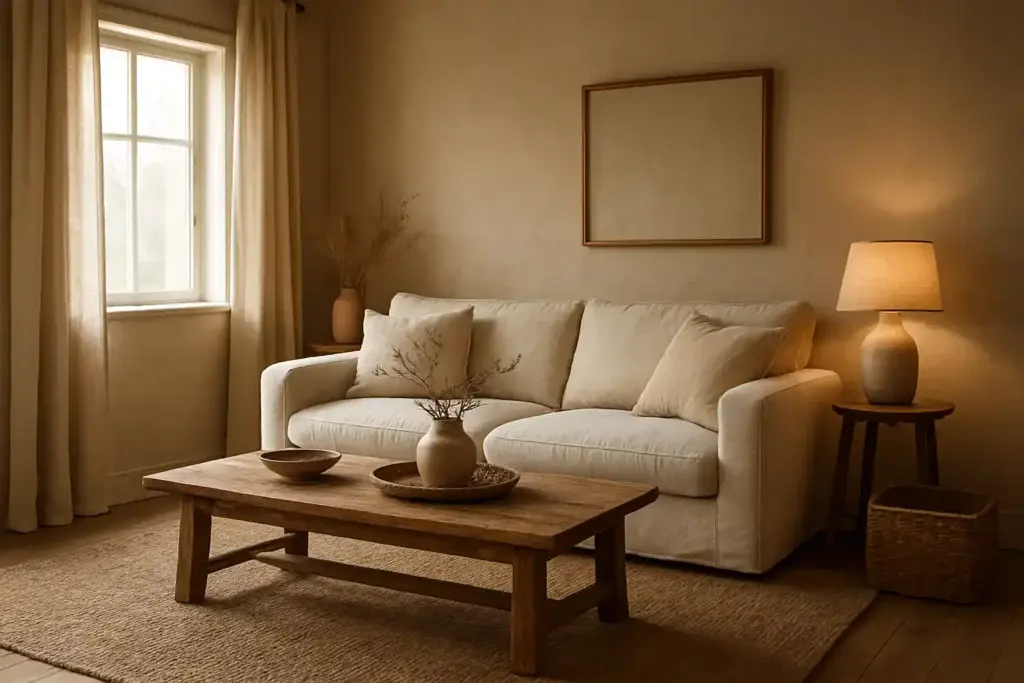
Lighting has a strong effect on whether natural materials feel cozy or gloomy. Aim for several sources at different heights rather than relying on one bright ceiling fixture. A floor lamp beside a reading chair, table lamps near the sofa, and a ceiling light for general use give you options as the room’s needs change.
Choose bulbs that create a warm, comfortable glow, and use shades that soften the light. A fabric or parchment-style shade can make a lamp feel less stark than an exposed bulb. If you have a fireplace, treat it as one source of evening atmosphere, not the room’s only light.
Make practical adjustments, too. Place reading lights where they illuminate a book without shining directly into someone’s eyes. Keep cords out of walking routes, and use dimmers where available. These small decisions let rustic living room ideas feel inviting during quiet evenings as well as bright daytime hours.
Add color and pattern with a light touch
Patterns can bring personality to a rustic room, but a mix of too many competing prints can make it feel restless. Choose one pattern to lead, such as a striped rug, a plaid throw, or a botanical cushion. Then add smaller patterns that share a color or have a quieter scale.
Earthy colors are a natural fit, but rustic style is not limited to brown and beige. Muted green, dusty blue, ochre, and soft terracotta work well alongside wood and natural fibers. Repeat an accent color in a few places—for example, a cushion, a vase, and a piece of art—so it feels deliberate.
When in doubt, keep large surfaces calm and use replaceable accessories for stronger color. Cushions, blankets, and small decorative pieces are easier to change than a sofa or a painted feature wall. This approach also lets the room shift with the seasons without requiring a full redesign.
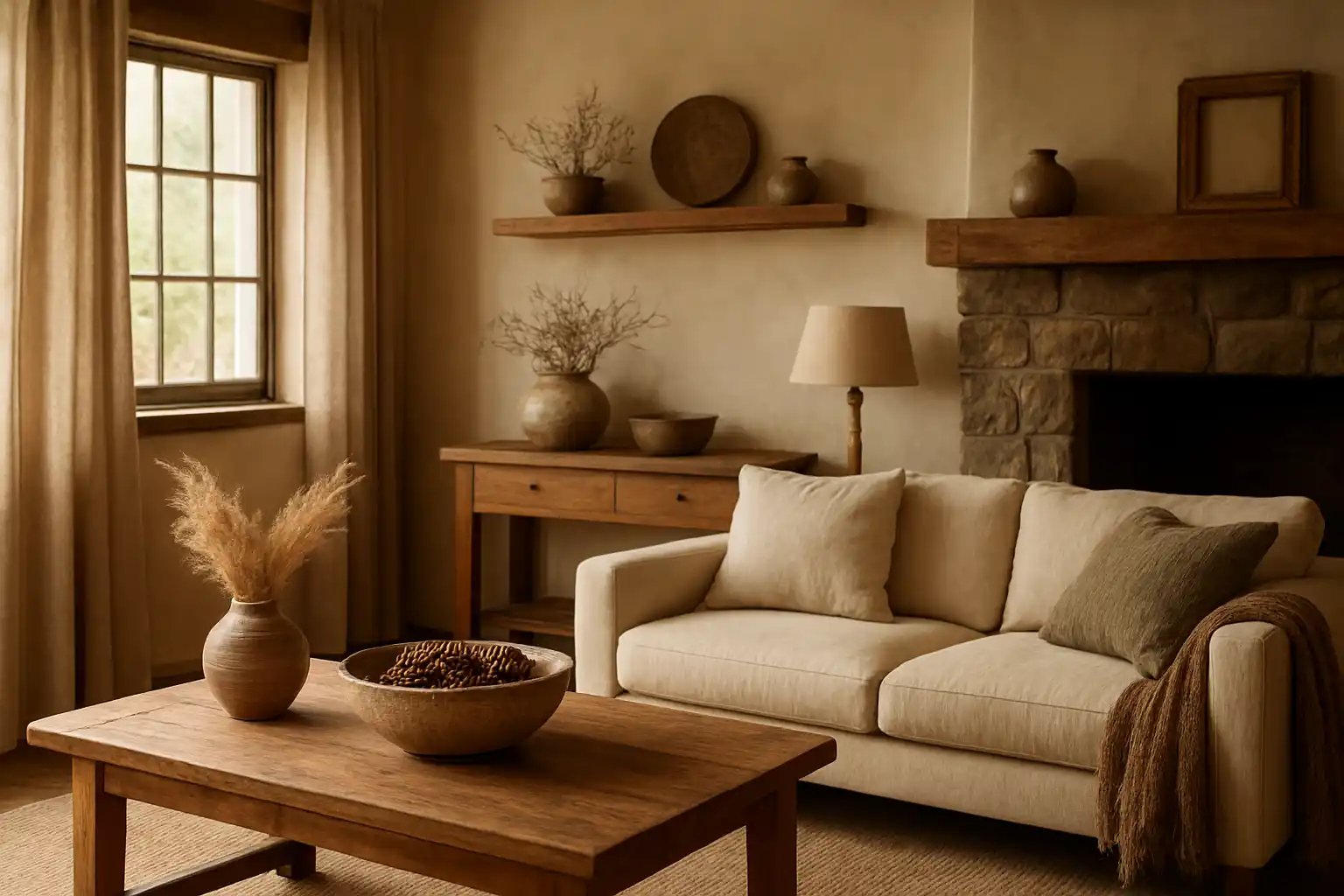
Style shelves and surfaces with intention
Decorative objects give a living room character, especially when they have a personal or useful purpose. Display a few books, a handmade bowl, framed artwork, or a plant rather than filling every shelf. Vary the height and shape of objects, and leave gaps so the arrangement can breathe.
On a coffee table, keep the arrangement low enough for conversation and simple enough to move when you need the surface. A small tray can gather coasters and a candle, while a book or low vase adds a little height. Avoid fragile pieces where they could be easily knocked over by children, pets, or everyday activity.
Plants bring a fresh note to wood-heavy rooms. Choose varieties that suit the available light and the care you can provide. If a live plant isn’t practical, a branch in a sturdy vase or a naturally textured arrangement can offer a similar visual contrast without adding much upkeep.
Make rustic living room ideas work in any home
Rustic style can adapt to apartments, modern houses, and rooms without exposed beams or a fireplace. You don’t need architectural features to create a sense of warmth. A natural-fiber rug, a wood-framed mirror, and a soft throw can introduce the look without changing the structure of the room.
In a rental, focus on movable pieces and reversible updates: lamps, textiles, furniture, baskets, and art. If you can’t paint, use color through accessories and choose a rug that defines the seating area. In a contemporary home, balance rustic materials with simple silhouettes and uncluttered surfaces for a look that feels current rather than themed.
For a small living room, prioritize clear walkways and furniture that serves more than one purpose. An ottoman with storage, a narrow console, or nesting tables can add function without taking over. In any room, edit before adding more. Removing a few items may reveal that the space needs better lighting or a stronger furniture layout, not extra decoration.
A simple plan to pull the room together
If you’re unsure where to begin, work through the room in a clear order. This keeps purchases focused and helps prevent a collection of mismatched accents.
- Identify the anchors. Note the floor, walls, fireplace, and largest furniture pieces, along with the colors and materials they already bring in.
- Set the palette. Choose a light or neutral base and one or two supporting colors that suit the room’s fixed features.
- Plan the layout. Measure furniture, preserve comfortable walking paths, and arrange seats to support conversation or the room’s main activity.
- Add texture and light. Introduce a few contrasting materials, then place lamps where people read, gather, or relax.
- Finish with personal details. Add art, books, plants, or meaningful objects, then remove anything that feels like clutter.
This sequence works whether you are refreshing a single corner or furnishing the entire room. It also helps keep rustic living room ideas practical: each addition has a role in comfort, function, or atmosphere.
A warm rustic living room comes from thoughtful choices, not a long shopping list. Begin with a comfortable layout, build a balanced palette, and layer natural materials with soft light and personal details. With those foundations in place, rustic living room ideas can make your home feel welcoming in a way that suits how you live.