Affiliate disclosure: We may earn a commission when you buy through links in this post.
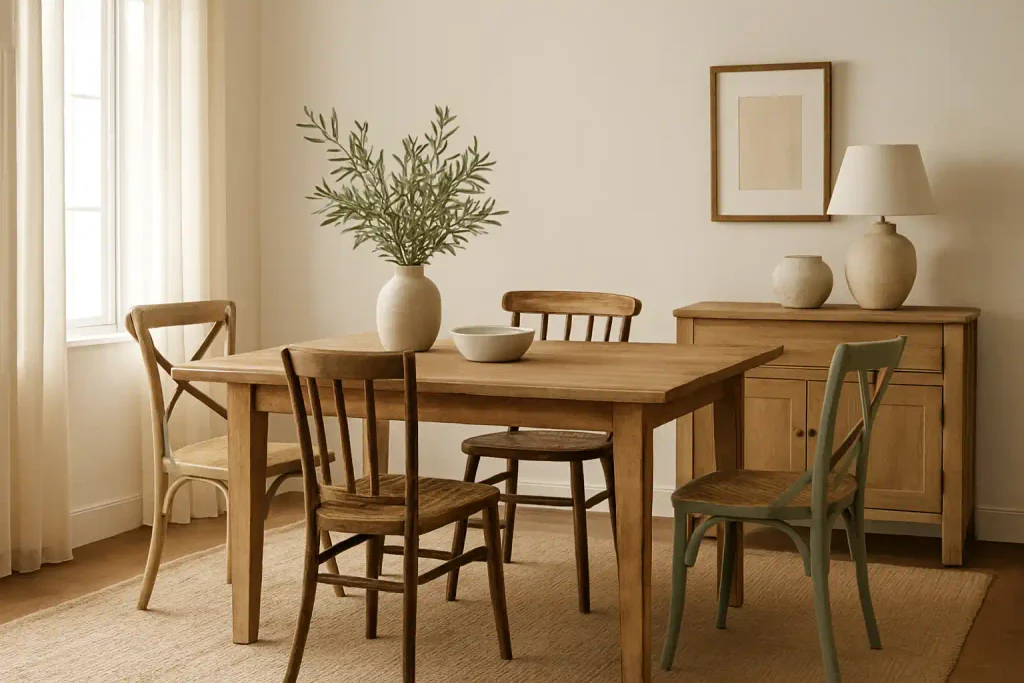
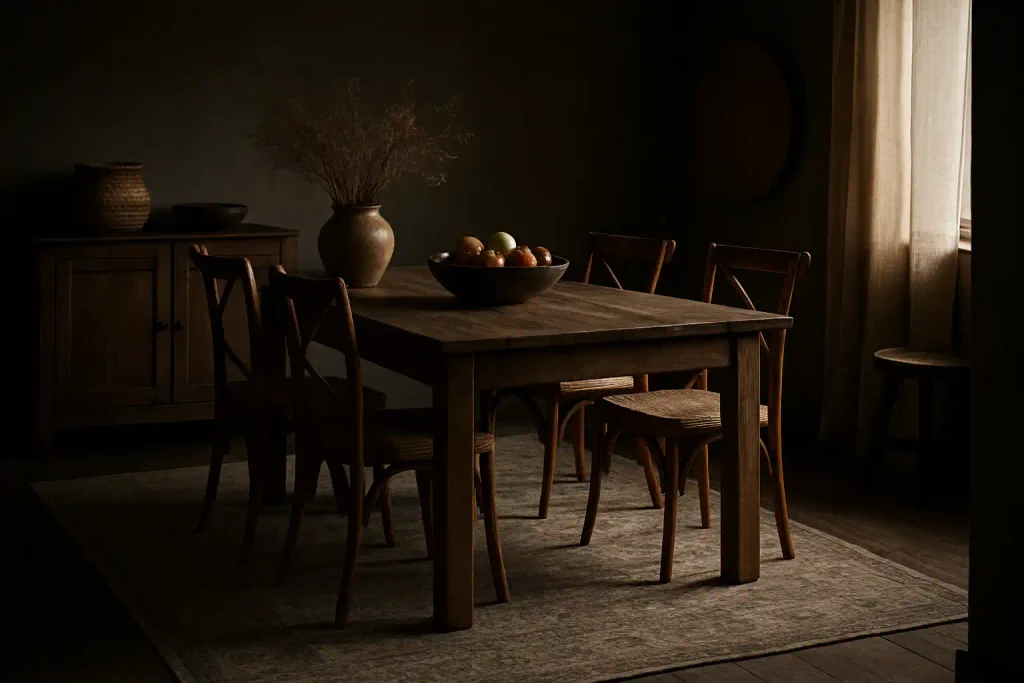
A well-chosen rug can make a dining room feel warmer, define the table area, and soften the sound of chairs moving across a hard floor. The best rustic dining room rug ideas balance texture and color with practical needs, especially crumbs, spills, and chairs that slide in and out every day.
Start with the table and the room’s overall palette, then choose a rug that leaves enough space for chairs to remain on it when pulled back. Natural-looking fibers, muted patterns, and earthy colors suit rustic spaces, but there is no single right style. These ideas can help you find a look that feels welcoming and works for your household.
The Look To Aim For
Rustic style often combines tactile materials, relaxed colors, and signs of natural character. Your rug can echo wood grain, stone, linen, or woven baskets without matching every surface. The most useful rustic dining room rug ideas add contrast as well as warmth: a textured neutral rug can ground a dark table, while a faded pattern can bring definition to a pale room.
Before choosing a design, measure the table and the space around it. Aim for a rug large enough that chairs stay on the rug when people sit down or stand up. Also consider how the rug will meet nearby flooring, whether a door needs clearance, and how easy the material will be to clean.
Ideas To Try: Rustic Dining Room Rug Ideas
1. Rustic Dining Room Rug Ideas With Natural Jute Texture
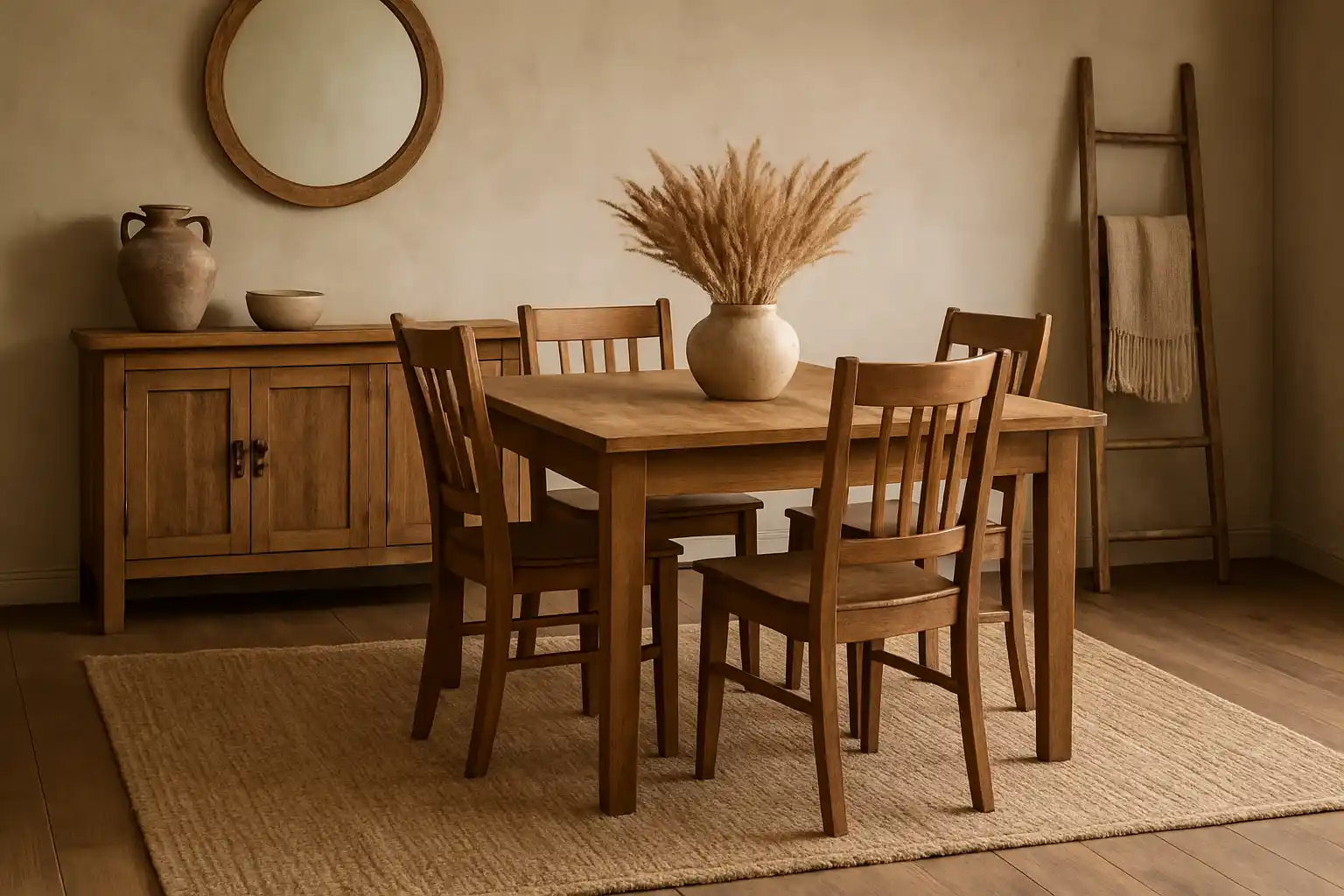
Jute brings a relaxed, woven look that pairs easily with timber tables and simple pottery. Try it in a room where the rug is mainly there to define the dining zone. Its nubby texture can be less comfortable underfoot and may be harder to clean after wet spills, so consider your dining habits first.
2. Choose A Flatweave For Easy Chair Movement
A low-profile flatweave lets dining chairs slide more smoothly than a thick, plush pile. Look for a reversible style if you want to rotate it as wear appears. This is a practical fit for a busy family dining area, though a thin rug may benefit from a grippy pad underneath.
3. Rustic Dining Room Rug Ideas In A Faded Persian Pattern
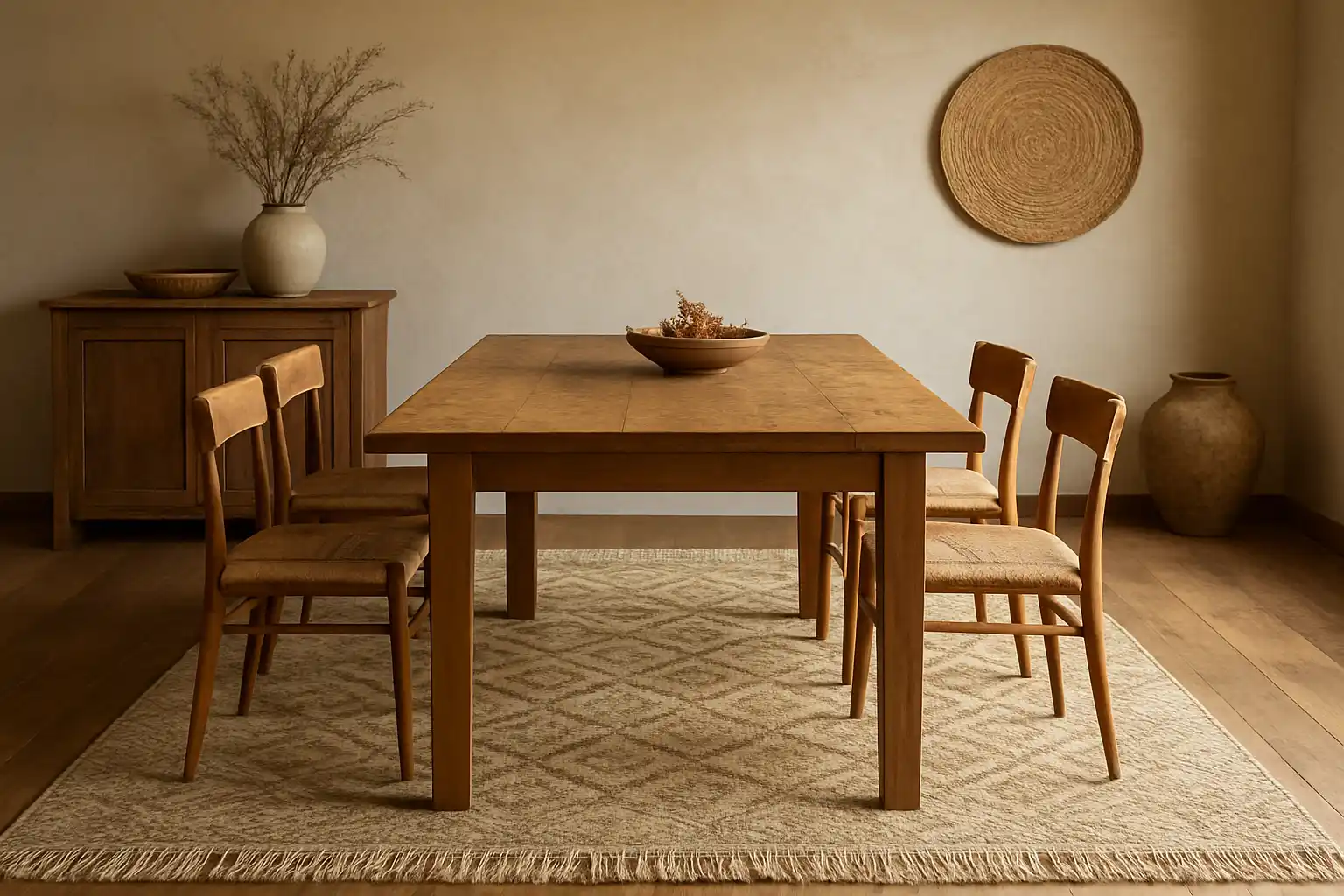
A softly distressed motif adds color and a collected-over-time feel without making the room look overly formal. Choose a pattern with several muted tones so it can connect the table, chairs, and nearby decor. It suits a plain wood floor, but a highly detailed design may feel busy in a small room.
Pro tip: Use painter’s tape to outline the rug’s intended footprint before buying. Pull out each chair and check that its back legs do not catch on the edge.
4. Repeat A Warm Earthy Color
Bring one rug color into another part of the room, such as a clay-colored cushion, a brown ceramic vase, or a natural-toned lampshade. Repeating a shade helps the room feel considered without requiring a matching set. Keep the other accents restrained if the rug already has a strong pattern.
5. Rustic Dining Room Rug Ideas With A Subtle Stripe
A narrow stripe can add structure while keeping the overall look calm. Place the stripes along the table’s longer direction to reinforce the room’s shape, or use them to make a compact dining nook feel more defined. A stripe can show crumbs more clearly than a multicolored pattern, so choose its contrast level thoughtfully.
6. Try A Round Rug Under A Round Table
A round rug can echo a circular tabletop and make a breakfast corner feel cohesive. Make sure its diameter extends far enough beyond the table for chairs to move without slipping off the edge. This shape can be awkward in a long, narrow room, where a rectangular rug may use the space better.
7. Use A Natural-Looking Wool Rug
Wool can offer a soft, substantial feel and comes in both simple and patterned designs. A low-pile option is usually easier to manage around dining chairs than a deep pile. It can be a comfortable choice for a frequently used room, but check the maker’s cleaning instructions for your specific rug.
8. Rustic Dining Room Rug Ideas In A Deep, Grounding Color
Charcoal, tobacco brown, olive, or muted rust can anchor a light dining room and make a pale wood table stand out. A deeper shade may disguise everyday marks better than a very light solid, although it can make a small or dim room feel heavier. Balance it with lighter walls or textiles.
9. Layer A Small Accent Rug In A Separate Nook
If the dining table shares an open-plan room, a smaller rug near a sideboard or reading corner can help distinguish that area. Keep it outside the chairs’ path so the dining rug remains the main anchor. Too many overlapping patterns can make the space feel cluttered, so repeat colors across both rugs.
10. Pick A Border To Frame The Table
A border gives a rug a clear outline and can make a dining setup feel neatly defined. It works especially well when the table and chairs have simple shapes. Make sure the border does not visually compete with detailed chair backs or a busy tabletop, and select a size that keeps it visible around the furniture.
Pro tip: Check the care label and cleaning guidance before choosing a fiber. A beautiful rug is less useful if its care requirements do not suit the way you eat and entertain.
11. Choose A Washable Style For Everyday Meals
For households with frequent spills, a washable rug or a rug with a removable cover may be easier to maintain. Check its actual washing and drying directions, along with the finished size and thickness. These rustic dining room rug ideas put cleanup first, but a washable option still needs a secure, suitable pad.
12. Rustic Dining Room Rug Ideas With A Worn-In Look
A gently distressed pattern can suit reclaimed wood, vintage-inspired lighting, and mixed dining chairs. It adds visual texture without requiring the rug itself to be a true antique. Look for a design that feels softly varied rather than artificially damaged, and check that its colors work with your fixed finishes.
13. Match The Rug’s Scale To The Table
A large table usually needs a larger pattern or a mostly open design to avoid looking crowded. A small table can be overwhelmed by oversized motifs, so consider a finer pattern or a restrained texture. In either case, leave enough visible rug around the furniture to create a comfortable border.
14. Add A Rug Pad For Stability
A properly sized pad helps limit slipping and can reduce wear where the rug meets the floor. Choose one suitable for both your flooring and rug material, and trim it so it stays hidden beneath the rug’s edges. A pad adds a small setup step, but it can make daily chair movement more manageable.
15. Use A Muted Check For Cottage Character
A subdued check pattern brings a familiar, relaxed feel that works with painted chairs or a farmhouse-style table. Keep the colors soft if the room already has strong wood grain or patterned curtains. A high-contrast check can dominate a small dining area, so test a sample or visual mockup if possible.
16. Let The Rug Contrast With The Floor
On a dark floor, a lighter rug can clarify the dining area; on a pale floor, a deeper or more textured rug can give the table definition. Aim for enough contrast to see the rug’s outline without creating a harsh divide. This approach is useful in open-plan spaces, where the rug can mark a zone.
17. Keep The Pattern Simple In A Busy Room
If your room already includes exposed beams, patterned upholstery, or expressive artwork, a solid or subtly textured rug can provide visual rest. Choose a shade that relates to one existing element, then let the room’s materials supply the character. A plain rug may show stains more readily, so factor in care needs.
Bringing It Together With Rustic Dining Room Rug Ideas
Once you have a shortlist, compare the rug with the table, floor, and chair legs together rather than judging it alone. Samples are helpful if available, especially because daylight and warm bulbs can change how colors appear. The strongest rustic dining room rug ideas often connect two or three details, such as a rug’s rust tone, the table’s warm finish, and a woven pendant.
Prioritize function before finishing touches. Confirm the overall dimensions, check the pile height, and make sure the rug will not block a door or create a raised edge in a walking route. If you are deciding between two styles, a quieter pattern is often easier to live with when other room elements already attract attention.
Key takeaways:
- Measure for chair movement, not just the tabletop.
- Choose a texture, color, and pattern that suit both the room and your cleaning routine.
- Use a suitable rug pad and check doors, walkways, and floor compatibility.
Budget And Space Adaptations
In a small dining room, keep the rug proportionate to the table and preserve a clear path around it. A low-profile weave can reduce visual bulk, while a softly patterned design can hide small marks without making the floor feel crowded. For a tight budget, a durable, easy-care rug that fits correctly is a better starting point than an elaborate style that is too small.
For a larger room or open-plan layout, use the rug to distinguish the dining area from nearby seating. You do not need to cover the entire floor. These rustic dining room rug ideas work best when the rug anchors the table but leaves a visible border of flooring around the arrangement. If a single large rug is impractical, keep the dining chairs fully within the dining zone rather than placing small rugs in their travel path.
Your Next Step
Measure your table, mark the rug footprint, and decide which matters most: easy chair movement, a natural texture, a forgiving pattern, or simple cleanup. Then narrow the options by color and care requirements. With these rustic dining room rug ideas as a guide, you can choose a rug that makes the dining area feel warm, grounded, and ready for everyday use.
Looking for options for this space? Explore Rustic dining room decor and choose what suits your needs.