
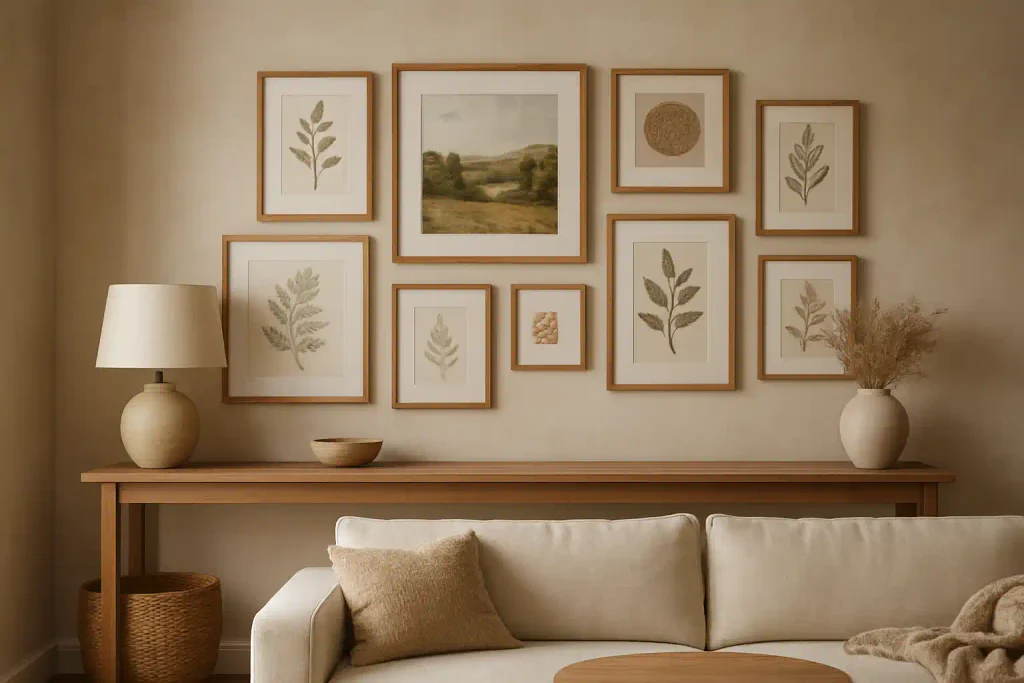
A gallery wall can add warmth and personality without asking you to redecorate the whole room. The best rustic gallery wall ideas combine natural textures, art with meaning, and a layout that feels right for the space. Weathered wood, botanical prints, family photographs, and a little open wall can work together without looking like a matching set.
Start by choosing a mood and a few colors or materials to repeat. Then build around pieces you already enjoy, rather than trying to fill every inch. The 17 ideas below offer different ways to create a relaxed display, whether you have a broad living room wall or just a narrow stretch in the hallway.
The look to aim for with rustic gallery wall ideas
Rustic style is less about covering everything in distressed finishes and more about mixing natural materials with a collected, comfortable arrangement. Pair framed art with a tactile accent, such as a woven piece, small mirror, or simple wood object. Warm neutrals, muted greens, charcoal, and soft white can help varied finds feel related.
Take cues from the room. A display near a stone fireplace might echo its gray and brown tones, while a bright bedroom could suit pale wood and botanical prints. Repeat one or two colors or finishes, but let individual pieces keep their character. Leaving some wall visible helps the arrangement feel intentional, not crowded.
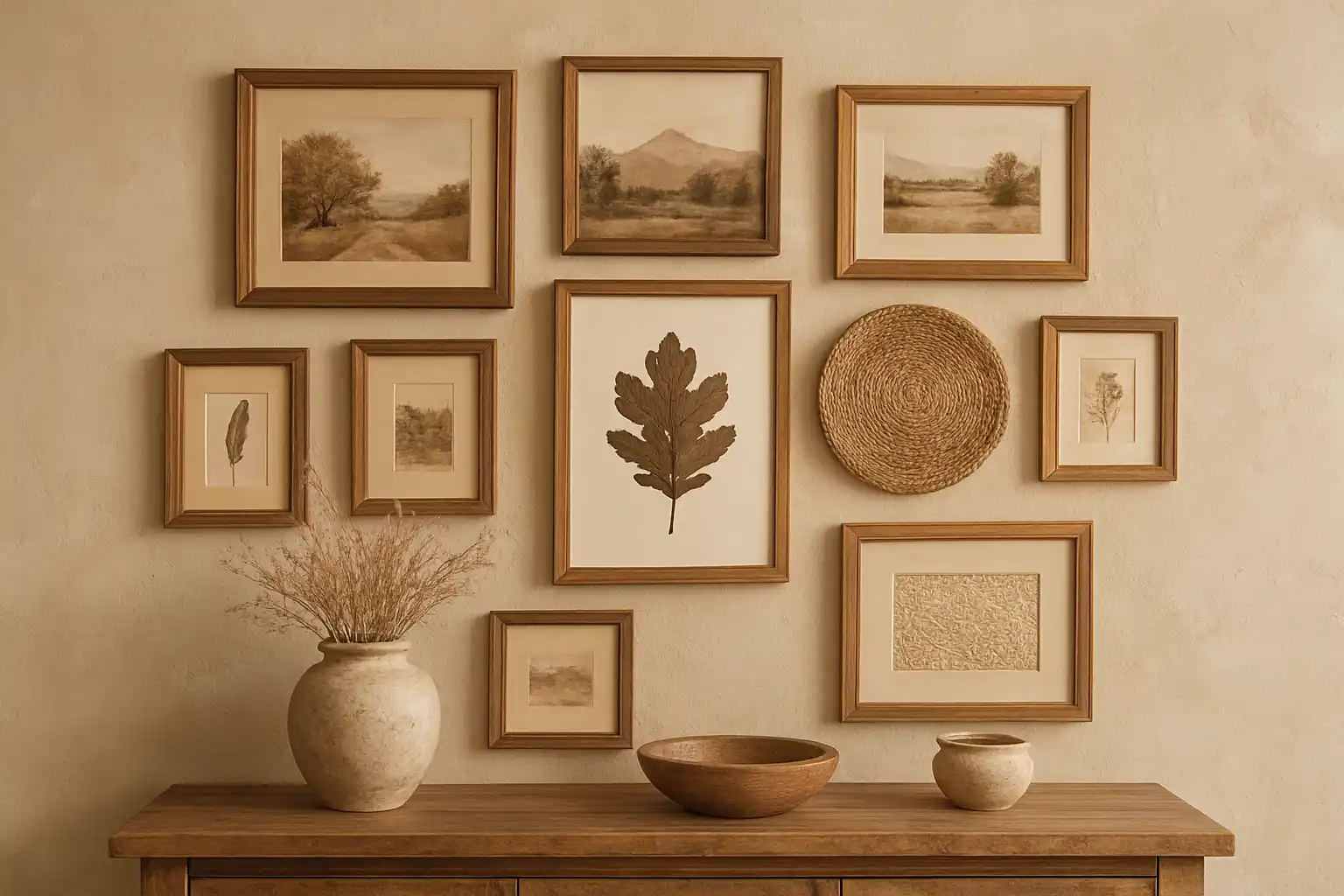
Ideas to try: 17 rustic gallery wall ideas
Choose ideas that suit your collection, the wall, and what you want to see each day. These rustic gallery wall ideas can stand alone or work together around a shared color, material, or subject.
1. Build around an anchor piece
Start with a larger landscape, framed textile, or wood accent, then arrange smaller pieces around it. The anchor gives the eye a place to land. This works above a sofa or console, but leave enough room between the display and furniture to avoid a top-heavy look.
2. Repeat a frame finish
Mix frame shapes and profiles while repeating a finish, such as warm brown wood or matte black. That shared detail connects different artwork. Try it in a living room or hallway. If frame colors vary widely, keep the art palette quieter to prevent visual clutter.
3. Add botanical prints
Ferns, seed studies, and simple flower illustrations bring in a natural note without adding bulky objects. Group a few related prints or pair one with a landscape. They suit kitchens, bedrooms, and entryways, though paper prints may need protection from direct sun and moisture.
Pro tip: Cut paper templates to match your frames and tape them to the wall before hanging. Move the templates until the spacing and overall shape look balanced, then mark the hanging points.
4. Break up rectangles with a mirror
A small mirror adds a different shape and can reflect light in a dim hallway. Choose a plain wood or dark metal frame that relates to other finishes. Place it where it reflects something pleasant, and use hanging hardware suited to its weight and your wall.
5. Feature a map or local landscape: rustic gallery wall ideas
A map or landscape can give the display a sense of place. Choose tones that connect with nearby textiles or woodwork, then leave enough space for the image to read clearly. This suits an office or family room. A detailed map may need a larger frame to remain legible.
6. Bring in woven texture for rustic gallery wall ideas
A small woven basket, plate, or textile adds dimension beside flat framed art. This makes rustic gallery wall ideas feel tactile without relying on distressed finishes. Try it in a dining nook or relaxed living space, but limit similar textures if the wall starts to look busy.
7. Frame a handwritten note
A copied recipe card, letter, or handwritten phrase adds a personal touch. Place it beside quieter artwork so it has room to stand out. This fits a kitchen or breakfast area. Use a copy rather than an irreplaceable original if the wall gets strong sunlight.
8. Use a series of landscapes
Several landscapes can create a calm, unified display, even when their frames differ. Look for a recurring element such as trees, hills, or open skies. Try this in a bedroom or sitting room. If the pictures are similar in size and color, vary the frames to avoid a uniform feel.
9. Include a small architectural detail
A wood carving or decorative molding fragment can introduce an old-house note. Treat it as an art object and leave open space around it. It can suit a narrow console wall, but choose a lightweight piece and secure it properly instead of relying on a loose display.
10. Make room for a family photograph
One or two softly toned photographs bring a personal note to the wall. Rustic gallery wall ideas like this work well on a stair landing or in a family room. Let a shared frame finish or mat connect the photographs to the other pieces without making every image identical.
Pro tip: Photograph your floor layout from across the room. If one side looks much heavier, shift a smaller piece or balance it with a darker frame before hanging anything.
11. Try a narrow vertical arrangement
Stack a few pieces to emphasize height on a slim wall beside a doorway or window. Align their outer edges loosely for a relaxed look. This makes awkward space useful, but it will feel cramped if the wall is too narrow to leave comfortable gaps.
12. Pair art with a picture ledge
A shallow ledge lets you lean framed art and change the arrangement without rehanging each piece. Add one small object, such as a ceramic vase, for depth. This suits a bedroom or office. Secure the ledge appropriately and keep fragile items away from busy walkways.
13. Keep to black and white
Monochrome prints, dark frames, and pale mats create contrast while natural materials preserve a rustic feel. This approach suits a modern farmhouse room or a home with dark trim. Too much black can feel stark, so balance it with warm wood or a natural textile.
14. Feature a textile in rustic gallery wall ideas
Frame a fabric sample, quilt block, or woven piece to soften a room with hard surfaces. It pairs well with botanical prints and simple frames, and can work especially well in a bedroom. Keep it out of strong direct sunlight, which may fade the material over time.
15. Arrange pieces around a doorway or window: rustic gallery wall ideas
Use the wall around an architectural feature to make the space feel intentional. Leave a comfortable gap between frames and trim, and test the layout with paper templates. This can brighten an entry, but irregular wall sections call for careful measuring before you commit.
16. Reserve a spot for a seasonal accent
Keep most of the display in place and reserve one frame or ledge for a seasonal print, pressed leaves, or a small color change. This adds variety without rebuilding the wall. It works in a living area, but too many swaps can make the arrangement lose its anchor.
17. Choose a calm, open gallery
Fewer pieces and wider gaps can warm a compact wall without overwhelming it. A pair of landscapes, one mirror, and a small object may be enough. This suits minimalist rooms and small homes. Edit carefully, because each item needs to earn its space in an open arrangement.
Bringing it together with rustic gallery wall ideas
Once you have chosen your pieces, decide on the overall shape. A loose rectangle is easy to plan above furniture, while a more organic outline can suit an open wall. Keep the bottom edge visually connected to the furniture below, and use consistent gaps as a starting point. Small variations can make the display feel collected rather than mechanical.
For rustic gallery wall ideas that feel finished, repeat one detail in at least two places. It might be warm wood, muted green, a dark frame, or natural texture. Place the largest work first, then build outward and check the whole arrangement from across the room. Match hanging hardware to both the wall material and each object’s weight.
- Connect varied pieces with a repeated color, finish, or texture.
- Test the layout before hanging, using paper templates or a floor arrangement.
- Choose objects and hanging methods that suit the room and wall.
Key takeaways:
- Start with an anchor piece and build an arrangement around it.
- Repeat a small number of colors, finishes, or textures to create cohesion.
- Measure, test the layout, and use suitable hanging hardware.
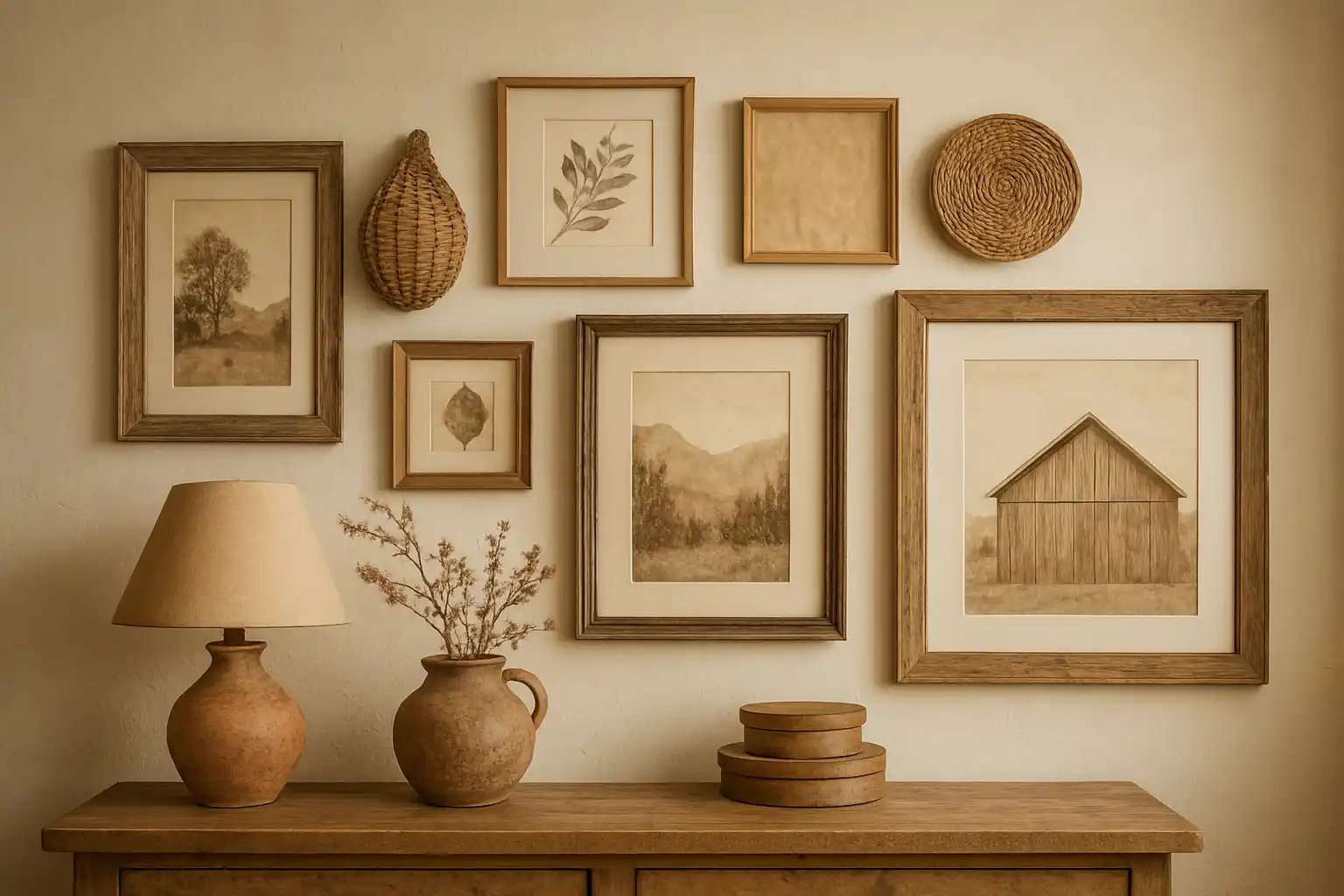
Budget and space adaptations
A satisfying display does not need a large collection. Reuse frames you already own, or refresh mismatched frames with a consistent finish. Look for meaningful objects at home before buying decor. A small, edited arrangement often feels more considered than a crowded wall, and rustic gallery wall ideas can grow over time as you find pieces you genuinely like.
For a rental or a room with limited wall space, consider a picture ledge or lightweight frames with removable hanging solutions rated for the items. Check the product instructions and wall surface first. In a narrow hallway, arrange a few pieces vertically. In a small room, leave open wall around the display so it does not feel cramped.
Your next step
Choose a wall, measure its usable width and height, and gather a few pieces you already like. Make a paper layout, adjust the spacing, and check the balance from across the room. Rustic gallery wall ideas work best when the arrangement suits your home and the objects you genuinely want to see each day.
Keep the finished display personal, balanced, and practical to maintain. A few well-chosen pieces can make a wall feel warm without making it feel crowded.