Affiliate disclosure: We may earn a commission when you buy through links in this post.
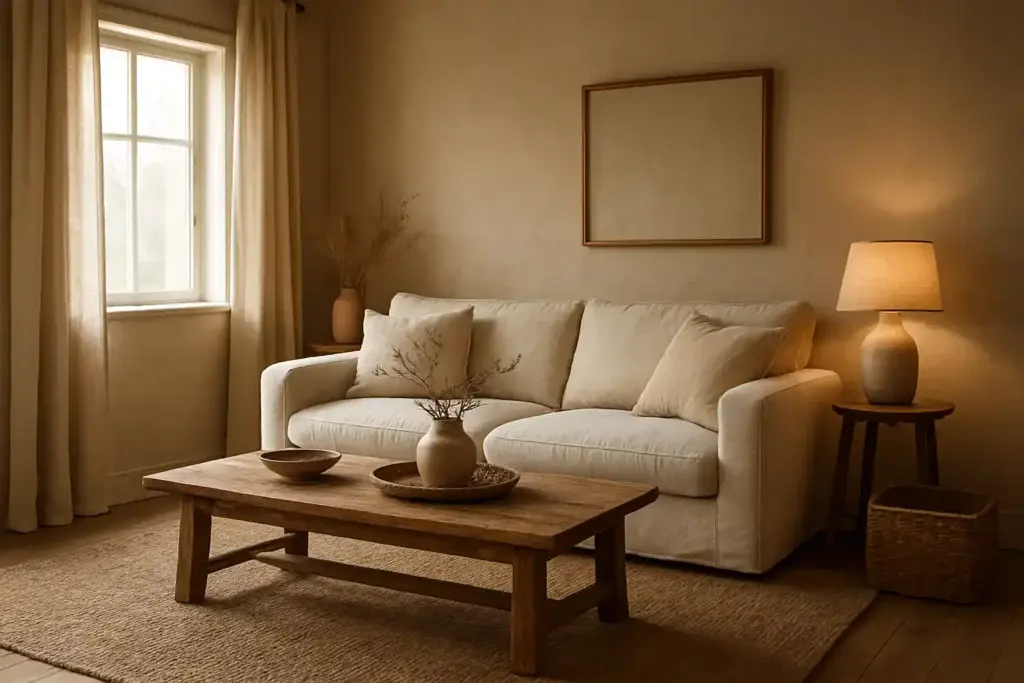
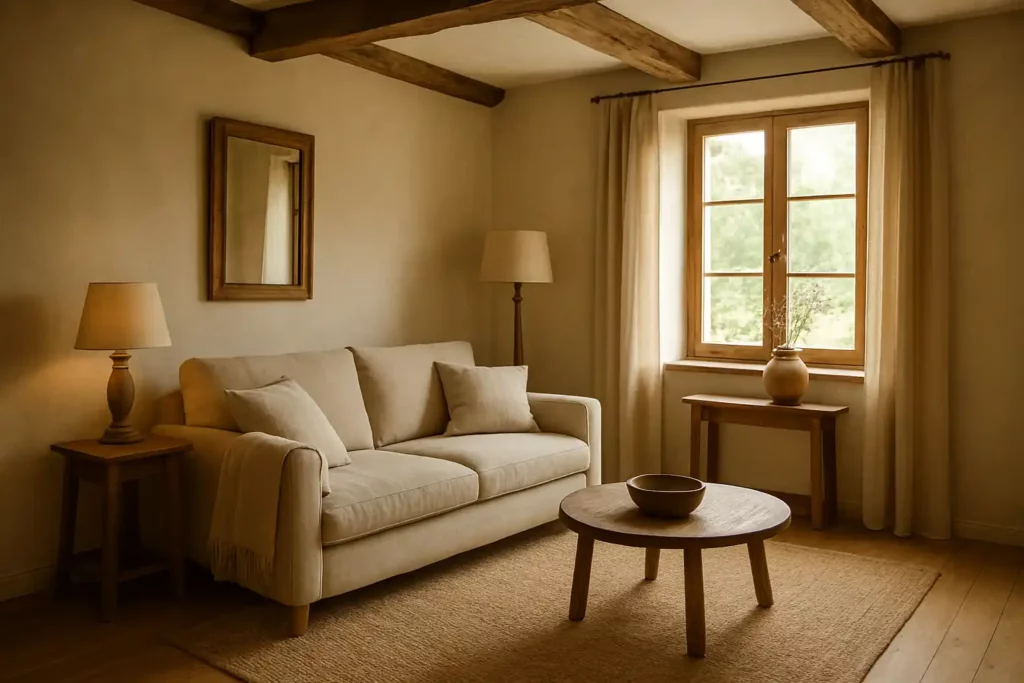
A rustic living room feels comfortable, layered and connected to natural materials—not like a room filled with expensive antiques. With rustic living room decor on a budget, focus on a few warm textures, useful secondhand finds and pieces you already own. Small changes can make a room feel welcoming without replacing everything.
Start by noticing what the space needs: softer lighting, a warmer color palette, more texture or a better place to gather. Then make one change at a time. A thoughtful mix of wood, fabric and personal objects usually feels more natural than buying a matching set of themed decor.
The look to aim for
Rustic style is less about making a room look old and more about letting natural materials and everyday comfort take the lead. Wood grain, woven fibers, worn finishes and simple shapes add character. A room can include modern furniture and still feel rustic when its colors and textures are warm and grounded.
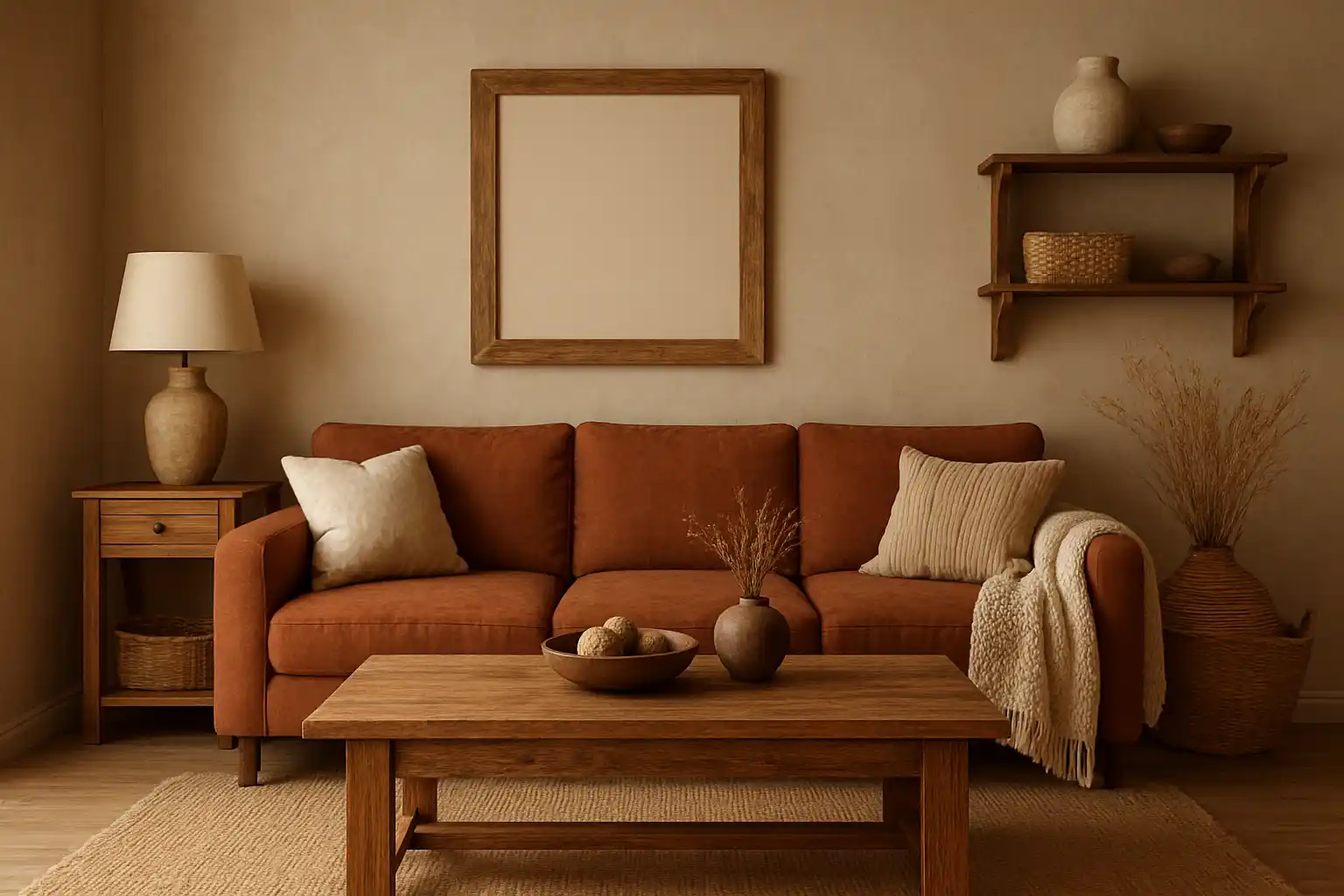
Choose a restrained palette as your starting point. Cream, warm white, tan, muted green and earthy brown work well together, while a darker accent can add depth. Repeating two or three colors across cushions, throws and small decor helps the room feel considered. Keep some open space, too: rustic does not have to mean cluttered.
For rustic living room decor on a budget, use what is already in the room before shopping. A wooden side table might look right after a light clean and a new placement. A plain sofa can take on a softer feel with a textured throw. These adjustments give you a clearer sense of what, if anything, is still missing.
Explore rustic living room decor for options to consider.
Ideas to try for rustic living room decor on a budget
Try the ideas below one at a time. Each can work on its own, so you can stop when the room feels balanced rather than filling every surface.
1. Build rustic living room decor on a budget around texture
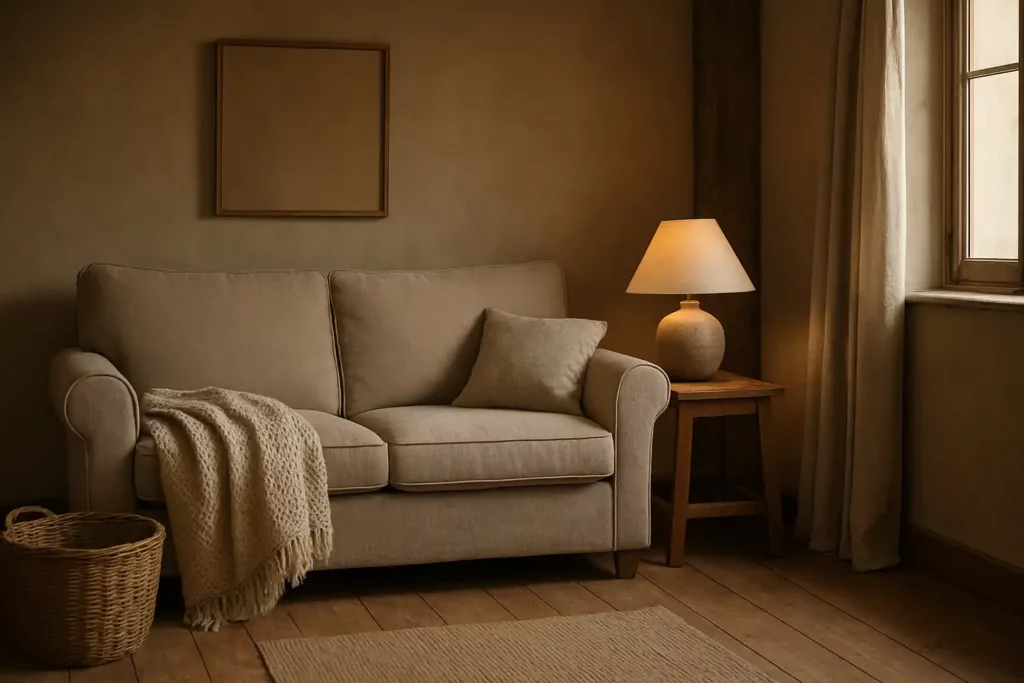
Texture brings warmth even when the furniture is simple. Layer a woven basket beside a sofa, a soft throw over an arm or a natural-fiber rug under a coffee table. If you already have cushions, switch their covers between seasons or group different fabrics in a consistent color family.
This approach suits a living room that feels flat or overly polished. Use just a few tactile pieces in visible spots, and leave room for people to move through the space. A large rug may be impractical in a small room or hard to maintain in a busy household, so a smaller washable accent or a basket may be a better first step.
2. Give wood and secondhand finds a useful role
Look for solid, serviceable pieces at secondhand shops, community sales or in your own home. A small stool can become a side table; a sturdy wooden box can hold blankets. Check that a piece is stable, clean and suitable for its intended use before bringing it into the room.
Let the wood’s existing tone and grain show where possible. If a finish is rough or damaged, consider whether simple cleaning or a careful repair is enough before attempting a bigger change. This idea works especially well in an empty corner, but an oversized piece can overwhelm a compact room, so measure first.
3. Make lighting softer and more welcoming
Harsh overhead light can make even a warm color scheme feel stark. Add a table or floor lamp where people read or gather, and use bulbs that create a comfortable glow. A secondhand lamp can be a practical find, provided its wiring and shade are in suitable condition.
Place light at more than one height when the room allows. A lamp beside a chair or on a side table makes a useful pool of light without requiring a full lighting redesign. Avoid crowding walkways with cords or placing lamps where they can be easily knocked over.
4. Style a simple, personal focal point
Choose one area to draw the eye, such as the mantel, a shelf or the wall above a sofa. Arrange a few objects with varied heights: perhaps a framed print, a small plant and a meaningful secondhand find. Reuse frames or containers you already own, and let a little empty space keep the grouping from looking busy.
A focal point is useful when a room feels scattered, because it gives the eye a place to settle. Keep heavy objects securely placed and avoid blocking a fireplace, vents or a television screen. If there is no mantel or shelf, a small tabletop arrangement can do the same job.
5. Bring in natural detail without overdecorating
A branch in a sturdy vase, a houseplant or a bowl of pinecones can add an organic note. Choose items that suit your home and are easy to care for; there is no need to collect a large assortment. A simple natural detail can soften a room full of straight lines and smooth surfaces.
Place fragile or prickly items away from children and pets, and use only plant material that is safe for your household. If upkeep is a concern, choose a durable branch or an object made from natural material instead of a plant that needs regular attention.
Bringing it together
Once you have a few elements, repeat them rather than adding more categories of decor. For example, let warm wood appear in a side table and frame, then echo a woven texture in a basket and cushion. Similar colors help different pieces feel connected even when they come from different sources.
Arrange seating so people can talk comfortably, with a clear route through the room. Put frequently used items within reach and reserve decorative objects for surfaces where they will not get in the way. Rustic living room decor on a budget works best when it supports daily life, not just a picture-perfect arrangement.
- Start with existing furniture and identify what feels missing.
- Repeat a small palette of warm, natural colors.
- Use texture, softer lighting and a few personal details for warmth.
- Measure secondhand pieces and consider their condition before buying.
Pro tip: Before shopping, take a photo of the room and note one specific change that would make it more comfortable. That keeps purchases focused and makes it easier to see when the room is finished.
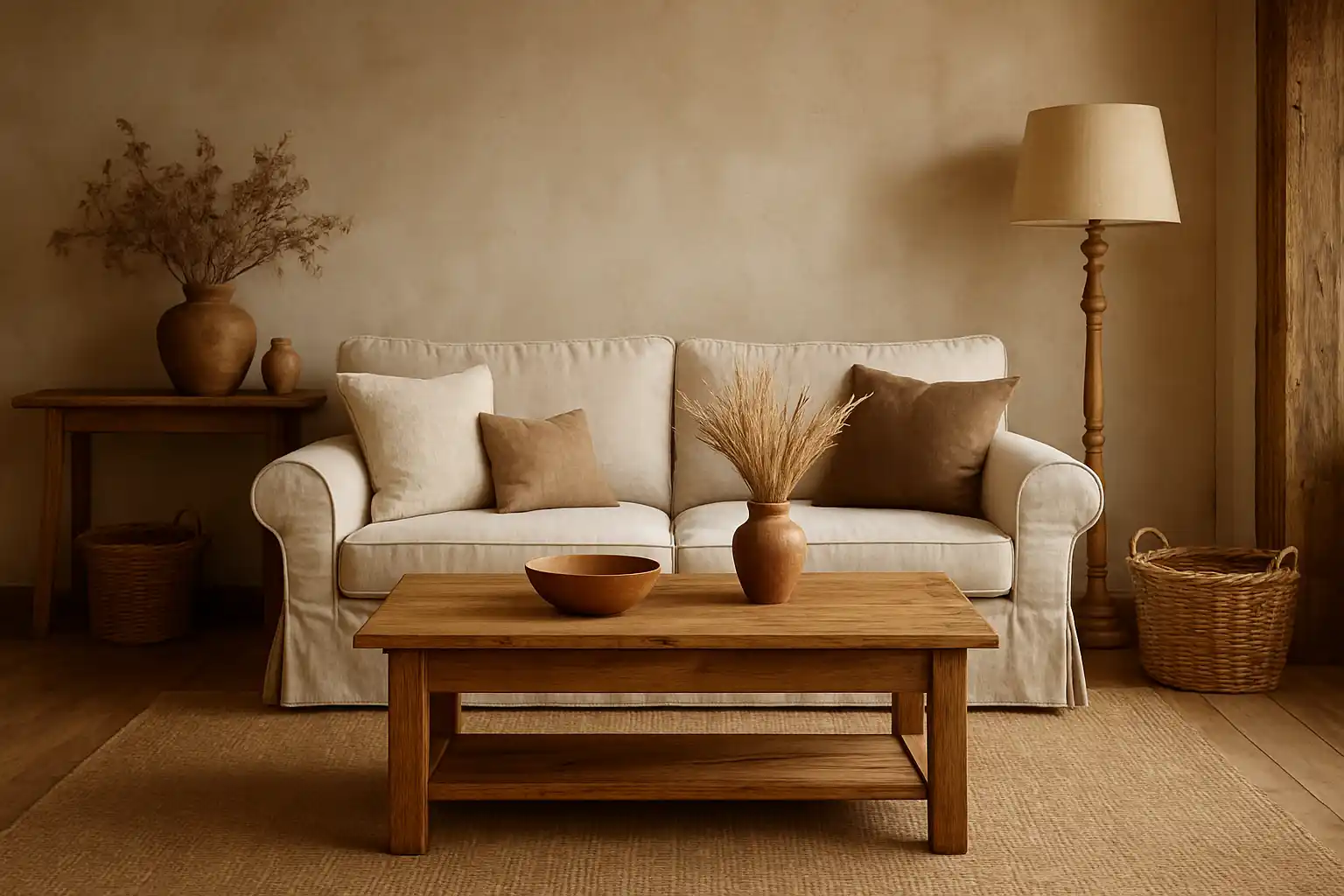
Budget and space adaptations for rustic living room decor on a budget
Set a spending limit before browsing, even if you plan to buy only one item. Prioritize things that solve a real problem—such as a lamp for a dark reading corner or storage for loose blankets—over small decorative pieces that may not have a clear place. Rustic living room decor on a budget can come together gradually, so there is no need to complete the room in one trip.
In a small living room, favor a few versatile accents over bulky furniture. A basket can provide storage without taking up much visual space, while a small wood stool can serve as a side table when needed. Leave clear pathways, and keep tall decor from making a low ceiling feel crowded. In a larger room, repeat colors and materials in more than one area so the space feels connected rather than divided.
If you rent, choose reversible updates: throws, cushion covers, freestanding lamps and objects on shelves. Avoid altering walls or finishes unless your agreement allows it. In a busy home, washable textiles and sturdy, easy-to-clean surfaces may be more practical than delicate vintage pieces. The best choices are the ones you can comfortably maintain.
Before bringing home a secondhand item, check its dimensions, stability, cleanliness and any repair needs. Add the full effort and materials needed to make it usable to your decision—not just its appeal at first glance. When the room is nearly done, pause for a few days before buying more. Often, moving an existing piece or removing visual clutter makes a bigger difference than another accessory.
Key takeaways:
- Warmth comes from natural textures, comfortable lighting and a restrained palette.
- Reuse, repurpose and measure before buying secondhand furniture or decor.
- Choose practical, reversible accents that suit your room and household.
Your next step
Choose one corner or surface to refresh first. Rearrange what you own, add one useful texture or improve the lighting, then live with the change before deciding what comes next. With a clear palette and a few purposeful choices, rustic living room decor on a budget can feel warm and welcoming without turning the room into a collection of props.
Let comfort guide the final edit. If a piece is hard to use, maintain or fit into the room, it may not belong there—even if it looks rustic. Keep what makes the space feel like home, and give the rest a little breathing room.