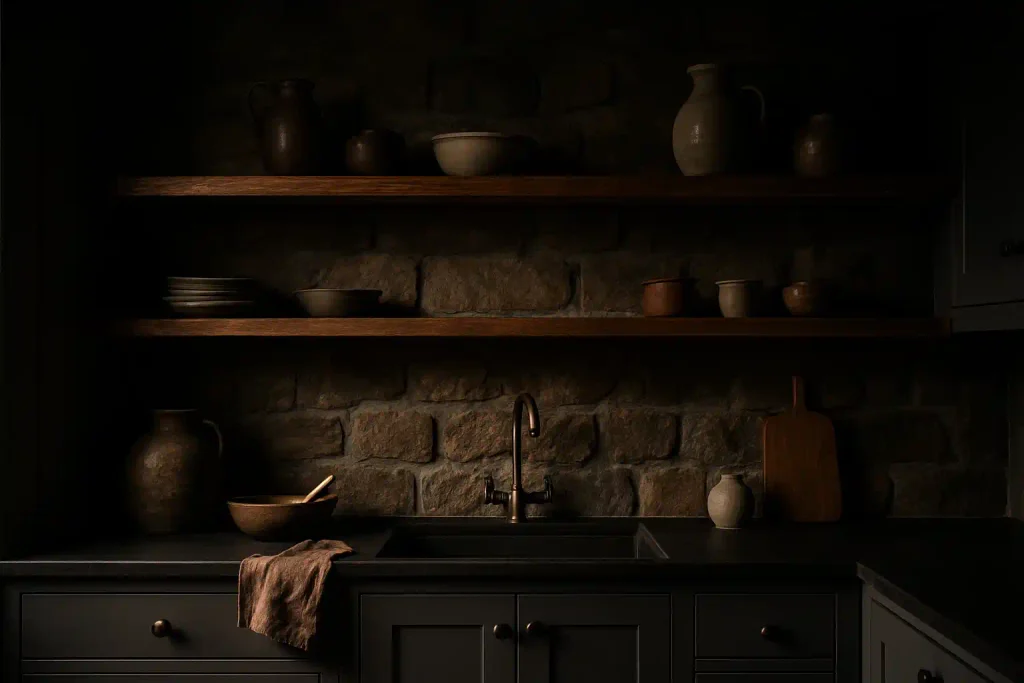
Affiliate disclosure: We may earn a commission when you buy through links in this post.
The best rustic kitchen color schemes work with the materials already in your room. Choose a main color, a supporting neutral, and a smaller accent, then check how they look beside your wood, counters, and flooring. This simple plan adds warmth without making every surface compete.
Below are 17 combinations, from soft neutrals to earthy reds and greens. Use one across the room or borrow a shade for an island, pantry door, or textiles. Before committing, view samples in your kitchen’s natural and evening light.
The Look To Aim For In Rustic Kitchen Color Schemes
Rustic style comes from texture as much as color. Grainy wood, stone, handmade-looking tile, and aged metal already add visual interest, so paint does not need to imitate them. A calm wall color can let those finishes stand out; a deeper accent can add definition.
Start by looking at four details together:
- Undertones: Notice whether the wood, flooring, and counters read warm, cool, or neutral.
- Light: Check color samples at different times of day and beside the surfaces they will meet.
- Contrast: Decide where a lighter or darker shade could define an island, cabinet run, or trim.
- Texture: Let natural materials add depth rather than layering on too many competing colors.
A restrained palette is a helpful starting point for rustic kitchen color schemes, especially when the room already has prominent wood grain or patterned stone. Think in terms of a few related colors, not an exact match for every finish.
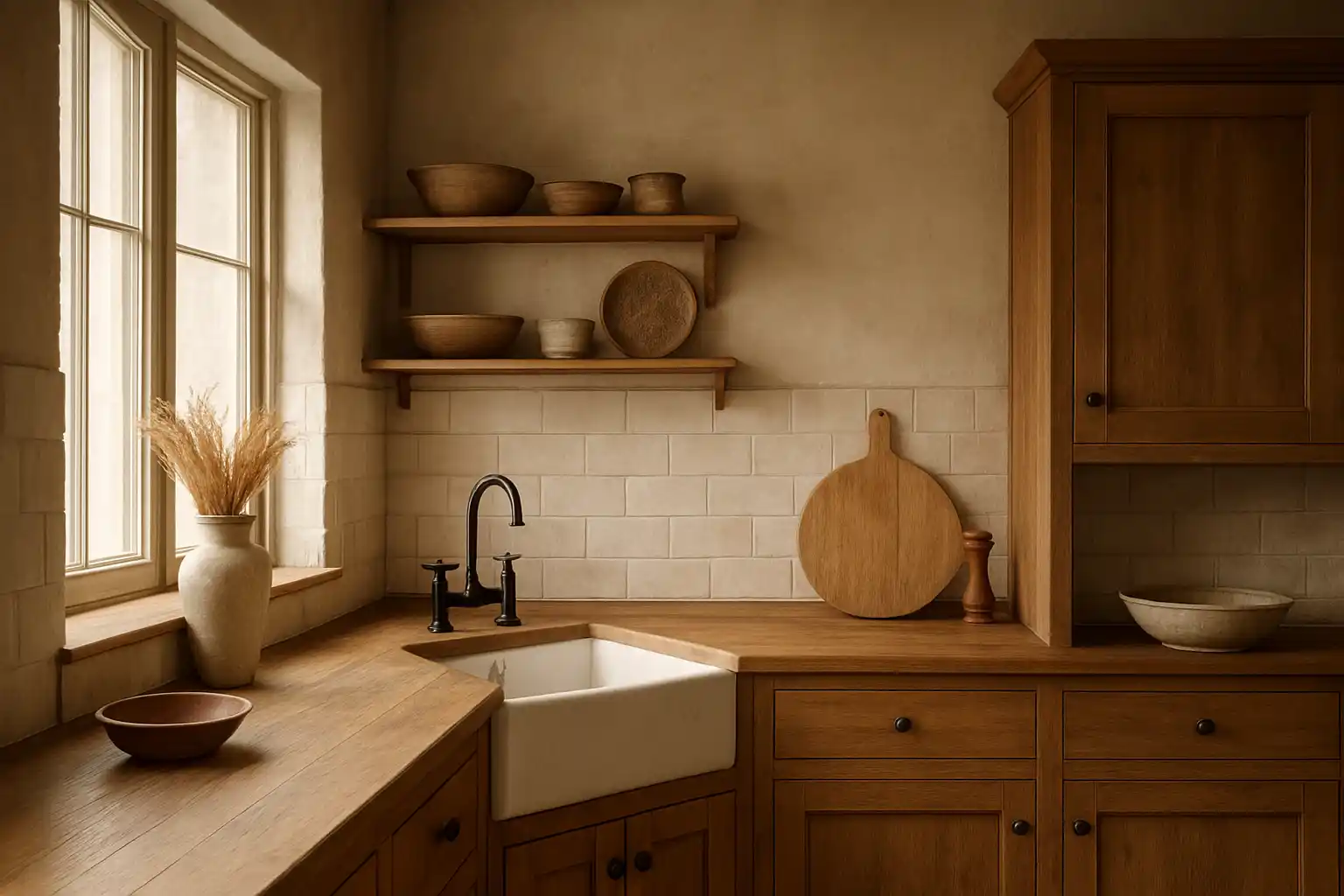
Ideas To Try With Rustic Kitchen Color Schemes
Each combination gives the colors a different role. Adapt the proportions to your fixed finishes, available light, and the areas you want to emphasize.
1. Cream, Oak, And Black: Rustic Kitchen Color Schemes
Cream walls and oak create a soft base, while black hardware or lighting adds definition. This combination suits a kitchen where wood is already a feature. Keep black to a few accents in a small or dim room, where broad dark surfaces may feel heavy.
2. Warm White And Weathered Gray
Warm white keeps the room light, and weathered gray adds a worn-in note on an island or lower cabinets. Try it with existing wood that has gray undertones. Compare both colors with the floor first, since too much cool gray can make the palette feel flat.
Pro tip: Paint sample boards rather than judging a tiny chip. Move them beside cabinets and counters, then look at them in daylight and evening light before choosing a shade.
3. Sage Green, Cream, And Oak
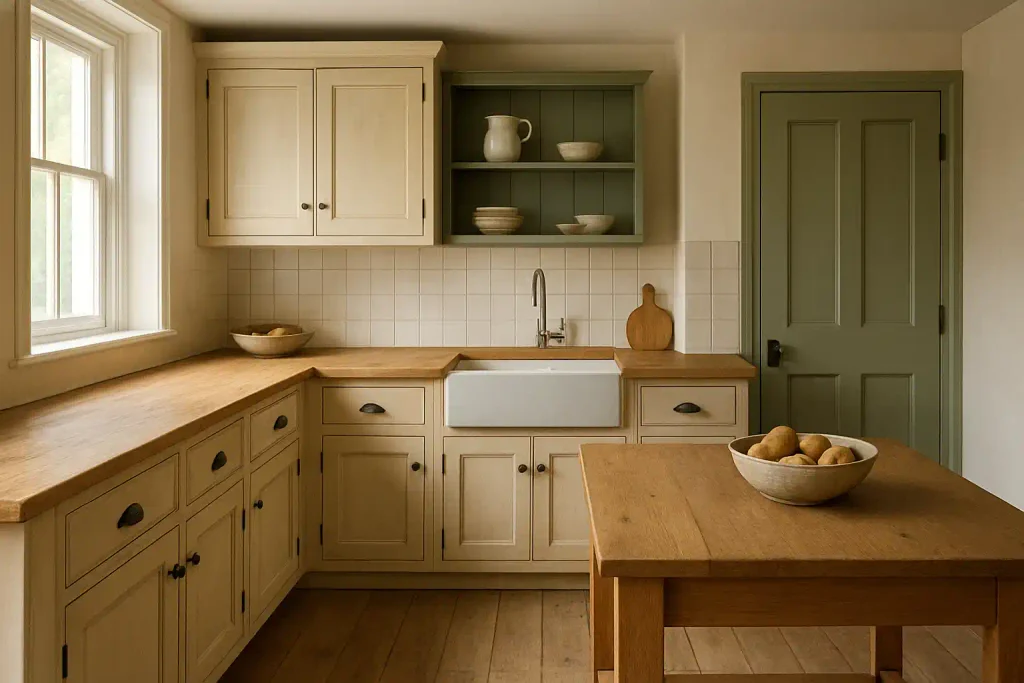
Muted sage brings a gentle green note beside cream and natural oak. Use it on an island or cabinet run, with lighter walls nearby. It suits cottage-inspired rooms, but a deeper sage may look darker in a shaded kitchen.
4. Forest Green And Aged Brass: Rustic Kitchen Color Schemes
Forest green makes cabinetry feel grounded, while aged brass offers a warm contrast. Pair them with a pale backsplash or counter to keep the deep color from dominating. If full-color cabinets feel like too much, test the green on an island first.
5. Terracotta, Oatmeal, And Walnut
Subdued terracotta adds an earthy accent to oatmeal walls and walnut details. Use it on a small painted area, tile, or accessories. This option brings rustic kitchen color schemes a little warmth without needing a bold, bright orange, which can be overpowering across a large surface.
6. Dusty Blue And Warm White
Dusty blue gives warm white and wood a cool counterpoint without a stark effect. Try it on a pantry door, island, or cabinets in a bright kitchen. Because blue can shift with changing light, compare a sample beside the wall and wood colors.
7. Charcoal, Linen, And Reclaimed Wood: Rustic Kitchen Color Schemes
Charcoal adds a modern edge, while linen-colored walls soften the contrast and reclaimed wood brings texture. Keep charcoal to an island or one cabinet run in a narrow kitchen. Spreading it across every surface could make the room feel enclosed.
8. Butter Yellow And Soft White
A muted butter yellow brings a sunny note beside soft white and pale wood. Consider it for a breakfast nook, a small cabinet area, or accessories. Strong yellow can be intense over a large area, so start with a gentle shade and sample it first.
9. Olive Green, Cream, And Dark Wood
Olive green and dark wood create a grounded combination, while cream keeps the overall palette from feeling too heavy. Use olive on cabinets or a wall, then repeat a little in pottery or a runner. This is one of the more flexible rustic kitchen color schemes when you want a nature-inspired look with contrast.
Explore Rustic kitchen decor for options to consider.
Pro tip: If a cabinet color feels like a big commitment, test it on a small door, pantry, or island. You can see how it works with the room before extending it across a larger area.
10. Greige, White Oak, And Iron
Greige can bridge warm and cool finishes when a kitchen mixes materials. White oak keeps the look light, and iron details add a quiet industrial note. Greige undertones vary, so compare samples directly with the floor and countertop instead of relying on the color name.
11. Navy, Warm White, And Butcher-Block Tones
Navy makes an island or lower cabinets a clear focal point, while warm white and butcher-block tones keep the room inviting. Choose this if you want contrast without repainting every surface. In limited light, keep navy to one area.
12. Mushroom, Cream, And Stone
Mushroom, a muted brown-gray, can connect stone counters with cream walls. It is a softer alternative to stark white on cabinets or trim. Check it against the actual stone, since similar-looking shades may have undertones that either blend or clash.
13. Rust, Soft Beige, And Blackened Metal: Rustic Kitchen Color Schemes
Rust brings an earthy accent, while soft beige and blackened metal help balance it. Use rust on a modest surface or in accessories if the room already has patterned materials. Medium-toned wood can help the palette feel connected rather than like separate color blocks.
14. Pale Blue-Gray, Warm Wood, And Cream
Pale blue-gray can feel airy, while warm wood and cream temper its cooler side. Try it on walls or upper cabinets that receive natural light. In a shaded kitchen, compare it with a warmer neutral before settling on a color.
15. Black, Natural Wood, And Soft Beige
Black details sharpen natural wood, and soft beige eases the contrast. Consider black for hardware, a range hood, or a small island instead of every cabinet. This restrained approach leaves prominent grain as the main feature.
16. Muted Red And Cream
A muted barn red adds a traditional note beside cream and natural wood. Limit it to a door, a small section of shelving, or a few accessories. Strong reds can take over a compact kitchen, especially when other finishes are already busy.
17. Sand, Warm White, And Soft Green
Sand and warm white create a light base; soft green brings in a natural accent. Use green on an island, textiles, or pottery. In a larger room, darker wood or hardware can add definition to this pale combination.
Bringing It Together With Rustic Kitchen Color Schemes
Once you have a shortlist, assign each shade a job. Let the main color cover the largest painted area, use a supporting neutral on walls or cabinets, and reserve the accent for a smaller feature. Repeat that accent in a couple of places, such as pottery and a runner, to make the plan feel deliberate.
Build around finishes that are staying. Use the floor or counter to judge paint undertones, then consider the balance of light and dark. A dark cabinet run can sit comfortably with lighter walls, while an all-light room may benefit from a deeper island. The most useful rustic kitchen color schemes complement existing materials rather than trying to match every shade exactly.
Key takeaways:
- Choose colors around the wood, counters, and flooring that are staying.
- Give the main shade, neutral, and accent distinct roles.
- Check samples in the kitchen’s light before using them on large surfaces.
- Try a smaller or reversible update when you want less commitment.
Before painting, place sample boards near the surfaces they will meet and view them from different parts of the room. If the wood has strong grain or the counter has a bold pattern, keep nearby painted areas simple. If the room feels plain, a colored island or a small accent can add interest without introducing several competing finishes.
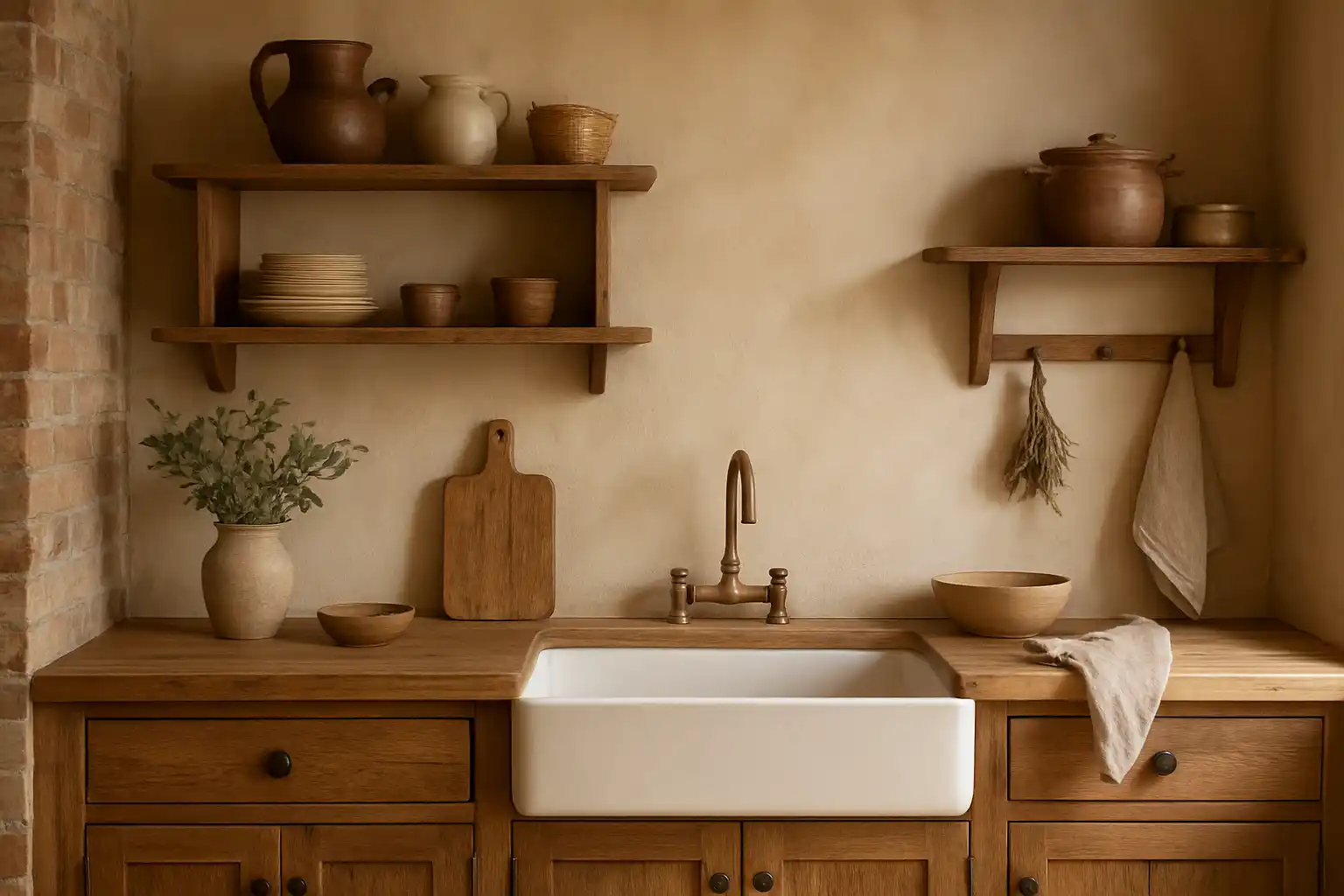
Budget And Space Adaptations
A color update does not have to involve repainting the entire kitchen. Start with textiles, displayed pottery, or one smaller feature such as an island or pantry door. These limited changes let you assess a color alongside the rest of the room before using it more widely.
In a compact kitchen, keep the largest surfaces relatively light and use deeper shades sparingly. A larger room may have space for a dark island or deeper cabinet run. If you rent or prefer reversible changes, focus on decor and textiles instead of fixed finishes. Whatever the room size, compare samples with the materials you plan to keep.
Your Next Step
Choose two or three rustic kitchen color schemes that suit your existing finishes. Gather samples, check them in the room at different times of day, and decide which shade should lead. Starting with a small test area makes the decision manageable and helps create a warm, welcoming kitchen that feels connected to its materials.