
Affiliate disclosure: We may earn a commission when you buy through links in this post.
Good living room storage should make everyday items easy to put away without making the room feel like a row of cabinets. Rustic living room storage does both when you balance useful closed storage with natural textures, open display space, and furniture suited to your room. Start by deciding what needs a home, then choose pieces that fit your layout and the level of visual warmth you want.
The ideas below cover furniture, baskets, shelves, and practical ways to make a cohesive arrangement. You do not need a matching set. A few well-chosen pieces in compatible materials and finishes can create a collected look while keeping clutter manageable.
The Look To Aim For: Rustic Living Room Storage
Rustic style is less about making every surface look old and more about letting natural materials and straightforward forms show their character. Wood grain, woven fibers, iron details, and softly worn finishes can add texture. Pair those elements with storage that has a clear purpose, such as a cabinet for games or a basket for throws.
For a balanced room, mix open and closed storage. Closed doors conceal items you use often but do not want on display. Open shelves and trays give a few useful or meaningful objects a place to be seen. When choosing rustic living room storage, repeat one or two finishes across the room, such as warm wood and dark metal, rather than combining many competing styles.
Think about scale as well as appearance. A broad cabinet may suit a long wall, while a narrow console or a pair of baskets may be better beside a sofa. Leave room to walk around furniture, open doors, and pull out drawers. The best piece is one that works in the space you have, not simply the one with the most storage.
Ideas To Try For Rustic Living Room Storage
Use these ideas as starting points, adapting the material and size to your home. A rustic finish does not have to come from reclaimed timber; simple shapes and natural textures can create a similar grounded effect.
Pro tip: Before shopping, gather the items you want to store by type. Measure the largest items, such as board games or folded blankets, so you can check shelf depth and cabinet clearance.
1. Rustic Living Room Storage With A Storage Bench
A storage bench gives you a place to sit while concealing items behind a lid or doors. It works well beneath a window, along an entry-side wall, or behind a sofa when the layout allows. Choose a height that feels comfortable for sitting and check that the lid can open fully without hitting a wall or table. In a busy walkway, a bulky bench may take up more floor space than it returns.
2. Add A Low Wood Cabinet
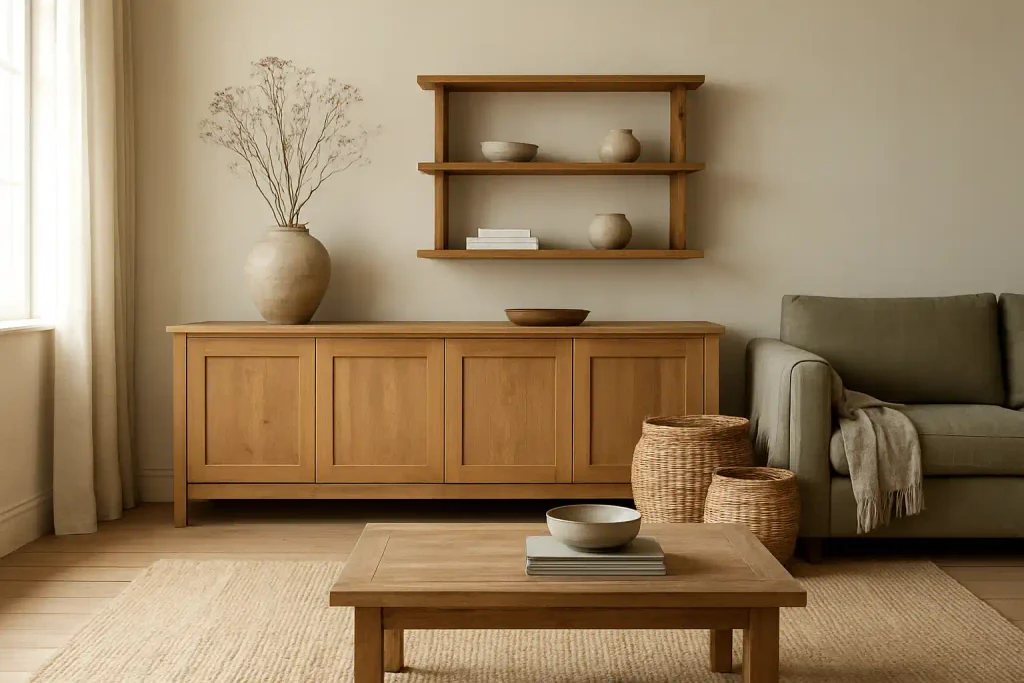
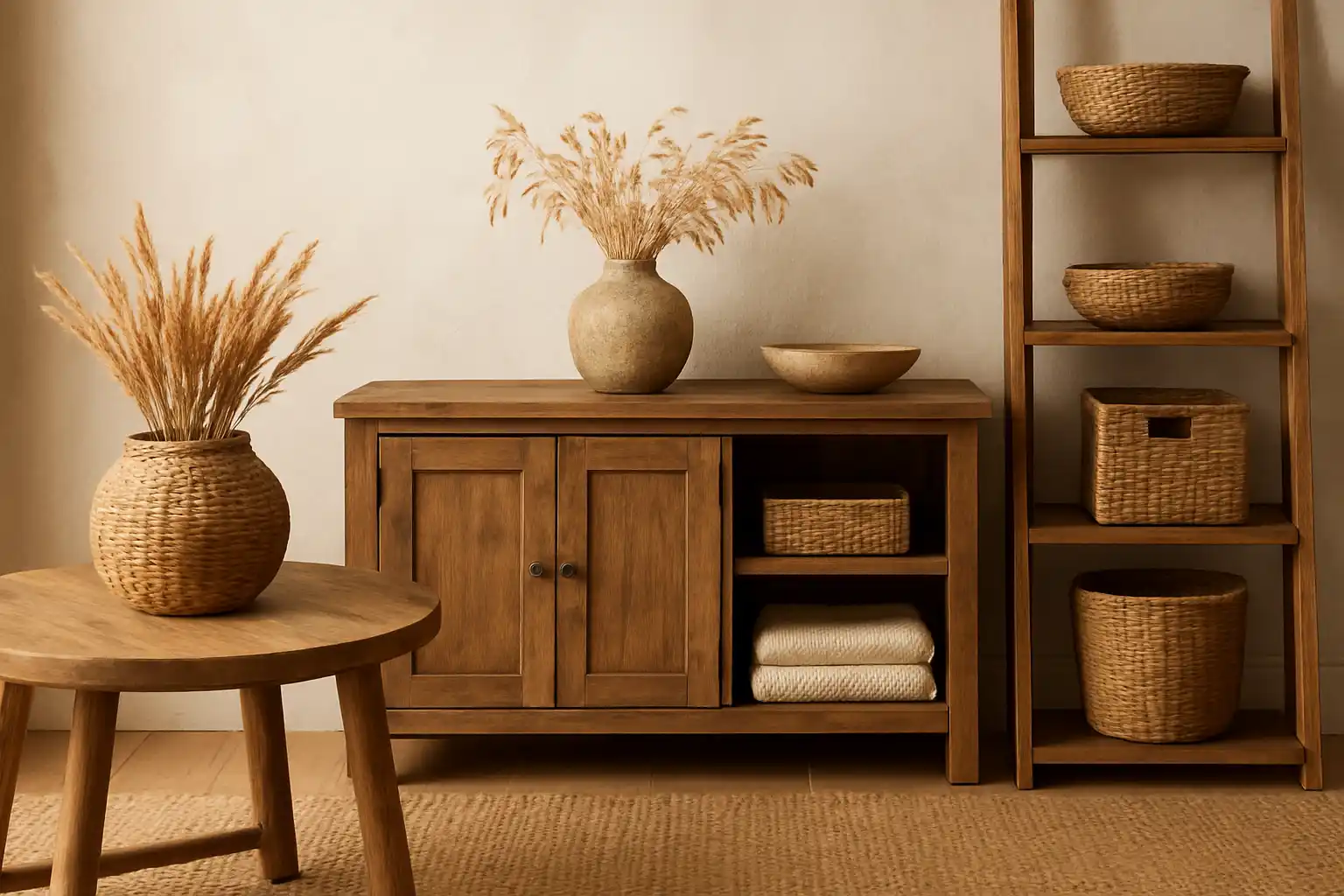
A low cabinet can hold games, electronics, or extra table linens while giving a television or a few carefully selected objects a stable base. Look for a depth that fits the room and doors that suit what you plan to store. Solid-looking wood, simple panel fronts, and modest hardware help the piece feel rustic without making it overly ornate. For rented homes or changing layouts, a freestanding cabinet is easier to reposition than built-in storage.
3. Use Woven Baskets Beside Seating
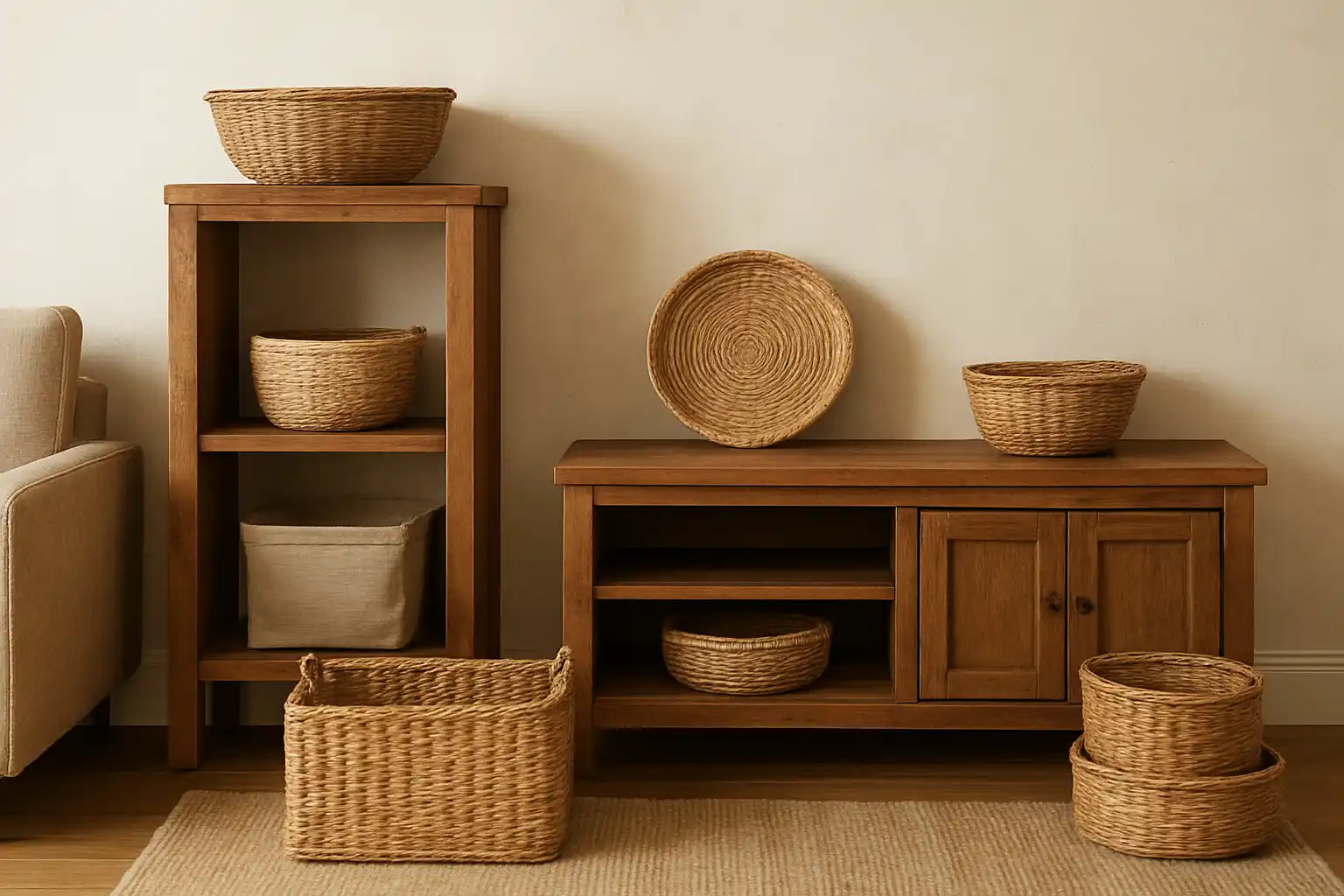
Baskets are an easy way to keep throws, magazines, or children’s toys within reach. Place one beside a sofa or under a console, and choose a shape that fits the contents instead of leaving a large empty container on display. Woven baskets add softness alongside wood and metal, but they are not always the right choice for small loose objects. A fabric insert or a smaller lidded basket can help keep those items together.
4. Build A Simple Open Shelf Display
Open shelves can show off books, pottery, and a few personal objects while keeping them accessible. Use sturdy brackets and a shelf depth that suits the items, and anchor the structure as needed for the wall and its contents. This approach works above a low cabinet or on a wall where a deeper piece would obstruct movement. The trade-off is that open shelves need regular editing and dusting, so reserve them for objects you are happy to see every day.
5. Choose A Rustic Coffee Table With Storage
Pro tip: Give each basket or shelf a specific job, such as “throws” or “current reading.” A clear purpose makes it easier to return things to their places and prevents storage from becoming another catchall.
A coffee table with a lower shelf, drawers, or a lift-top compartment can make the center of the room more useful. A shelf keeps books and trays close at hand, while enclosed storage hides remotes and small items. Measure from the sofa and leave enough clearance to move comfortably around the table. If the room is narrow, a compact table with softened corners may be easier to navigate than a heavy trunk-style design.
Bringing It Together
Once you have identified the main pieces, make them feel connected through repetition. One wood tone can appear in a cabinet and a coffee table, while black or aged-metal hardware picks up a lamp or shelf bracket. Rustic living room storage feels more intentional when materials relate to one another, even if the furniture comes from different sources.
Vary height and visual weight. A low cabinet can balance a taller bookcase, and a woven basket can soften a run of solid furniture. Avoid filling every surface. Leave some open space around displayed objects so the useful storage does not turn into a crowded collection.
Plan what goes where before arranging accessories. Keep frequently used items near the seat where they are needed, and place occasional-use items in less accessible cabinets or higher shelves. For a shared room, assign each person or activity a defined area. That small bit of organization helps rustic living room storage stay practical after the initial tidy-up.
- Use doors or drawers for small, visually busy items.
- Keep everyday blankets and reading material within easy reach.
- Repeat a few materials or finishes rather than matching every piece.
- Check that drawers, doors, and walkways remain clear when furniture is in place.
Budget And Space Adaptations
You can build a rustic look gradually instead of replacing every piece at once. Start with the storage problem that causes the most daily frustration, then add furniture or containers as needed. A simple basket or a secondhand cabinet with a sound structure may be more useful than a decorative piece that does not fit your belongings. Inspect used furniture for stability, damage, odors, and hardware condition before bringing it home.
In a small room, prioritize furniture that serves more than one purpose. A storage ottoman can provide a footrest and a place for blankets, while a narrow console may offer a landing spot without taking the depth of a cabinet. Rustic living room storage in a compact home should also leave clear paths through the room. Measure doorways and corners as well as the intended wall so a chosen piece can actually be brought in and positioned.
If new furniture is not in the plan, make existing storage work harder. Sort contents, remove items that belong elsewhere, and group what remains in boxes or baskets that fit the shelves. You can also change the visual balance by moving a heavy piece away from a crowded corner or displaying only a small selection of objects. Avoid DIY alterations that could weaken furniture or create an unsafe installation.
Key takeaways:
- Mix closed storage with a limited amount of open display.
- Choose materials and finishes that relate without requiring a matching set.
- Measure furniture, walkways, and stored items before buying.
- Give each cabinet, shelf, or basket a clear purpose.
For a larger room, resist the temptation to solve every empty wall with a cabinet. A central storage piece, a basket near seating, and one intentional display area may be enough. In rooms used by children or pets, consider whether sharp corners, tipping hazards, or delicate objects call for a different placement or a more secure storage option.
Your Next Step
Begin with a quick room audit: list the items that need storage, note where you use them, and measure the spots available for furniture. Then choose one anchor piece and a small number of supporting containers. This method keeps rustic living room storage tied to real needs instead of an attractive but impractical shopping list.
Before you buy, compare the piece’s dimensions, construction, and storage layout with your room and belongings. If it fits the measurements and solves a specific problem, it is more likely to earn its place. Add pieces over time, keeping comfort, access, and a calm mix of textures at the center of your choices.
Looking for options for this space? Explore Rustic storage and organization and choose what suits your needs.