Affiliate disclosure: We may earn a commission when you buy through links in this post.
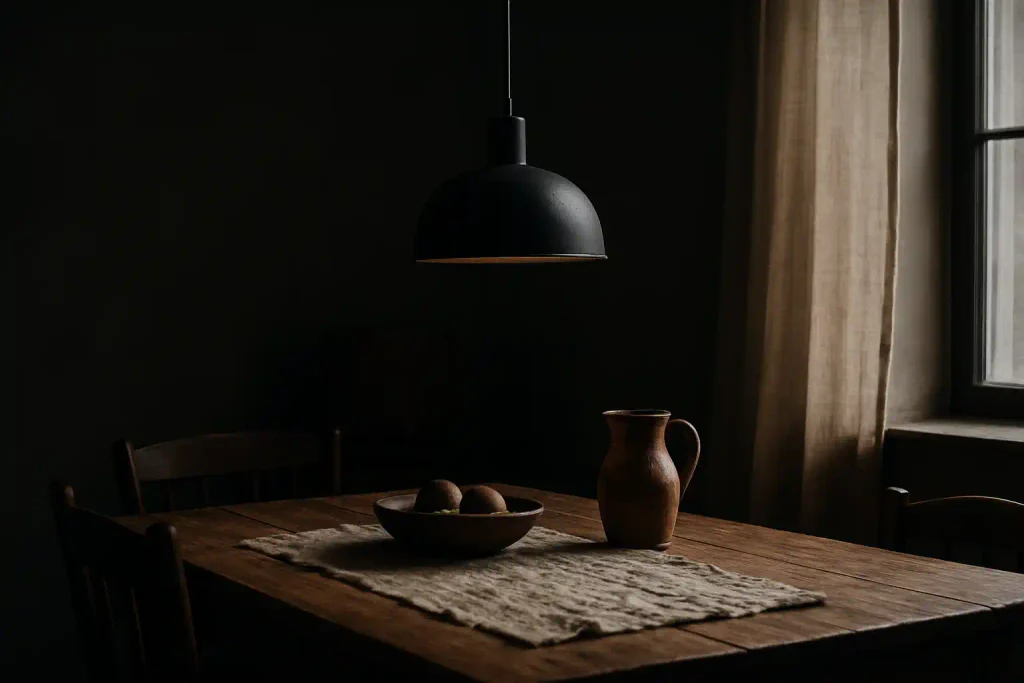
Rustic lighting that looks expensive is less about choosing the biggest chandelier and more about thoughtful materials, balanced proportions, and warm, layered light. A fixture can feel polished without looking formal: look for a clear silhouette, a restrained finish, and details that suit the room rather than compete with it.
Start with the scale and style of the space, then choose one fixture to lead and let the rest support it. The strongest rustic lighting that looks expensive feels intentional, whether it is a simple iron pendant over a kitchen island or a substantial wood-and-metal chandelier in a dining room. Use the ideas below to make that effect work in your home and budget.
The Look To Aim For With Rustic Lighting That Looks Expensive
High-end rustic style usually comes from editing, not adding more decoration. Choose fixtures with a recognizable shape and a small number of materials, such as aged metal with clear glass or dark iron with natural wood. When every fitting has a different finish, shape, and decorative motif, the room can feel like a collection of unrelated purchases.
Pay attention to proportion. A fixture that is too small can disappear above a table or in a room with a tall ceiling; one that is too large can overwhelm a compact space. Consider the furniture beneath it, the height of the ceiling, and how much visual weight the fixture carries. Open-frame designs often look lighter than solid shades of similar size.
Surface and light quality matter as much as the material itself. A soft, muted metal finish can feel more considered than a bright, shiny one in a relaxed rustic room. Choose bulbs that provide a comfortable warm glow, and check the fixture’s recommended bulb type and brightness. Clear glass shows the bulb, so a pleasing bulb shape can be part of the design.
Pro tip: Before ordering, place painter’s tape on the ceiling or wall to outline the fixture’s approximate width. View the outline from the doorway and from the main seating area to judge its visual scale.
Ideas To Try For Rustic Lighting That Looks Expensive
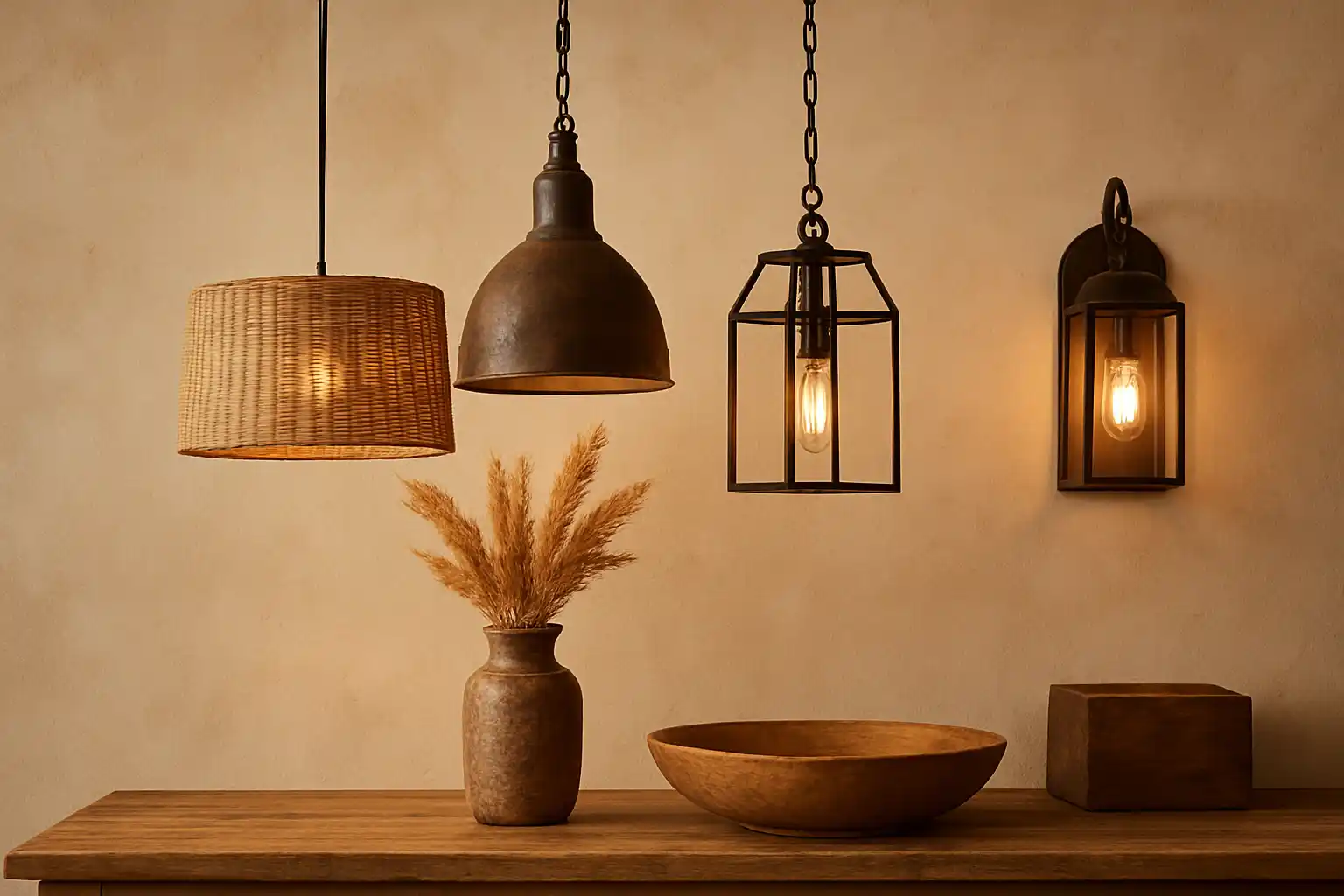
Use these distinct approaches as starting points. Pick the one that suits the room’s existing materials and function, rather than trying to combine every rustic detail at once.
1. Choose A Sculptural Iron Chandelier
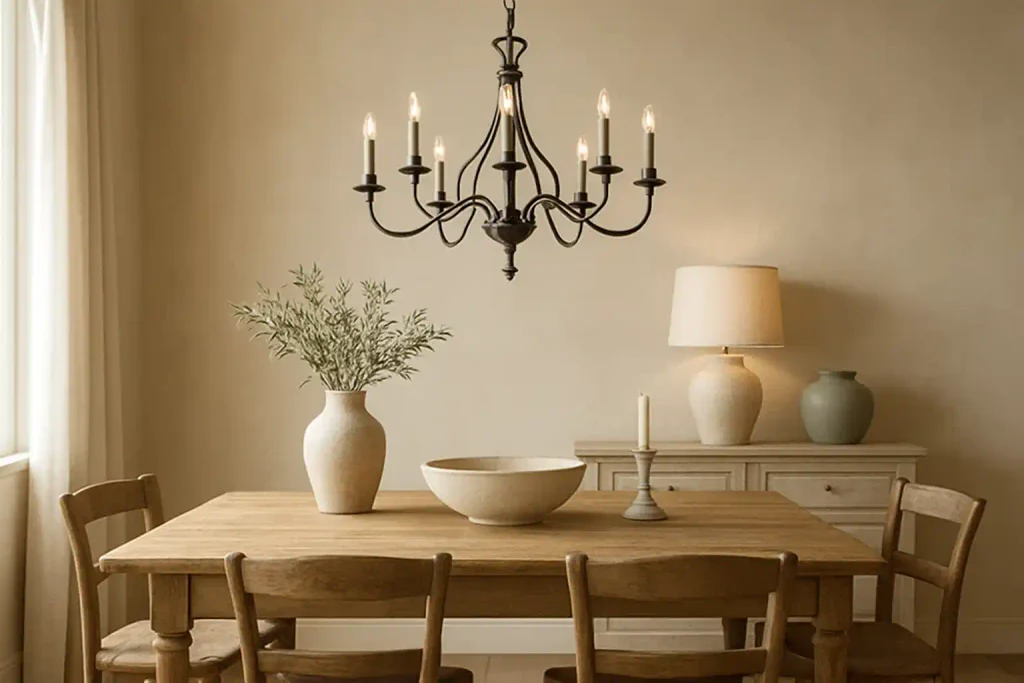
A chandelier with a simple, open frame gives a dining room or entry a strong focal point while leaving the surrounding architecture visible. Look for balanced arms, tidy joints, and a finish that relates to nearby hardware. Keep the table or room size in mind: a broad fixture needs enough breathing room, and a low ceiling may call for a compact or flush-mounted alternative.
2. Use A Pair Of Pendants With A Clear Rhythm
Two matching pendants can make a kitchen island or long counter feel planned. Repeat the same shape and finish, and space the fixtures evenly in relation to the work surface, not just the ceiling. Rustic lighting that looks expensive often depends on this kind of repetition: a consistent pair reads as a deliberate choice. Check that the pendants do not block sightlines across the room, and confirm the intended hanging height before installation.
3. Add A Natural Material In A Restrained Way
A wood detail, woven shade, or stone-like element can bring warmth to a room dominated by painted surfaces and metal. Let one natural texture stand out instead of mixing several competing materials in one fixture. This works well in a bedroom, breakfast nook, or living area where softer light is welcome. Natural finishes vary, so compare the fixture with the room’s actual wood tones before committing.
Pro tip: Take a photo of the room and note the finishes already present, including cabinet pulls, faucet, door hardware, and furniture legs. Use that short list to narrow fixture choices before comparing decorative details.
4. Let A Wall Sconce Provide The Layered Light
Wall sconces can add a considered finishing touch beside a bed, mirror, fireplace, or hallway. Choose a pair where symmetry helps, or use one sconce to brighten a darker corner. A compact design is useful where floor or table space is limited. Make sure the light is comfortable for the task, and plan wiring and mounting with a qualified electrician when needed.
Bringing It Together With Rustic Lighting That Looks Expensive
Think of lighting as a set of layers rather than a single ceiling fixture. Ambient light provides overall illumination, while task lighting helps with activities such as cooking or reading. Accent lighting draws attention to an architectural feature or artwork. A room that uses more than one layer tends to feel more flexible and welcoming than one relying on a harsh central light.
Repeat a finish or shape in a few places to connect the scheme. For example, a dark metal pendant might relate to a nearby cabinet pull or picture frame, while a wood detail can echo a table or shelf. Repetition does not mean every piece has to match. Keep the main fixture distinctive, then choose simpler supporting lights so the room retains a clear focal point.
Check how the fixture looks both on and off. During the day, its silhouette and material should sit comfortably with the room. In the evening, light should reach the places where it is useful without creating uncomfortable glare. Dimmers can help create different moods when the bulbs and fixture are compatible. Rustic lighting that looks expensive is ultimately lighting that appears chosen for the room and works for daily life.
Budget And Space Adaptations
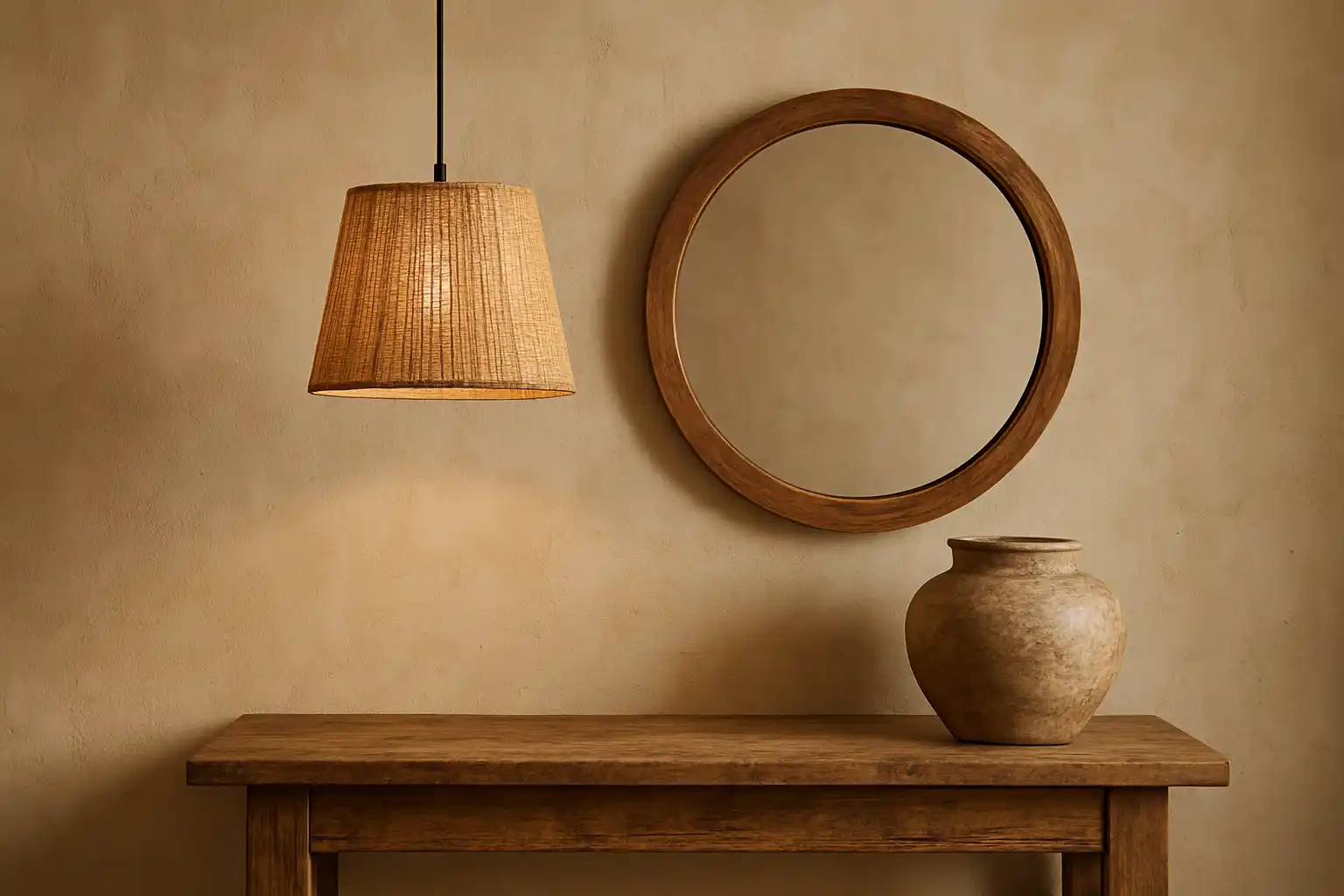
A limited budget does not require buying an elaborate fixture. Give priority to shape, scale, and finish, then keep decorative details simple. A well-proportioned pendant can have more presence than a larger fixture crowded with ornament. If replacing a ceiling light is not practical, update the room with a table lamp or floor lamp in a complementary finish and treat the existing fixture as a quieter layer.
For a small room, avoid heavy shapes that make the ceiling feel lower. Open frames, compact sconces, and fixtures with translucent shades can preserve a sense of space. In a larger room, one small fixture may look lost, so consider a larger central light or a coordinated combination of ceiling and wall lights. In either case, check the fixture dimensions and installation requirements before purchase.
Key takeaways:
- Choose a clear silhouette and limit competing finishes.
- Match fixture scale to the room, furniture, and ceiling height.
- Layer ambient, task, and accent light where the room needs them.
- Check dimensions, bulb compatibility, and installation requirements before buying.
When shopping, compare the complete specifications rather than relying on a product photo alone. Review dimensions, material descriptions, bulb requirements, mounting type, and whether the fixture is suitable for the intended location. Rustic lighting that looks expensive can still be a poor fit if it cannot be installed safely or does not provide enough useful light. For wet or damp areas, use a fixture rated for that location and follow local electrical requirements.
Your Next Step
Choose the room that needs the most improvement and identify its main lighting job: general illumination, focused task light, or a visual focal point. Measure the area, note the finishes you want to repeat, and shortlist fixtures that fit those needs. That simple process makes rustic lighting that looks expensive easier to achieve without overfilling the room or stretching the budget.
Looking for options for this space? Explore Rustic lighting and choose what suits your needs.