Affiliate disclosure: We may earn a commission when you buy through links in this post.
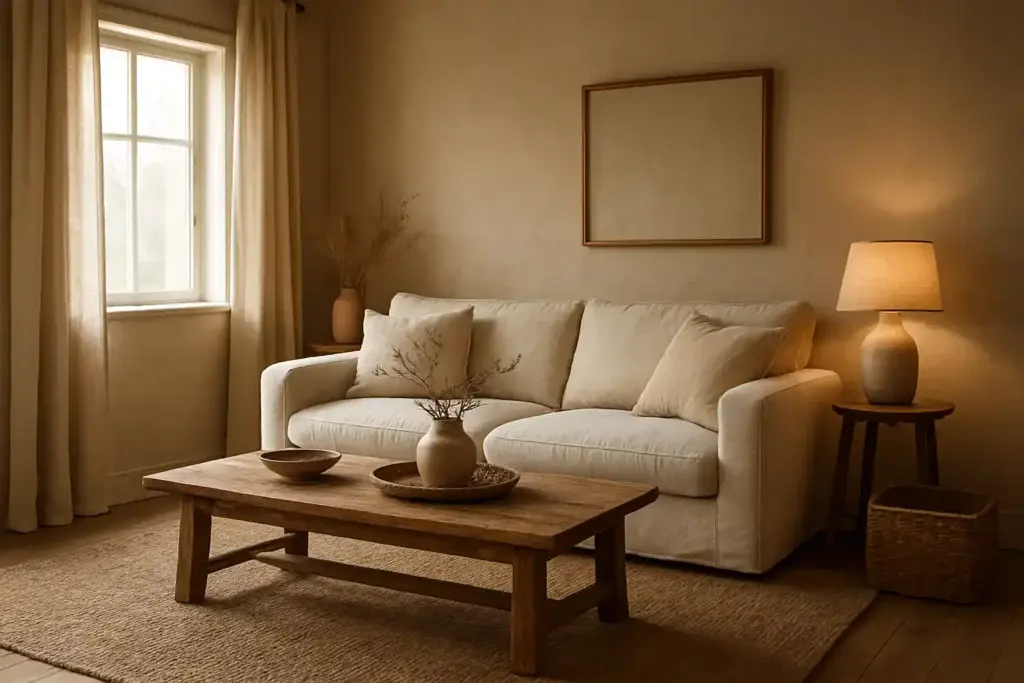
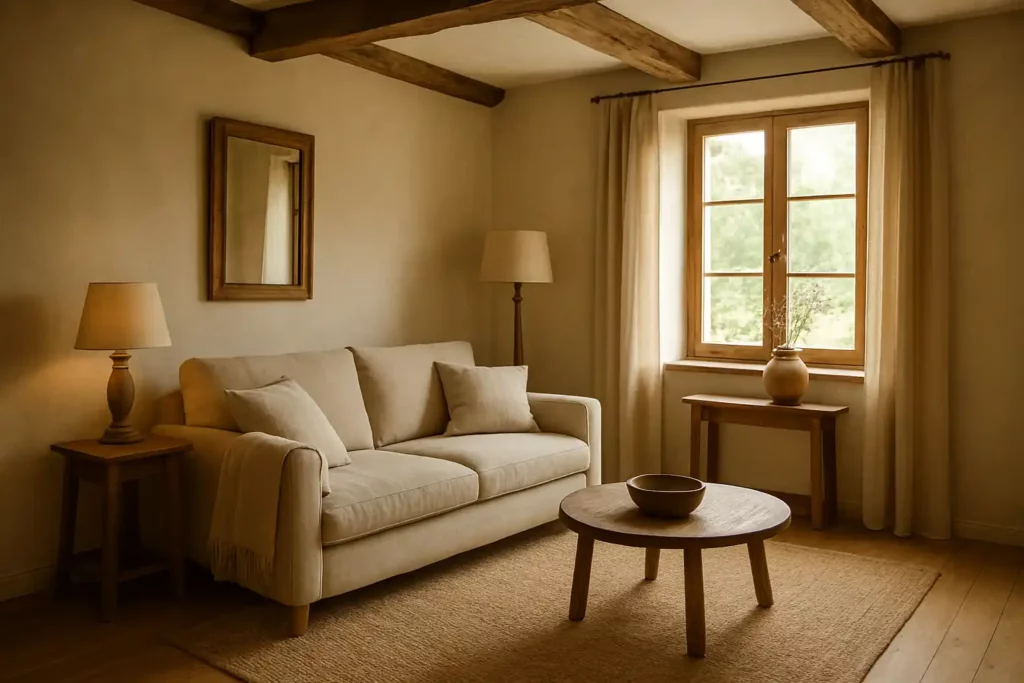
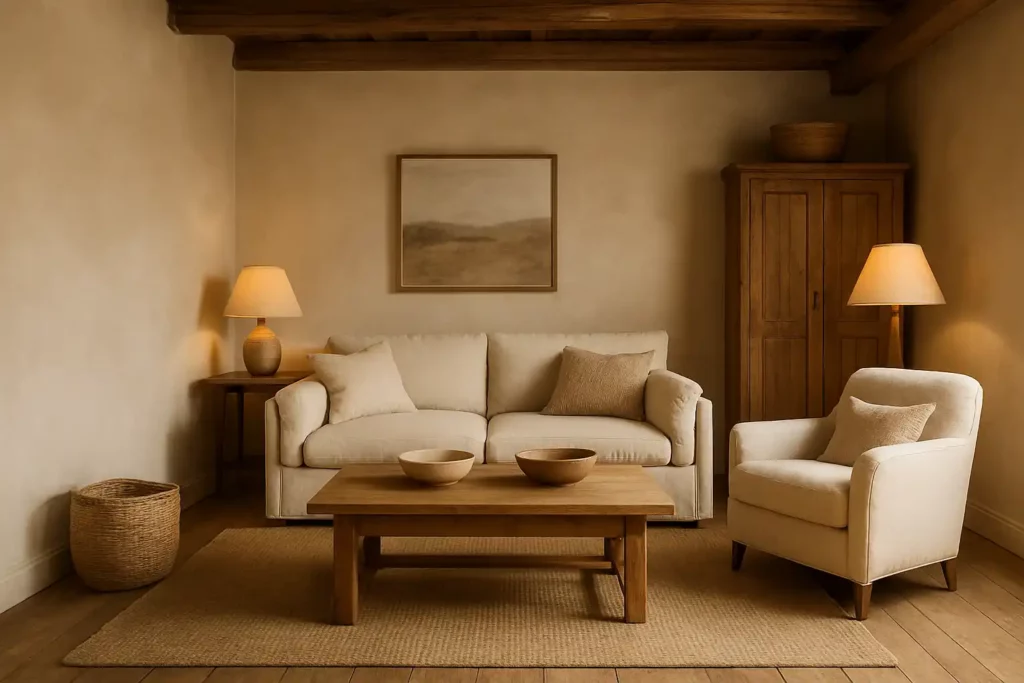
Rustic living room decor with neutral colors pairs the warmth of natural materials with a calm, flexible palette. Think wood grain, woven fibers, stone-like textures and soft shades of cream, taupe, gray and brown. The result can feel relaxed rather than rough, and collected rather than themed.
To get the balance right, begin with the room’s existing features, choose a small group of related neutrals, then add texture and a few purposeful rustic accents. Rustic living room decor with neutral colors does not require matching furniture or a full renovation; thoughtful layering can make the style work in a rental, a compact room or a home with modern finishes.
Explore rustic living room decor for options to consider.
The look to aim for: rustic living room decor with neutral colors
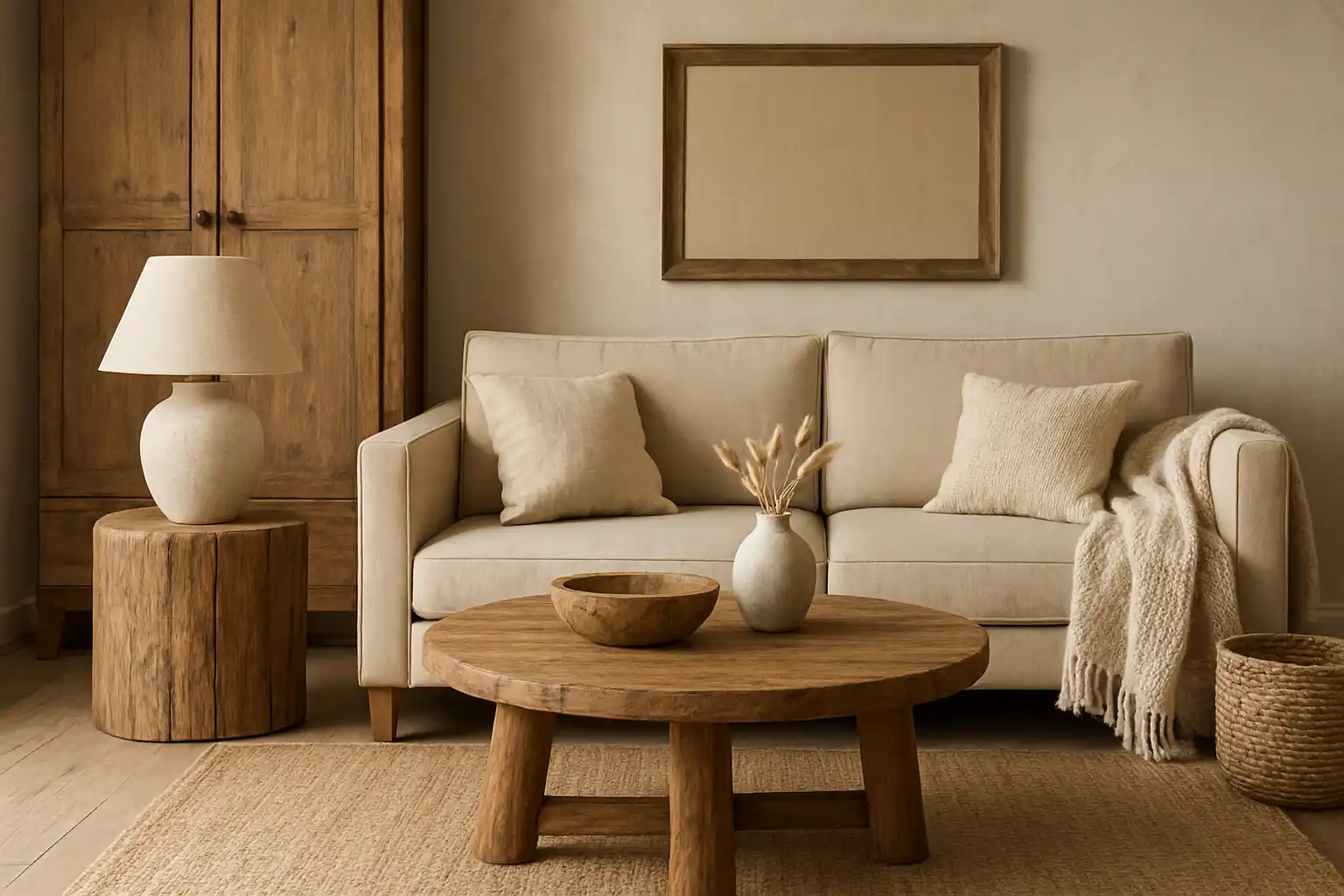
A successful rustic-neutral room feels grounded, comfortable and lived in. Its materials carry much of the visual interest, so a plain wall or simple sofa can still feel inviting when paired with a nubby throw, a timber side table and a woven basket. Let natural variation show: knots, grain, softly uneven finishes and handmade-looking surfaces keep a neutral scheme from appearing flat.
Start with a restrained palette rather than trying to include every neutral. Choose one light base, such as ivory or warm white; one middle tone, such as sand or mushroom; and one deeper anchor, such as walnut, charcoal or muted brown. If the room already has cool gray flooring or a white fireplace, use those as fixed parts of the palette instead of fighting them. A small touch of muted green or rust can add contrast without pulling the room away from its quiet foundation.
Scale matters as much as color. A heavy reclaimed-wood coffee table may suit a generous room but overwhelm a narrow one. In smaller spaces, use open-legged furniture, pale upholstery and baskets that can be tucked away. Keep a clear path through the room and leave some surfaces uncluttered so the materials have room to register.
Ideas to try for rustic living room decor with neutral colors
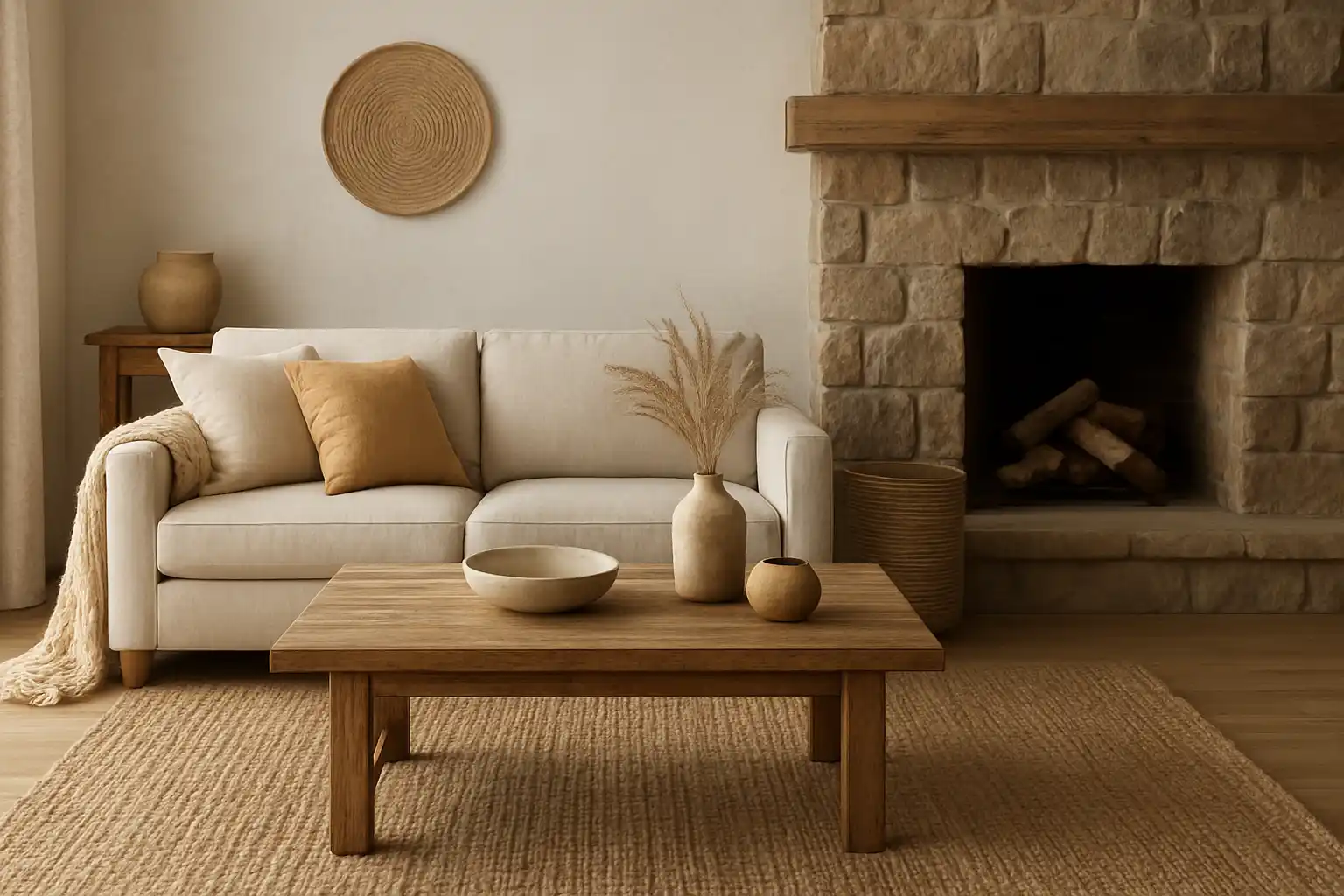
Use these ideas as a menu, not a checklist. Choose a few that respond to your room’s light, layout and existing furnishings; repeating every rustic cue can make the space feel staged.
1. Build a layered neutral palette
Why it works: Several related shades create depth without relying on strong color contrast. How to apply it: Use a light wall or rug as the broadest field, a mid-tone sofa or curtains for visual weight, and darker wood or metal in smaller doses. Keep undertones compatible: warm beige and honey wood usually sit comfortably together, while cool gray may call for more muted, less golden accents. Where it fits: This approach suits rooms with existing neutral upholstery or wood floors. Constraint: In a dim room, too many dark browns can absorb light, so reserve deep tones for limited accents.
2. Let wood add character, not clutter
Why it works: Wood brings natural pattern and warmth to an otherwise quiet scheme. How to apply it: Pick one prominent wood element, such as a coffee table, mantel or open shelf, then repeat its tone once or twice elsewhere. Mix finishes gently rather than forcing an exact match. Where it fits: A timber table can anchor a seating area, while a smaller stool or frame can add warmth where floor space is tight. Constraint: Several large, strongly grained pieces may compete. If the room already has visible beams or wood flooring, balance them with softer fabrics and simpler furniture.
3. Mix soft and rugged textures
Why it works: Texture makes a restrained color palette feel inviting and gives the eye something to explore. How to apply it: Combine a smooth surface with a tactile one: a linen-look cushion beside a knitted throw, a woven basket near a leather-look chair, or a matte ceramic vessel on a timber shelf. Where it fits: Textiles work especially well around the sofa and reading chair, where comfort is part of the room’s purpose. Constraint: Too many coarse or highly textured items can feel busy. Limit the most pronounced textures and leave quieter surfaces between them.
4. Use lighting to soften the materials
Why it works: Warm, layered light can bring out the variation in wood, fabric and woven finishes. How to apply it: Combine general room lighting with a floor or table lamp near the seating area. Choose shades that diffuse light and finishes that relate to the room’s metal or wood accents. Where it fits: A lamp beside a sofa adds useful reading light and helps define a smaller conversation zone. Constraint: One central ceiling fixture may leave corners feeling flat; add lamps only where they serve a purpose and can be safely positioned.
5. Add restrained, personal accents — rustic living room decor with neutral colors
Why it works: A few meaningful details make the room feel individual without crowding its calm palette. How to apply it: Try a landscape print, a handmade-looking bowl, or a small arrangement of branches in a simple vessel. Repeat a shape or material rather than buying a matching set. Where it fits: These accents suit a shelf, mantel or side table that is visible from the main seating area. Constraint: Small decorative objects can multiply quickly. Group a few together and store the rest so the room retains open space.
A useful shopping sequence is to check what you own before buying anything new. Measure the seating area, note the room’s main wood tones, and list the practical needs the room must meet. Rustic living room decor with neutral colors becomes easier to plan when a new piece has a clear job—adding storage, improving comfort or balancing a strong visual element.
- Choose a palette of two or three neutrals, then add wood and texture.
- Check furniture scale and walking paths before purchasing.
- Repeat a finish or material selectively instead of matching everything.
- Use baskets, trays or closed storage to keep everyday items contained.
Bringing it together
Arrange the room around how people actually use it. Set the main seating so conversation feels natural and access to doors, windows and storage remains clear. If a fireplace or large window is the strongest feature, let it guide the furniture layout rather than adding a new focal point that competes for attention.
Next, balance visual weight. A substantial sofa can be offset by a lighter-legged chair or an open shelf. If the room has a dark timber table, repeat that tone in a frame or lamp base, but avoid distributing dark objects evenly just for the sake of symmetry. A little repetition helps the room feel connected; variation keeps it from looking like a showroom.
Before calling the arrangement finished, view it from the doorway and from the main seat. Notice whether one corner feels bare, whether the coffee table is easy to reach, and whether cushions or decor interfere with daily use. Rustic living room decor with neutral colors should support comfort first; edit anything that is attractive but awkward in the way you use the room.
Pro tip: Take a daylight photo of the room before shopping, then compare samples and finishes against it. This makes it easier to spot undertone clashes and helps you remember which pieces already dominate the space.
Budget and space adaptations
You can make a noticeable change without replacing the largest pieces. Begin with a rearrangement, a washable neutral cover, cushion covers or a lamp that solves a lighting problem. Reuse sturdy baskets and serving trays as storage or surface organizers. If you do buy a substantial item, prioritize dimensions, durability and everyday usefulness over a distressed finish that may not suit your room long term.
In a small living room, keep the biggest surfaces visually light and choose furniture that earns its place. A compact side table can replace a bulky cabinet, while a storage ottoman can provide both a footrest and a place to tuck away blankets. Rustic living room decor with neutral colors can still have depth in a tight space: use texture in cushions and a rug, and keep larger patterns or dark finishes to a minimum.
For a rental or a room where permanent changes are not practical, focus on movable layers. Add a freestanding lamp, framed art that can be rehung, a throw, or a rug that defines the seating area. In a large open-plan room, use the rug and furniture grouping to establish a living zone. Leave enough visible floor around the group to preserve circulation, and repeat one or two materials nearby to connect the area with the rest of the space.
Shopping thoughtfully also means checking care requirements and construction details. Consider whether a fabric can handle the household’s routine, whether a table has enough usable surface, and whether a basket or cabinet fits the items it needs to hold. Neutral does not automatically mean practical; choose finishes and materials that make sense for your daily life.
Key takeaways:
- Let a limited palette and varied textures create interest.
- Choose rustic accents that suit the room’s scale and existing finishes.
- Shop for function, care needs and fit as carefully as appearance.
Your next step
Start with a short room audit: identify the strongest existing feature, choose your light, middle and dark neutrals, and decide what the space needs to do better. Then make one change at a time, beginning with layout or lighting before adding decorative pieces. Rustic living room decor with neutral colors works best when each layer feels considered and the room remains easy to live in.
Before placing an order, measure the available space and check that the item’s material, finish and upkeep suit your household. Save a photo of the room and a simple list of what you already own; use both to guide the next purchase. A few well-chosen updates can bring the look together without making the room feel overdone.