
Affiliate disclosure: We may earn a commission when you buy through links in this post.
Rustic rooms feel polished when natural materials, strong proportions, and thoughtful details work together. You do not need a matching furniture set or a room full of reclaimed wood. To create rustic furniture that looks expensive, choose a few pieces with character, give them space, and balance their rougher textures with clean shapes and calm colors.
The key is editing. A handsome timber table can feel special on its own, while several heavy, distressed pieces competing for attention may make a room feel crowded. Use the ideas below to choose furniture, combine finishes, and adapt the look to your budget and available space.
The Look To Aim For: Rustic Furniture That Looks Expensive
Think of rustic style as a balance between natural character and visual control. Wood grain, visible knots, iron details, and softly worn finishes bring warmth. Clean-lined upholstery, uncluttered surfaces, and a limited palette keep that warmth from feeling overly themed.
When shopping for rustic furniture that looks expensive, look beyond a dramatic finish. Check whether the piece has balanced proportions, a stable construction, and details that feel intentional. A simple table with a well-shaped edge can look more considered than one covered in decorative hardware or heavy distressing.
Choose a small group of materials to repeat, such as medium-toned wood, blackened metal, and linen-like fabric. Repetition creates cohesion without requiring every item to match. Keep the overall palette restrained, then let one or two pieces provide the strongest grain or texture.
Ideas To Try
Use these ideas as starting points rather than a checklist. Choose the ones that suit your room, and leave enough breathing space for each piece to be noticed.
1. Let The Wood Lead
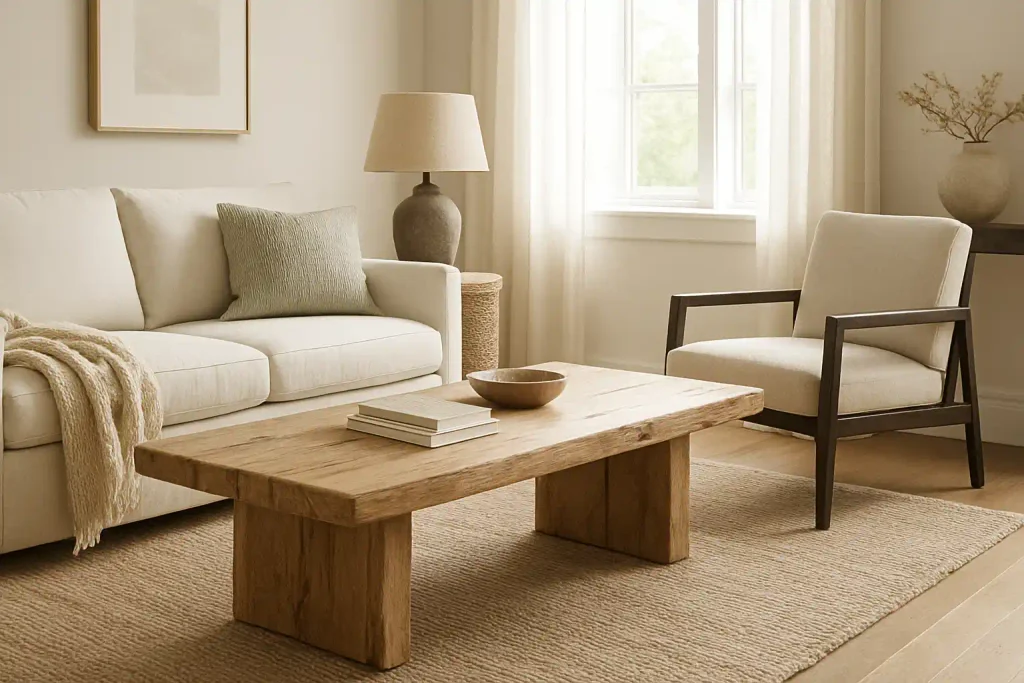
A substantial wood piece can anchor a room and give the rustic look a clear focal point. Consider a dining table, a bed frame, a console, or a coffee table with visible grain and a shape that suits the room. For rustic furniture that looks expensive, prioritize a finish that lets the material show through instead of relying on artificial wear marks.
Pro tip: Take a photo of the room before shopping and note the colors, wood tones, and finishes already in view. It helps you avoid buying a piece that looks appealing alone but clashes at home.
Apply the idea by keeping nearby furnishings quieter. Pair a prominent table with straightforward chairs, or balance a textured bed frame with simple bedding. This works especially well in dining rooms and living areas where one central piece can organize the layout. The constraint is visual weight: a thick, dark piece can overwhelm a small room, so check its dimensions and surrounding clearance before committing.
2. Pair Rustic With Refined Lines
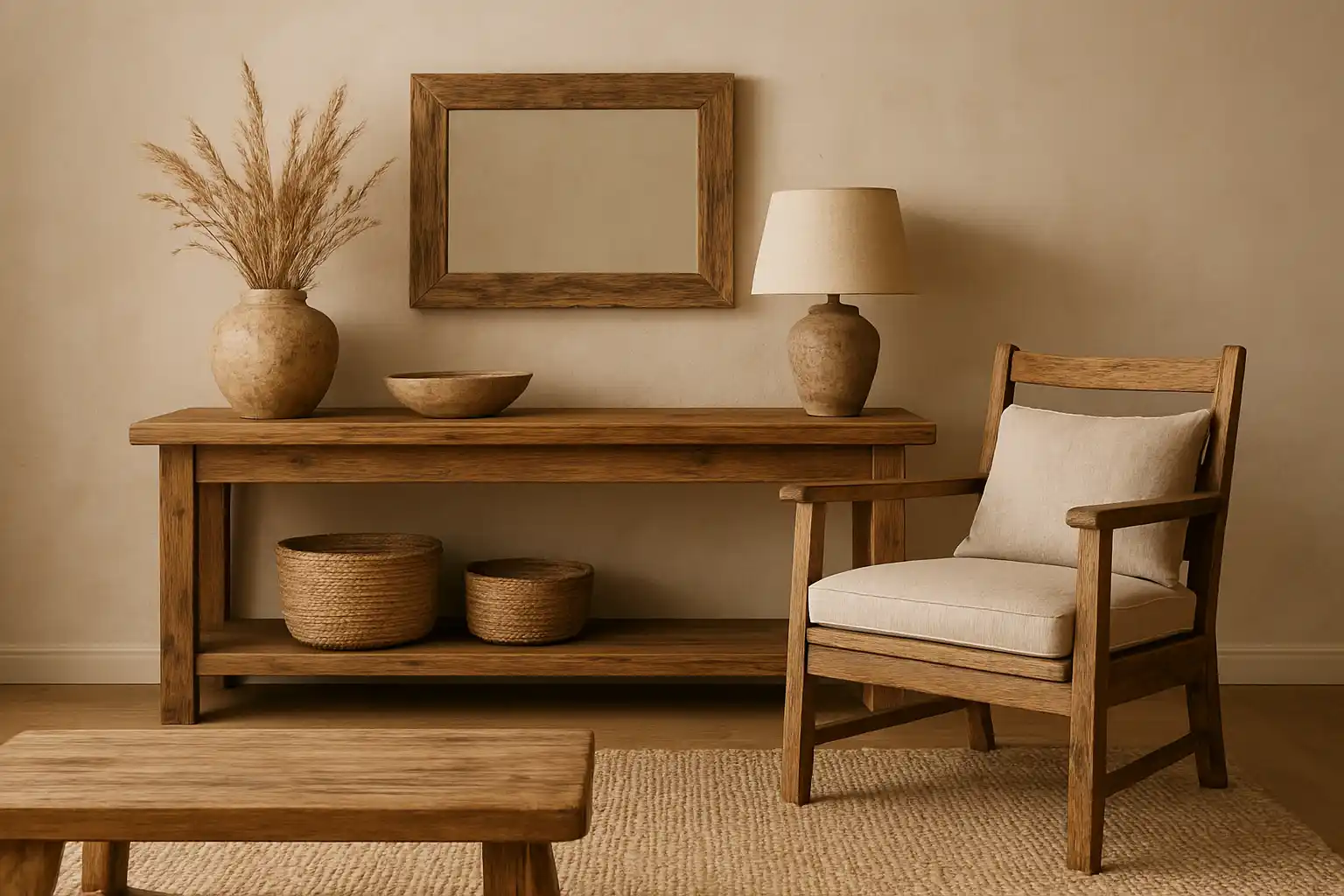
Contrast makes rustic materials feel deliberate. A sturdy timber sideboard can sit beneath a simple mirror, while a rugged dining table can be surrounded by chairs with slim legs. Smooth upholstery, clean silhouettes, and uncomplicated lamps create a counterpoint to rougher surfaces.
Try one clear contrast at a time. In a bedroom, combine a wooden bed with crisp, plain bedding. In a living room, place a solid coffee table beside a sofa with a tailored profile. This approach suits homes where full-on cabin styling would feel too heavy. Avoid mixing too many competing shapes, since a room still needs a consistent visual rhythm.
3. Use Scale To Make Rustic Furniture That Looks Expensive
Proportion often matters more than ornament. A piece that fits its setting can feel purposeful, while one that is too small may look like an afterthought and one that is too large can block movement. Measure the room, note doorways and walking routes, then compare those dimensions with the furniture before buying.
In a spacious room, a generous dining table or wide console can hold its own. In a compact space, choose a narrower profile or furniture with open space beneath it. This idea works in any room because good scale improves both appearance and use. Its limit is that measurements on a product page do not always show how bulky an item will feel, so mark its footprint on the floor with painter’s tape when possible.
4. Finish With A Restrained Mix
Layering a few textures makes a room feel inviting: wood, woven fabric, metal, and perhaps a natural-fiber rug. Repeat a finish at least once so it feels connected to the rest of the room, but avoid collecting every rustic material in one space. A little variation adds depth; too much can make the furnishings compete.
Pro tip: Before adding accessories, remove a few items from the room and look at the furniture again. It is easier to see which materials or colors are missing when the surfaces are not crowded.
Try a wood console with a woven basket below and a modest metal lamp above. In a dining area, use fabric seat cushions to soften a solid table. This works well when the room needs warmth without additional large furniture. Keep accessories practical and leave some surfaces clear, especially if the room is already busy.
Bringing It Together With Rustic Furniture That Looks Expensive
Start with the room’s main function, then select the anchor piece. A dining room may need a table first; a living room may be organized around seating; a bedroom may begin with the bed. Once that piece is in place, choose supporting furniture that is useful and visually lighter.
Use a simple plan for finishes: select one dominant wood tone, one secondary material, and a small number of accent colors. Matching every wood surface is not necessary, but undertones should make sense together. If one piece is warm and golden while another is cool and gray, introduce a rug or upholstery color that helps them relate, or keep the finishes farther apart so the difference looks intentional.
For rustic furniture that looks expensive, pay attention to the small decisions around the furniture, too. Keep cords tucked away, align rugs with the seating arrangement, and leave enough room to open drawers and walk comfortably. A tidy layout gives distinctive materials room to stand out.
Explore Rustic Furniture for options to consider.
Lighting also changes how finishes appear. Use more than one light source where practical, such as overhead lighting paired with a table or floor lamp. Warm, even light can make wood and fabric feel welcoming, while harsh glare may emphasize scratches or uneven color. Consider the room’s natural light before selecting a very dark finish.
Budget And Space Adaptations
A considered room does not depend on buying everything at once. Decide which item has the greatest impact, then direct more of your budget toward finding the right size, shape, and finish for that piece. Fill in around it gradually with simpler furnishings and accessories that share a material or color.
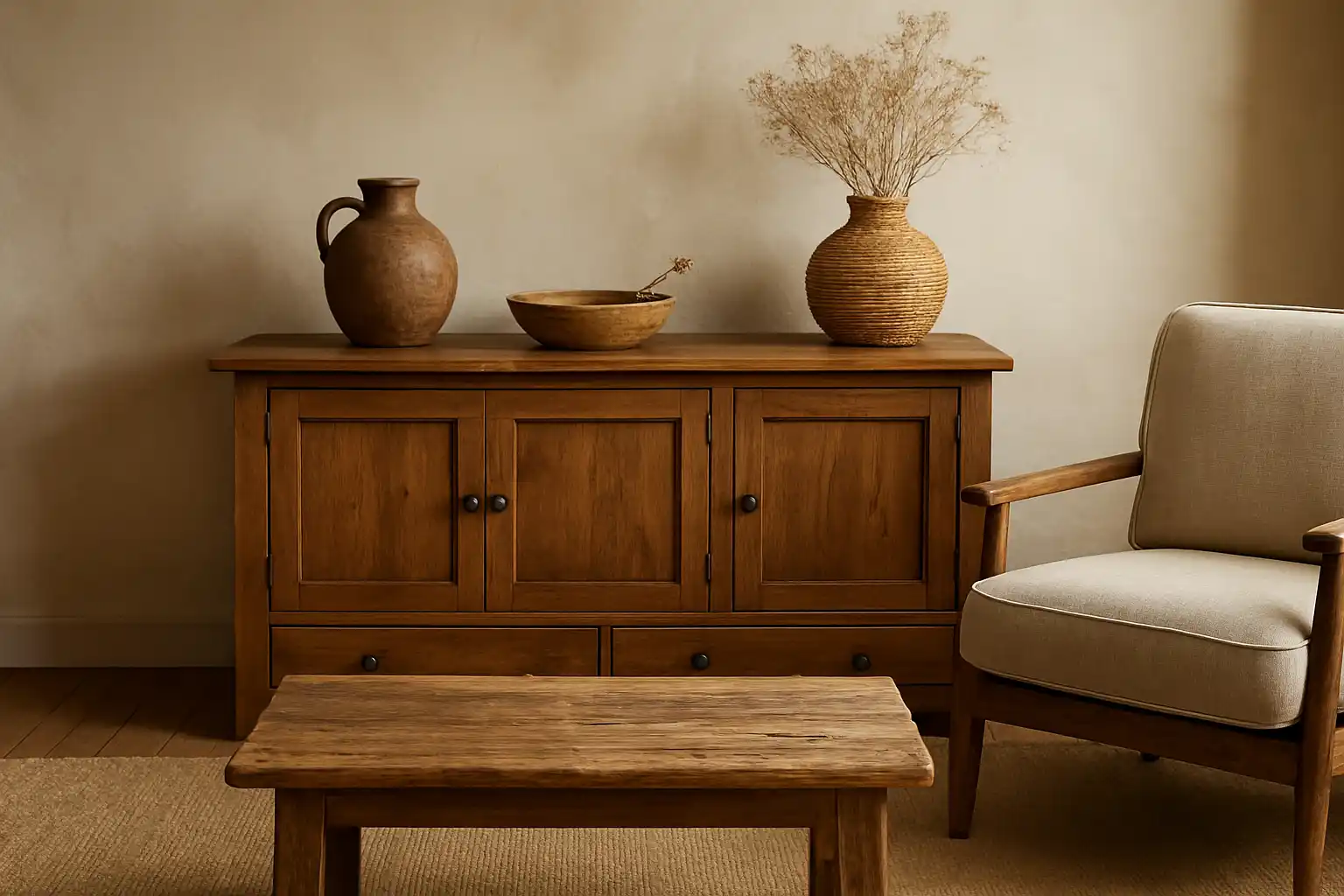
When comparing options, inspect the details that affect everyday use: stability, drawer movement, joinery, finish consistency, and whether the dimensions suit your layout. For secondhand pieces, look closely for structural damage, strong odors, pests, or repairs that may need specialist attention. A low purchase price is not a bargain if the item is unsafe or costly to restore.
In a small home, use fewer pieces with clear functions. A narrow console can provide a landing spot without taking over a hallway, while a storage bench can combine seating and organization. Choose open legs or lighter finishes when you want to keep the room feeling airy. For renters or frequent movers, favor manageable sizes and finishes that work in more than one room.
Key takeaways:
- Balance natural textures with clean shapes and an edited palette.
- Choose furniture that fits the room and gives the layout enough breathing space.
- Start with an anchor piece, then add useful supporting furniture gradually.
- Check construction, condition, and dimensions before making a purchase.
To make rustic furniture that looks expensive on a modest budget, focus on care and restraint rather than decorative extras. Clean and maintain pieces according to their material and finish, use protective pads where needed, and avoid overloading surfaces. A few well-kept items can create a stronger impression than a room filled with trend-led accessories.
Your Next Step
Begin with one room and identify the piece that should anchor it. Measure the available space, note the finishes you already own, and decide what qualities matter most, such as storage, durability, or a particular wood tone. Then compare a short list of options rather than shopping for a whole room at once.
As you make choices, ask whether each item supports the room’s function, palette, and proportions. That question helps you build rustic furniture that looks expensive without chasing a showroom look or buying pieces that do not fit your life.
Take your measurements and choose the room’s anchor piece first. A clear starting point makes it easier to build a warm, cohesive space one considered decision at a time.