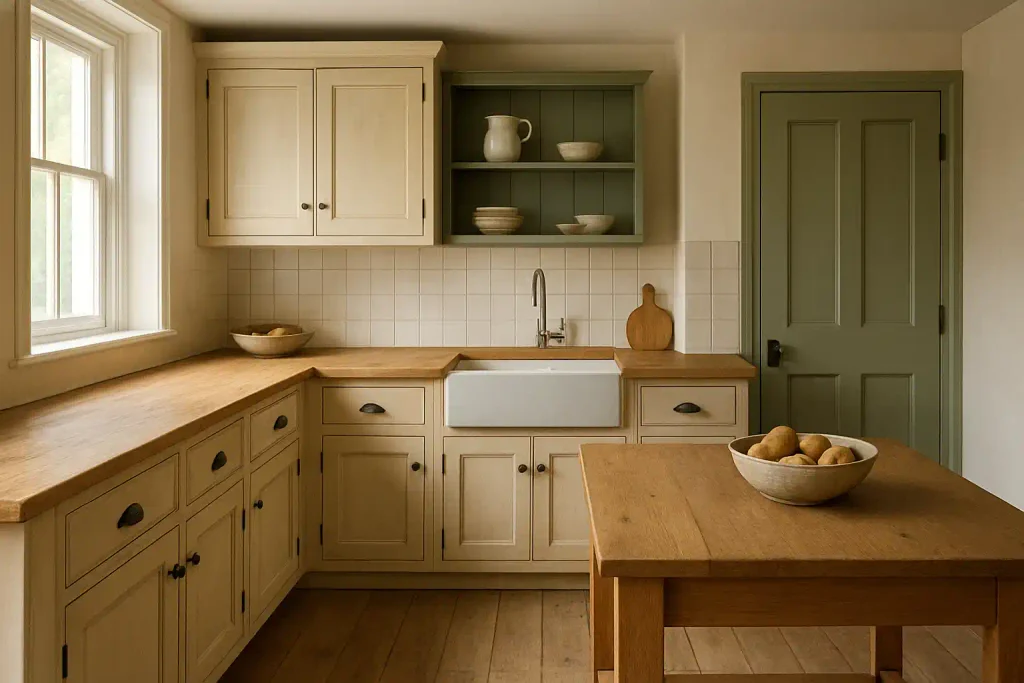
Affiliate disclosure: We may earn a commission when you buy through links in this post.
The Look To Aim For With Rustic Kitchen Decor With Stone Accents
Rustic kitchen decor with stone accents works best when the stone feels connected to the rest of the room, not added as a heavy feature without context. Pair its natural texture with warm wood, simple finishes, and a few useful objects. The result can feel grounded and welcoming without making a kitchen look like a cabin set.
Start by choosing one main stone surface, such as a backsplash, floor, or island detail. Then repeat its colors in small ways through hardware, textiles, pottery, or wood tones. This approach makes rustic kitchen decor with stone accents feel coordinated, whether your home is a farmhouse, cottage, or contemporary space.
Consider practical needs before choosing materials. Kitchens collect grease, moisture, and food splashes, so placement and maintenance matter as much as appearance. Textured stone can look beautiful but may need sealing or more careful cleaning than a smooth, nonporous surface. Ask about care requirements before buying or installing anything.
Ideas To Try For Rustic Kitchen Decor With Stone Accents
Use the ideas below as a menu, not a checklist. A single well-chosen stone feature can have more impact than several competing surfaces. Think about sightlines from the doorway and the areas that need protection or visual emphasis.
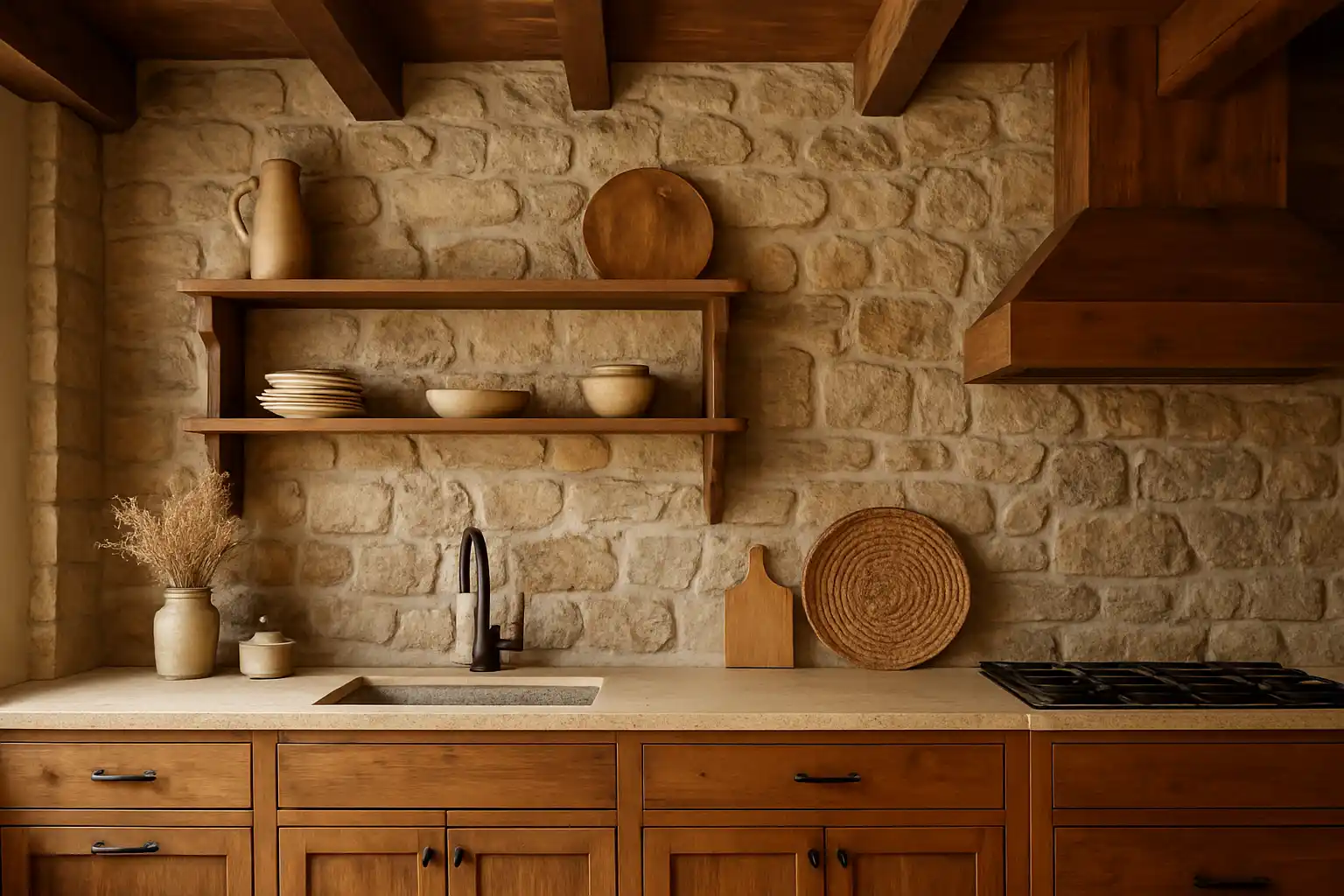
1. Rustic Kitchen Decor With Stone Accents Starts With A Backsplash
A stone backsplash gives a working wall texture and helps define the cooking area. Choose a finish that suits your cleaning habits, and keep grout lines manageable behind the range. If natural stone is too much upkeep, consider a stone-look tile with a smoother surface.
2. Frame The Range With A Stone Focal Point
A stone panel or short feature wall around the range creates a natural focal point. Keep nearby cabinetry and counters quieter so the area does not feel crowded. Confirm that the chosen material is appropriate for the heat and installation conditions in that location.
3. Add A Stone Shelf Niche
A small recessed niche can display a few everyday bowls or cooking oils while giving a plain wall depth. It fits especially well beside a range or prep zone. Keep the shelf shallow and avoid storing items that can be damaged by heat, splashes, or grease.
4. Repeat Rustic Kitchen Decor With Stone Accents On An Island
A stone island end panel or modest stone detail connects the island to a nearby backsplash without covering every surface. This can work in an open-plan kitchen where the island is visible from other rooms. Check that edges are finished safely and that the feature will not interfere with seating.
Pro tip: Bring home samples of your stone, cabinet finish, and countertop color before committing. Compare them in morning and evening light, since warm and cool tones can shift across the day.
5. Choose A Stone Window Ledge
A stone sill is a durable landing place for a small herb pot or a simple ceramic vessel. It suits kitchens where the window gets strong visual attention. Measure carefully around the window trim, and choose a finish that will not show every water mark.
6. Mix Stone With Reclaimed-Look Wood
Pair a stone wall or counter detail with wood shelves, a butcher-block work surface, or a timber-framed hood. The contrast keeps the room from feeling cold. Use wood finishes with compatible undertones, and keep food-preparation surfaces suitable for their intended use.
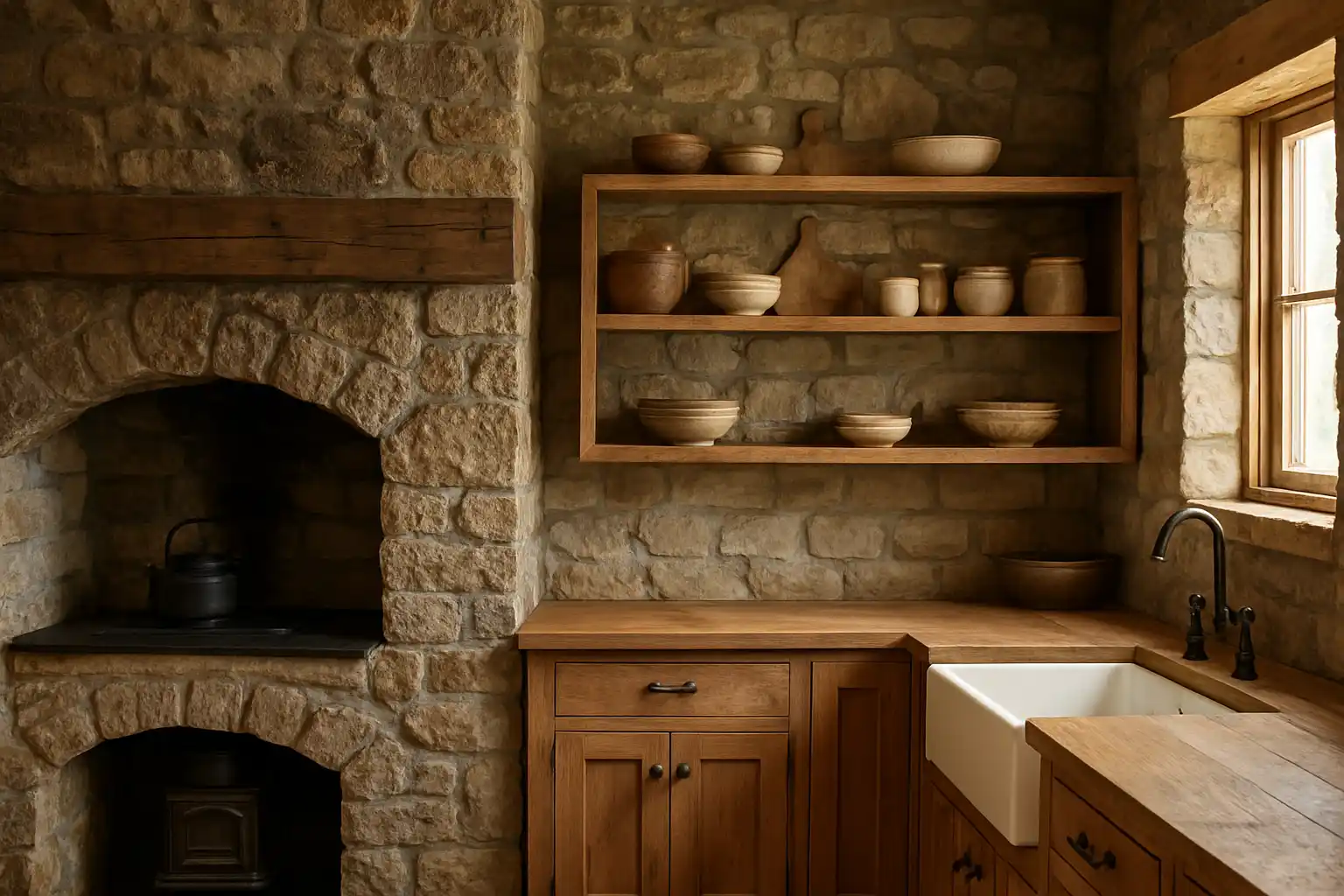
7. Create A Stone Hearth Effect
If the kitchen includes a fireplace or a decorative cooking-area surround, stone can suggest the warmth of an old hearth. Keep the shape simple and let the material provide the detail. Any feature near a working appliance must follow the appliance and installer’s clearance requirements.
8. Use Stone On A Small Counter Section
A dedicated stone landing area beside the sink or range adds texture without requiring a full countertop replacement. It can make sense during a phased update. Match thickness and edge profiles carefully, and verify that the transition between materials is easy to clean.
9. Give Rustic Kitchen Decor With Stone Accents A Natural Color Story
Choose stone with tones that can be echoed in wood, cabinet paint, or accessories. Warm beige stone may suit honey-colored timber, while gray stone can pair well with darker woods. Rustic kitchen decor with stone accents feels calmer when the palette stays selective rather than introducing many unrelated colors.
Explore Rustic kitchen decor for options to consider.
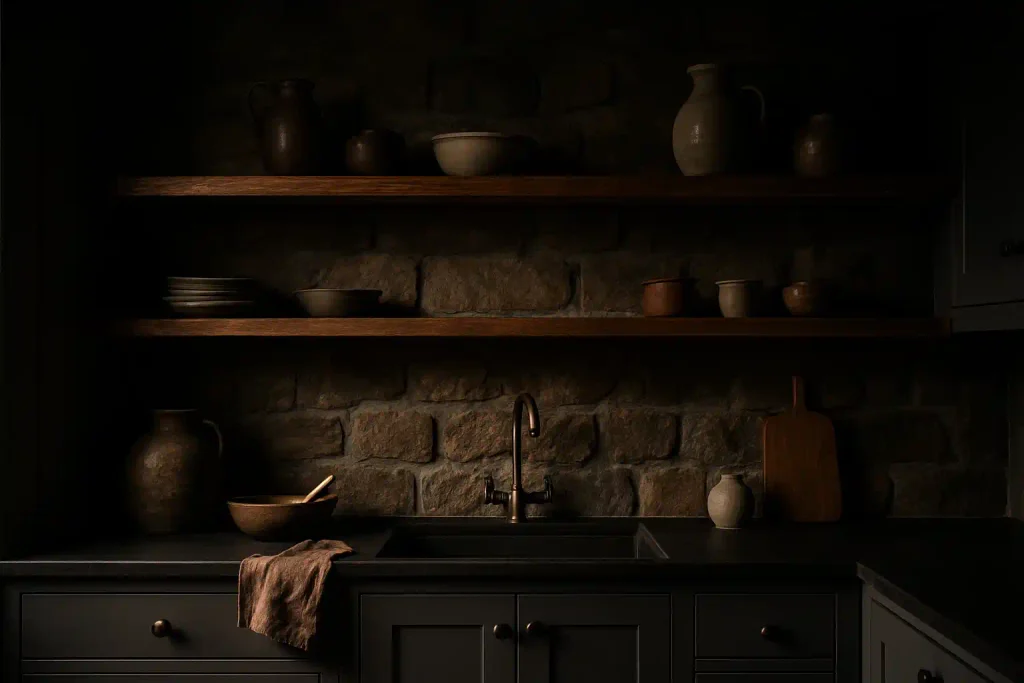
10. Add A Stone Backsplash Behind Open Shelves
A stone backdrop gives open shelves a textured setting and makes everyday dishes part of the display. This works best when the shelves hold a small, edited collection. Leave enough clear wall to let the stone show, and avoid placing delicate items in a busy cooking zone.
11. Use A Stone Threshold Between Kitchen Zones
A narrow strip of stone can mark the transition between a kitchen and an adjoining dining area, particularly where floor materials change. Keep the transition level and secure to reduce trip risks. A simpler flooring layout may be the better choice in a compact room.
Pro tip: Take a photo of the kitchen from its main entrance and review it alongside your samples. It can help reveal whether a proposed stone feature will balance the room or dominate the view.
12. Highlight A Pantry Or Coffee Nook
Use stone tile or a small slab as the backdrop for a pantry counter or coffee station. The detail can make a secondary corner feel intentional without competing with the main kitchen. Choose a finish that handles the area’s likely spills and leave enough space for appliances.
13. Bring Rustic Kitchen Decor With Stone Accents To A Breakfast Bar
A stone counter edge or end panel can give a breakfast bar a sturdy, grounded look. This option suits kitchens where the bar is a natural gathering spot. Keep the seating side comfortable, with a suitable overhang and no sharp corners at knee level.
14. Balance Rough Stone With Smooth Surfaces: Rustic Kitchen Decor With Stone Accents
Combine rough-cut stone with smooth cabinet fronts, simple tile, or polished metal. The contrast keeps texture from overwhelming the room and makes cleaning easier in active areas. Use the roughest finish where hands and food are less likely to touch it.
15. Choose A Stone-Look Floor For A Rustic Foundation
Stone-look porcelain tile can provide a practical visual foundation in a kitchen that sees frequent spills. It offers a consistent pattern and is available in a range of appearances. Check slip resistance, grout needs, and how the floor feels underfoot before selecting a product.
16. Add Stone Through A Small Decorative Detail
If a renovation is not planned, bring in a stone mortar and pestle, a soap dish, or a small serving board with a stone surface. These pieces introduce texture without construction. Keep decorative objects out of the way of chopping, cooking, and other everyday tasks.
17. Pair Stone With Handmade-Look Tile
Use handmade-look tile on a nearby wall or in a niche to soften the geometry of stone. The two materials can share a color family while differing in texture. Limit the combination to a defined area so patterns and grout lines do not compete across the whole room.
18. Let Rustic Kitchen Decor With Stone Accents Stay Simple
Choose one stone feature and support it with a few natural materials, rather than filling every open surface with rustic accessories. This gives the eye a place to rest and makes the stone feel deliberate. Rustic kitchen decor with stone accents is especially effective when daily-use items are also attractive and easy to reach.
19. Use Stone-Colored Textiles For A Low-Commitment Update
Linen towels, a washable runner, or neutral seat cushions can echo the colors in a stone feature. This is a flexible way to unify the room without adding another hard surface. Choose textiles that can be laundered, and keep runners clear of appliance doors and walking paths.
20. Connect Stone To Metal Finishes
Repeat a subtle tone in the stone with cabinet pulls, a faucet, or a pendant finish. Warm metals can complement earthy stone, while darker finishes may sharpen a more muted palette. Stick to a small number of metal finishes to keep the room cohesive.
21. Finish With A Practical Display
Style a stone shelf or counter corner with a wooden board, a ceramic bowl, and one useful plant or utensil crock. Leave working surfaces mostly open. This gives the room a lived-in feel while preserving the space needed to prepare meals.
Bringing It Together
Before committing to a feature, look at the whole room: cabinet color, countertop, floor, lighting, and the stone’s texture. Rustic kitchen decor with stone accents comes together through repetition, not exact matching. A wood tone repeated on a shelf or a stone color picked up in pottery can connect different finishes naturally.
Key takeaways:
- Choose one main stone feature before adding supporting details.
- Balance stone texture with warm wood and simpler finishes.
- Check maintenance, safety, and installation needs for each location.
- In a small or budget-conscious kitchen, use stone selectively.
Use this short planning list before buying materials:
- Choose the main stone feature and its location.
- Check cleaning, sealing, and repair requirements.
- Compare samples with fixed finishes in different light.
- Confirm measurements, clearances, and installation needs.
- Decide which wood, metal, and textile details will support the feature.
Budget And Space Adaptations
In a small kitchen, use stone on one contained surface, such as a backsplash section, window ledge, or coffee nook. A large expanse of busy texture can make a compact room feel visually crowded. Carry the stone color through accessories instead of repeating the material everywhere.
For a lower-cost refresh, keep existing counters and cabinets, then add one small stone-look detail or a few accessories in natural materials. If you plan to install tile or stone yourself, research the substrate and waterproofing requirements first. Work that involves cutting, heavy slabs, electrical fittings, or appliance clearances may call for a qualified installer.
Your Next Step
Pick the area you most want to improve, then compare two or three stone samples with the finishes already in your kitchen. Rustic kitchen decor with stone accents does not require a full remodel: a carefully placed backsplash detail, shelf, or small accessory can establish the look. Start with the option that fits your space, upkeep preferences, and budget, and build around it gradually.