Affiliate disclosure: We may earn a commission when you buy through links in this post.
Good rustic living room wall decor feels collected rather than staged. It brings natural materials, useful objects and personal meaning into the room while leaving enough breathing space for the walls to feel calm. Start by asking what your room needs: warmth, a focal point, more visual balance or a place to display things you already enjoy.
The most inviting arrangements mix texture and scale instead of filling every blank patch. Wood grain, woven fibers, framed art and handmade pieces can work together when they relate to the furniture and colors nearby. The goal is a wall that feels at home with everyday life, not a display that looks like it arrived as a matching set.
The Look To Aim For: Rustic Living Room Wall Decor
Rustic style is less about making everything look old and more about showing the character of honest materials. Wood, linen, metal, ceramics and nature-inspired imagery bring warmth and variation. A little wear can add character, but using distressed finishes everywhere may make a room feel overly themed.
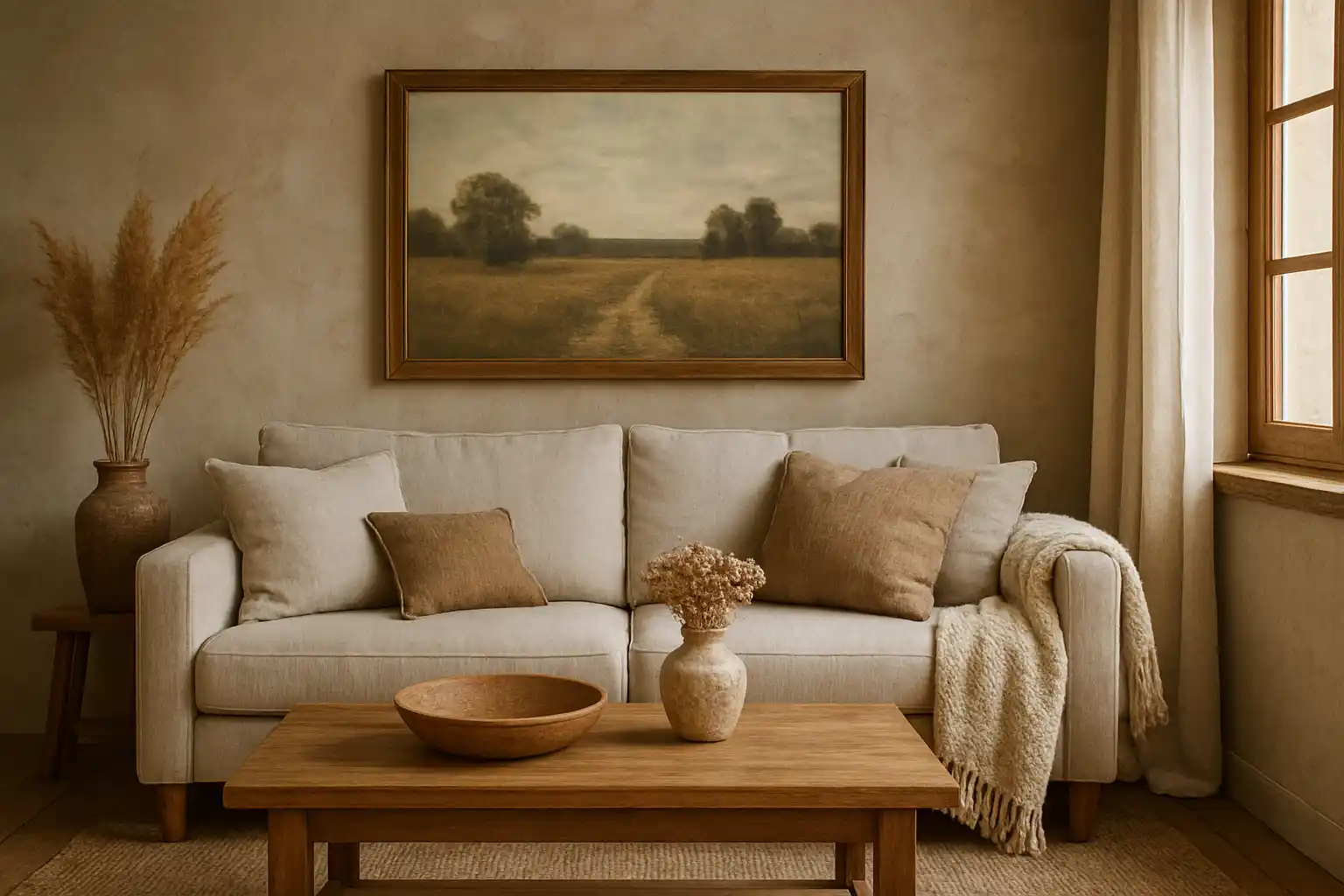
Think of the wall as part of the whole room. Repeat a material or color already present, such as the tone of a coffee table, leather chair or woven rug. Then introduce one or two contrasting textures. A dark frame can define a pale wall, while a soft textile can temper the look of brick or dark wood. This kind of rustic living room wall decor feels connected to its surroundings instead of relying on a single style cue.
Scale matters as much as style. A small picture can disappear above a broad sofa, while a large piece may overwhelm a narrow wall. Before hanging anything, cut paper templates close to the size of your pieces and test the layout. Look at it from the doorway and the main seating area, where you will see the arrangement most often.
Ideas To Try
Choose a starting point that suits the wall and the way you use the room. These four ideas can stand alone or work together in a restrained arrangement. Begin with one piece you genuinely want to look at, then add supporting elements only if the wall needs them.
Pro tip: Take a photo of your paper-template layout from the main seating position. The image can make awkward spacing or a crowded grouping easier to spot before you make holes.
1. Build A Collected Gallery Around One Anchor
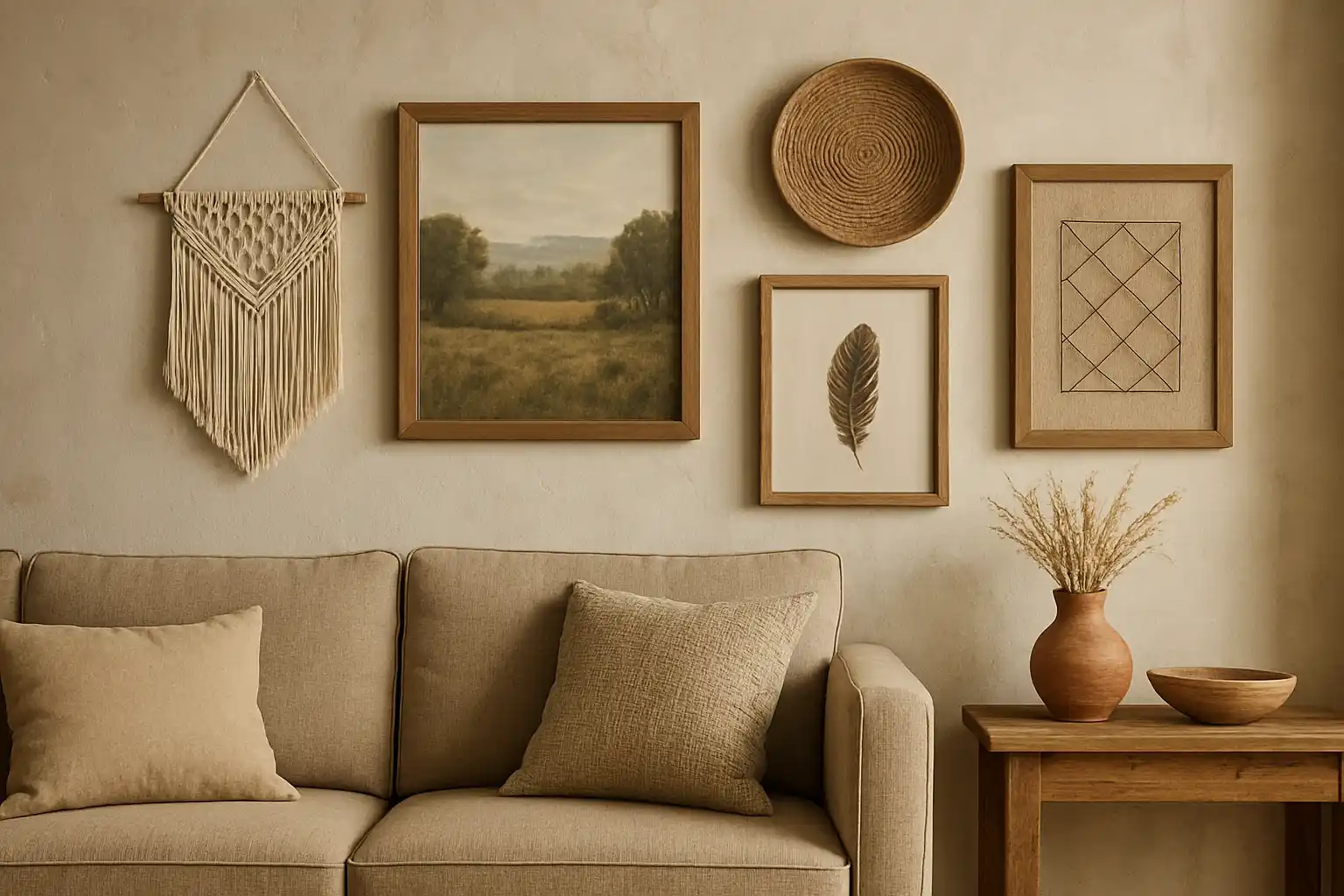
A gallery wall brings a layered, personal quality, especially when it pairs landscapes, botanical prints, family photographs or small pieces of folk art. Start with one medium or large anchor image, then arrange a few smaller frames around it. A shared frame finish or limited color palette can help different subjects feel related without making them identical.
Lay the arrangement on the floor first, keeping the gaps consistent enough to feel intentional. Transfer the layout to the wall with paper templates before making holes. This works well on a broad wall behind a sofa or one visible from the living room entrance. The main constraint is visual busyness: if the room already has patterned upholstery or many objects, use fewer frames and leave more wall visible.
2. Add A Wood Shelf For A Useful Display
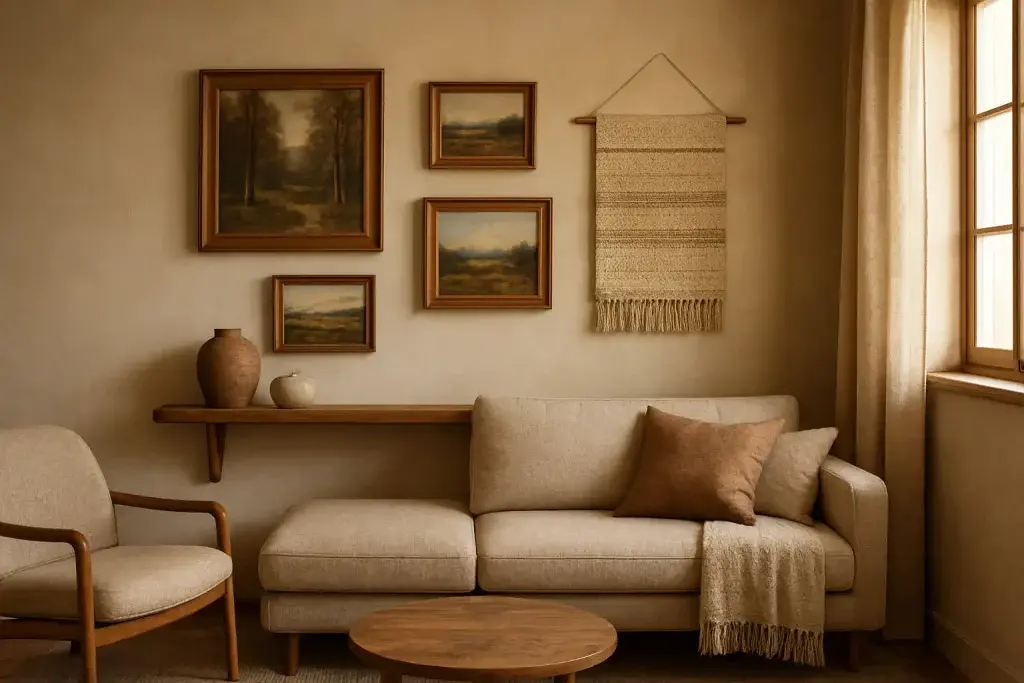
A wood shelf gives small objects a place to be seen and adds a strong horizontal line. Style it with a few books, a ceramic vessel and one framed print rather than filling every inch. Natural grain adds texture, and the display can change as your interests shift.
A shelf can work above a low cabinet, beside a fireplace or on a smaller wall where a gallery might feel crowded. Check the wall surface and choose fixings suited to both the shelf and its contents. A deep shelf can project into a walkway, and an overloaded one can look cluttered, so keep the display light and secure.
3. Bring In Woven Texture Or A Textile: Rustic Living Room Wall Decor
A woven wall hanging, a small rug intended for display or a framed textile can soften hard surfaces and add a handcrafted note. Natural fibers pair easily with wood and stone, while a muted pattern introduces color without competing with the room. This is a useful direction for rustic living room wall decor when a large framed print would feel too formal.
Explore rustic living room decor for options to consider.
Choose a wall where the textile can hang freely and be appreciated up close, rather than one where people or furniture are likely to brush against it. Consider dust, fading and cleaning before deciding on a location; textiles may need more care than framed art. If you are unsure, start with one modest piece instead of covering a large area.
Pro tip: Step back to the room entrance and the seating area as you plan. If one piece grabs all the attention, try moving it or simplifying the supporting objects before adding anything else.
- Choose two or three main tones, then let natural materials add variation.
- Mix shapes and surfaces, such as framed art, a rounded mirror and a linear shelf.
- Leave open areas so meaningful pieces have room to stand out.
- Use paper templates and check the layout from different parts of the room before hanging.
4. Use A Mirror Or Found Object As A Focal Point
A mirror in a wood or aged-metal frame can reflect light and add a sense of depth. Alternatively, a carefully chosen vintage sign, carved object or architectural fragment can provide a clear focal point. One distinctive item often makes more impact than several unrelated decorations competing for attention.
Place a mirror where it reflects something pleasant, such as a window, plant or favorite corner. For a found object, check its weight and mounting needs before choosing a spot. This option suits a smaller wall or an area that needs one clear point of interest. A very ornate or oversized piece, however, may overpower a compact room.
Bringing It Together With Rustic Living Room Wall Decor
Once you have chosen a direction, connect the display to the room with a few repeated details. A black frame might echo a lamp base; warm wood might pick up the tone of a side table. Repetition creates cohesion, but exact matching can make the arrangement feel overly coordinated. Let some contrast remain in the shapes, finishes or subjects.
Check the composition before committing. Look for balance rather than perfect symmetry: a larger frame on one side might be offset by a smaller frame and shelf on the other. Keep the visual center of a group at a comfortable viewing height, adjusting for the furniture below. Above a sofa, leave enough clearance for the display to feel connected to the seating without crowding anyone. These choices help rustic living room wall decor feel personal rather than like a themed set.
Layering does not mean adding more of everything. If a wall already has a strong material, such as exposed stone or timber, let that surface do some of the work. Add only what it needs for scale or a personal touch. This restraint helps the room feel thoughtful rather than crowded.
Budget And Space Adaptations
A warm wall does not require a matching set. Reuse frames you own, change what is inside them or group a few meaningful objects with prints. A single well-placed piece can be more effective than several purchases made just to fill an empty area. If you bring reclaimed materials indoors, check that they are clean and suitable for the room.
In a rental or a home where you want to limit wall changes, consider lightweight art, hanging options designed for your wall surface or a leaning frame on a stable cabinet. Follow the fixing product’s instructions and account for the object’s weight and the wall finish. Heavy mirrors, shelves and objects need secure support suited to the wall, not a light-duty adhesive.
Small rooms often benefit from fewer, clearer shapes. A vertical arrangement can draw the eye upward, while a mirror may reflect existing light. In a large room, a tiny frame can feel disconnected, so consider a larger anchor or a group with enough visual weight to relate to the furniture. In either setting, keep walkways and seating areas clear.
Key takeaways:
- Relate wall pieces to the room’s materials, colors and scale.
- Choose one focal point, then add texture and supporting pieces with restraint.
- Test the arrangement with paper templates before hanging anything.
- Match mounting methods to the wall, object weight and living situation.
If your budget is tight, make changes in stages. Start with the main wall and live with the arrangement before adding more. That pause helps you judge whether the display supports how you use the room, instead of turning the project into a race to fill every blank space. Rustic living room wall decor can grow gradually as you find pieces that suit the space.
Your Next Step
Pick one wall that would benefit most from added warmth or personality. Decide what it needs before shopping: a focal point, texture, useful display space or a more personal collection. Gather pieces you already own and test an arrangement with paper templates. This planning step can show you what is missing, and what you can leave out.
Build from there with a material or color already present in the room. The best rustic living room wall decor is not a checklist of reclaimed wood, old frames and natural fibers; it is an arrangement that feels at home with your furniture and leaves room for daily life. Make one change, step back and let the wall evolve at a comfortable pace.