
Affiliate disclosure: We may earn a commission when you buy through links in this post.
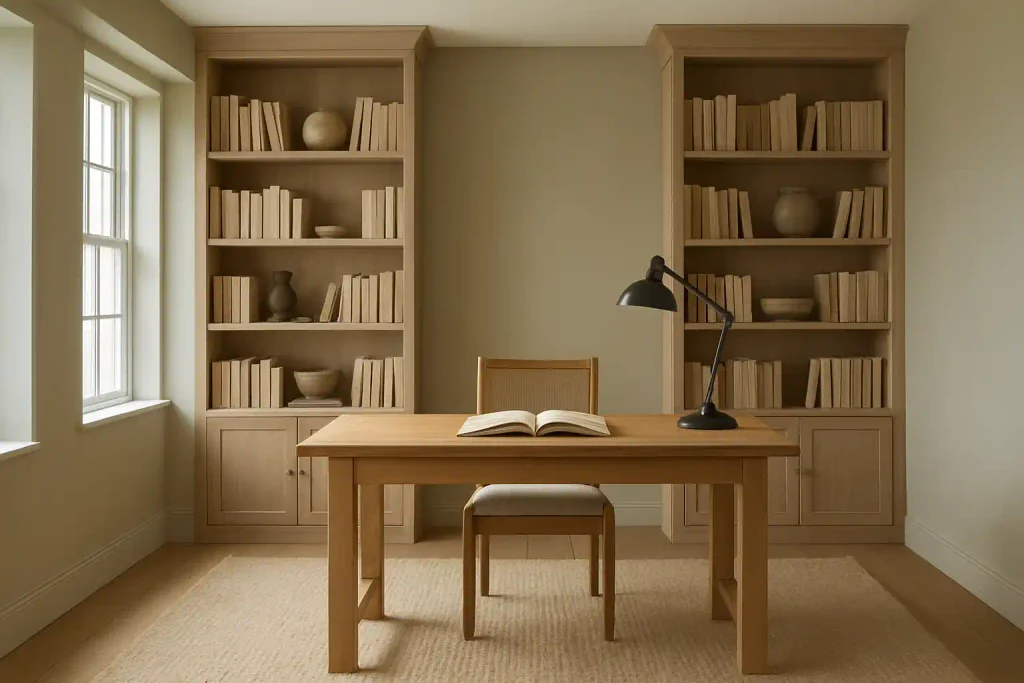
A rustic home office library can feel warm, organized, and genuinely useful without looking like a themed cabin. The key is to combine natural materials and a few well-chosen vintage details with practical storage, comfortable lighting, and a desk that suits your work. Start with the room you have, then build a layered look around its everyday needs.
Think of rustic style as a balance, not a checklist. Wood grain, aged finishes, woven textures, and muted colors bring character, while clear surfaces and thoughtful storage keep the room functional. You do not need a large collection of antiques or a wall of built-in shelves. A few consistent choices can give even a compact workspace a library-like atmosphere.
The Look To Aim For In A Rustic Home Office Library
Begin with a calm palette: warm wood, soft cream, charcoal, olive, or muted blue. Choose one or two wood tones that relate to each other, rather than mixing every finish you like. A sturdy desk and book storage can provide the main visual weight, while linen, leather, metal, and natural-fiber accents soften the harder surfaces.
Let useful objects contribute to the style. Books, a desk lamp, a ceramic vessel, or a small tray can add texture while serving a purpose. Leave some open space on shelves so the collection does not feel crowded. The goal is a room that looks collected over time, not one that is difficult to work in.
Consider scale before shopping. A substantial desk may suit a roomy study, but it can overwhelm a narrow spare room. Measure the desk footprint, chair movement, and the space needed to open drawers or cabinet doors. If shelving is above the desk, leave enough clearance to work comfortably and avoid placing heavy items where they could be knocked down.
Ideas To Try In A Rustic Home Office Library
1. Make The Desk The Anchor
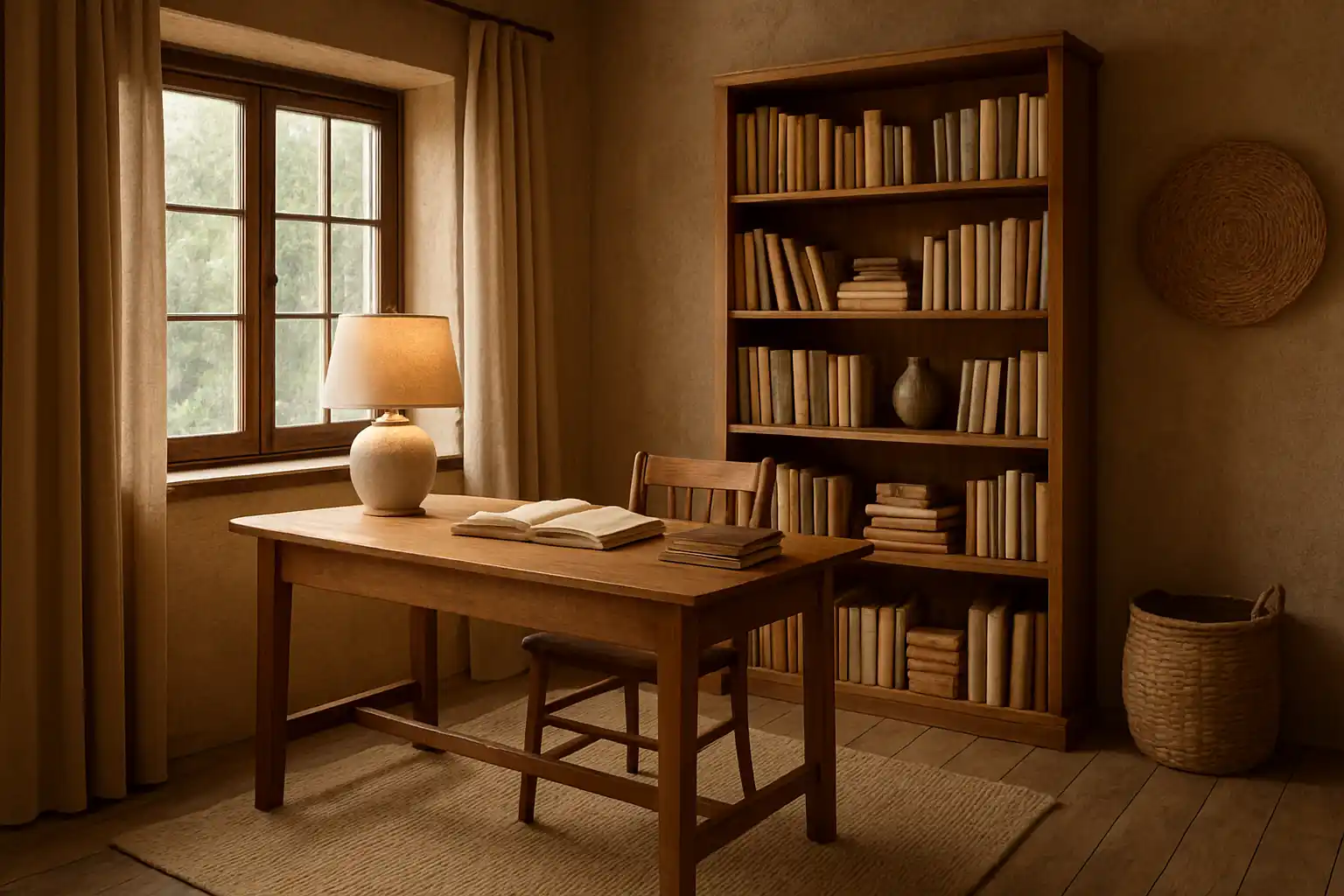
A desk with visible grain or a simple, sturdy silhouette gives the room a natural focal point. Look for a size that fits your work habits, with enough surface for a computer, writing space, and a lamp. A reclaimed or distressed finish can add character, but check that the top is smooth enough for writing and that drawers move easily. In a small room, a streamlined writing desk may work better than a large executive style.
Pro tip: Choose the desk and the main storage piece before buying smaller decor. Their size, finish, and shape will set the direction for the rest of the room.
2. Build A Book Wall With Breathing Room
Bookcases bring the library element into the office and make frequently used references easy to reach. Freestanding shelves are flexible and can move with you; wall-mounted shelves can make use of vertical space, provided they are properly installed for the wall and expected load. Arrange books in groups by subject or size, then mix in a few boxes and useful objects. Keep heavier books on lower shelves and reserve a little empty space for future additions.
3. Layer In Warm, Task-Friendly Lighting
Rustic finishes can feel especially inviting under warm light, but appearance should not come at the expense of visibility. Use a desk lamp that directs light onto your work, then add ambient light from a ceiling fixture or floor lamp if the room needs it. A metal or ceramic base can complement the furniture without requiring a matching set. Make sure cords do not cross walkways, and place the lamp where it will not create distracting screen glare.
4. Mix Textures Instead Of Adding More Clutter
Woven baskets, a wool or cotton rug, linen curtains, and a leather or fabric chair can create depth without filling every surface with decoration. Choose a small number of textures that work with the wood and metal already in the room. A basket can hold notebooks or spare cables, while a rug can help define a desk area in a shared room. Avoid placing a thick rug where a rolling chair needs to move freely.
5. Give Practical Storage A Vintage Note
Use drawers, document boxes, or a small cabinet to hide supplies that make the desktop feel busy. A secondhand cabinet or a simple piece with aged hardware can add a sense of history, but inspect its condition and dimensions before bringing it home. Measure doorways and stair turns as well as the final location. This idea works particularly well when open shelves are already doing the visual work and you need concealed storage below.
Pro tip: Before styling shelves, group books and accessories on the floor or a table. You can test the balance and remove extras before lifting anything into place.
In a rustic home office library, small accents are most effective when they connect to the room’s materials. Repeat a finish or color in two or three places, such as dark metal on a lamp and drawer pulls, or a muted green in a book spine and a cushion. Repetition creates cohesion without making every item look like part of a set.
Explore Rustic home office decor for options to consider.
Bringing It Together For A Rustic Home Office Library
Work from the largest pieces to the smallest. Place the desk where it gets comfortable natural light if possible, while checking for screen glare and nearby outlets. Set the main bookcase next, leaving a clear route between the chair, shelves, and door. Then add task lighting, a rug if it suits the room, and only the storage you need for current projects.
Use a simple styling rule to keep shelves useful: combine books with a few objects, but leave visible gaps. Turn some books upright and stack a small group horizontally where it will not become unstable. Store everyday items within easy reach and move rarely used supplies higher or into closed storage. A rustic home office library should support the way you work, not turn every shelf into a display that needs constant adjustment.
Pay attention to comfort as you finish the room. Adjust the chair and desk so your working position feels natural, and check that the lamp lights the task rather than your eyes. Keep frequently used stationery, chargers, and reference books close by. If a decorative item repeatedly takes up useful desk space, move it to a shelf or leave it out.
Budget And Space Adaptations
You can create the look gradually instead of furnishing the entire room at once. Prioritize a suitable desk, a supportive chair, and dependable task lighting. Add book storage when you know how many books and supplies need a home. Reusing furniture you already own is often the simplest starting point: a wood desk can gain a warmer feel with a lamp, a textured rug, and tidier cable management.
For a lower-cost refresh, focus on placement and editing before buying accessories. Remove items that do not support work or add meaningful character, group books by size, and use sturdy containers you already have for loose supplies. If painting or refinishing furniture is an option, check the material and finish first and choose a method appropriate to the piece. A small change to hardware may be enough to connect an existing cabinet to the room.
In a compact room, use height thoughtfully. A narrow bookcase, wall shelves, or a desk with drawers can provide storage without spreading across the floor. Keep the route to the chair clear and avoid shelves that make the workspace feel boxed in. In a shared room, a rug, a lamp, or a bookcase can help define the office zone without building a permanent divider. In a rustic home office library with limited daylight, lighter wall colors and open shelving can help the space feel less enclosed.
Key takeaways:
- Start with a desk, storage, and lighting that suit your actual work.
- Use a restrained palette and repeat a few materials for a collected look.
- Measure furniture and preserve clear space for movement and chair use.
- Build the room in stages, adding decor only when it has a purpose.
Before buying secondhand furniture, verify measurements, condition, and how it will be moved into the room. Check for wobbling, damaged surfaces, stuck drawers, and odors that may be difficult to remove. For new purchases, compare the dimensions and materials rather than choosing by finish alone. The most useful rustic home office library is one that fits the room and can adapt as your work changes.
Your Next Step
Take measurements and make a short list of what the room must do before you shop. Decide where the desk will sit, how many books need storage, and which supplies should stay within reach. Then choose one anchor piece and build around its finish and scale. With a practical plan, your rustic home office library can become a comfortable place to work and a thoughtful part of your home, without requiring a complete redesign.