Affiliate disclosure: We may earn a commission when you buy through links in this post.
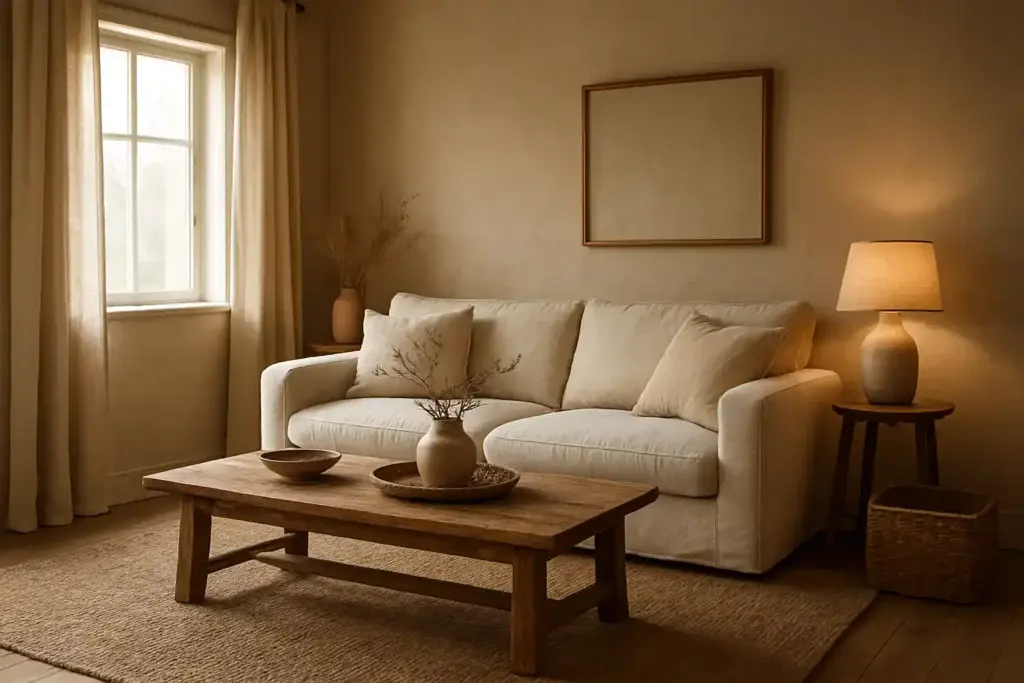
A small room can feel rustic without turning dark, crowded, or overly themed. The most useful small rustic living room ideas pair natural materials and warm details with clear pathways, well-sized furniture, and practical storage. Begin with the room’s needs, then add character a few pieces at a time.
Rustic style is less about filling a space with antiques than creating a comfortable mix of texture, color, and function. Small rustic living room ideas work especially well when you balance wood, woven fibers, or handmade accents with open surfaces and breathing room.
Explore rustic living room decor for options to consider.
The look to aim for
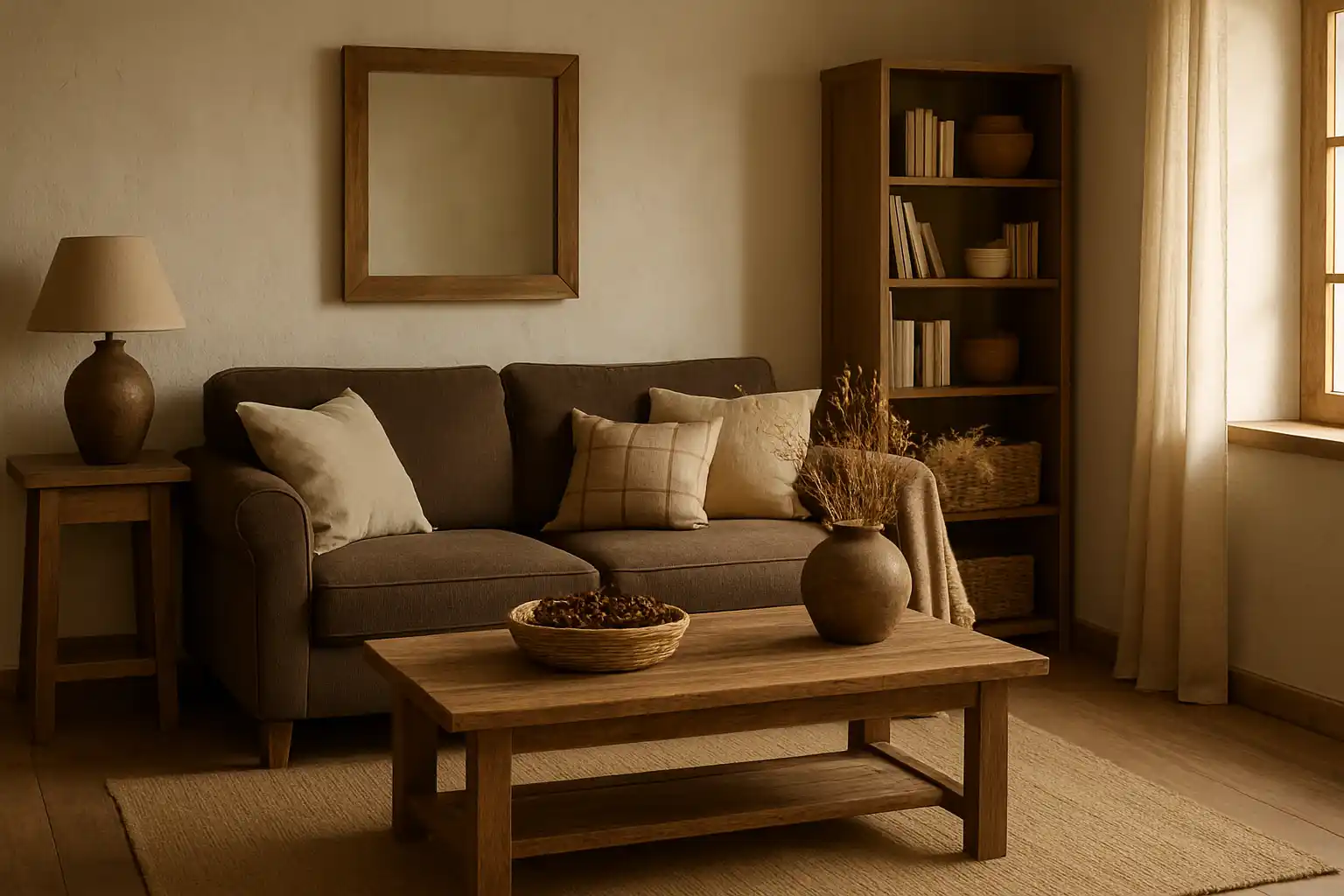
Aim for a welcoming seating area with a grounded palette and a few tactile materials. Weathered wood, linen, wool, and woven accents can bring warmth, while pale walls and uncluttered surfaces help a compact room feel open. Choose two or three materials to repeat rather than mixing every rustic finish you like.
Think about the room’s light and layout before choosing colors or furniture. A dim space may benefit from lighter fabrics and warm, layered lamps; a bright room can handle deeper wood tones. Keep the largest pieces visually simple so smaller details can add personality without making the room feel busy.
Ideas to try: small rustic living room ideas
1. Start with a light, warm palette
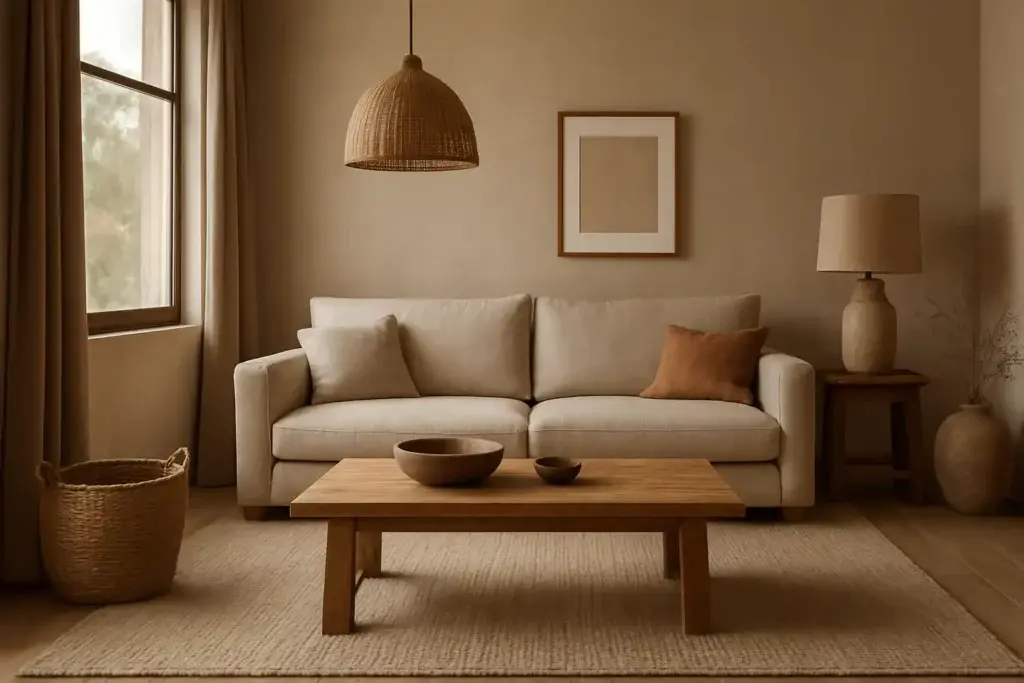
Warm white, soft beige, or muted green gives wood and woven accents space to stand out. Bring in deeper shades through a cushion, frame, or small accessory. This approach can make a compact room feel calmer, though a few darker details help add definition.
2. Choose a sofa that fits the room — small rustic living room ideas
Measure the wall, nearby doors, and the route from the entrance before settling on a sofa. A straightforward shape in a neutral fabric is easy to layer with rustic textures. A compact model can leave more room to move, but avoid sacrificing comfortable seating just to gain a few inches.
3. Add one weathered-wood feature
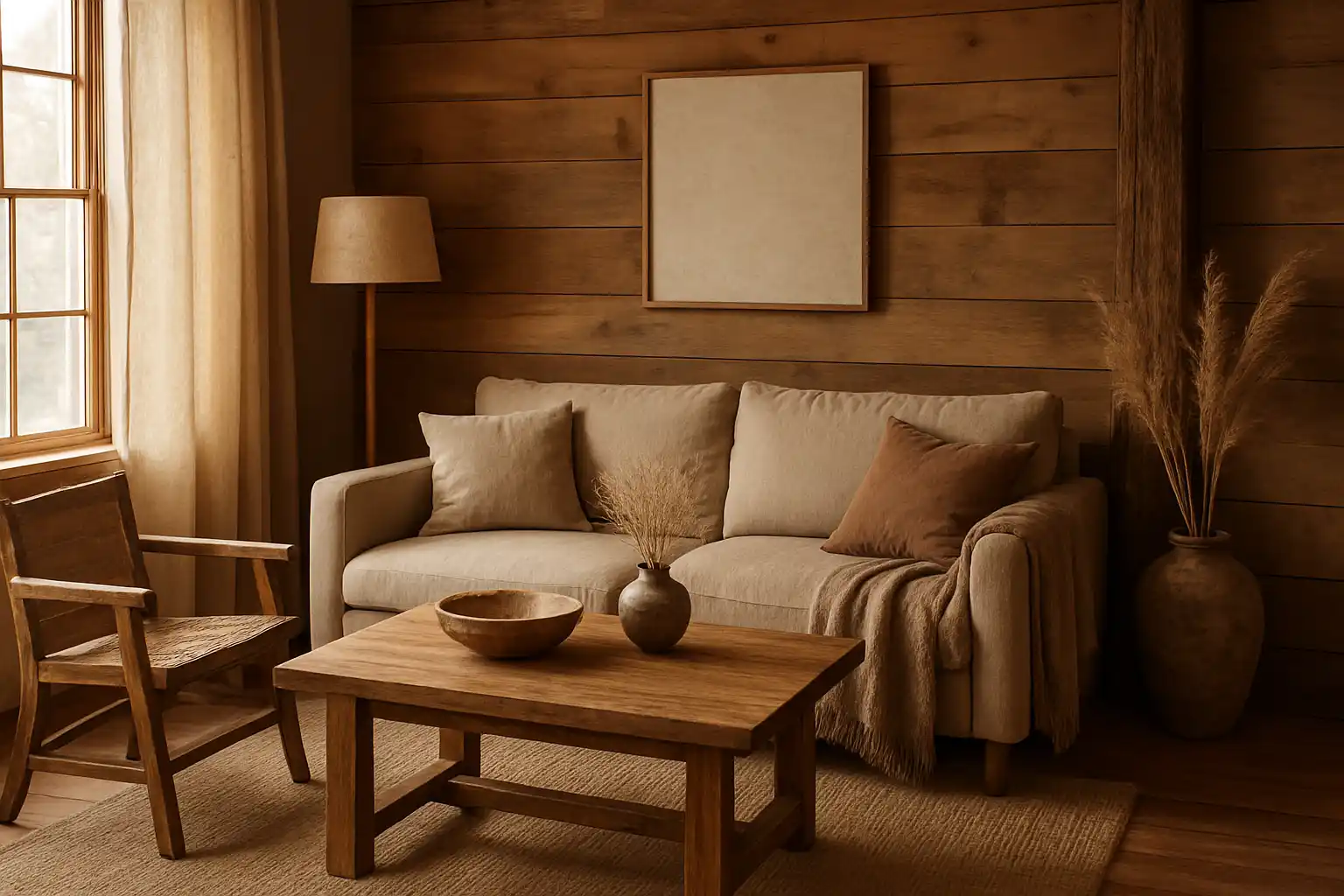
A reclaimed-wood shelf, side table, or picture frame can give the room character without covering every surface in timber. Check that furniture is stable and that frequently touched surfaces are smooth. Strong grain is distinctive, but several competing wood tones may look unsettled together.
4. Use a round coffee table
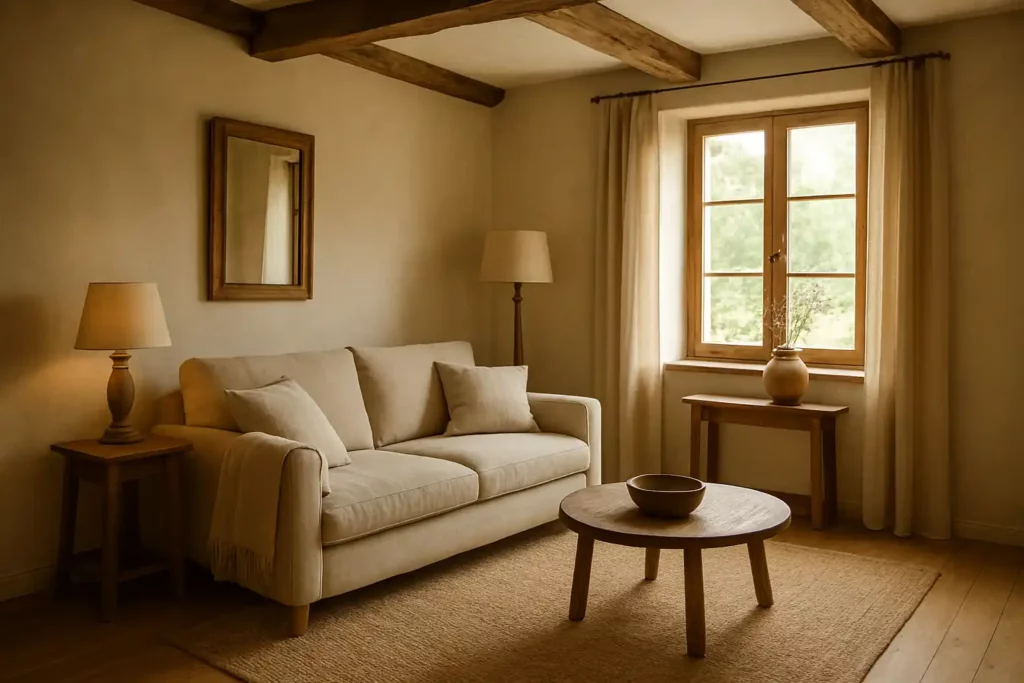
Rounded edges can make it easier to move around a tight seating area and soften the room’s straight lines. Choose a size that leaves a comfortable route past the sofa. A round table may offer less surface space than a rectangular one, so use a tray to group everyday items.
5. Anchor the seating with a rug
A rug adds softness and helps the seating arrangement feel connected. A low-pile weave or quiet pattern can complement rustic finishes without competing with them. Measure the area first: a rug that is too small can make the furniture look disconnected, while a bulky pile may be harder to move around.
6. Let baskets do useful work
A basket beside a seat can hold a throw, while one under a console can collect items you use regularly. This adds woven texture without requiring another cabinet. Choose a shape that fits the available space, and clear it out now and then so it does not become a permanent clutter spot.
7. Use vertical storage in small rustic living room ideas
Wall-mounted shelves make use of height instead of valuable floor space. Display a few books, framed pieces, or a small plant, and leave some shelf area empty. Secure shelves properly for the wall and their intended load; deep or crowded shelves can feel imposing in a narrow room.
8. Pair wood with soft textiles
Contrast a wood surface with linen, cotton, or wool to make the room feel welcoming rather than hard. Repeat one textile color elsewhere for a pulled-together look. Consider how each fabric will be used: delicate materials may not suit a seat that gets frequent spills or heavy daily use.
9. Layer light at more than one height — small rustic living room ideas
A table lamp, floor lamp, or wall light can make the room more comfortable in the evening than relying on a single ceiling fixture. Keep cords and bases clear of walkways. In a very tight layout, a wall-mounted light can free up a useful tabletop.
10. Choose one focal point for the wall
A landscape print, handmade piece, or simple mirror can give a seating wall a clear purpose. Choose a scale that suits the wall and keep nearby objects restrained. Natural colors or a modest wood frame suggest rustic character without relying on themed signs.
11. Add a slim console only when it fits
If the sofa floats away from the wall, a narrow console behind it can define the seating area and hold a lamp. Keep its profile shallow and leave enough room to pass. Skip this idea if the sofa is already close to a main route through the room.
12. Bring in a plant at the right scale
A plant adds an organic shape beside the room’s more structured furniture. Choose one suited to the available light, and use a simple pot that fits your palette. Small rustic living room ideas need not include a large floor plant; a smaller tabletop plant may be easier to place and maintain.
13. Keep fireplace styling simple
If the room has a fireplace, let the surround remain the main feature. One piece of art and a couple of small objects may be enough for the mantel. Keep decorations clear of anything that could interfere with safe fireplace use or the manufacturer’s guidance.
14. Make an ottoman multitask — small rustic living room ideas
A storage ottoman can serve as a footrest, occasional seat, and place to tuck away blankets. Add a tray when you need a steadier surface for a drink. Check the available footprint before choosing one, and consider a durable cover if it will see regular use.
15. Repeat metal accents sparingly
Black or aged-metal details on a lamp, frame, or cabinet hardware can add definition to natural finishes. Repeat the finish in a few small places rather than using it everywhere. In a dim room, too many dark accents may make the space feel heavier.
16. Let a well-sized rug ground small rustic living room ideas
A rug can tie together wood, upholstery, and woven details while marking out the seating zone. Choose a quiet pattern if other surfaces already have visible grain or texture. Before buying, map the furniture arrangement so the rug works with the actual footprint.
17. Hang simple window treatments
Where the window allows, placing a curtain rod higher can draw the eye upward. Light-filtering fabric can soften the room while keeping the look relaxed. Make sure panels can open fully and will not block a door, radiator, or other feature.
18. Place a mirror to reflect something pleasant
A mirror can reflect daylight or a view and add a useful focal point. Position it to reflect an attractive part of the room, not an untidy corner. A modest wood or metal frame can suit the style; an oversized ornate one may overpower a compact wall.
19. Keep open shelves edited
Group a few useful objects by height and leave gaps between them. A small stack of books beside a ceramic vessel can feel personal without becoming a display of everything you own. Put everyday odds and ends in closed storage if you want fewer surfaces to dust.
20. Add one quiet pattern
A checked cushion, subtle stripe, or nature-inspired motif can bring a relaxed cabin note to a plain sofa. Pick colors already present in the room and keep other textiles mostly solid. Several competing patterns can make a small seating area feel restless.
21. Leave some floor space open — small rustic living room ideas
Resist filling every corner. An open patch near the entrance or beside the seating group makes movement easier and gives the room visual breathing space. Removing an extra chair or basket may improve the layout more than adding another decorative accent.
Bringing it together: small rustic living room ideas
Build the room in layers: settle the sofa and rug first, then add lighting and storage, and finish with a few personal objects. This order helps you spot what is missing before bringing in more decor. Small rustic living room ideas come together more naturally when practical pieces lead and decorative details follow.
- Measure the room, doorways, and walking routes before choosing furniture.
- Repeat a few related colors and materials for a considered look.
- Use closed storage for everyday clutter and open shelves for chosen display pieces.
- Keep large items simple so smaller accents can bring texture and character.
Pro tip: Before buying furniture, mark its footprint on the floor with painter’s tape. Walk through the room and check that doors, drawers, and the main pathways still work.
Key takeaways:
- Scale and clear pathways matter as much as rustic finishes.
- A restrained mix of wood, soft textiles, and woven texture adds warmth.
- Prioritize useful storage and comfortable lighting before extra decor.
Budget and space adaptations
Start with what you already own. Moving a lamp, changing a cushion cover, or editing a shelf can shift the mood without replacing major furniture. For small rustic living room ideas on a limited budget, focus first on the pieces you use every day, then add character gradually with secondhand finds or simple natural accents.
In a rental, try textiles, freestanding lamps, and leaning art before making permanent changes. If floor space is scarce, consider a wall shelf or storage ottoman instead of another cabinet. In a room shared with children or pets, stable furniture, easy-care fabrics, and straightforward storage can make daily tidying simpler.
Keep scale in mind: a rustic piece does not have to be large to feel at home. One weathered surface or woven detail may be enough. If the room starts to feel crowded, remove an item before adding another.
Your next step
Choose one change that solves a real problem, such as improving the light, adding storage, or clearing a walking route. Then select a rustic texture or finish that supports that change. Small rustic living room ideas are easiest to put into practice one decision at a time, with comfort and usable space guiding your choices.