A well-planned rustic bedroom accent wall can make a room feel warmer and more personal without changing every surface. The key is to choose one material or finish that adds texture, then balance it with calm colors, comfortable bedding, and enough open space.
Start by looking at the wall behind the bed, since it often gives the room a natural focal point. Consider the wall’s size, the light it receives, and the furniture already in the room. A rustic bedroom accent wall should feel connected to the rest of the space, not like a separate decorating theme.
The Look To Aim For
Rustic style is less about making a bedroom look old and more about giving it warmth, texture, and a sense of substance. Wood grain, matte finishes, woven fibers, and softly varied colors can all contribute. You do not need to use every rustic material at once. A single strong surface can do the work.
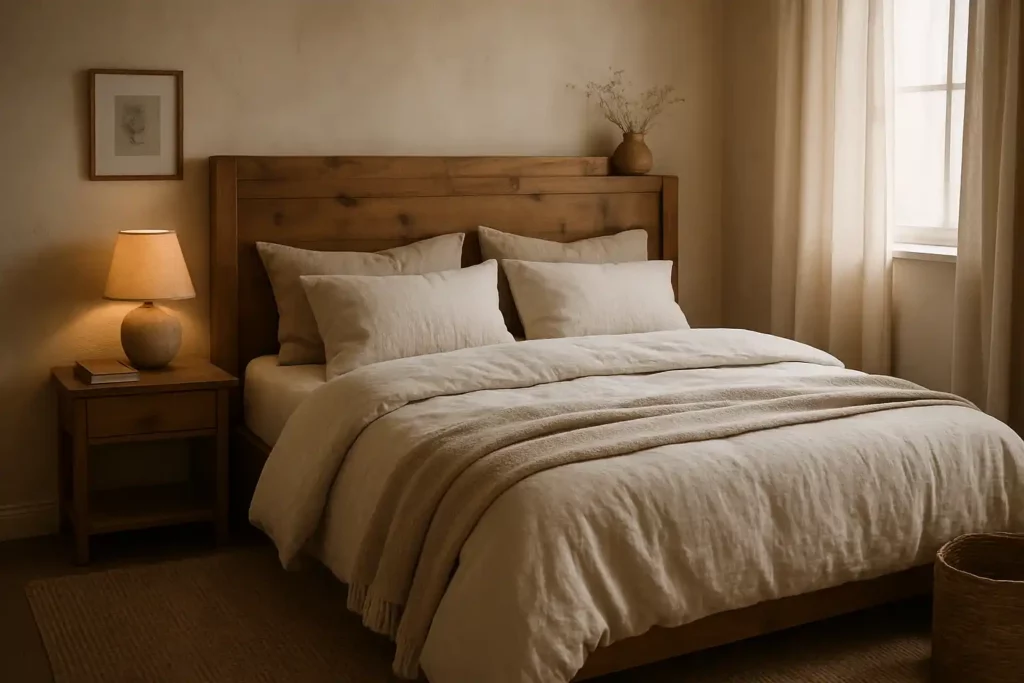
For a comfortable result, pair visual texture with simple surroundings. A wood wall, for example, can sit alongside plain bedding, understated lamps, and a restrained color palette. Cream, warm white, muted green, charcoal, and natural wood tones are useful starting points. Choose colors that work with the flooring and furniture instead of selecting them in isolation.
Scale matters, too. A heavily textured wall may dominate a small room, while a subtle finish can disappear in a larger one. Check how the wall looks from the doorway and from the bed. If the surface competes with the headboard, artwork, or patterned bedding, simplify one of those elements.
Ideas To Try For A Rustic Bedroom Accent Wall
These options range from visibly textured to quietly rustic. Pick one based on the room’s architecture, your comfort with installation, and how much maintenance you want to take on.
1. Use Reclaimed Or Characterful Wood
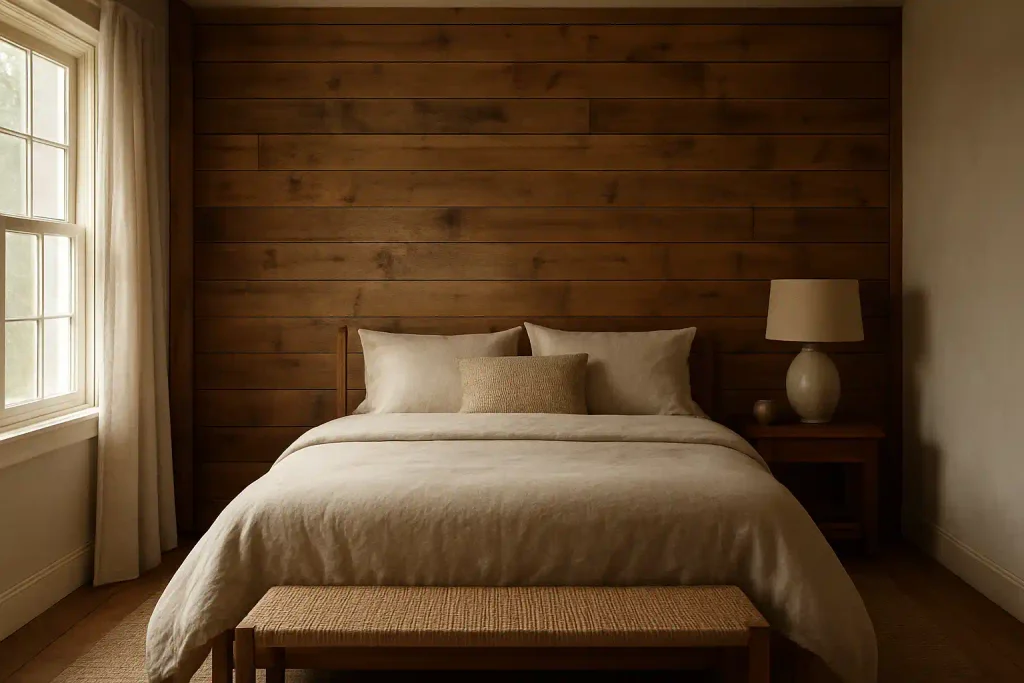
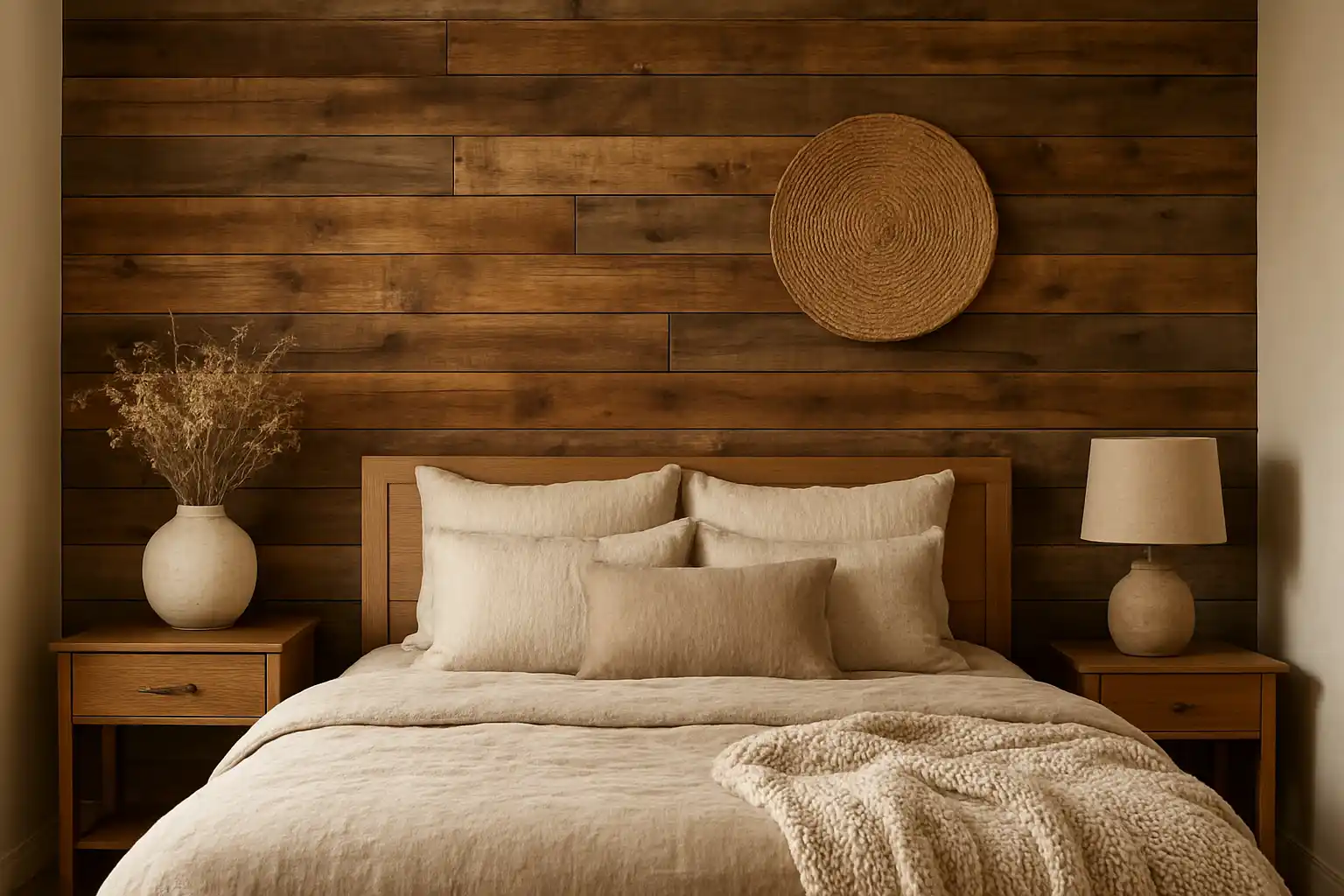
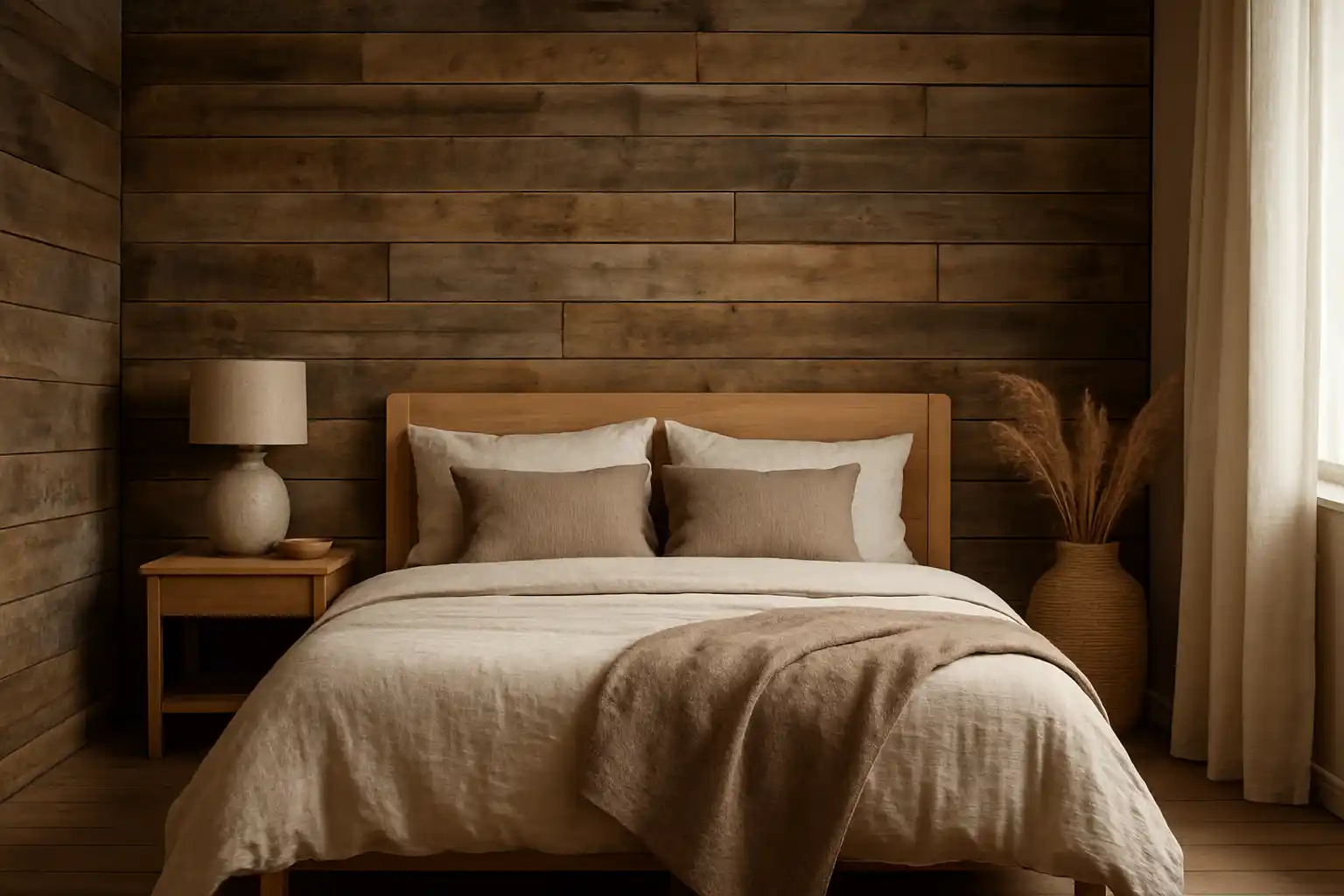
Wood boards bring natural variation and a strong connection to the rustic look. They work particularly well behind a bed, where the boards can frame the main furniture without covering the entire room. Choose boards with a consistent overall tone if you want a calm effect, or mix restrained variations for more movement.
Pro tip: Gather a few material and fabric samples and look at them together in both daylight and lamplight before committing. A finish that feels balanced in a store or on a screen may look quite different beside your bedroom’s existing colors.
Before installing reclaimed wood, check its condition and suitability for indoor use. Remove loose material, look for signs of pests or moisture, and make sure the surface is clean and stable. If the boards are too visually busy, use them on a smaller section or choose a simpler headboard and bedding. Installation also needs to suit the wall structure and the weight of the material.
2. Add A Plank Or Panel Detail
Painted or stained planks can suggest an old farmhouse interior while giving you control over color and spacing. Vertical boards can draw the eye upward, while horizontal boards create a broad, settled feeling. This approach is useful when you want defined lines rather than the irregular grain of reclaimed material.
Lay out the pattern before attaching anything. Account for outlets, switches, trim, and the bed’s position so the boards do not end in awkward slivers. A rustic bedroom accent wall made with planks can still feel light if you use a pale, matte finish and keep nearby decor uncluttered. The trade-off is that seams and edges need careful finishing to look deliberate.
3. Build A Rustic Bedroom Accent Wall With A Soft Finish
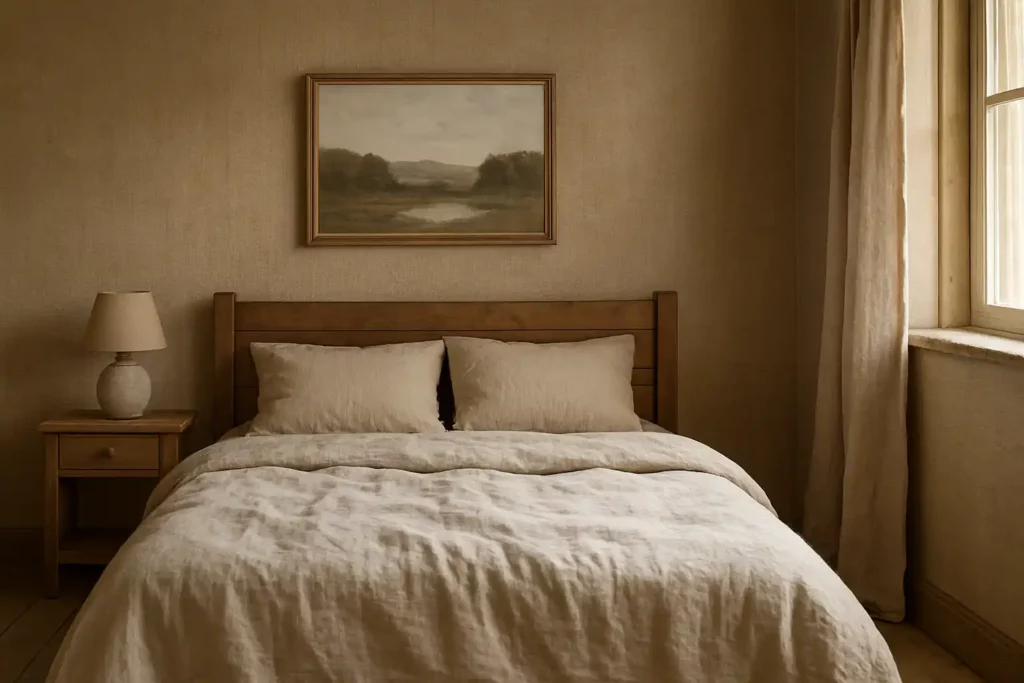
A matte paint treatment, limewash-style finish, or subtle textured coating can add depth without the weight of boards. Warm gray, clay, muted sage, and soft brown can bring a grounded quality to the room. This choice fits bedrooms where a large pattern or strong grain would feel overwhelming.
Test the finish on a sample board or a small, inconspicuous area first, following the product directions. Texture can appear stronger in raking light, so check it at the times of day when you use the room most. This method is often visually quieter, but it may require extra preparation to achieve an even result.
Pro tip: Set the bed and nightstands in their intended positions before deciding where a feature surface should begin and end. This helps you avoid spending effort on areas that will be hidden or leaving a narrow, unbalanced strip beside the furniture.
4. Layer Stone, Brick, Or Woven Texture Carefully
Brick, stone, and woven wall coverings offer a different kind of rustic character. Exposed masonry can suit a home that already has it, while a woven panel or natural-fiber detail can add softness to a plain wall. Use these materials selectively, especially in a small bedroom or around a bed where a rough surface could feel too dominant.
Think about comfort, cleaning, and installation before choosing a material. Textured surfaces can collect dust and may be harder to wipe than a painted wall. If you like the look but not the upkeep, use a smaller panel or bring in the texture through a headboard, rug, or bedside accessories instead.
Bringing It Together With A Rustic Bedroom Accent Wall
Once you have chosen the surface, connect it to the rest of the room with a few repeated details. That does not mean matching every finish. Instead, echo one or two colors or materials elsewhere: a wood tone in a bedside table, a woven texture in a basket, or a muted shade in a blanket.
Keep the wall’s main features in proportion. If the surface has strong grain, choose bedding with a simpler pattern. If the wall is subtle, a textured quilt or patterned rug can add interest lower in the room. Leave some visual breathing room around the bed so the feature remains easy to read.
Lighting can change how texture appears. Bedside lamps create a softer atmosphere than a single bright overhead source, while adjustable lighting can make it easier to read. Consider where light falls across the wall, and avoid placing a lamp so close that it emphasizes every small imperfection unless that effect is part of the plan.
For a rustic bedroom accent wall that feels integrated, repeat its dominant color or material in at least one other place, but vary the scale. A broad expanse of wood can pair with a small wooden frame or a woven shade. Repeating the same texture everywhere can make a bedroom feel overly themed.
Budget And Space Adaptations
You can create a rustic mood without covering a full wall or selecting a high-texture material. A painted panel behind the bed, a small section of boards, or a carefully arranged set of natural-fiber accessories can provide a similar focal point with less work. In a rental, check the rules before installing permanent finishes and favor reversible changes where needed.
In a compact bedroom, use a lighter color or limit the feature to the area directly behind the bed. Keep large furniture and window treatments simple, and avoid adding multiple competing patterns. In a spacious room, a deeper shade or more pronounced texture may help the bed feel anchored, provided the wall still works with the room’s daylight and furnishings.
Key takeaways:
- Choose one main wall finish and let it set the room’s direction.
- Balance strong texture with quieter bedding and decor.
- Test colors and finishes in the bedroom’s actual light.
- Check wall condition, installation needs, and upkeep before starting.
- Repeat a color or material elsewhere to make the design feel connected.
Plan for the less visible costs of a project, such as surface preparation, trim, fasteners, finishing supplies, and cleanup. If you are uncertain about the wall condition or the installation method, seek appropriate guidance before proceeding. A rustic bedroom accent wall should be secure as well as attractive, particularly when heavy boards or panels are involved.
Before buying materials, make a short list of what the project must solve: add warmth, establish a focal point, hide a visually uneven surface, or connect mismatched furniture. Prioritizing one main goal makes it easier to compare options and avoid decorative extras that do not improve the room.
Your Next Step
Start with the wall behind the bed and note what already works: its light, the bed’s width, nearby trim, and the colors you want to keep. Then choose one finish that suits the room’s scale and your willingness to install and maintain it. A rustic bedroom accent wall does not need to be elaborate. A considered material, a balanced palette, and a few repeated details can make the bedroom feel warm, cohesive, and distinctly yours.