The Look To Aim For With Rustic Bedroom Curtains
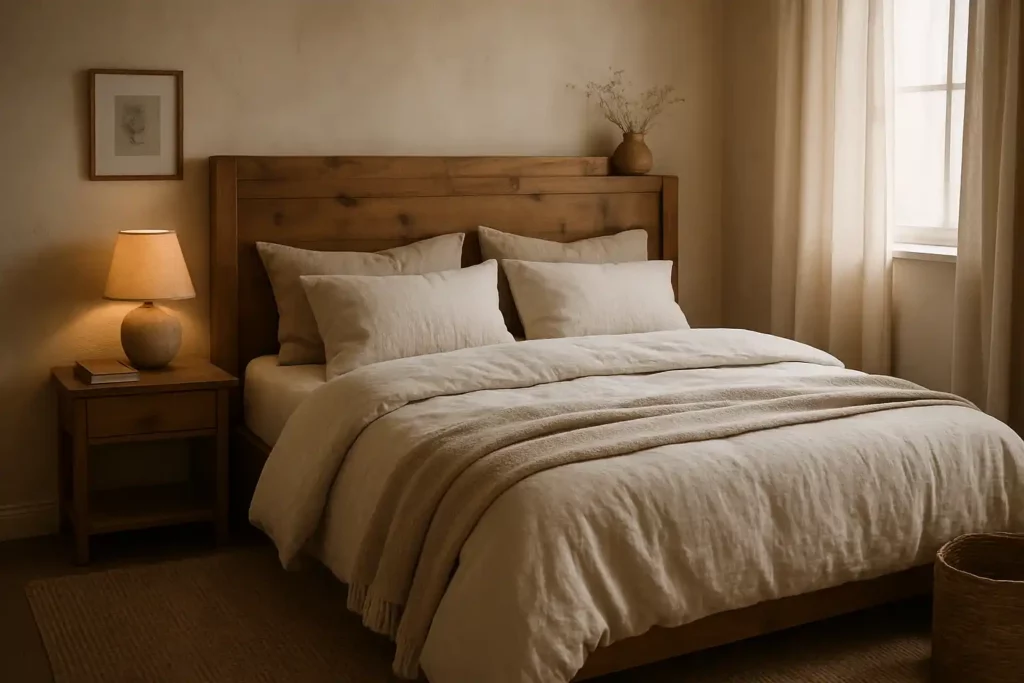
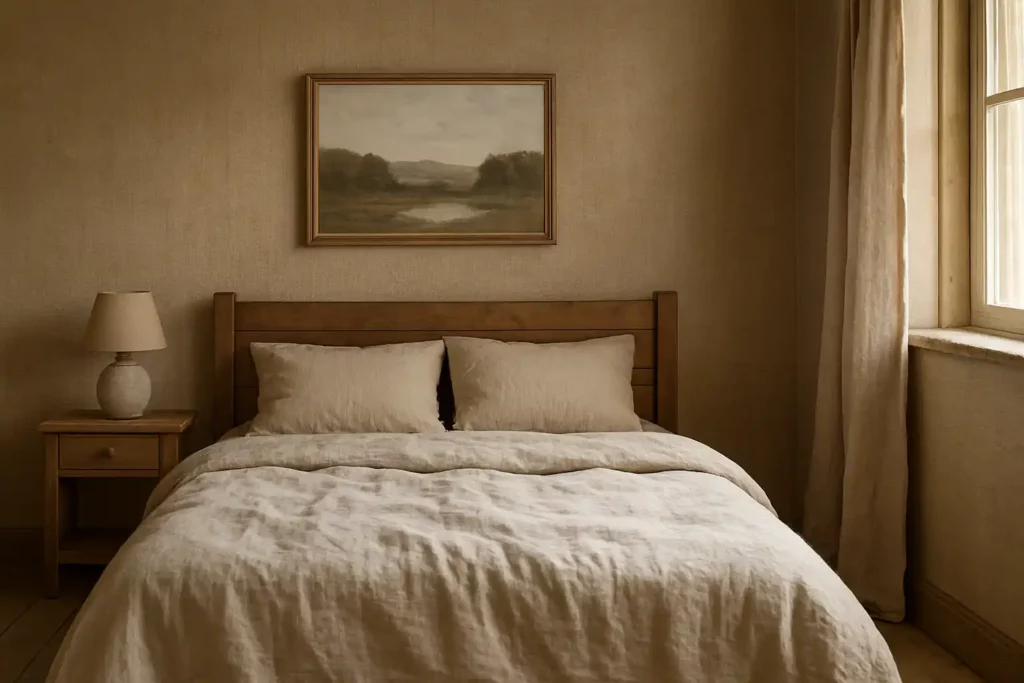
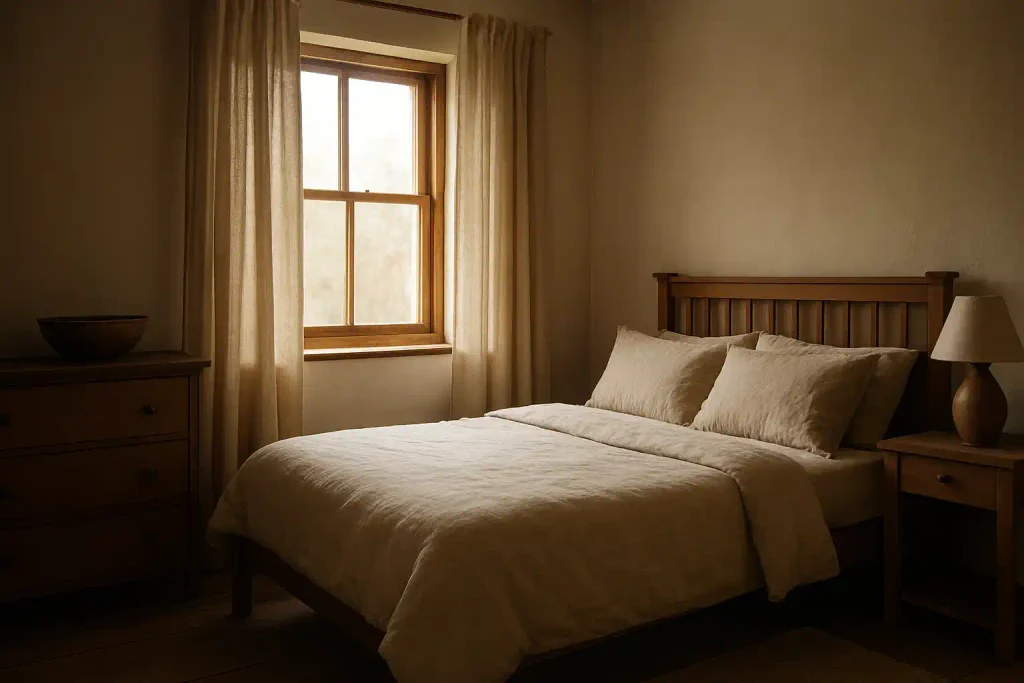
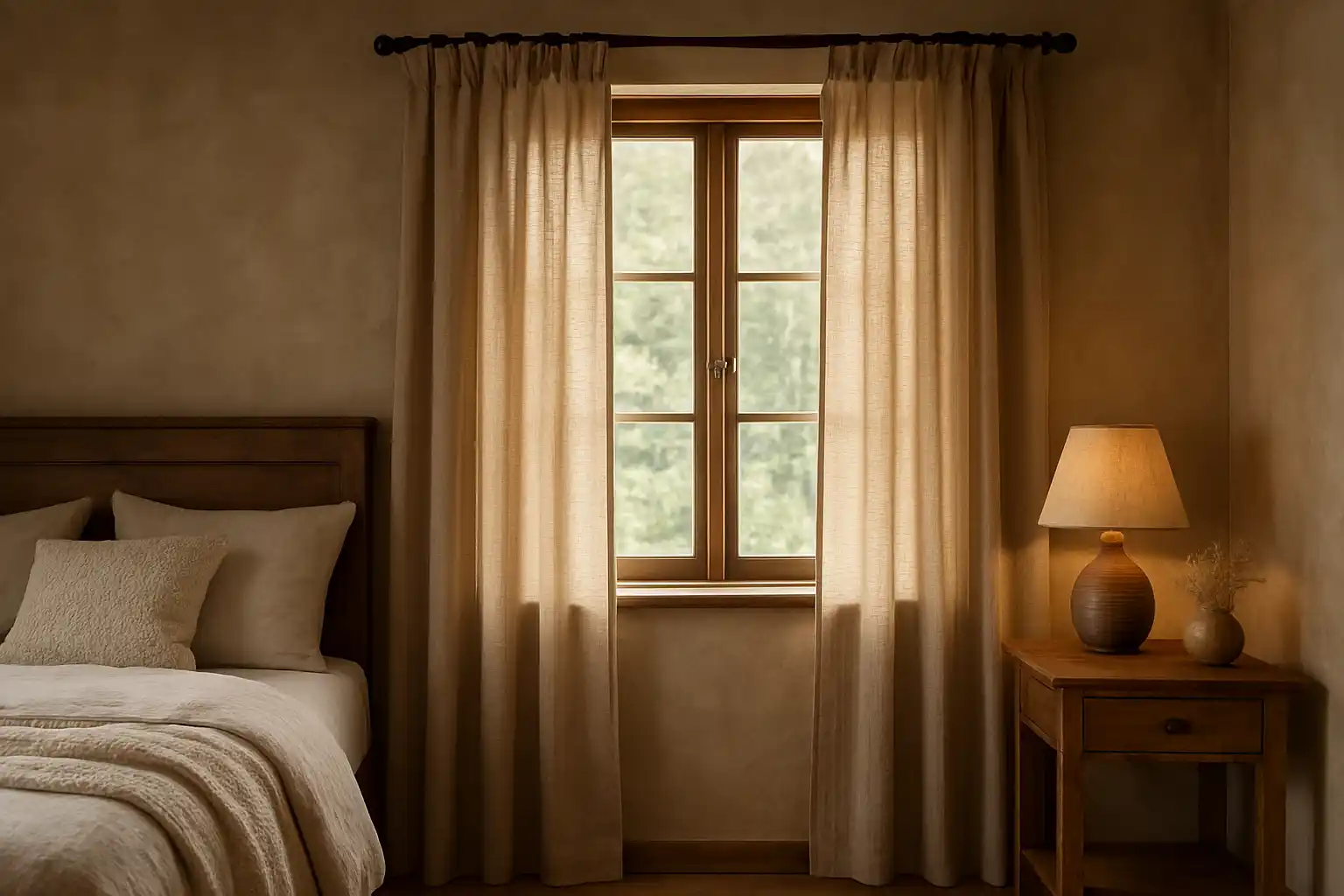
Rustic bedroom curtains work best when they feel connected to the rest of the room, not like a theme added on top. Aim for natural-looking texture, relaxed lines, and a color that suits the wood, bedding, and wall finishes already in place. Linen, cotton, and woven fabrics can all bring softness to a room with timber, stone, or aged metal.
That does not mean every window needs a heavy plaid or a rough, unfinished fabric. A lighter curtain can still feel rustic when its texture and color echo the room. Consider warm white, oatmeal, flax, muted green, or a soft clay shade, then let one or two stronger details carry the character.
Before choosing a fabric, decide what the curtains need to do. If you want privacy, look for a denser weave or plan to layer panels. If you need to soften bright morning light, a lighter fabric may be enough. Rustic bedroom curtains should suit the room’s daily use as well as its style.
Ideas To Try With Rustic Bedroom Curtains
Use these ideas as starting points, then adjust the fabric, color, and hardware to your room. The best rustic bedroom curtains add warmth without making a small or already busy space feel crowded.
1. Layered Rustic Bedroom Curtains For Flexible Light
Combine a simple, light-filtering panel with a heavier outer curtain. The inner layer can soften daylight, while the outer panels add texture and can be drawn for more privacy. This approach works well in bedrooms where the window faces a street or receives strong sun, though two layers need more space and a wider rod than a single panel.
Keep the layers visually related. For example, pair a natural-colored sheer with solid cotton panels in a muted earth tone. If the room already has patterned bedding, choose plain curtains to keep the overall look calm.
Pro tip: Hold a fabric sample beside your bedding and wood finishes in both daylight and lamplight. Colors can look quite different as the light changes.
2. Use A Subtle Pattern To Add Character
Small checks, restrained stripes, and botanical prints can bring a cottage feel without overwhelming the room. Look for patterns with a limited palette that repeats colors already present in your rug or bedding. A quiet print works especially well when the walls and furniture are simple.
Pattern scale matters. A large, high-contrast motif can dominate a narrow window, while a tiny print may disappear from across the room. Take a sample home if possible and view it from the doorway. If the room has several patterns already, use a solid curtain instead.
3. Choose Hardware That Complements The Room
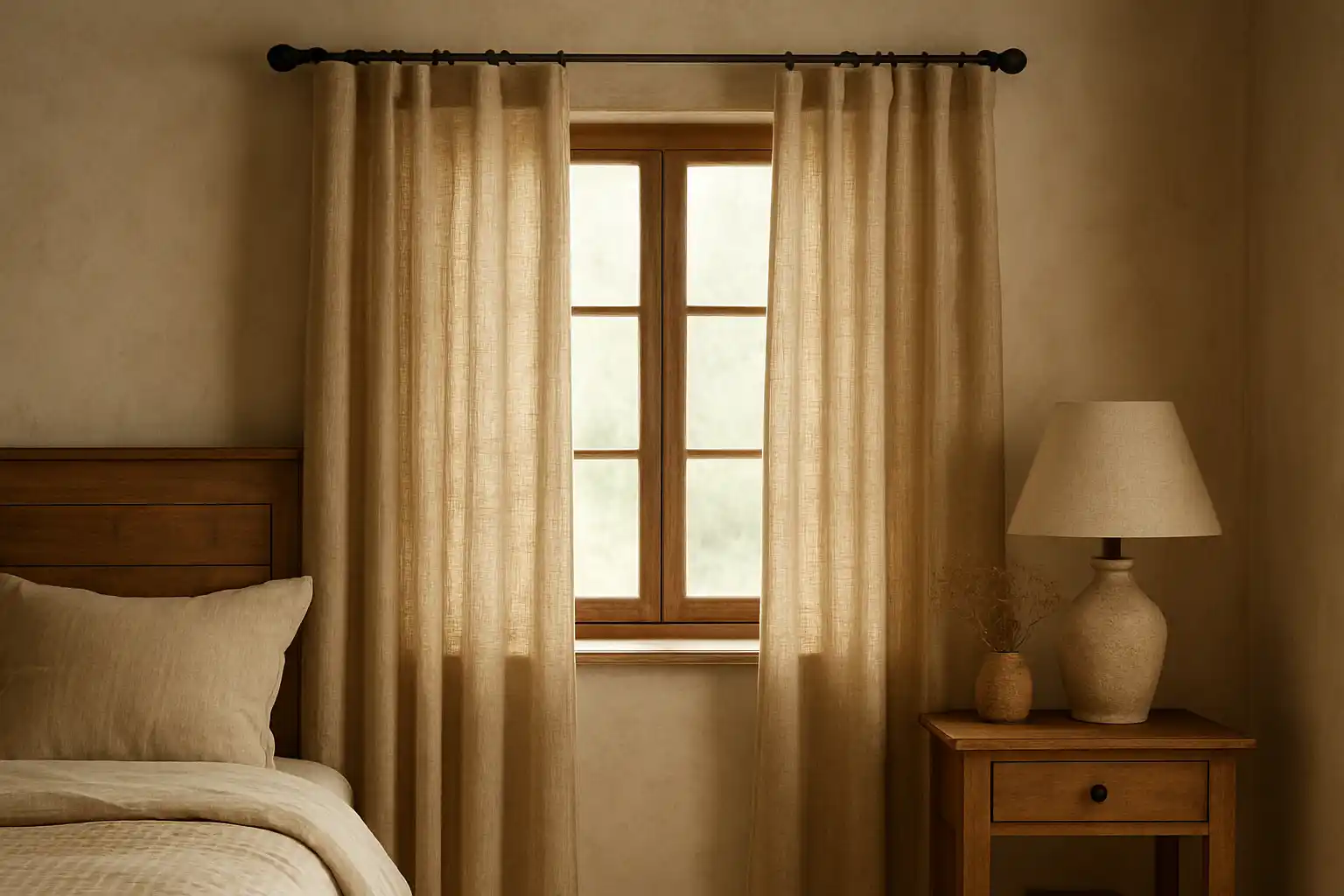
A dark metal rod can connect with iron bed details, while a wood pole can echo exposed beams or a timber headboard. Rings, brackets, and finials do not need to match every other finish exactly. Aim for a deliberate connection, such as repeating one metal tone, rather than collecting several competing styles.
Check that the rod and brackets can support the fabric you choose, especially with lined or layered panels. Heavy curtains may need a central support bracket, which can affect how freely they slide. Measure the window and plan the hardware before buying panels.
4. Hang Panels To Make The Window Feel Taller
Mount the rod above the window frame and extend it beyond the sides where the wall allows. This can make the window feel more generous and lets panels sit clear of the glass when open. It is a useful choice for a compact bedroom that needs more visual height.
Pro tip: Use a temporary paper or fabric mock-up to check the planned curtain length and rod position before drilling. It can reveal clashes with trim, furniture, or window handles.
Leave enough clearance for doors, trim, and nearby furniture. Floor-length curtains bring a relaxed, finished look, but they can collect dust or catch on a radiator. In those situations, choose a length that clears the obstruction safely rather than forcing a floor-skimming finish.
Bringing It Together
Start with the room’s strongest existing feature, perhaps a timber bed, a patterned quilt, or a painted wall. Let that guide the curtain color and texture. Rustic bedroom curtains can either repeat a color already in the room or provide a quiet contrast, but they should not compete with every other focal point.
Think about the whole window treatment as a set of practical choices: fabric, lining, fullness, rod placement, and length. Fuller panels create deeper folds, but they need more fabric and may crowd a small window when open. A simpler, less-full panel can look cleaner and leave more glass visible.
For a balanced combination, pair one noticeable element with quieter choices. If the fabric has a bold check, keep the rod simple. If the hardware is decorative, use a plain panel. This keeps the room’s rustic character visible without making the window feel overworked.
Also consider how the curtains relate to the bed. If the bed has a tall headboard or canopy, keep nearby fabric details restrained. If the bed is visually simple, curtains can provide extra texture. Repeating one color in a cushion, throw, or rug helps the room feel connected without requiring a matching set.
Budget And Space Adaptations
If you are working with a small budget, focus on fit and fabric before decorative extras. Ready-made panels can be hemmed to a more considered length, and a plain curtain can gain character from a textured rod or simple rings. Rustic bedroom curtains do not need a complicated pattern to feel warm and intentional.
For a compact room, avoid bulky layers that take up space when pulled aside. A single light-filtering panel on each side may be enough, or you can choose a lined pair in a soft, solid color. Extend the rod only as far as the surrounding wall and furniture allow, and make sure open curtains do not block a closet or bedside light.
In a rental or a room where drilling is difficult, consider a tension rod only when the window recess and curtain weight are suitable. Check the rod’s instructions and limits, and avoid using it for heavy layered curtains. If you cannot change the hardware, make the fabric itself do more of the decorating.
Key takeaways:
- Choose fabric for the room’s light and privacy needs.
- Repeat a color or material already present for a connected look.
- Check rod support, window clearance, and curtain length before installation.
- Keep patterns and decorative details in balance with the rest of the bedroom.
When sewing or altering panels, measure the full rod width and desired drop before cutting. Account for the curtain heading and any hem. If you are uncertain, leave extra length for adjustment rather than trimming too much at once.
Your Next Step
Begin by measuring the window and noting what the current curtains do well or poorly. Write down whether you need more privacy, softer light, added warmth, or simply a fresher look. That short list will help narrow the fabric and layering choices.
Then choose one direction: a quiet solid with textured hardware, a subtle pattern, or a practical layered treatment. Compare samples with the room’s wood and bedding, check the available space around the window, and confirm the rod can handle the fabric. Rustic bedroom curtains feel most at home when the details are considered and the room still feels easy to live in.