
Affiliate disclosure: We may earn a commission when you buy through links in this post.
A hallway may be a pass-through, but the right light can make it feel like a considered part of your home. Rustic hallway lighting pairs practical illumination with natural textures, warm finishes, and a sense of age. The key is to choose fixtures that suit the hallway’s size and layout, then layer their glow with the colors and materials already in the space.
Start by asking what the hallway needs: brighter light for a narrow, windowless passage, a welcoming glow at the entry, or a decorative focal point in a wider landing. From there, build a simple plan around one main fixture, thoughtful bulb choices, and, when space allows, a second source of light.
The Look To Aim For With Rustic Hallway Lighting
A rustic look is not a single style. It can lean farmhouse, cabin, industrial, or quietly traditional. Shared details often include wood, iron, aged brass, ceramic, linen, and glass with a gently imperfect finish. The aim is a warm, settled feeling rather than a hallway filled with props or overly distressed surfaces.
For rustic hallway lighting, consider how a fixture’s shape and materials connect to the rest of the home. A black metal lantern can echo iron hardware, while a simple aged-brass sconce may suit a more refined interior. Repeating one or two finishes is usually enough to make the passage feel connected to nearby rooms.
Light quality matters as much as appearance. A warm-toned bulb can soften painted walls and bring out the grain in wood, while a clear shade may create more sparkle than a frosted one. Check the bulb’s brightness and color temperature on its packaging, and choose a level that makes the route safe without making the hallway feel harsh.
Ideas To Try With Rustic Hallway Lighting
Use these ideas as starting points, not a checklist. The best choice depends on the architecture, ceiling height, and amount of natural light in your hallway.
1. Aged-Metal Flush Mounts
Pro tip: Before choosing a fixture, note the ceiling height, hallway width, and location of doors. These quick measurements help rule out lights that hang too low or project too far into the walking path.
A flush mount keeps the ceiling line clear and provides broad, useful light. Choose a low-profile design in blackened iron, bronze, or aged brass, with a shade that diffuses the bulb. This works well in narrow corridors, homes with lower ceilings, and spots where a pendant could interfere with a door swing. The trade-off is that a compact fixture may feel less decorative, so look for considered details such as a shaped rim or textured glass.
2. Rustic Hallway Lighting With Lantern Pendants
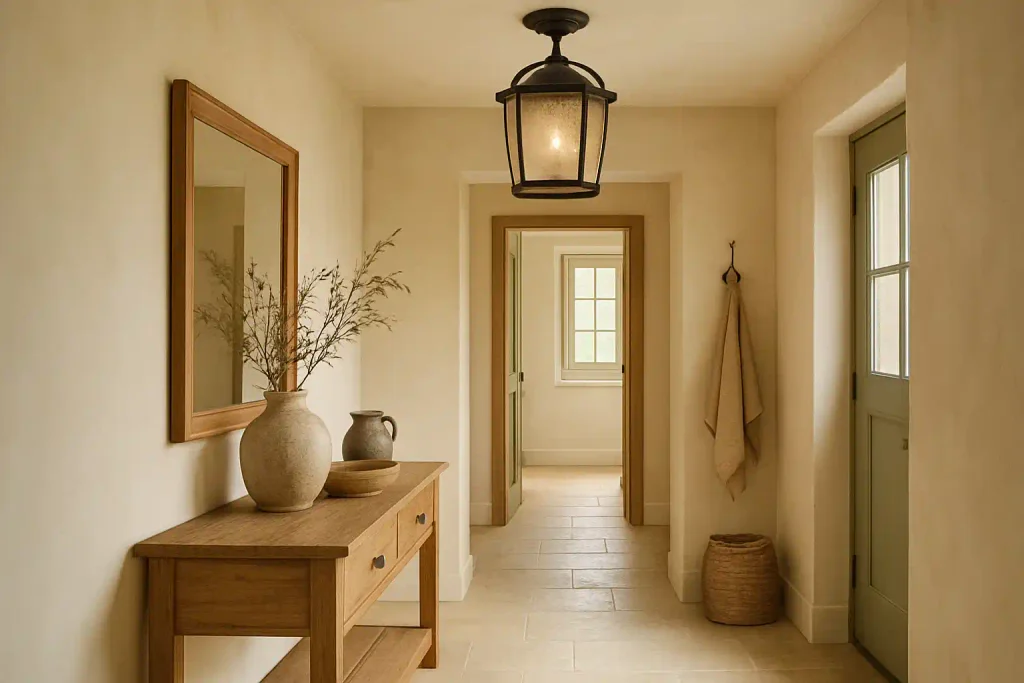
A lantern pendant can add a strong focal point in an entry hall or a passage with enough ceiling height. Open metal frames feel airy, while seeded or clear glass adds texture around the bulb. Center the fixture where it will be seen on entering, and confirm that its lowest point leaves comfortable headroom. In a long hallway, one pendant can look isolated, so consider a coordinated pair only if the ceiling and layout allow even spacing.
3. Wall Sconces For Soft, Layered Light
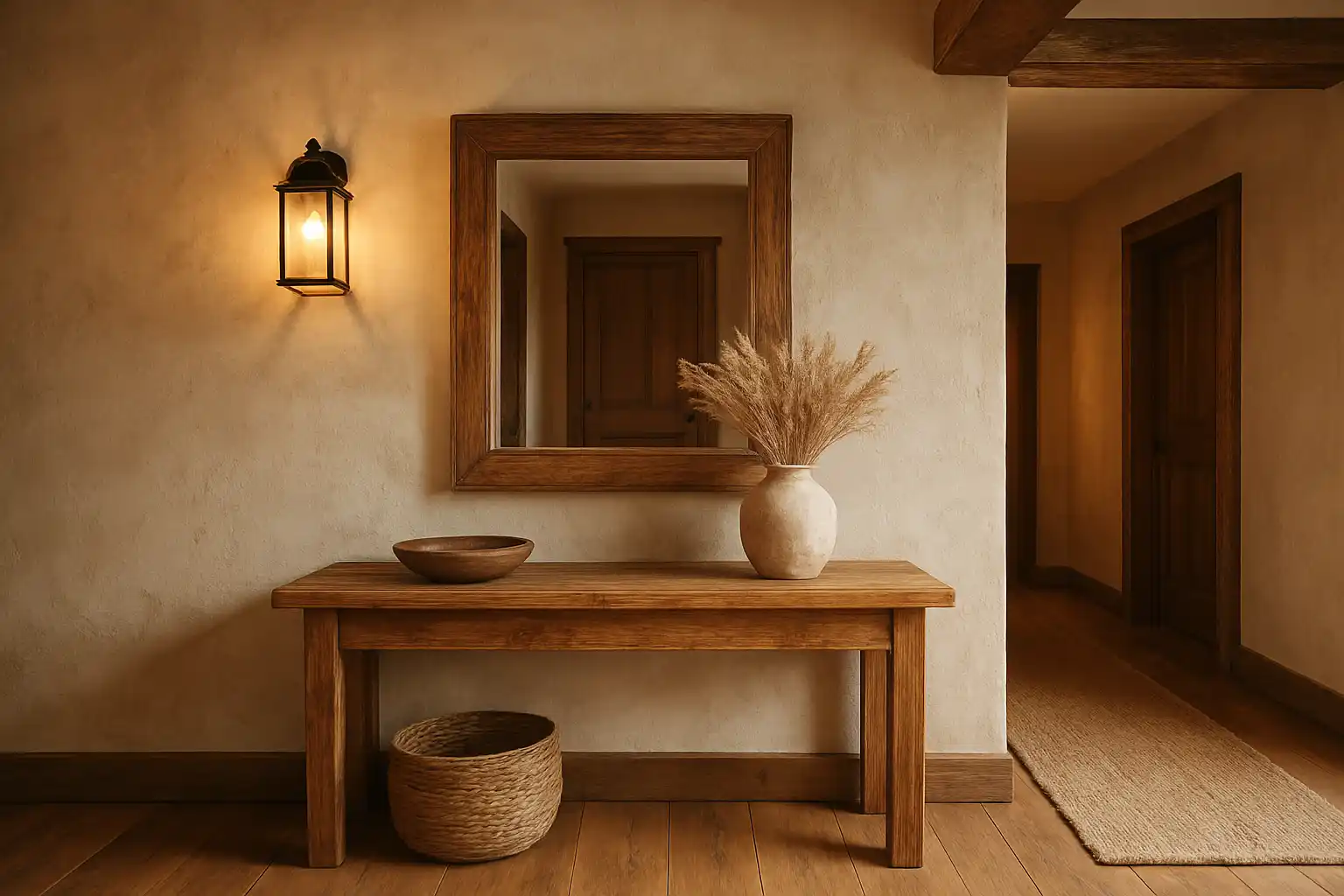
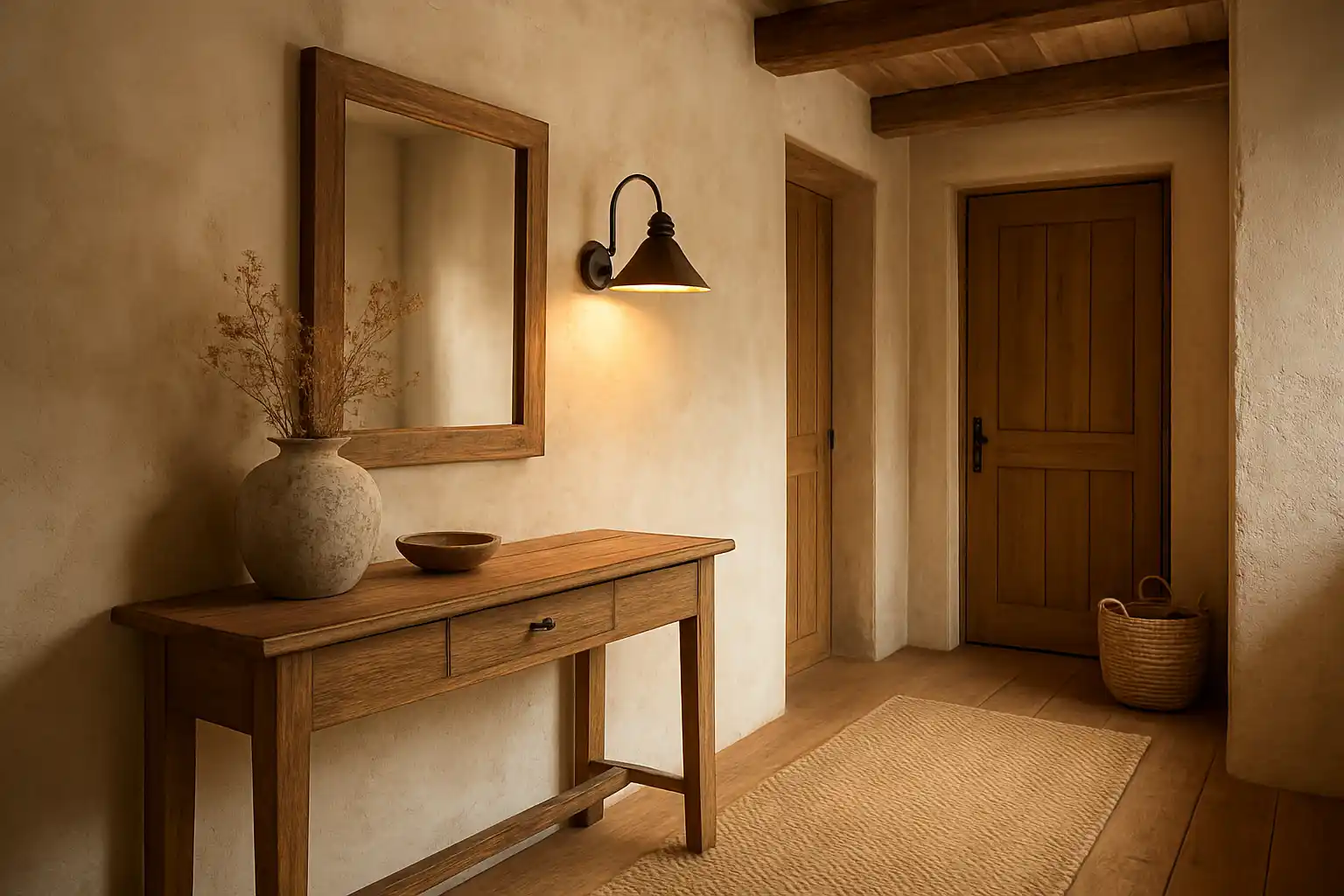
Sconces add light closer to eye level and can make a hallway feel more welcoming after dark. Look for simple arms, ceramic shades, or metal finishes that repeat elsewhere in the home. They suit wider passages, stair landings, and walls with enough clear space, but may not fit narrow routes where people brush past the wall. Place them thoughtfully in relation to door frames and artwork, and have a qualified professional handle new wiring when needed.
4. A Wood-And-Metal Combination
A fixture that pairs wood with iron or aged brass brings together two familiar rustic materials. It can connect a timber console, bench, or exposed beam to the lighting without making every surface match. This approach works especially well in an entryway with a few natural textures already in place. Keep the wood tone in conversation with nearby furniture, but avoid trying to match it exactly if the finishes differ; a related undertone often looks more natural.
5. Textured Glass For Gentle Diffusion
Ribbed, seeded, or frosted glass can soften the view of a bulb and add detail without taking up floor space. It is a useful option for compact hallways where the fixture needs to do its job without dominating the walls. Pair textured glass with a restrained frame to keep the look balanced. Because glass still needs occasional dusting, choose an accessible shade that can be cleaned safely and easily.
Pro tip: If you are unsure about a fixture’s scale, cut a paper outline close to its dimensions and hold it in place or tape it to the ceiling. It is a simple way to judge visual bulk before making a purchase.
Bringing It Together
A successful scheme balances the fixture with the hallway’s other elements. Think about the color of the walls, the finish of door hardware, and any console, runner, mirror, or framed art nearby. Rustic hallway lighting feels intentional when it relates to these details, rather than competing with all of them at once.
Explore rustic entryway and hallway decor for options to consider.
For a straightforward plan, choose one dominant metal finish and one supporting natural material. A black iron ceiling light might pair with a wood console, while brass sconces could sit comfortably near a warm-toned mirror frame. Repeating a finish once or twice is enough; a collection of unrelated metals can make a small area feel busy.
Also consider how the light falls. A single central ceiling fixture may leave the far end of a long corridor dim. In that case, use multiple ceiling lights or add a sconce where the layout permits. If the hallway opens to an entry, a table lamp on a console can provide a softer secondary glow. Keep switches convenient, and consider a dimmer if the fixture and bulbs are compatible.
- Choose a fixture size that leaves the walking route clear.
- Use a warm bulb tone for a softer, more welcoming atmosphere.
- Repeat a small number of finishes to connect the hallway with nearby rooms.
- Layer light where a single ceiling fixture cannot reach the whole passage.
Budget And Space Adaptations
You do not need to replace every fixture to refresh the hallway. If the existing light is safe and functional, a suitable shade or a change to compatible bulbs may shift the mood with less disruption. Check the fixture’s specifications before changing bulbs, and do not exceed its stated limits. A new ceiling rose or small detail in a coordinating finish can also help tie older hardware into the room.
In a tight or low-ceilinged space, favor flush mounts and slim sconces over large hanging fixtures. Use mirrors to reflect available light, but position them so they do not create an uncomfortable glare from a bare bulb. In a dark hallway, lighter wall colors and a clear path can help the space feel more open, while a runner or small piece of art can add character without crowding it.
For a larger entry, a pendant can make a statement, but scale still matters. Measure the fixture and check its clearance against doors and nearby stairs. Rustic hallway lighting should make everyday movement easier, not turn the route into an obstacle course. If the existing wiring, junction box, or mounting surface needs work, include that in the plan and seek qualified help rather than treating installation as a purely decorative task.
Key takeaways:
- Match the fixture’s scale to the hallway’s width and ceiling height.
- Use warm, diffused light for a softer and more comfortable atmosphere.
- Connect materials and finishes to details already present in the home.
- Prioritize safe clearance and suitable installation alongside appearance.
When funds are limited, prioritize function first: safe mounting, adequate brightness, and a bulb that suits the fixture. Then add character through one visible detail, such as a textured shade or a finish that echoes existing hardware. A restrained update can feel more cohesive than several inexpensive pieces that do not relate to one another.
Your Next Step
Walk through the hallway at the time of day you use it most. Notice where the light feels insufficient, which surfaces catch your eye, and whether the existing fixture fits the scale of the space. Use those observations to decide whether the best next move is a bulb change, a new ceiling light, or a layered combination.
With a clear plan, rustic hallway lighting can give a practical passage warmth and personality without making it feel crowded. Start with the space you have, choose a fixture that serves it well, and add character through a few materials and finishes that belong together.