Affiliate disclosure: We may earn a commission when you buy through links in this post.
The right rustic dining room chairs can make a dining space feel relaxed, welcoming, and connected to the rest of your home. Start with the table and room you already have, then choose chairs for their shape, finish, comfort, and everyday practicality.
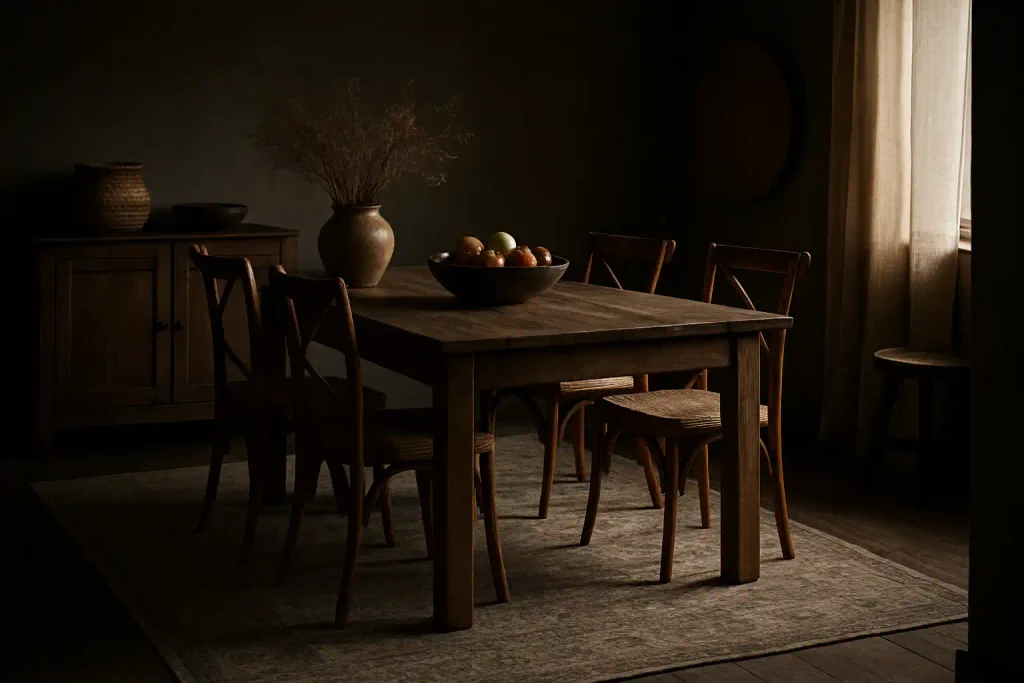
You do not need a perfectly matched set to create a cohesive look. Rustic style welcomes natural variation, but a shared material, color, or silhouette helps the mix feel intentional. These 17 ideas offer ways to find that balance, whether your room is spacious or compact.
The Look To Aim For: Rustic Dining Room Chairs With Character
Rustic dining rooms tend to feel best when materials look honest and finishes feel comfortable rather than formal. Wood grain, softened edges, woven textures, and muted colors can all add warmth. A little variation is appealing, but choose one or two details to repeat so the room does not look like a collection of unrelated pieces.
Think about the whole setting before settling on a chair. A substantial farmhouse table may need chairs with visual weight, while a narrow table often suits a lighter frame. Check the seat height, width, and how far each chair can pull out. A beautiful chair is less useful if it crowds the walkway or feels uncomfortable at dinner.
Ideas To Try With Rustic Dining Room Chairs
Use these ideas as starting points, not rules. Consider your table, the room’s traffic paths, and how the chairs will be used each day. A rustic choice should work for ordinary meals as well as gatherings.
1. Choose Solid Wood For A Classic Foundation
Wood chairs bring grain and warmth to a room, especially alongside a simple farmhouse table. Match the wood tone loosely, not perfectly. This works in most dining spaces, though heavy wood frames can feel imposing in a small room.
2. Pair A Dark Table With Lighter Chairs
Lighter chairs can keep a dark, substantial table from dominating the room. Try natural oak or a pale painted finish in a dining area that needs visual lift. Check that the lighter finish still suits nearby floors and cabinetry.
3. Add A Bench At One Side: Rustic Dining Room Chairs
Pro tip: Measure the table height and the space around it before shopping. Leave enough room to pull chairs back and move through the dining area without squeezing past another seat.
A bench creates a casual, shared-table feel and can fit neatly against a wall when not in use. Combine it with individual chairs on the opposite side. It may be less comfortable for long meals if guests have little elbow room.
4. Mix Chair Styles Around One Table
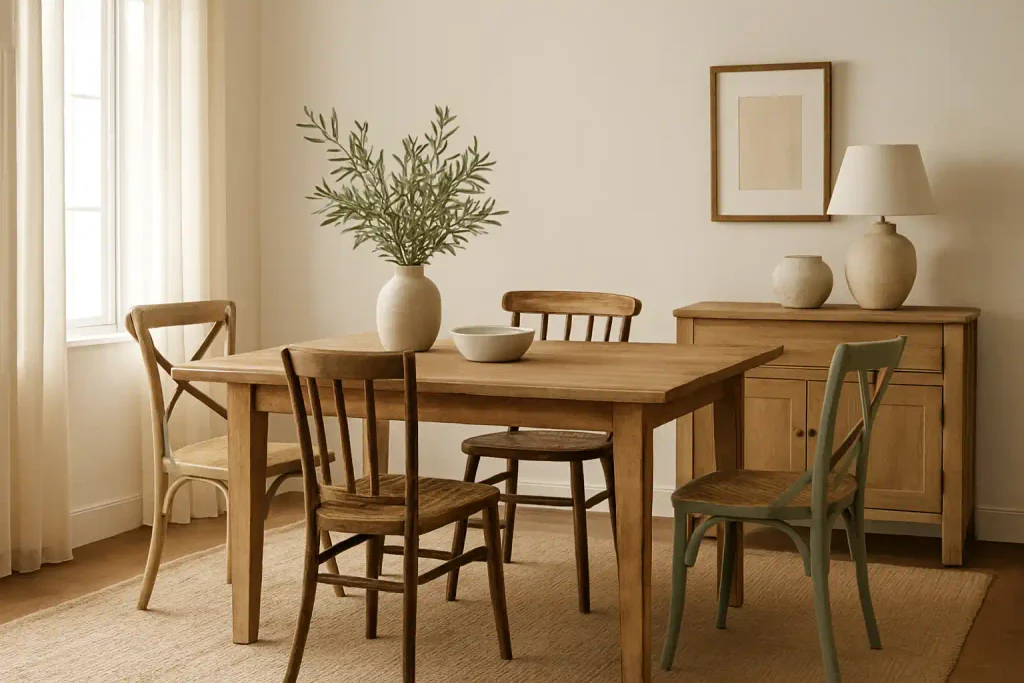
Mixing rustic dining room chairs can make the room feel collected rather than overly coordinated. Repeat a finish, seat material, or general shape to connect different designs. Keep the number of styles limited so the table remains the visual anchor.
5. Use Spindle Backs For A Lighter Profile
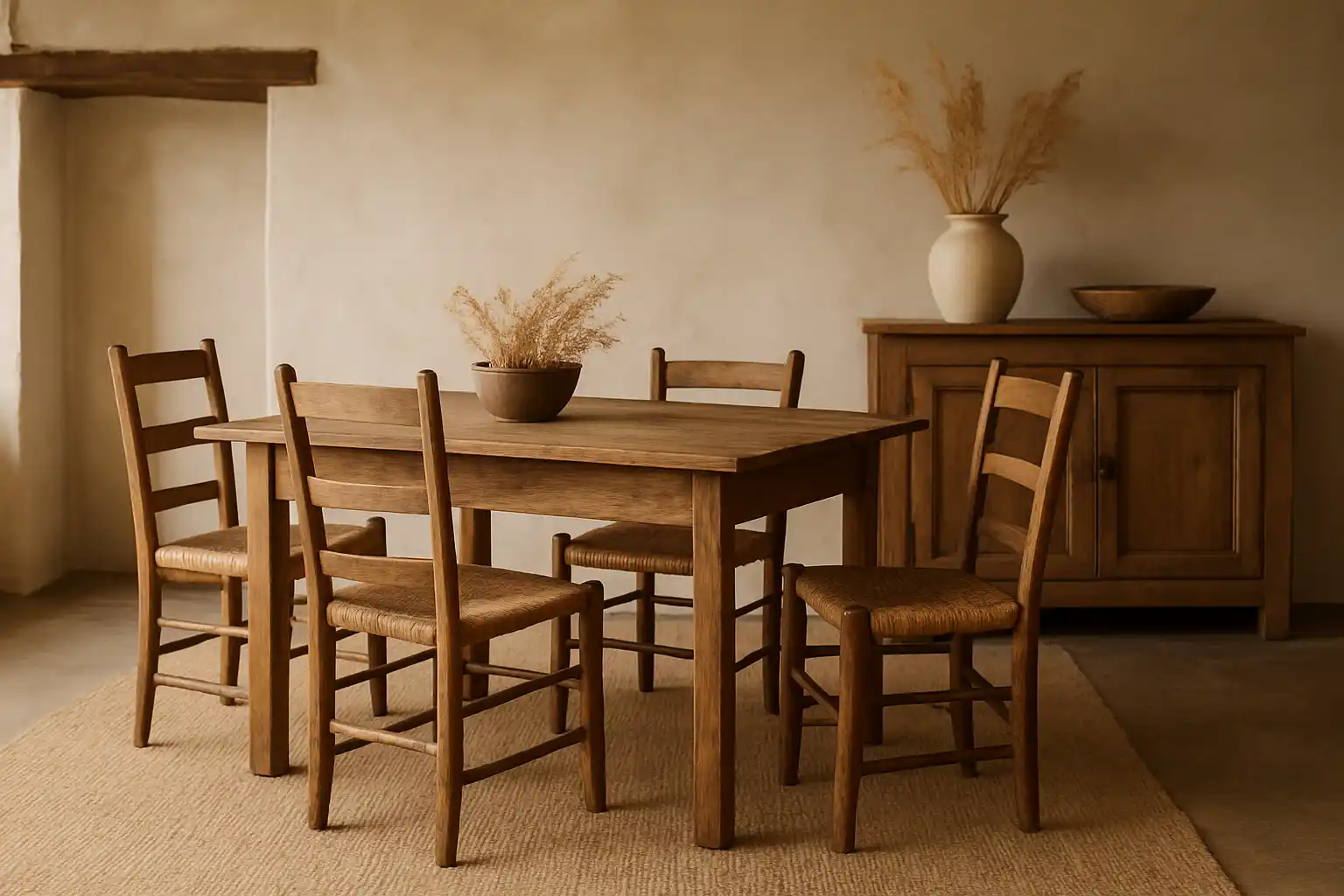
Spindle-back chairs add traditional character without the solid outline of a panel back. They suit cottage and farmhouse settings, especially around a simple table. Their open shape feels airy, but check that the back provides enough support for your household.
6. Try A Woven Seat For Added Texture
Rush, cane, or similar woven details bring a natural texture that contrasts well with smooth wood. Use them to soften a room with mostly hard surfaces. Woven seats may need more careful cleaning than a sealed, solid seat.
7. Consider Upholstered Seats For Longer Meals: Rustic Dining Room Chairs
A cushioned seat can make dinner and conversation more comfortable. Choose a durable, easy-to-clean fabric in a warm neutral or muted color. Upholstery is less forgiving around spills, so it may not suit every busy household.
8. Choose A Painted Finish For Gentle Contrast
A painted chair can introduce color without changing the whole room. Cream, muted green, or charcoal can sit comfortably beside natural wood. Use a finish that works with nearby details, and remember that painted surfaces may show chips over time.
9. Match The Chair Shape To The Table
Rounded chair backs can soften a square table, while straight lines reinforce a more structured one. The contrast can make rustic dining room chairs feel thoughtfully chosen. Before committing, check that arms or wide backs do not prevent chairs from fitting beneath the table.
10. Use Captain’s Chairs At The Ends
Armchairs at the table ends can give the layout a sense of occasion while side chairs keep the arrangement practical. This works well at a larger rectangular table. Measure carefully, since arms may limit how many seats fit comfortably.
Pro tip: If you are combining styles, bring home finish samples or compare clear photos in the dining room’s natural light. Wood and paint can look different under warm bulbs than they do near a window.
11. Repeat Black Details For Definition: Rustic Dining Room Chairs
Black metal or painted accents can outline a rustic room and connect chairs to a light fixture or cabinet hardware. A few repeated details are usually enough. Too many dark accents can make a small dining space feel visually crowded.
12. Try Cross-Back Chairs For Farmhouse Character
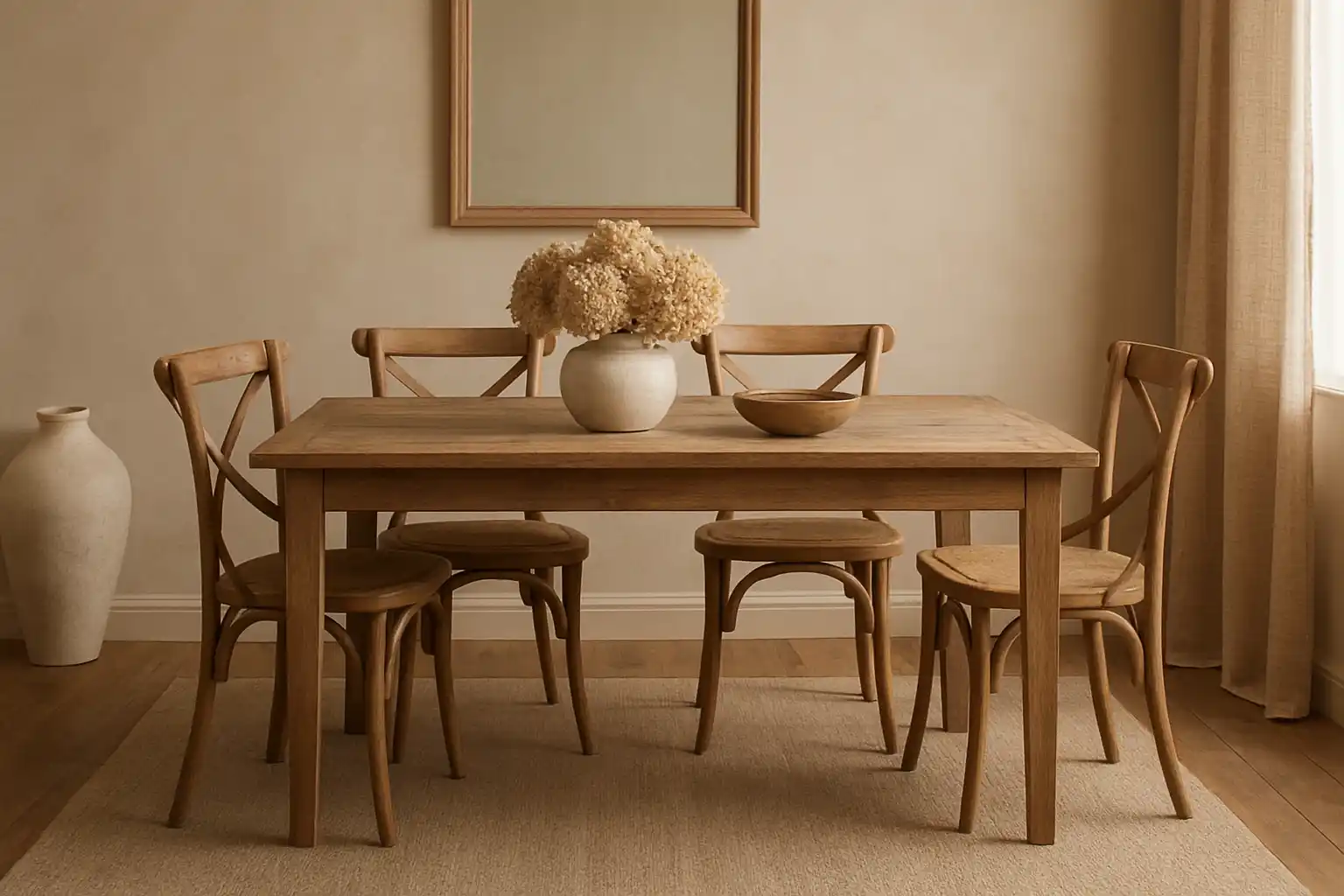
The crossed supports create a recognizable farmhouse look and add detail to a plain table. Choose them when you want a strong, traditional shape. The frame can feel busy beside an ornate table, so pair it with simpler surroundings.
13. Keep The Finish Close To The Floor Tone
Chairs that relate to the floor can make a small room feel more continuous. They need not be an exact match, just similar in warmth or depth. If everything blends together, use contrasting cushions or a table finish to add definition.
14. Bring In A Subtle Color
Muted blue, green, or earthy red can enliven a neutral dining room without losing its relaxed feel. Try color on a pair of chairs or through seat cushions first. Strong shades may be harder to coordinate if the room changes often.
15. Choose Open Backs For A Compact Room: Rustic Dining Room Chairs
Open-back designs let more light and sightlines pass through, which can help a tight dining area feel less crowded. Check the actual chair width, since a visually light frame can still take up substantial floor space.
16. Use A Matched Set For A Calm Look
A coordinated set brings order to a room with patterned floors or busy surroundings. Add variation through a table runner, ceramics, or a textured rug instead. A fully matched set can feel formal if the finishes are especially polished.
17. Mix In A Vintage-Look Accent Chair
One distinctive chair can add personality at the end of the table or in a nearby corner. Look for a shape and finish that relate to the other seats. Keep it usable and stable, and avoid an accent that blocks a walking route.
Bringing It Together
Once you have a style direction, check the practical details before arranging the room. Compare the seat height with the table, make sure arms slide beneath the apron if needed, and consider how much space diners need to sit and stand. A sample layout with paper or painter’s tape can help you judge the footprint before moving furniture.
For a cohesive mix, repeat a detail in at least two places. The same wood tone might appear on a chair and a shelf, or a woven seat could echo a basket nearby. This approach lets rustic dining room chairs vary in shape while still belonging to the room.
- Choose one main finish or material to anchor the arrangement.
- Check chair width, seat height, and clearance around the table.
- Balance visual contrast with a repeated color, texture, or shape.
- Plan for cleaning and wear as well as appearance.
Budget And Space Adaptations: Rustic Dining Room Chairs
If replacing every chair is not practical, start with the seats that need attention most. Add two contrasting chairs at the table ends, or use cushions to update sound, comfortable seats. Small changes can refresh the room without requiring a complete furniture overhaul.
Key takeaways:
- Let the table and room size guide chair proportions.
- Use a repeated finish or texture to connect mixed styles.
- Measure for comfort, clearance, and everyday cleaning.
- Make one or two changes first if a full set is not feasible.
In a compact space, prioritize slim frames, open backs, and chairs that tuck fully beneath the table. A bench can work along one wall, but leave a clear route for people to enter and exit. Avoid buying chairs based on appearance alone: measure the full footprint with the chair pulled out.
For a larger room, a heavier chair or a more varied arrangement can help the dining area feel grounded. Keep enough space between the table and surrounding furniture for comfortable movement. If a chair needs upholstery or refinishing, consider the time and upkeep involved before choosing it.
Your Next Step
Start by measuring your table and noting what feels missing: warmth, comfort, contrast, or space to move. Then choose one or two ideas that solve that need. Rustic dining room chairs should suit the way your household eats and gathers, not just a particular look. When the proportions work and the materials feel at home, the room becomes more welcoming without feeling overdone.
Looking for options for this space? Explore Rustic dining room decor and choose what suits your needs.