Affiliate disclosure: We may earn a commission when you buy through links in this post.
The Look To Aim For With Rustic Entryway Storage
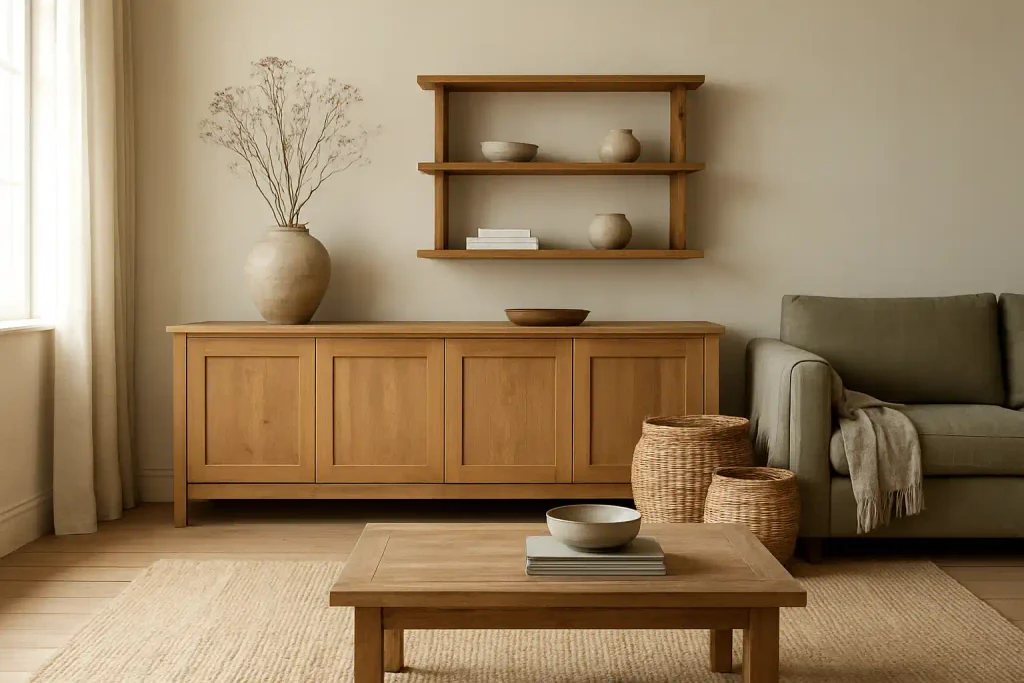
Rustic entryway storage works best when it feels connected to the home, not like a collection of baskets and hooks added in a hurry. Start with a practical question: what tends to gather by your door? Shoes, coats, bags, keys, pet leads, and mail each need a sensible place to land. Then choose a few materials and finishes that suit your space, such as wood, woven fibers, iron, or muted paint.
A strong rustic entryway storage plan balances texture with order. Weathered wood and handmade-looking details can add warmth, but clear surfaces and easy-to-reach compartments keep the area useful. The goal is not to make everything look old. Instead, mix natural character with simple shapes and enough concealed storage to keep everyday clutter from taking over.
Look at the colors and materials already in view from the entrance. If your home has pale walls and light floors, a dark bench or iron hooks can give the entry definition. In a room with deep wood tones, a lighter basket or painted cabinet can keep the corner from feeling heavy. Repeat one or two finishes elsewhere nearby so the entry looks connected rather than themed.
Ideas To Try For Rustic Entryway Storage
These ideas can work separately or as a small combination. Choose based on your household’s routines and the available footprint, rather than trying to fit every rustic detail into one area.
1. Add A Bench With Baskets Below
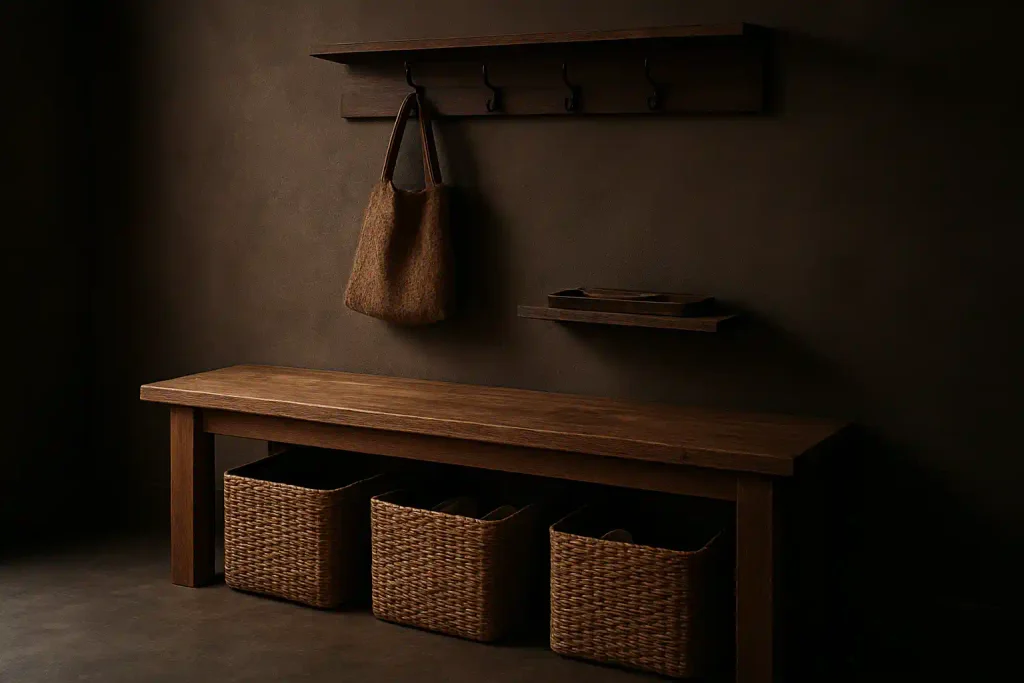
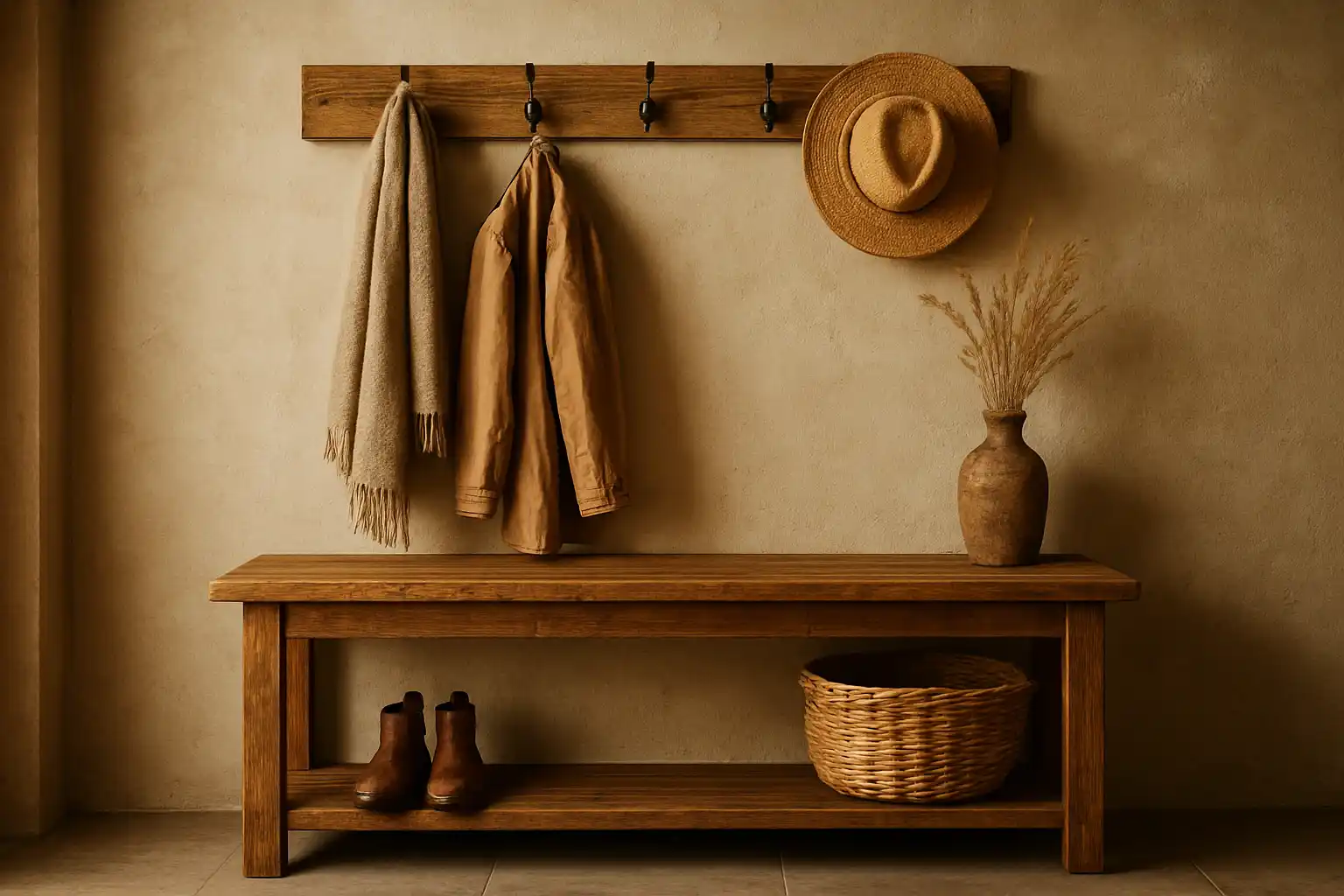
A bench creates a place to sit while putting on shoes, and the open space beneath it can hold baskets for footwear, scarves, or reusable bags. For rustic entryway storage, choose a sturdy wood bench with a finish that suits your room, then use baskets in a consistent material or color. This setup fits a wider hall or the wall beside a door. Its main constraint is depth: check that the bench does not narrow the walking path, and avoid overloading baskets that need to slide out often.
Pro tip: Before buying anything, note what needs storing and measure the wall, floor, and door swing. A beautiful piece is less useful if it blocks a doorway or leaves no room to sit.
2. Build A Simple Hook And Shelf Zone
A row of hooks beneath a narrow shelf uses vertical wall space and gives coats, hats, and small grab-and-go items a clear home. Wood with visible grain can bring rustic warmth, while dark metal hooks add a useful contrast. Place the hooks at a comfortable height for the people who will use them, and keep the shelf shallow enough to avoid bumps in a tight passage. This is a practical choice where floor space is limited, though it may not hide the visual clutter of several coats.
3. Use A Small Cabinet For Hidden Storage
A compact cabinet can tuck away gloves, pet supplies, or loose accessories while keeping the entry looking calm. A simple wood-front piece or a painted cabinet with plain hardware can feel rustic without looking overly distressed. This arrangement makes rustic entryway storage feel more composed in a shared living area, especially when the entrance opens directly into a room. Measure carefully, including the door’s opening arc. A cabinet needs enough clearance to open, and a deep one can make a narrow entry feel crowded.
4. Repurpose A Crate Or Wooden Box
A sturdy crate or wooden box can hold shoes, kindling for a nearby fireplace, or dog-walking essentials, depending on the location. It works well under a console or beside a bench, where it adds texture without requiring a large furniture piece. Sand rough edges and check that the box is stable before using it for heavy items. A single crate can look intentional; several different boxes may read as clutter, especially in a small entrance.
5. Set Up A Catchall Tray And Wall Basket: Rustic Entryway Storage
A shallow tray on a console or shelf gives keys and sunglasses a defined landing spot. A wall-mounted basket can hold incoming mail or lightweight accessories, freeing the tabletop for a lamp or decor. Keep these containers close to the door, but not where the door or a passing bag can knock them down. They suit small homes and rental entries because they require little floor space. Their limit is capacity: sort papers and small items regularly so the catchall does not become a pile.
Pro tip: Give each household member one hook or one small container, then reserve a separate spot for shared items such as keys. Clear ownership makes it easier to put things away without adding more furniture.
Bringing It Together
Once you have chosen the main storage pieces, make them feel like a coordinated arrangement. Begin with the largest item, often a bench, cabinet, or console. Add hooks or a shelf above it only if the wall has enough space and the combination will not feel cramped. Rustic entryway storage looks most considered when each piece has a job and the materials repeat in a restrained way.
For example, pair a wood bench with two or three woven baskets, then repeat the basket texture in a small mail holder. Or combine a painted cabinet with iron hooks and a plain tray. You do not need matching furniture. Similar tones, finishes, or shapes can create a relationship between pieces that were chosen at different times.
Keep the most-used items easiest to reach. Put daily shoes near the door, hang coats at a usable height, and store seasonal accessories higher up or in a closed compartment. Leave some surface space empty. A clear patch on a console or shelf gives keys somewhere to land and helps decorative objects stand out without making the whole entry feel staged.
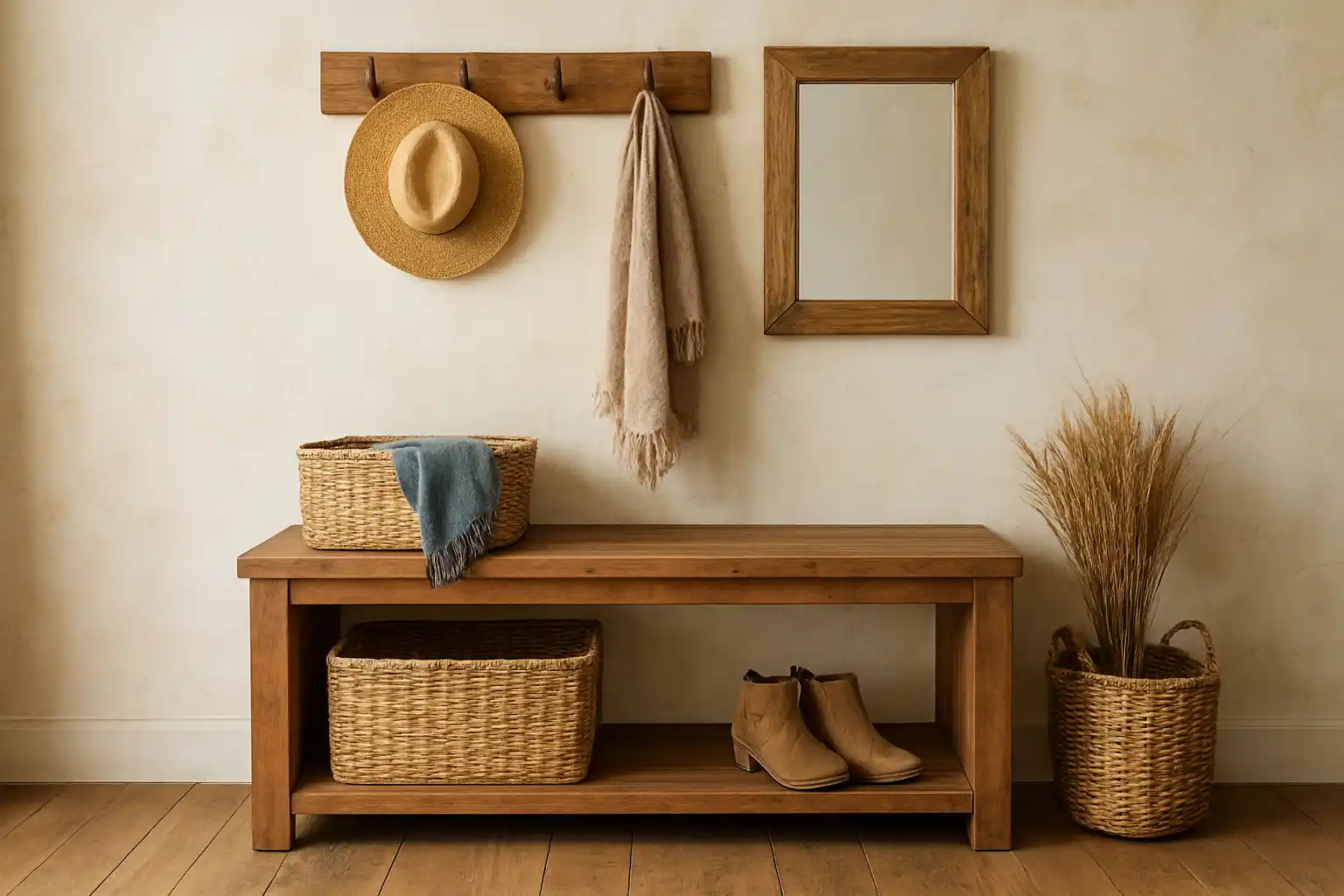
Use decor sparingly around storage. A small framed print, a simple mirror, or a sturdy plant can soften the area, provided it does not interfere with movement or cover useful hooks. A mirror can be especially practical near an exit, while a plant needs a spot that suits its light and watering needs. Let the storage remain the main feature.
Budget And Space Adaptations
Small-space rustic entryway storage can rely on the wall rather than the floor. A few hooks, a narrow ledge, and one compact basket may be enough for a household with limited gear. In a rental, freestanding furniture and over-door organizers can reduce the need for permanent changes. Check attachment requirements and weight limits before mounting shelves or hooks, and choose a location that will not obstruct a door or walkway.
If you already own a bench, crate, or cabinet, try changing its role before replacing it. A basket inside an existing console can group small items, and a tray can turn an otherwise cluttered surface into a defined drop zone. For a low-cost update, consider swapping hardware or adding a washable cushion in a natural, subdued fabric. Keep changes compatible with the item’s construction and finish.
Key takeaways:
- Plan around the items that collect by your door and measure before choosing furniture.
- Combine warm materials with clear surfaces and easy-to-reach storage.
- Use hooks and shallow organizers to save floor space in a narrow entry.
- Add pieces gradually, keeping pathways and door clearance open.
In a larger entry, resist the urge to fill every open wall. A bench, a useful storage piece, and a few hooks may handle daily needs while preserving room to move. In a narrow hall, prioritize shallow pieces and wall-mounted options. Whatever the footprint, leave space for wet shoes to dry and avoid storing damp items in closed baskets or cabinets.
Your Next Step
Start with a short inventory: list what arrives at the door, what must be stored, and what can be moved elsewhere. Measure the area and choose one main piece before adding smaller organizers. This keeps the plan grounded in your household’s actual routines.
Rustic entryway storage can feel fresh without losing its character when natural materials serve a clear purpose and everyday items have a place to go. Begin with one change, such as a bench basket or a better hook zone, then adjust after using it. Keep what makes the entrance easier to manage, and leave out anything that only adds visual noise.
Looking for options for this space? Explore Rustic storage and organization and choose what suits your needs.