Affiliate disclosure: We may earn a commission when you buy through links in this post.
A welcoming porch does not need a complete renovation or a collection of antiques. The best rustic porch ideas combine natural textures, comfortable seating, warm light, and a few personal details in a way that suits the house and the weather. Start with what your porch already offers, then add pieces that make it feel inviting and easy to use.
Think of the space as an outdoor room. A clear path to the door, seating that fits the available area, and materials that can handle local conditions matter as much as the decorative details. Use the ideas below as a starting point, and adjust the palette and scale to your home.
The Look To Aim For: Rustic Porch Ideas
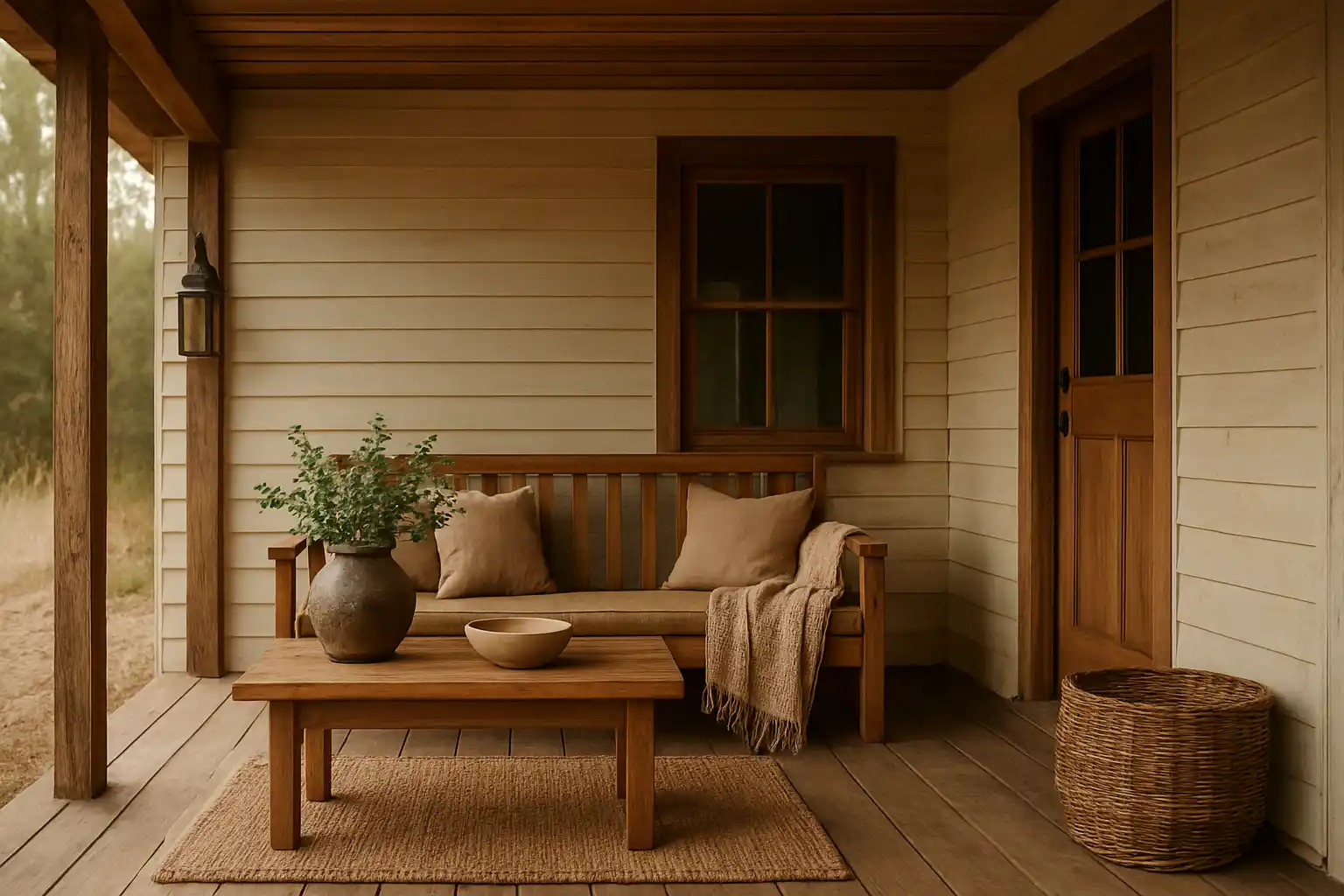
Rustic style feels relaxed because it lets the character of materials show. Wood grain, woven fibers, aged metal, stone, and simple cotton or linen can add depth without making the porch look overly styled. For a cohesive result, choose two or three main materials and repeat them in small ways, such as a wood bench, a woven basket, and dark metal lighting.
Color helps connect the pieces. Begin with the house exterior and work with its existing tones: warm wood and cream suit many natural palettes, while charcoal or deep green can bring definition to a lighter facade. Rustic porch ideas work best when contrast is intentional, not scattered. A cushion or planter in a muted accent color can provide enough variation without competing with the architecture.
Keep the entrance functional. Leave a comfortable route to the door, make sure it opens freely, and avoid placing decor where it could catch on bags or shoes. A porch that looks good but is awkward to walk through will not feel welcoming for long.
Ideas To Try With Rustic Porch Ideas
Choose a few changes that solve a real need, such as a place to sit, a softer evening atmosphere, or a tidier entrance. These ideas can stand alone or be combined, depending on the porch’s size and exposure.
1. Make Seating The Anchor
Pro tip: Before buying decor, take a photo of the porch from the street and from the doorway. The pictures make it easier to spot crowded areas, visual gaps, and colors that do not work together.
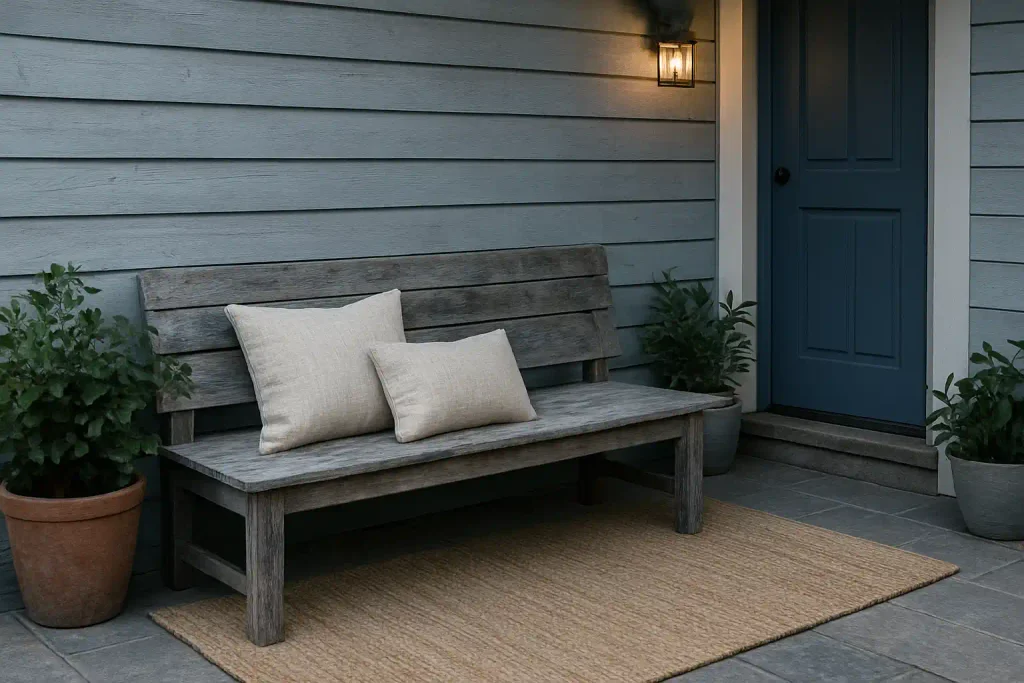
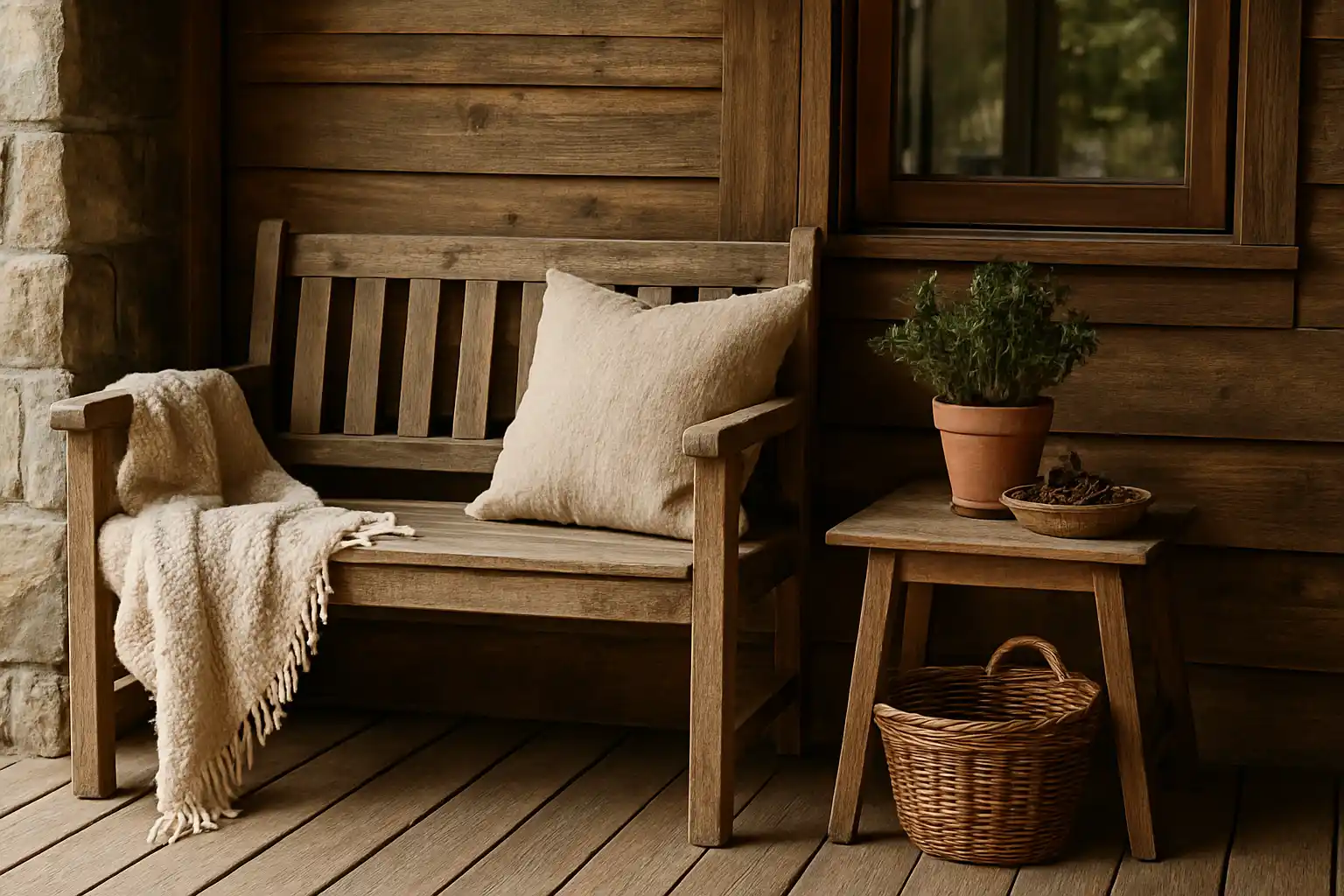
A bench, rocking chair, or compact pair of chairs gives the porch an obvious purpose. Choose a scale that leaves room to pass, and add a weather-suitable cushion for comfort. A simple wood bench works well beside a front door or along a wider wall; a single chair may be a better fit for a narrow stoop. If rain reaches the seating, choose removable cushions and store them indoors when needed. This is one of the most useful rustic porch ideas because it makes the space feel lived in without requiring much decoration.
2. Layer A Durable Outdoor Rug
A rug can define a seating area and soften a hard floor. Pick one made for outdoor use, sized so the front legs of the main furniture can rest on it without blocking the doorway. Natural-looking patterns in subdued colors add texture while keeping the porch grounded. Check that the rug drains and dries appropriately for your climate, and lift it occasionally to inspect the surface beneath. On a very small landing, a doormat may be more practical than a larger rug.
3. Add Warm, Useful Lighting: Rustic Porch Ideas
Lighting makes an entrance easier to use after dark and gives the porch a softer evening feel. Start with a suitable fixture near the door, then consider a sheltered table lamp or battery-operated lantern where appropriate. Warm-toned bulbs generally create a gentler atmosphere than stark, cool light. Make sure any fixture is rated for its location and installed safely. A hanging lantern can suit a covered porch, while a low-profile wall light is often more practical where headroom or weather exposure is a concern.
4. Bring In Planters With Varied Shapes
Plants add life and soften the straight lines of steps, posts, and siding. Combine one larger pot with a smaller container rather than lining up many identical planters, and choose varieties that suit the available light and your willingness to water. Rustic porch ideas can use terracotta, aged-looking metal, or simple glazed pots, but the containers should still work with the exterior palette. Keep plants away from the door swing and stairs, and avoid placing heavy pots where they could become a tripping hazard.
Pro tip: Arrange furniture and planters with temporary placeholders first, such as boxes or folded blankets. Walk the route from the steps to the door before committing to a layout.
5. Use A Small Table For Everyday Items
A side table provides a landing spot for a drink, keys, or a lantern and makes seating more useful. Choose a stable surface with a finish suited to outdoor conditions, and keep its footprint modest. On a covered porch, a reclaimed-looking wood table can reinforce the natural feel. For an exposed spot, prioritize a material that is easy to clean and move. Do not use a fragile indoor table outdoors unless you can protect it from moisture and sun.
6. Display One Personal, Weather-Ready Detail
A distinctive house number, a simple wreath, or a seasonal arrangement can give the entry character without filling every surface. Select one feature that can be seen from the approach, then let the rest of the decor stay quieter. This works particularly well on smaller porches, where a few well-placed details make more impact than a crowded collection. Check that hanging items are securely fixed and appropriate for wind, rain, or direct sunlight.
Bringing It Together: Rustic Porch Ideas
Once you have chosen the main pieces, look at the porch as a whole. Keep the largest item, often the seating, as the visual anchor. Repeat a material or color elsewhere, then leave some open space so the architecture remains visible. Rustic porch ideas feel more considered when each object has a purpose, whether that is comfort, storage, lighting, or a personal touch.
Use a simple order of operations: clear the area, check the floor and entry for repairs, place furniture, add the rug or planters, and finish with lighting and smaller accents. This sequence helps prevent decorative items from hiding practical problems. If the porch is exposed to weather, choose finishes and fabrics for that setting rather than relying on appearance alone.
- Keep the main route to the door open and easy to navigate.
- Repeat a small set of materials or colors for a unified look.
- Choose outdoor-suitable items where rain, sun, or temperature changes reach them.
- Leave room to remove cushions, sweep, and care for plants.
At night, check whether the entry is bright enough to use safely without feeling harsh. During the day, view the porch from the street and from inside the doorway. These two perspectives reveal whether the arrangement welcomes visitors and still works for daily routines.
Budget And Space Adaptations
A small budget calls for prioritizing rather than buying a full matching set. Start with one useful improvement, such as a comfortable chair, a fresh doormat, or a better light, then add pieces as needed. Clean and reposition items you already own before replacing them. A restrained palette can make a mix of existing furniture look more intentional, and rustic porch ideas do not depend on costly reclaimed materials or elaborate construction.
For a narrow porch, use vertical space carefully. A wall-mounted number, a compact sconce, or a single hanging planter can add interest without using floor area. Keep stairs and handrails clear, and avoid deep furniture that makes the entry difficult to pass. On a larger porch, create a defined seating zone rather than spreading small decorations across the entire floor.
Key takeaways:
- Build the look around natural textures, a limited palette, and functional furniture.
- Choose outdoor-suitable materials and keep the path to the door clear.
- Start with one practical improvement, then add personal details gradually.
Exposure changes what is practical. Covered porches can support more fabric and decorative objects, while open porches need pieces that tolerate weather or can be moved easily. If a finish, cushion, or plant needs more care than you can provide, choose a simpler alternative. A modest setup that stays tidy and comfortable is more useful than a complicated one that is hard to maintain.
Your Next Step
Begin by measuring the porch and identifying one thing you want it to do better: offer a seat, make the entrance brighter, or create a tidier landing. Then choose a main piece and one supporting detail that suit the space. This small plan keeps rustic porch ideas focused on comfort and character instead of accumulating decor without a clear purpose.
With a clear layout and a few well-chosen materials, a porch can feel warm, personal, and connected to the home. Let its size, architecture, and weather guide the details, and keep the finished space comfortable enough to use every day.
Looking for options for this space? Explore Rustic outdoor living and choose what suits your needs.