Affiliate disclosure: We may earn a commission when you buy through links in this post.
Rustic wall art can make a room feel more personal without making it look overdecorated. The most inviting rustic wall art ideas combine natural materials, meaningful objects, and a little breathing room. Try a large reclaimed-wood piece, a simple gallery of botanical prints, or a woven accent, then repeat a few colors and textures already in the room.
The goal is not to make every object look old or every wall feel like a cabin. Choose pieces that suit your home, add warmth, and leave space for the architecture and furnishings to show through. These practical approaches can help you plan a wall that feels collected rather than themed.
The Look To Aim For: Rustic Wall Art Ideas
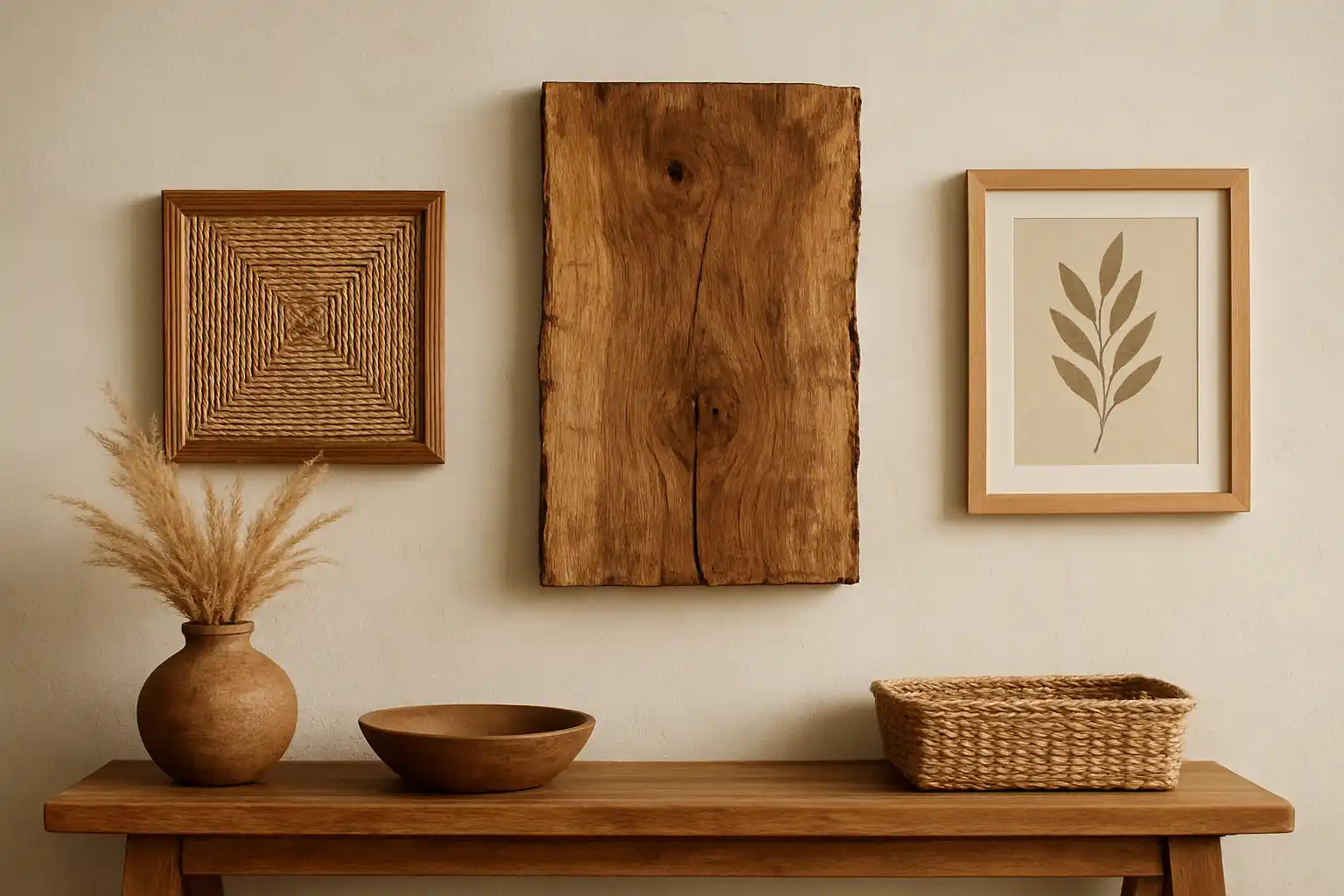
Rustic style draws on the character of natural and timeworn materials: wood grain, woven fibers, aged metal, stone, and paper with visible texture. On a wall, those materials work best when they connect to the rest of the room. A wood frame can pick up a dining table finish, for example, while a landscape print can echo the colors in a rug.
Use contrast to keep the result from feeling heavy. Pair a rough-edged wooden frame with a clean, unadorned print, or hang a soft textile against a smooth painted wall. A few well-chosen rustic wall art ideas are often more effective than filling every open area with signs and objects.
Before choosing pieces, note the wall’s size, the furniture below it, and the room’s natural light. A narrow wall may suit a vertical object or a small grouping, while a wide wall can accommodate one substantial focal piece. In dim rooms, lighter art and pale frames can keep the arrangement from feeling visually dense.
Ideas To Try: Rustic Wall Art Ideas
Start with the shape and material that suit the room, then decide what the art should communicate. These four ideas can stand alone or be combined in a measured arrangement.
1. Rustic Wall Art Ideas With Wood And Metal
Pro tip: Photograph the empty wall straight on, then use the image to sketch frame shapes and spacing before you put any holes in the wall.
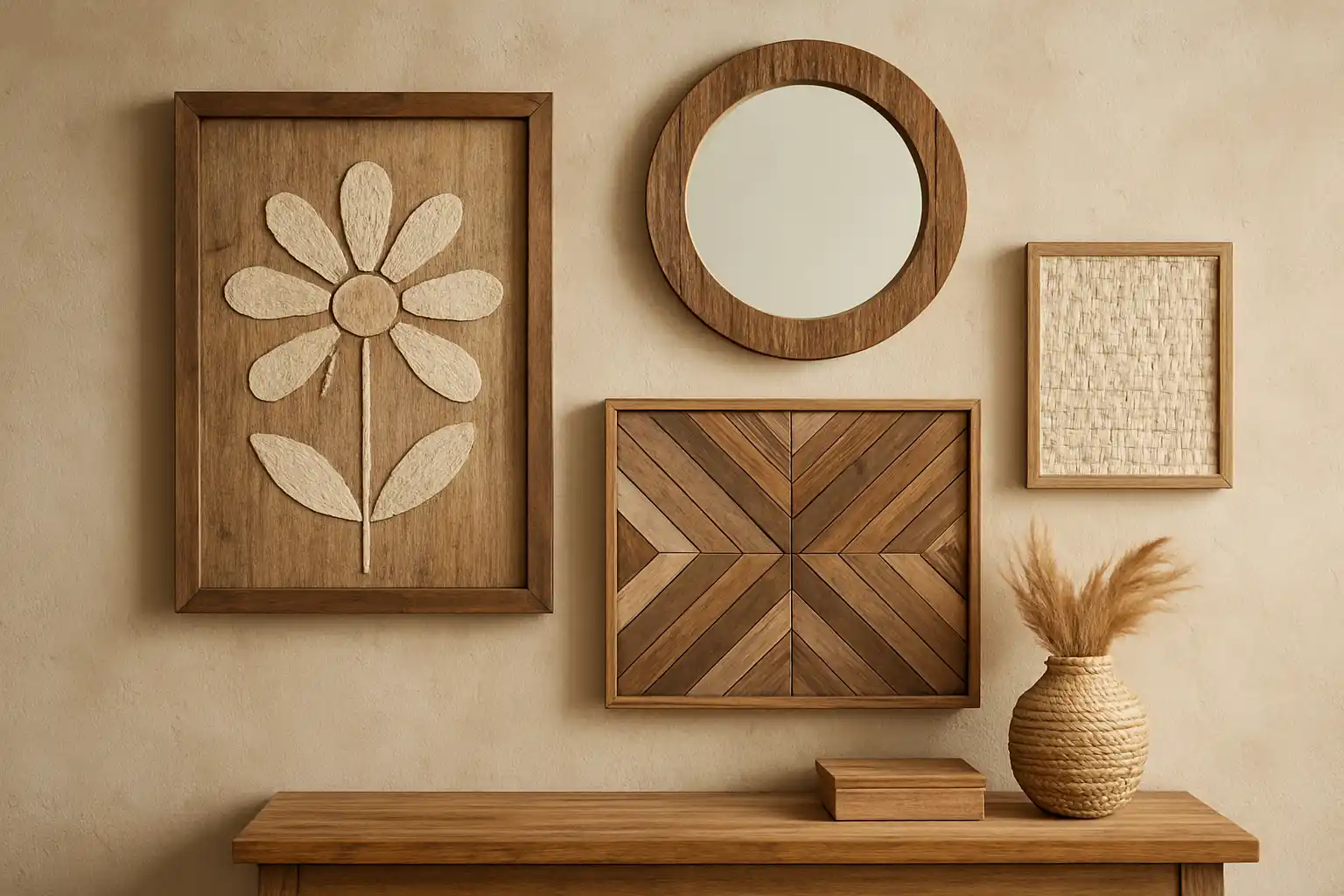
Wood and metal bring contrasting textures that feel grounded and substantial. A weathered wood panel, simple metal botanical silhouette, or framed piece with a thin dark-metal edge can work well above a console, fireplace, or bed. The mix is especially useful in rooms that already have wooden furniture but need a sharper accent.
Keep the combination intentional: repeat one finish elsewhere, such as a dark metal lamp or a similar wood tone in a shelf. Avoid combining several highly distressed finishes in a small room, where they can compete for attention. Check the piece’s weight and the wall construction before hanging heavy materials.
2. Botanical Prints And Collected Nature
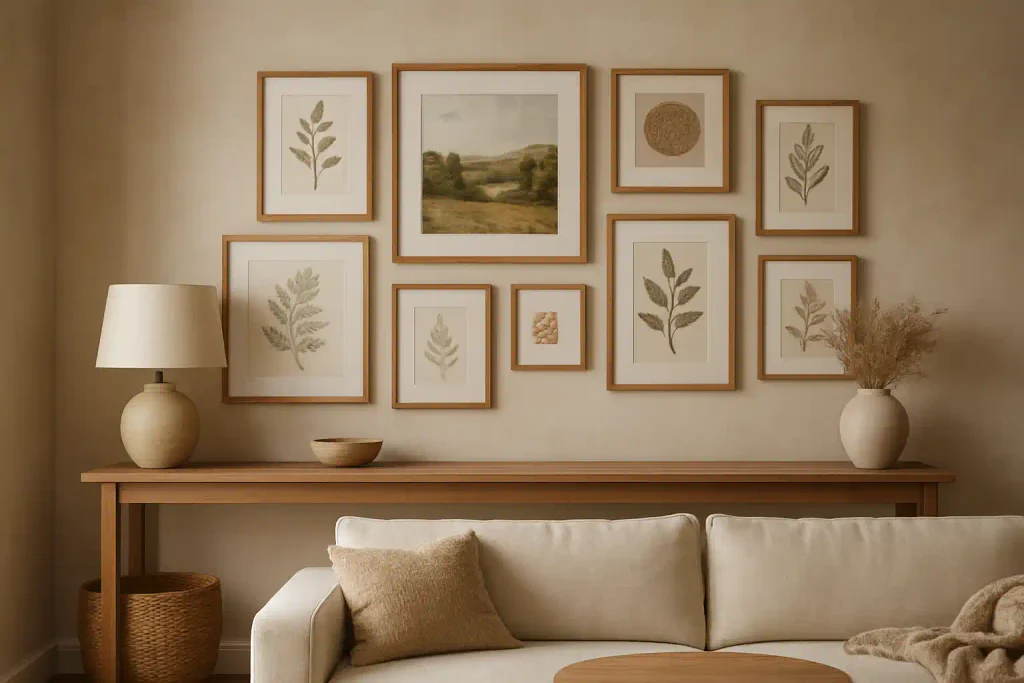
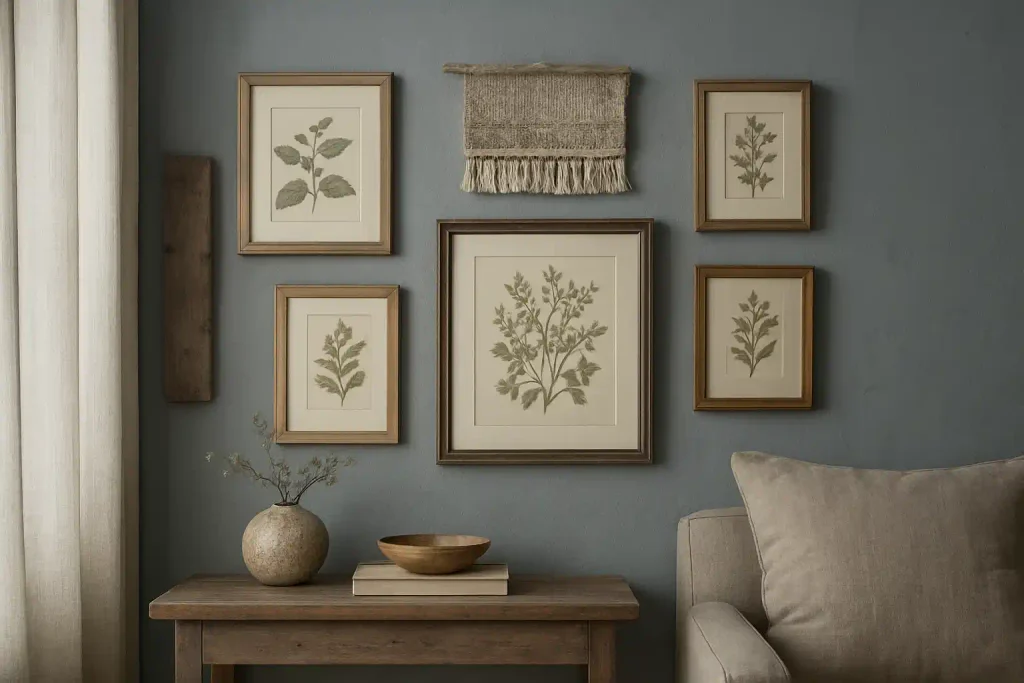
Leaves, wildflowers, tree studies, and other botanical images bring a gentle natural motif to a wall without requiring rustic materials in every frame. Use a matched pair for a calm, symmetrical look, or arrange a small set of different plant illustrations for a collected feel. They suit kitchens, hallways, bedrooms, and other spaces where detailed art can be enjoyed up close.
Choose a consistent frame color or mat treatment to make varied images feel related. If rustic wall art ideas appeal to you because they feel personal, include a nature drawing or print connected to a place or plant you genuinely like. Just keep the palette simple when nearby wallpaper or textiles already have a strong pattern.
3. Woven And Textile Wall Pieces
A woven basket, small textile, or framed piece of natural-fiber fabric adds softness and dimension. These pieces can balance the hard surfaces of a kitchen or the straight lines of a modern room. A single large textile can anchor a seating area, while a few smaller pieces can fill an awkward section of wall.
Consider dust, humidity, and direct sunlight before hanging fabric or woven materials. Keep them away from splashes and cooking grease, and use secure hardware suited to the object’s weight. If the wall already has plenty of texture, choose a flatter weave rather than a bulky, highly dimensional piece.
4. Meaningful Objects And Small Collections
Pro tip: Lay out a proposed gallery on the floor first, using paper templates to test the overall shape and spacing before hanging the real pieces.
Display a few objects that have a genuine connection to your household, such as a vintage hand tool, an inherited plate, or a framed map of a meaningful area. Their appeal comes from the story and material, not from matching a specific rustic theme. This approach works in an entryway, stair landing, or reading nook where a small arrangement can invite a closer look.
Give each object enough space to read clearly, and secure anything fragile or sharp with appropriate mounts. Collections can become cluttered quickly, so edit the display to a manageable group and leave room to add or rotate pieces later.
Bringing It Together
A wall arrangement feels settled when its scale, spacing, and colors relate to the room. Begin with the largest piece, then place smaller art around it. Keep the center of the arrangement at a comfortable viewing height, adjusting for furniture and the way people use the space. Above a sofa or console, treat the furniture and art as one composition instead of measuring the art in isolation.
For a gallery wall, repeat one or two features: frame color, subject, mat style, or a shared palette. The frames do not need to match exactly, but a clear point of connection helps a varied group feel deliberate. Rustic wall art ideas can look especially natural when one element repeats elsewhere, such as a warm wood tone picked up in a side table or woven shade.
Spacing matters as much as the art itself. Even gaps create a tidy effect, while a looser arrangement can feel casual if the outer edges still form a balanced shape. Step back as you work and look at the wall from the doorway, since that is often where the whole arrangement first comes into view.
- Choose one focal piece or a small group to establish the wall’s scale.
- Repeat a material, color, or subject to connect the art to the room.
- Leave open wall around important pieces so each one remains visible.
- Use hangers and anchors appropriate to both the object and wall surface.
Budget And Space Adaptations
You do not need a large collection to make a wall feel finished. Begin with one piece you already own, a family photograph, or a print that can be framed simply. Reusing a frame in good condition and changing its contents can create a fresh look without adding more objects. If you are considering secondhand finds, inspect them for loose joints, sharp edges, stains, or damage before bringing them into the room.
In a rental, lean framed art on a sturdy shelf or use removable hanging solutions only when they are suitable for the wall finish and the item’s weight. Follow the hardware instructions, and avoid placing fragile pieces where they could be knocked over. For a small room, a single vertical piece can draw the eye upward without crowding the wall. In a large room, a connected pair or a wider gallery can provide more visual presence.
Key takeaways:
- Connect art to the room through material, color, or subject.
- Balance textured pieces with simpler shapes and open space.
- Plan placement and use secure, suitable hanging methods.
Small spaces also benefit from restraint. Choose a limited palette, use lighter frames, and leave some wall visible around the art. If the room has low light, avoid grouping dark objects together in a way that makes one corner feel heavier. Rustic wall art ideas should support the room’s mood, not take over its limited visual space.
Your Next Step
Choose the wall you want to improve and decide whether it needs a focal point, softer texture, or a more personal detail. Then select one piece that answers that need and test its size and placement before committing to a larger arrangement. If you are combining several rustic wall art ideas, repeat a material or color so the pieces feel connected, and edit anything that makes the wall feel crowded.
A natural, lived-in room develops over time. Start with art you enjoy looking at, make sure it suits the wall and how the room is used, and leave space for the arrangement to change as your home does.
Looking for options for this space? Explore Rustic wall decor and choose what suits your needs.