Affiliate disclosure: We may earn a commission when you buy through links in this post.
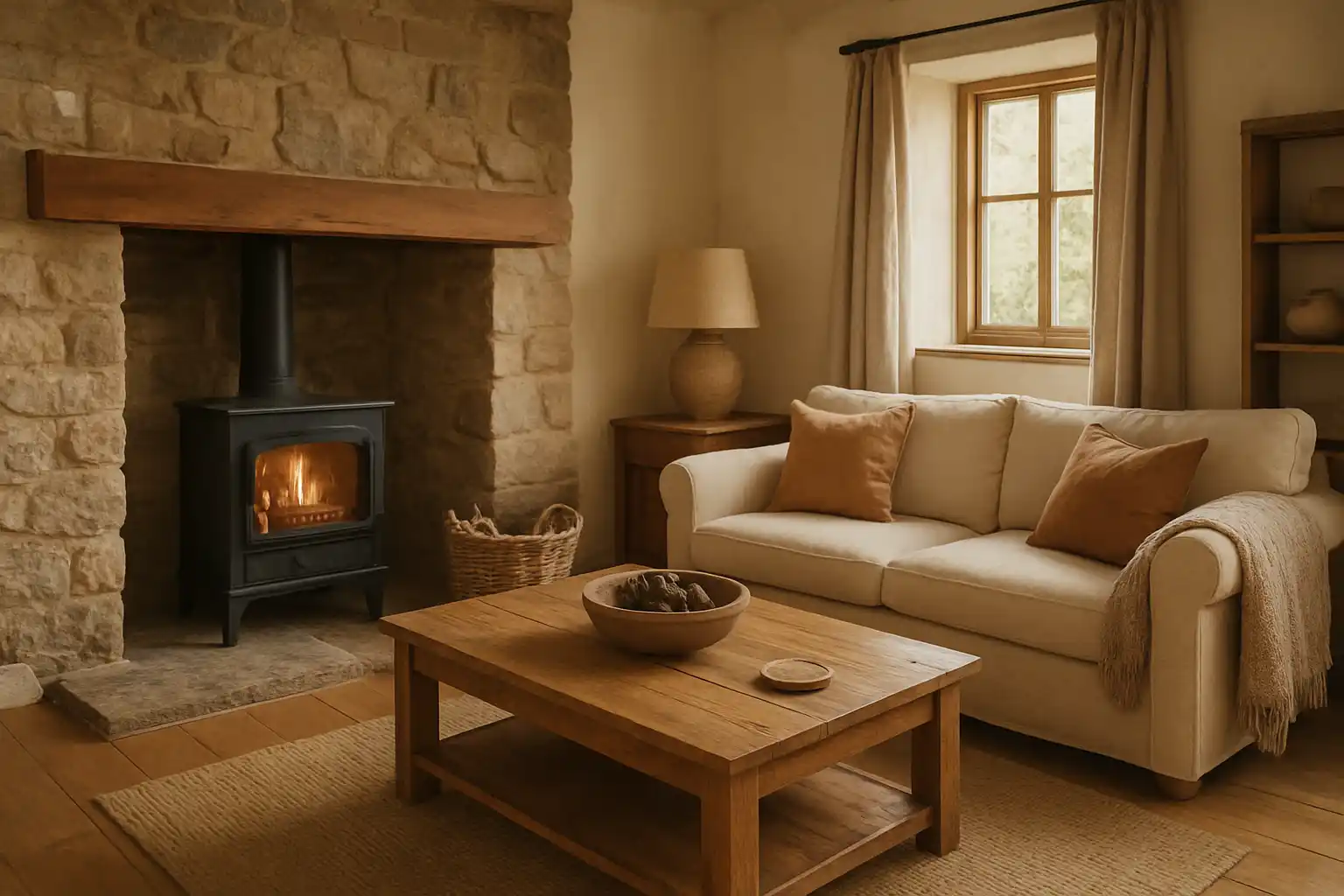
A cozy rustic living room feels welcoming and lived-in, not like a furniture showroom or a themed cabin. Build the look with natural materials, comfortable seating, layered light and a few details that feel personal. You do not need to renovate: a thoughtful furniture layout, soft textiles and a useful lamp can change the mood of the room while keeping it practical for everyday life.
Start with what you already own, then add texture and character in deliberate layers. The aim is to make the room feel warm without crowding it or making everything match.
The look to aim for in a cozy rustic living room
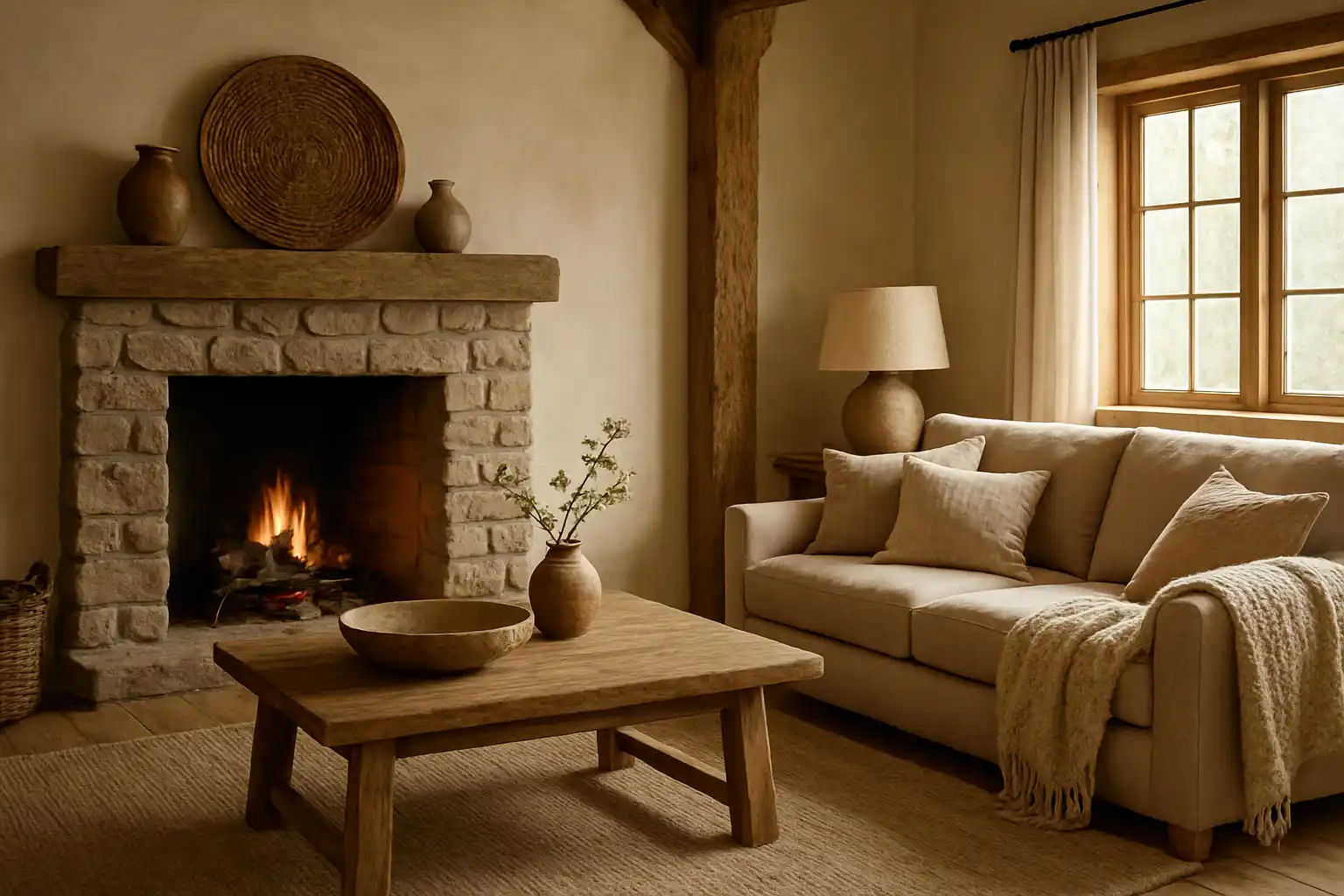
For a cozy rustic living room, bring together tactile materials and a relaxed, useful layout. Wood grain, woven fibers, linen or cotton, and a few handcrafted or vintage-feeling accents can give a room depth. You do not need every surface to look aged, and combining rustic materials with simple, clean-lined pieces often keeps the overall effect balanced.
Explore rustic living room decor for options to consider.
Begin with the room’s fixed features and largest furnishings. Timber floors, a brick fireplace or exposed beams can provide natural character. If your space does not have those details, a wood table, woven rug or textured cushions can add warmth instead. Choose a connected palette—warm white, muted green, clay, charcoal and natural wood are possible starting points. Let the colors relate rather than trying to use them all.
Comfort and movement matter as much as appearance. Arrange seats so people can talk, reach a table and walk through the room without squeezing past furniture. Add softness where it will be used: a rug underfoot, cushions that support the sofa and a throw within easy reach. Rustic style feels most inviting when the room is ready for everyday life, not only for display.
Ideas to try for a cozy rustic living room
Choose one or two ideas that suit your layout and existing belongings instead of adding every rustic detail at once. Each approach below can work on its own, and you can build on it gradually.
1. Let one natural material lead
A prominent natural texture gives the room a clear starting point. It could be a wood coffee table, a woven rug, a stone hearth or a substantial basket. Repeat that material in one or two smaller details, then keep nearby patterns and finishes quieter. This works well in a room that feels plain or visually flat because one focal texture adds interest without requiring a complete makeover. The constraint is visual weight: several large, strongly textured pieces can make a compact room feel busy, so leave space around the feature.
2. Layer textiles in a cozy rustic living room
Textiles soften hard floors and simple seating, making them a practical way to introduce comfort and color. Start with a rug that relates to the seating area, then add cushions in a few connected shades and a woven or knitted throw. This idea suits family rooms and rentals because textiles can be rearranged or replaced without altering walls or floors. Measure the floor area and check how the rug will sit beneath the furniture before choosing one. A small rug can make the seating feel disconnected, while a large, high-contrast pattern may dominate a small space.
3. Use more than one source of light
A single bright ceiling fixture may be useful for general tasks, but it does not have to do every job. Add a table lamp beside a chair or a floor lamp near the sofa so you can adjust the room for reading, conversation or quiet evenings. Fabric, ceramic and aged-looking metal finishes can sit comfortably alongside natural materials. Layered light is especially useful in a room with limited daylight, but lamps still need safe, accessible outlets and a position that does not obstruct a walkway.
4. Add character to a cozy rustic living room with collected accents
Rustic character does not depend on making every piece look distressed. Pair a simple sofa or modern side table with one vintage-feeling or handcrafted accent, such as a wooden stool, ceramic vessel or framed landscape. The contrast helps the special object stand out and keeps the room from feeling like a set. This approach works well if you are decorating gradually or already own contemporary basics. Be selective: several large, weathered pieces can make the space feel heavy, especially when the room is small.
5. Give the eye a place to rest
A small, considered arrangement can create a focal point on a mantel, shelf or coffee table. Combine a few objects with different heights and textures, then leave some surface visible around them. A bowl, a short stack of books and a natural detail can feel more composed than a collection spread across the whole area. This works in rooms without a strong architectural feature, but everyday surfaces still need room for drinks, games or household items. Keep frequently used tables easy to clear.
- Choose one leading texture and repeat it sparingly.
- Keep large surfaces within a calm, connected color palette.
- Use rugs, cushions and lamps to improve comfort as well as appearance.
Bringing it together
Once you have chosen the main pieces, connect them through repetition. A wood tone might appear in a coffee table and a picture frame; a muted green could return in a cushion and a planter. Repeating a color or material in a few places helps the room feel intentional without making it look overly coordinated. In a cozy rustic living room, the small connections between objects can matter more than adding another decorative feature.
Check scale and spacing before you finish. A tiny side table beside a deep sofa may be awkward to use, while an oversized coffee table can crowd the route through the room. Keep clear paths between the doorway, seats and frequently used storage. Then look at the room from its main entrance. If a corner feels crowded, move or remove an item before shopping for something new.
Personal objects can bring character without filling every shelf. Choose a few things you enjoy seeing or use regularly, such as a framed photograph, a well-used book or a handmade bowl. Leave some surfaces empty so the room’s materials and focal pieces have room to show.
Pro tip: Take a photo of the room from its main entrance before buying anything. It can help you notice visual clutter, awkward spacing or a focal point that feels off balance.
Budget and space adaptations
On a limited budget, start with changes that improve comfort or solve a layout problem. Rearrange the furniture, move a lamp from another room, or try your existing cushions and throws in a different combination. If you decide to buy something, choose one useful item—a rug, lamp or storage basket, for example—rather than several small decorations without a clear purpose. Check the dimensions and the place it will go before bringing it home.
In a small room, keep the largest pieces visually simple and use vertical surfaces selectively. A shelf can hold a few meaningful objects, while a basket can keep blankets close without adding another cabinet. A compact cozy rustic living room can still feel layered when its textures vary but its palette stays controlled. Avoid blocking windows or narrow routes with bulky furnishings, and make sure the seating area remains comfortable to use.
In a larger room, use a rug to define the seating area and arrange chairs or a sofa to encourage conversation. If the room serves several purposes, a lamp or side table can help mark a reading spot without adding a divider. Work with existing finishes where possible; replacing floors or adding architectural details is not necessary to create a rustic mood.
Key takeaways:
- Build warmth with natural texture, a connected palette and comfortable seating.
- Choose a few purposeful accents instead of filling every surface.
- Adapt furniture, lighting and purchases to the room you actually have.
Your next step
Take a quick room inventory: note what already adds warmth, what makes the space difficult to use and which area feels unfinished. Then choose one practical change, such as shifting the seating, adding a lamp or editing a crowded shelf. Give that change time before making another. This measured approach lets a cozy rustic living room develop around your materials, routines and favorite things, so its character feels natural rather than prescribed.