Affiliate disclosure: We may earn a commission when you buy through links in this post.
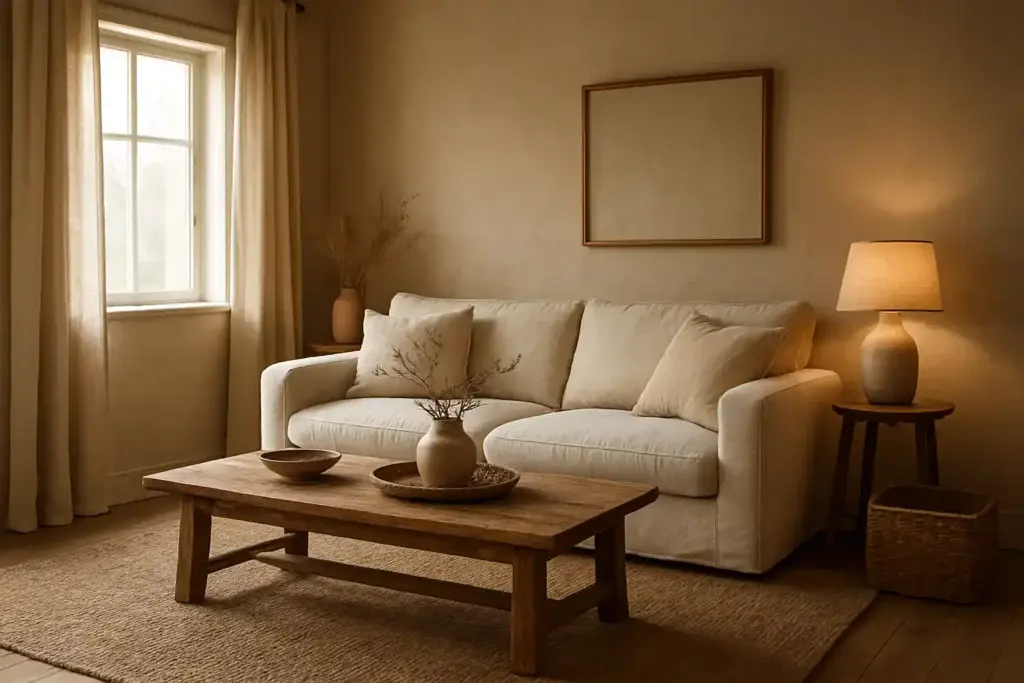
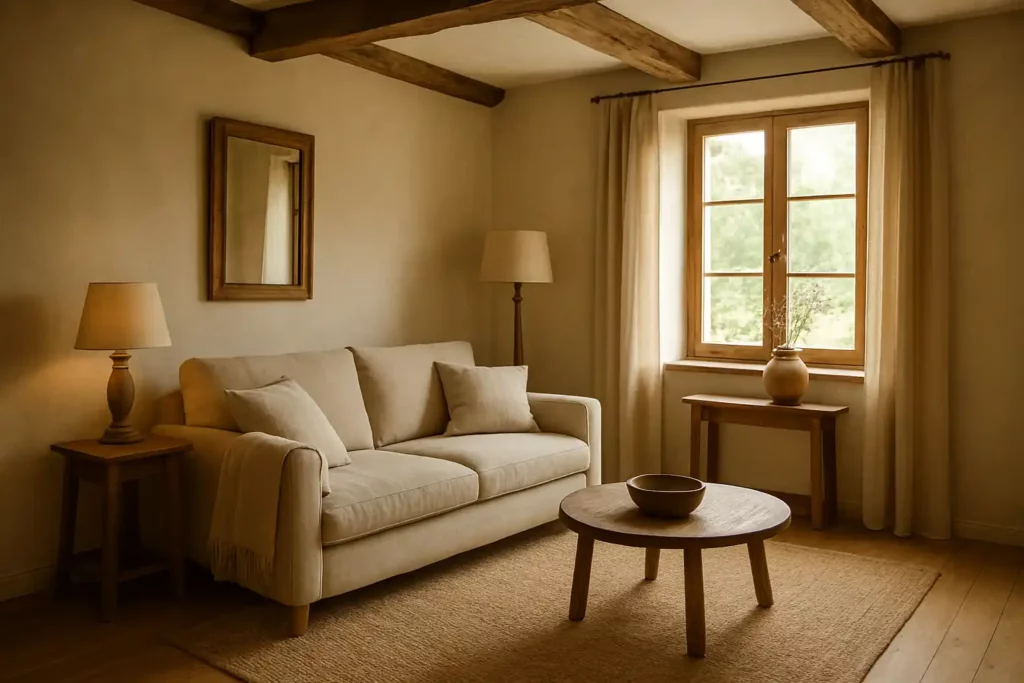
A farmhouse rustic living room feels warm, lived-in, and practical rather than overly polished. The look brings together natural materials, comfortable seating, quiet colors, and a few pieces with visible character. You can create it in a country home or a modern apartment: the key is choosing a simple palette and balancing aged textures with everyday comfort.
This guide explains which elements define the style, offers ideas you can adapt to your space, and shows how to shop with a plan. Start with the room you have, not a picture-perfect version of it. Keeping the existing layout and useful furnishings can make the result feel more personal and help avoid unnecessary purchases.
The look to aim for in a farmhouse rustic living room
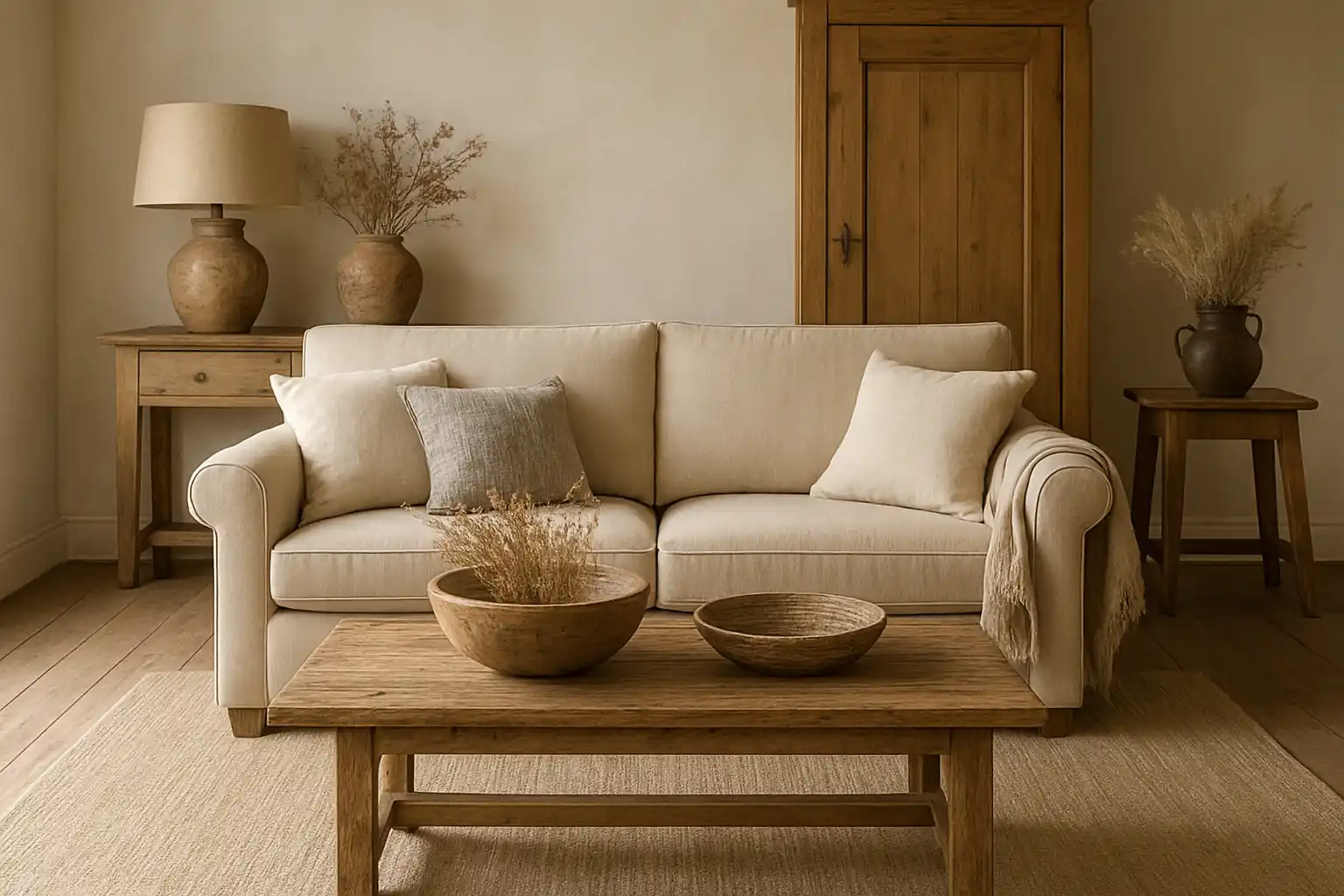
Think of the style as a blend of farmhouse ease and rustic texture. Farmhouse elements tend to be simple and welcoming; rustic details bring in wood grain, woven fibers, stone, and finishes that do not look factory-smooth. A farmhouse rustic living room works best when these qualities support comfort rather than compete for attention.
Explore rustic living room decor for options to consider.
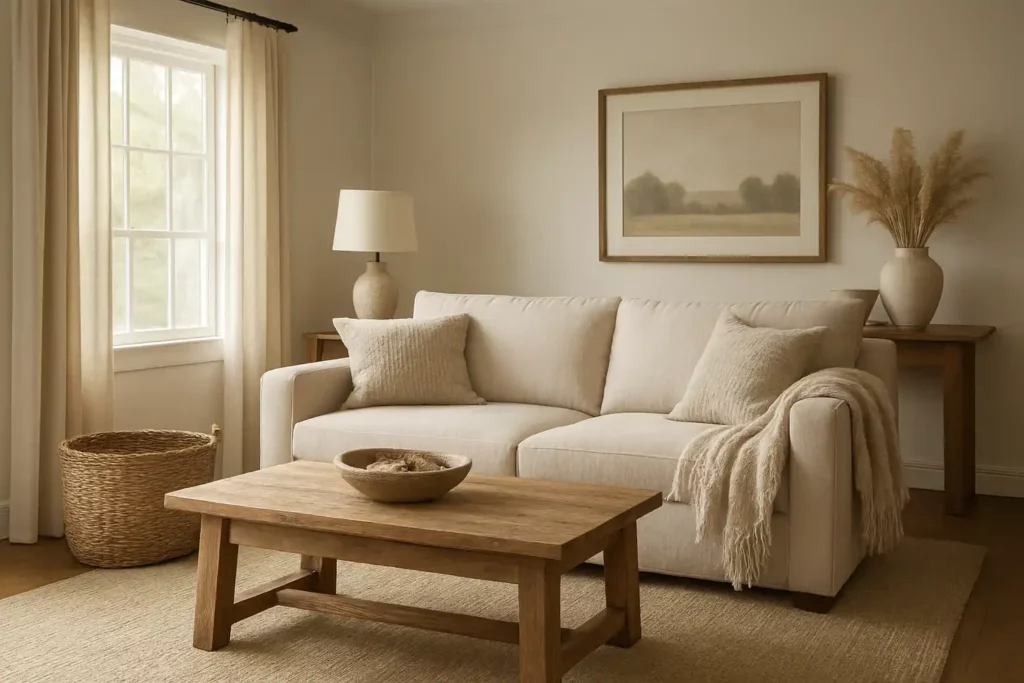
Choose a small color family first. Cream, warm white, taupe, muted green, and soft charcoal can sit comfortably beside natural wood tones. You do not need to use every shade. A restrained palette lets the texture of a chunky throw, a timber table, or a woven basket stand out without making the room feel busy.
Keep the layout suited to how the room is used. Arrange seating so people can talk, leave clear routes to doors, and make sure the most-used seat has a place to set down a drink or book. Rustic style can include substantial furniture, but a room still needs breathing space.
- Natural materials: Look for wood, cotton, linen, wool, rattan, and metal in finishes that feel tactile.
- Comfortable shapes: Choose inviting seats and soft layers over furniture that is attractive but difficult to use.
- Signs of character: Bring in a few worn, handmade, or vintage-inspired details rather than making every surface look distressed.
- Useful storage: Use baskets, cabinets, or lidded boxes to keep daily clutter manageable.
Avoid treating “rustic” as a requirement to fill the room with reclaimed-looking objects. One distinctive piece can carry more character than a collection of matching decorations. Keep a mix of smooth and rough surfaces so the room feels balanced.
Ideas to try
1. Build a welcoming seating arrangement
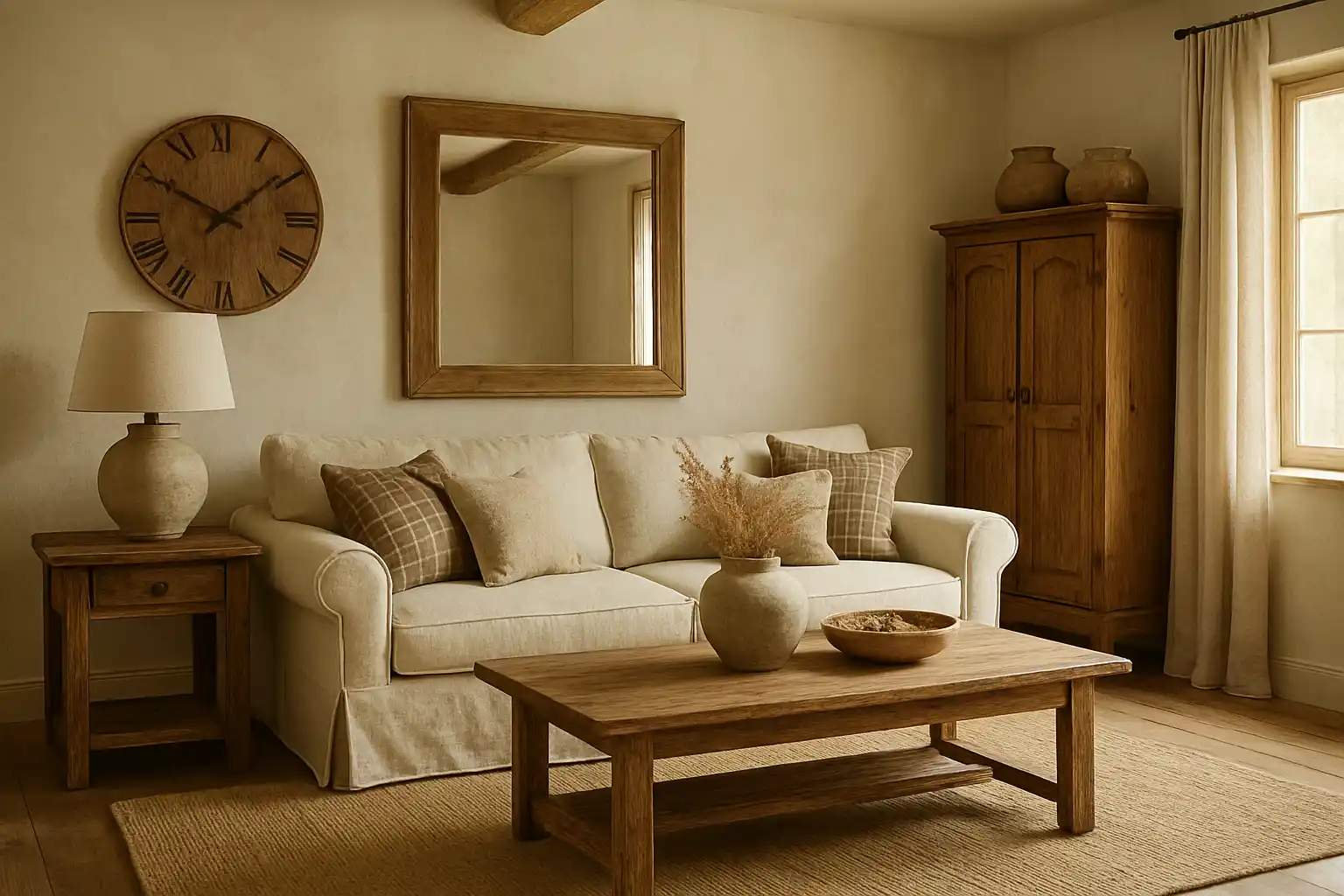
Why it works: A clear conversation area makes the room feel social and settled. How to apply it: Place the sofa as the anchor, then add a chair or pair of chairs where the room allows. Use a rug to connect the seats, with the front legs resting on it when practical. Where it fits: This arrangement suits both open-plan rooms and enclosed living rooms. Constraint: In a narrow space, a bulky chair can block circulation, so use a smaller accent chair or leave the arrangement simpler. A farmhouse rustic living room should be easy to move through as well as comfortable to sit in.
2. Add wood through one useful focal piece
Why it works: Visible grain introduces warmth and natural variation. How to apply it: Choose a coffee table, console, or side table with a finish that complements the room’s other wood tones. A little variation is appealing, but repeat at least one tone elsewhere so the furniture feels connected. Where it fits: A coffee table anchors a seating group; a console can bring character to an otherwise plain wall. Constraint: A large, dark timber piece can visually weigh down a small room. Consider an open base, lighter finish, or smaller scale.
3. Layer textiles for softness
Why it works: Textiles soften hard materials and make the space feel inviting. How to apply it: Start with a rug, then add cushions and a throw in related tones. Mix a few textures, such as a woven cover with a smoother cotton cushion, instead of combining many competing patterns. Where it fits: Textiles are especially useful in rooms with wood floors or leather seating. Constraint: Too many layers can look cluttered and require extra care. If the room is busy, edit the pattern mix before adding more accessories. This is an easy way to make a farmhouse rustic living room feel warm without changing its main furniture.
4. Use lighting at more than one height — farmhouse rustic living room
Why it works: A single ceiling fixture can leave corners feeling flat, while layered lighting gives you options for relaxing, reading, or hosting. How to apply it: Combine an overhead fixture with a floor or table lamp. Choose materials such as aged metal, ceramic, or woven shades if they suit the rest of the room. Where it fits: Put a reading lamp near a seat and a table lamp on a console or side table. Constraint: Make sure each light works with the room’s outlets and does not create a trip hazard with cords.
5. Style shelves with breathing room
Why it works: Open shelves can show personal objects and useful books without relying on wall decor alone. How to apply it: Group a few books horizontally and vertically, then add a small framed piece, pottery, or a basket. Leave some shelf space empty. Where it fits: Use this approach on a bookcase, built-in, or a short wall shelf. Constraint: Open storage gathers visible clutter. Keep everyday items in closed cabinets or baskets if you prefer a calmer look.
Bringing it together: farmhouse rustic living room
Before buying anything, identify what already works: a sofa in good condition, a wood floor, an heirloom cabinet, or even a favorite lamp. Build the room around those pieces. Then choose one or two missing elements that will make a practical difference, such as a rug to define the seating area or a lamp beside the sofa.
Use repetition to connect different finishes. For example, a dark metal lamp can echo a frame or cabinet hardware, while warm wood can appear in both a table and a smaller accessory. Repetition makes a farmhouse rustic living room feel considered, but exact matching is not necessary. Variation in grain, age, and texture helps the room feel collected over time.
Decorate in passes rather than trying to finish every surface at once. Set the main furniture, check the walking routes, and add lighting and textiles next. Live with that arrangement before deciding whether a wall needs artwork or a corner needs a plant. This pause helps you notice what the room actually lacks.
Pro tip: Take a photo of the room before shopping, then note the measurements of the space where each possible purchase would go. A quick visual reference and accurate dimensions make it easier to avoid pieces that overwhelm the room or interrupt a walkway.
Key takeaways:
- Start with comfort, a simple palette, and the furniture you already have.
- Use natural materials and varied textures, but leave room for the eye to rest.
- Prioritize layout, lighting, and useful storage before small decorative accents.
Budget and space adaptations
You do not need to replace a whole room to get the look. A farmhouse rustic living room can take shape gradually, beginning with a layout change, a lamp, or a few well-chosen textiles. Set a spending limit for each category, and decide which existing items can be repaired, refinished, or moved from another room before you shop.
When comparing furniture, check the dimensions, materials, care instructions, and return terms. A piece that looks right online may feel too large in person, so measure both its footprint and the routes it must pass through to reach the room. For secondhand finds, inspect stability and condition carefully, especially on seating and tables used every day.
In a small room, favor furniture with visible legs or an open base, and keep the main walkway clear. Use a compact side table, a wall-mounted shelf, or a storage ottoman only if it serves a real need. In a larger room, a broad rug or additional seating can help define the conversation area, but avoid buying filler pieces simply to occupy empty floor.
Renters can lean on movable changes: removable artwork, layered lighting, cushions, throws, baskets, and freestanding furniture. If you cannot alter walls or flooring, let those fixed surfaces guide the palette. In a darker room, lighter textiles and reflective surfaces can keep the overall scheme from feeling too heavy, while a few deeper accents preserve the rustic character.
Your next step
Choose one practical starting point: measure the seating area, sort the items you already own, or decide on a three-color palette. Then make a short list in order of importance and shop only for the first missing piece. That approach keeps the project manageable and helps each new choice relate to the room as a whole.
As you refine your farmhouse rustic living room, favor comfort and function over a strict checklist of trends. A welcoming seat, warm light, useful storage, and a few honest materials can do more than a room full of themed accessories. Add character slowly, keep what serves your home, and let the style feel like yours.