Affiliate disclosure: We may earn a commission when you buy through links in this post.
Rustic living room curtains can soften a room’s hard edges, add useful privacy and connect wood, stone, leather and woven textures into one comfortable space. The best choice is not necessarily the heaviest linen or the most obvious plaid. It is a curtain whose fabric, color, pattern and length suit your room and the way you use it.
Start by looking at the room’s existing materials and light. Choose a relaxed fabric and colors that echo the wood or upholstery, then decide whether you need privacy, light control or simply a finished window. For rustic living room curtains, fit matters as much as style: well-measured panels can make a window feel considered, even when the decor is simple.
Explore rustic living room decor for options to consider.
The look to aim for with rustic living room curtains
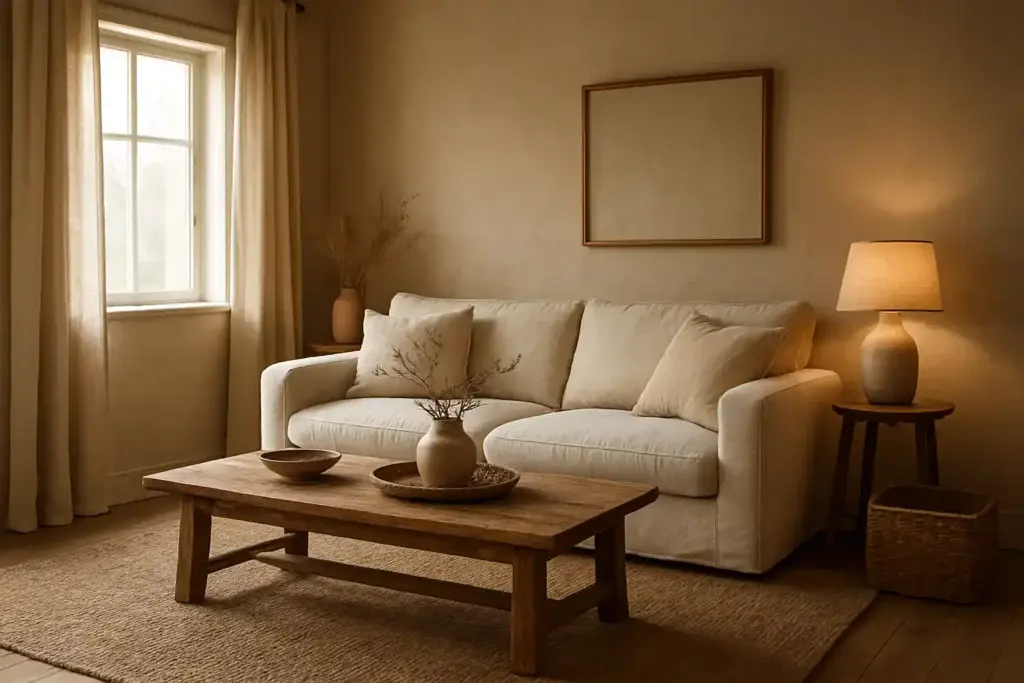
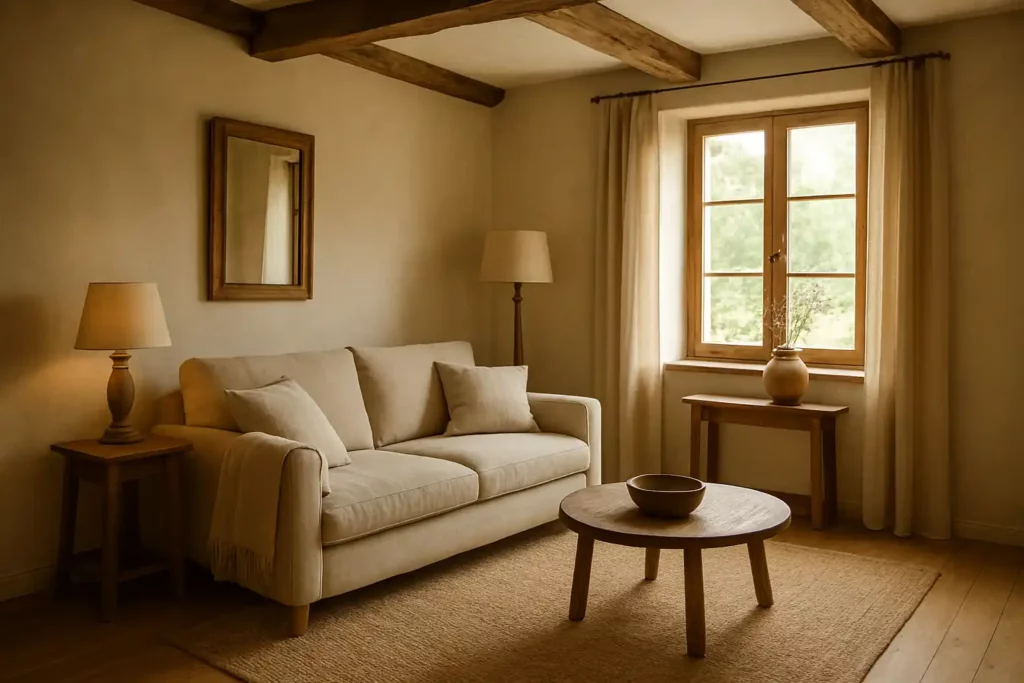
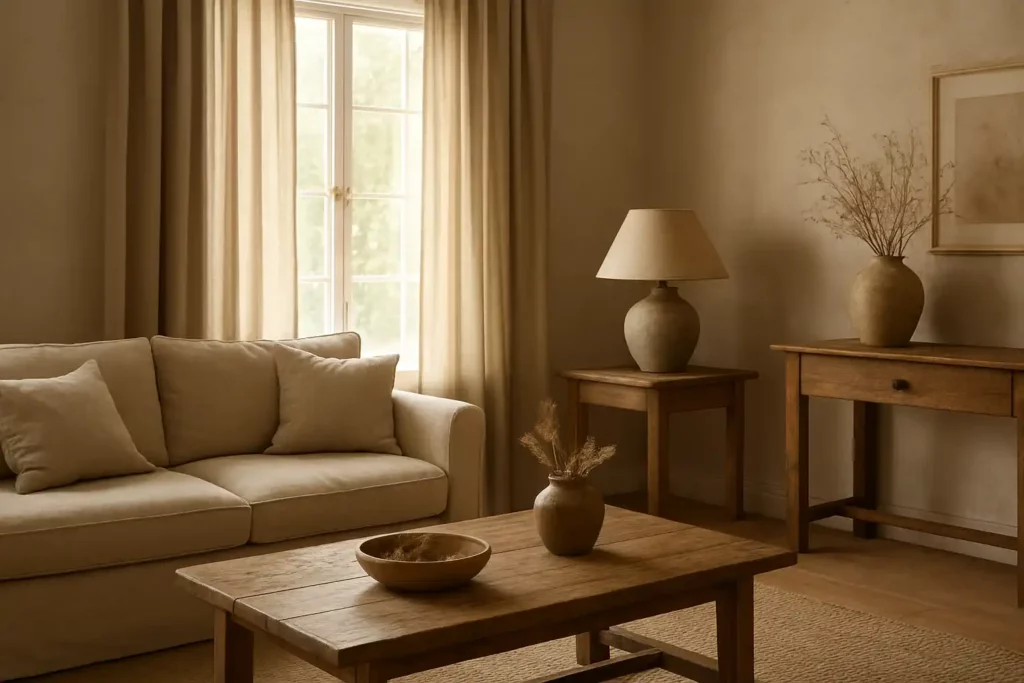
Rustic style is built from natural-looking materials, visible texture and a palette that feels connected to the outdoors. Curtains can reinforce that mood without turning the room into a theme. Think soft, slightly nubby fabric beside smooth glass, or a quiet stripe against a substantial wood frame. A mix of textures usually feels more inviting than matching every surface.
Begin with the room’s strongest finishes. Warm wood often pairs well with cream, flax, muted olive, clay or tobacco tones. Gray-washed timber and stone may suit cooler taupe, soft charcoal or faded blue. These are starting points, not rules: hold fabric samples beside the sofa, floor and trim at different times of day, because window light can change how a color reads.
Consider the feeling you want the window to create. Unlined panels in a light weave keep the space airy, while lined curtains provide more coverage and a fuller appearance. A heavier fabric can frame a large window, but may overwhelm a small one or block more daylight than you want. Check how the room is used before choosing a weight.
Ideas to try
Use the ideas below as options to adapt, rather than a set of matching rules. One strong detail—texture, pattern or a layered treatment—can be enough to establish a rustic mood.
1. Choose relaxed, textured panels
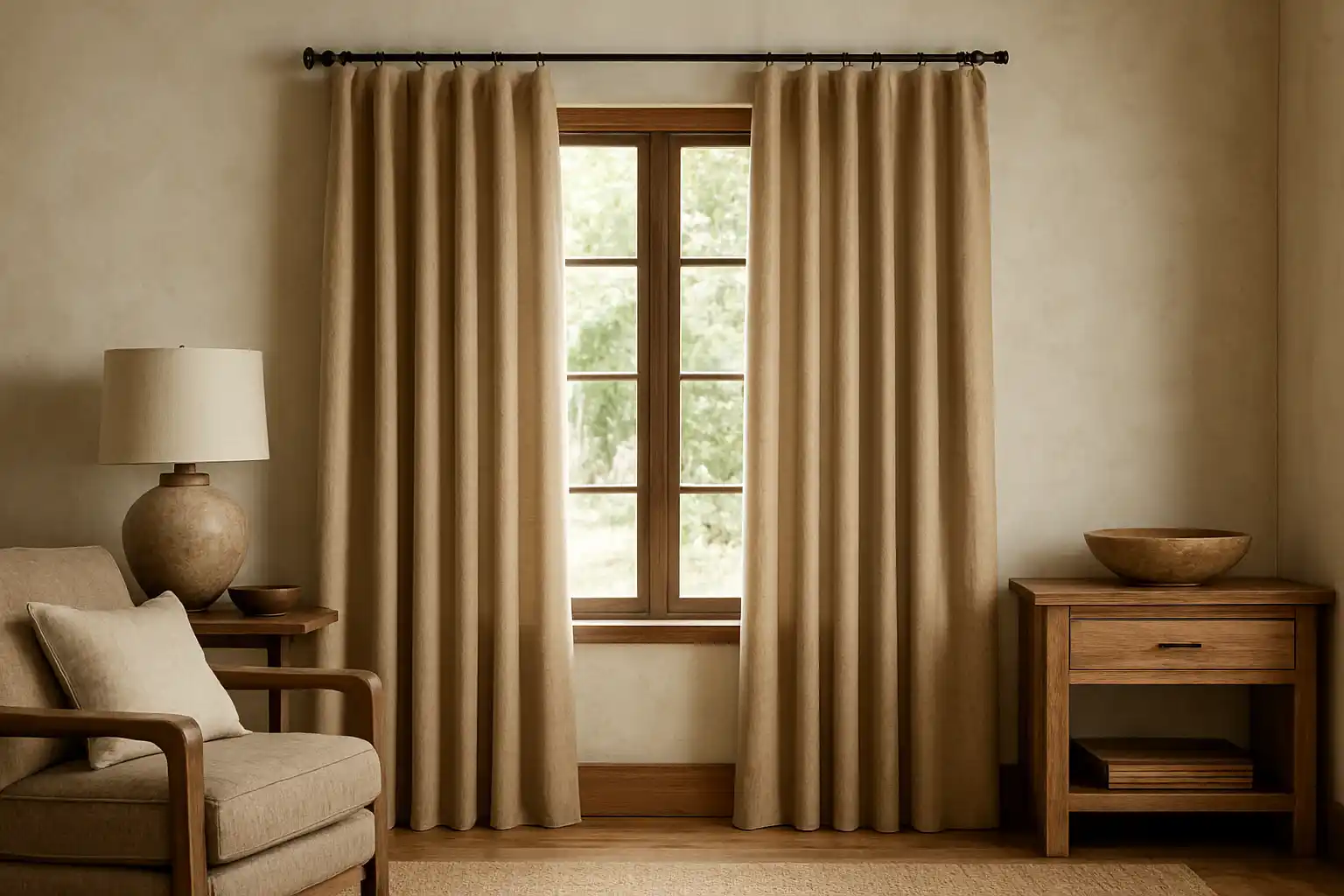
Linen-look fabric, cotton canvas and other visibly woven materials bring softness to a room with exposed beams, timber furniture or a stone fireplace. For rustic living room curtains, a plain fabric with texture can provide the warmth you want without competing with patterned cushions or a detailed rug. Hang panels where they can stack clear of the glass when open. Natural fibers can wrinkle and may respond to sunlight differently from synthetics, so check care guidance and consider lining where fading is a concern.
2. Use a restrained check or stripe
A small check, ticking stripe or understated plaid can add a traditional note. Keep the pattern’s scale in proportion to the room: a large, high-contrast repeat may dominate a compact window, while a tiny pattern can disappear across a broad expanse. If the sofa or rug already has a strong print, choose curtains with a quieter pattern or a solid color. This approach works especially well when the rest of the palette is limited to a few related shades.
3. Layer for changing light
Pair a simple outer panel with a lighter inner layer when you want flexibility between daylight and privacy. A sheer or loosely woven layer filters the view without making the window feel closed; the outer curtains can be drawn when you need more coverage. This arrangement suits a living room used throughout the day, but it needs enough room beside the window for both layers to stack. Measure the available space before buying two sets of panels.
4. Make the hardware part of the design — rustic living room curtains
A straightforward rod in dark metal or a warm, aged-looking finish can complement rustic furniture without calling too much attention to itself. Rings and visible brackets add a more traditional detail, while a simple pole keeps the treatment visually quiet. For rustic living room curtains in a small space, uncomplicated hardware can help the window feel less busy. Choose a rod rated for the curtain’s weight, and check that the brackets can be fixed securely to the wall or suitable anchors.
5. Let a solid color balance a busy room
When a room already has patterned upholstery, a gallery wall or prominent timber grain, plain curtains can give the eye a place to rest. Pull a subdued shade from an existing rug, throw or piece of artwork rather than introducing a new accent color. This is a useful option for open-plan rooms too: a solid curtain can connect the living area to nearby finishes without trying to match every item.
Bringing it together with rustic living room curtains
Before ordering, settle on four practical details: fabric weight, lining, heading style and finished length. A rod-pocket or gathered heading creates a softer, more traditional look; rings or tabs make the hardware more visible. The heading affects how much fabric is needed and how the panel hangs, so compare the finished appearance rather than choosing by fabric alone.
Measure each window individually, including the rod position you plan to use. For a fuller look, panels generally need more total width than the window opening; the amount depends on the fabric, heading and fullness you prefer. For length, decide whether the hem will stop near the sill, finish just above the floor or rest slightly on it. In a busy household, a hem clear of the floor is often easier to keep clean.
Use the same visual logic across windows that can be seen together, but do not assume every panel needs identical dimensions. A bay, deep sill or radiator can require a different arrangement. Check that curtains will not cover heating vents, obstruct doors or interfere with furniture. If you are uncertain about a measurement, mark the proposed rod and hem positions with removable tape before purchasing.
Pro tip: Tape a paper or fabric sample beside the window and view it in morning and evening light before committing to a color or pattern.
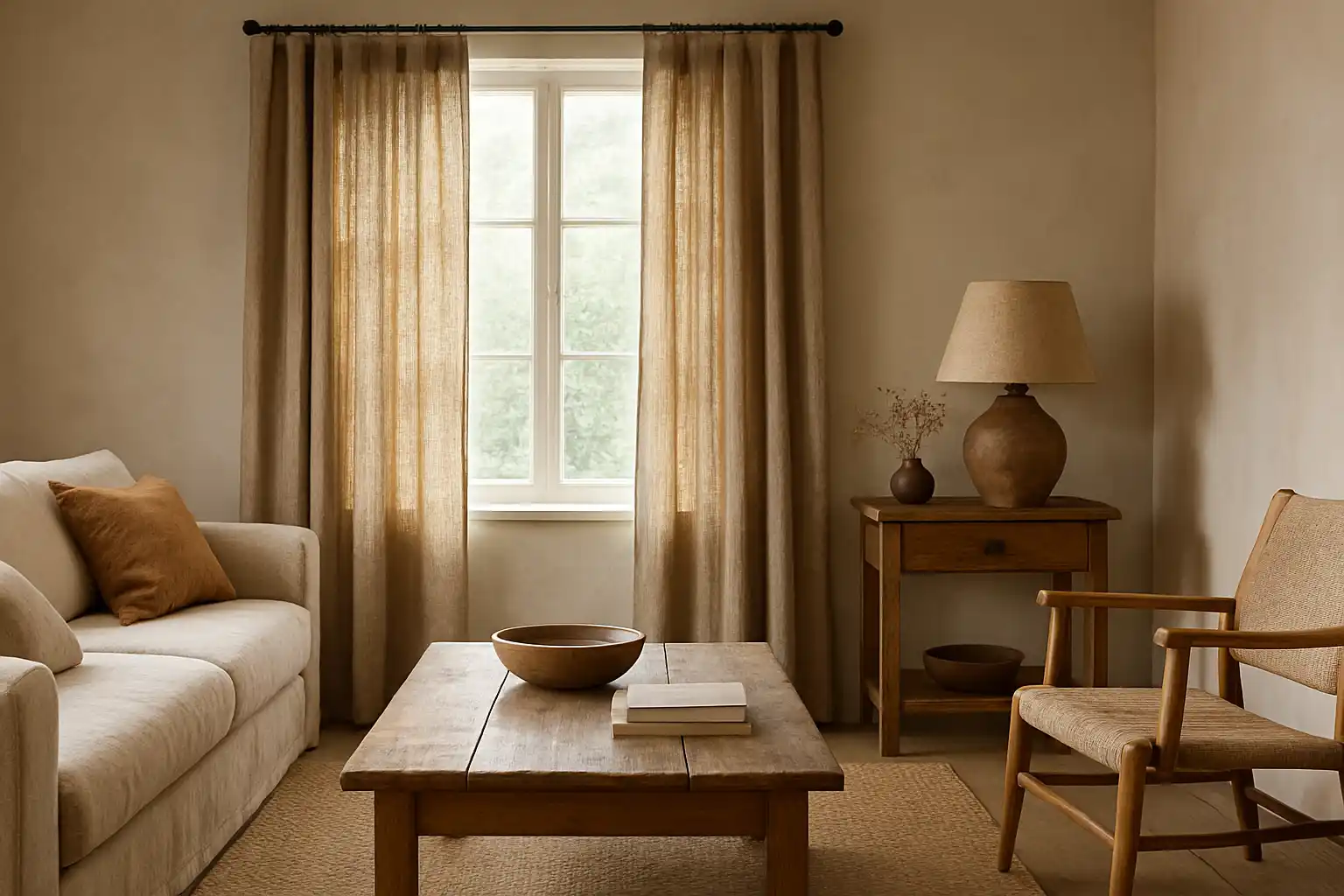
Budget and space adaptations
A polished window treatment does not require elaborate fabric or multiple layers. If you are working within a budget, prioritize accurate measurements, a suitable rod and a fabric you can maintain. Ready-made panels can be adjusted with hemming, while a simpler curtain may look more intentional than an ill-fitting, heavily decorated one. Compare the cost of alterations with the convenience of a ready-made length before deciding.
In a compact living room, use a color close to the wall tone or other large surfaces to keep the window from feeling visually crowded. Mounting the rod a little above and wider than the window, where the wall allows, can create a taller, broader impression and let panels sit clear of the glass. Check for trim, ceiling angles and nearby doors first; the rod should not create awkward gaps or block a walkway.
For a rental or a wall that cannot take substantial hardware, look into options that suit the window frame and local restrictions, and confirm the support is appropriate for the curtain’s weight. Lightweight panels are easier to handle, though they may offer less coverage. If privacy is the priority, consider a separate shade or liner rather than expecting a loosely woven fabric to do everything.
In a larger room, wider panels or a more substantial weave can help a broad window feel grounded. Avoid choosing extra-heavy curtains solely to make the room feel rustic; they can be difficult to open and may overwhelm delicate trim. For rustic living room curtains in any size of room, the useful balance is enough fabric to frame the window without making everyday use awkward.
Key takeaways:
- Match fabric texture and color to the room’s existing materials and natural light.
- Choose patterns, layers and hardware in proportion to the window and surrounding decor.
- Measure for the rod, panel width and finished length before placing an order.
- Balance the look with practical needs such as privacy, cleaning and daily access.
Your next step
Choose one window and write down what its curtains need to do: frame the view, add privacy, soften strong light or help tie the room together. Then note the window measurements, nearby finishes and any obstacles such as a radiator or door. That short checklist makes it easier to compare fabrics and headings on practical grounds, not just in a product photo.
Once you have a shortlist, view samples beside the window and decide on the hem and hardware before buying. Rustic living room curtains look most at home when they support the room rather than compete with it. A thoughtful fabric, a well-proportioned fit and a color that belongs with your existing decor are enough to make the window feel finished.