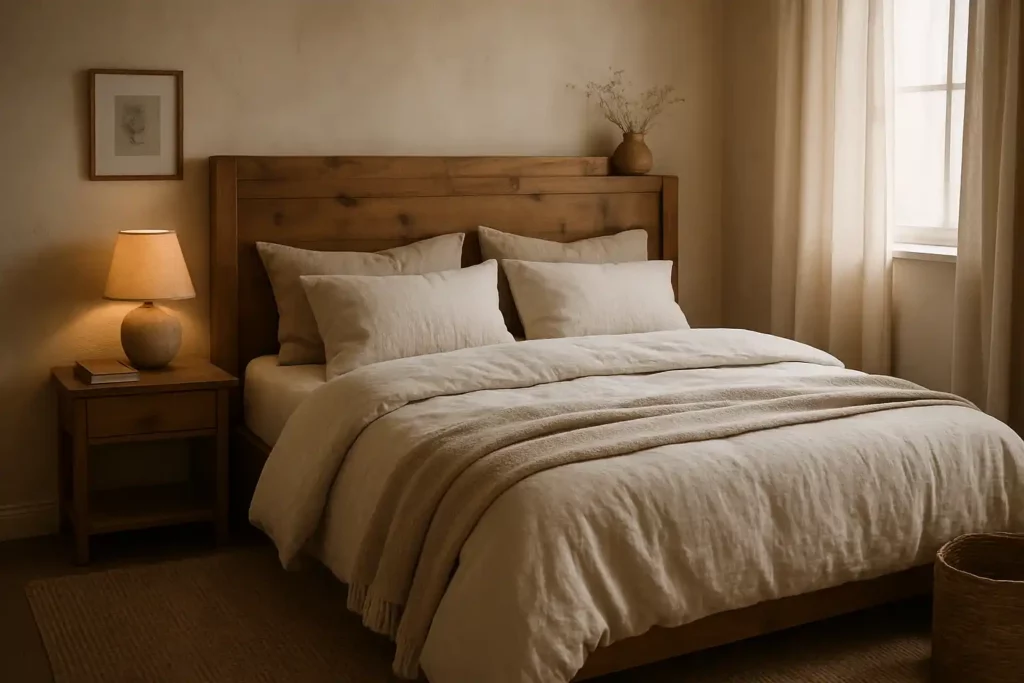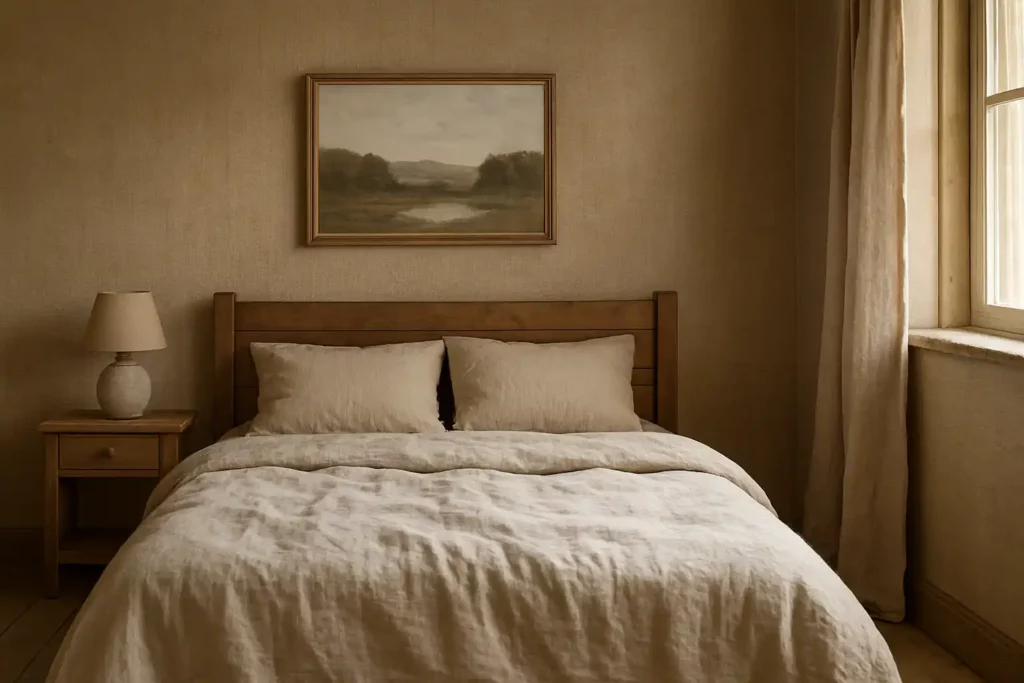
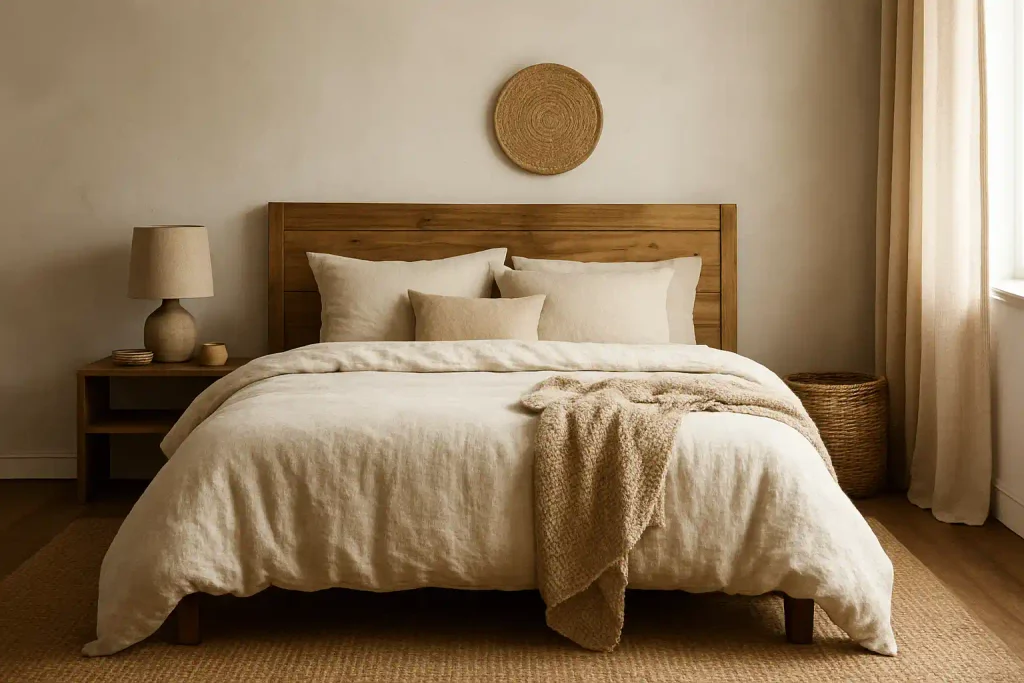
A calm rustic bedroom does not need dark wood, heavy patterns, or a cabin full of accessories. Rustic bedroom decor with neutral colors pairs natural textures and timeworn details with a restrained palette, making the room feel warm, restful, and easy to live in. Start with a few considered materials, layer soft shades, and let practical needs guide what you bring home.
This guide covers the look, specific ideas to try, how to pull them together, and ways to adapt the plan to your budget and room size. The goal is a bedroom that feels collected rather than themed.
The Look To Aim For In Rustic Bedroom Decor With Neutral Colors
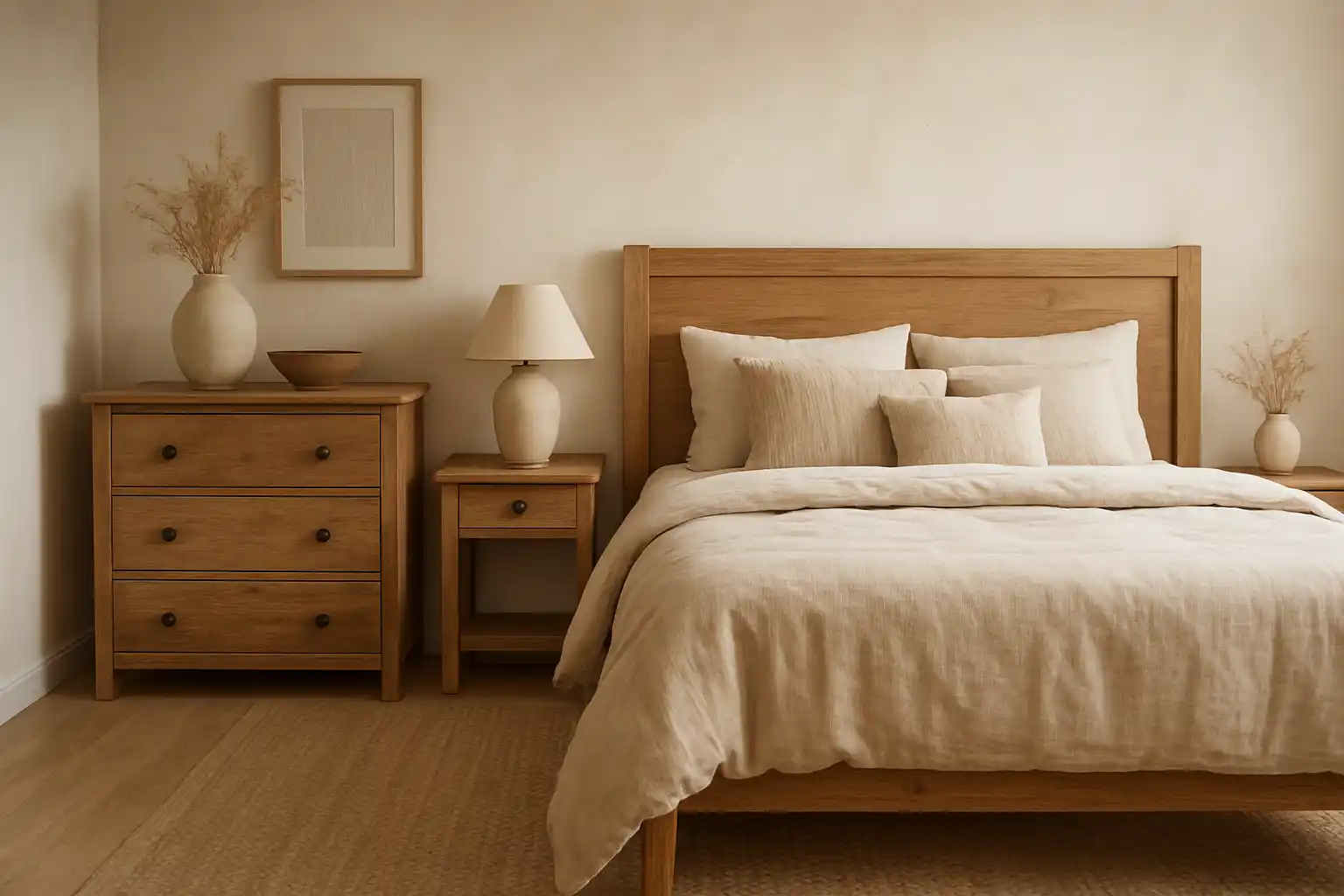
Rustic style draws on materials that show texture and character: wood grain, linen, cotton, wool, woven fibers, and aged metal. Neutral color keeps those materials in balance. Think warm white, cream, oatmeal, sand, taupe, soft gray, and the natural shades of wood. A small amount of charcoal or deep brown can add definition without making the room feel dark.
For rustic bedroom decor with neutral colors, aim for contrast in texture rather than a stack of competing patterns. A smooth painted wall beside a substantial wood headboard, or crisp cotton sheets with a chunky knit throw, gives the eye something to notice while keeping the overall palette quiet. A mix of old-looking and simple, clean-lined pieces helps the room feel comfortable instead of staged.
Choose a dominant neutral, a supporting neutral, and one or two wood tones before shopping. This simple palette keeps larger decisions consistent. For example, warm white walls and bedding can sit comfortably with honey-toned wood and a few darker accents. If your room already has cool gray flooring, balance it with warmer textiles rather than adding several unrelated wood finishes.
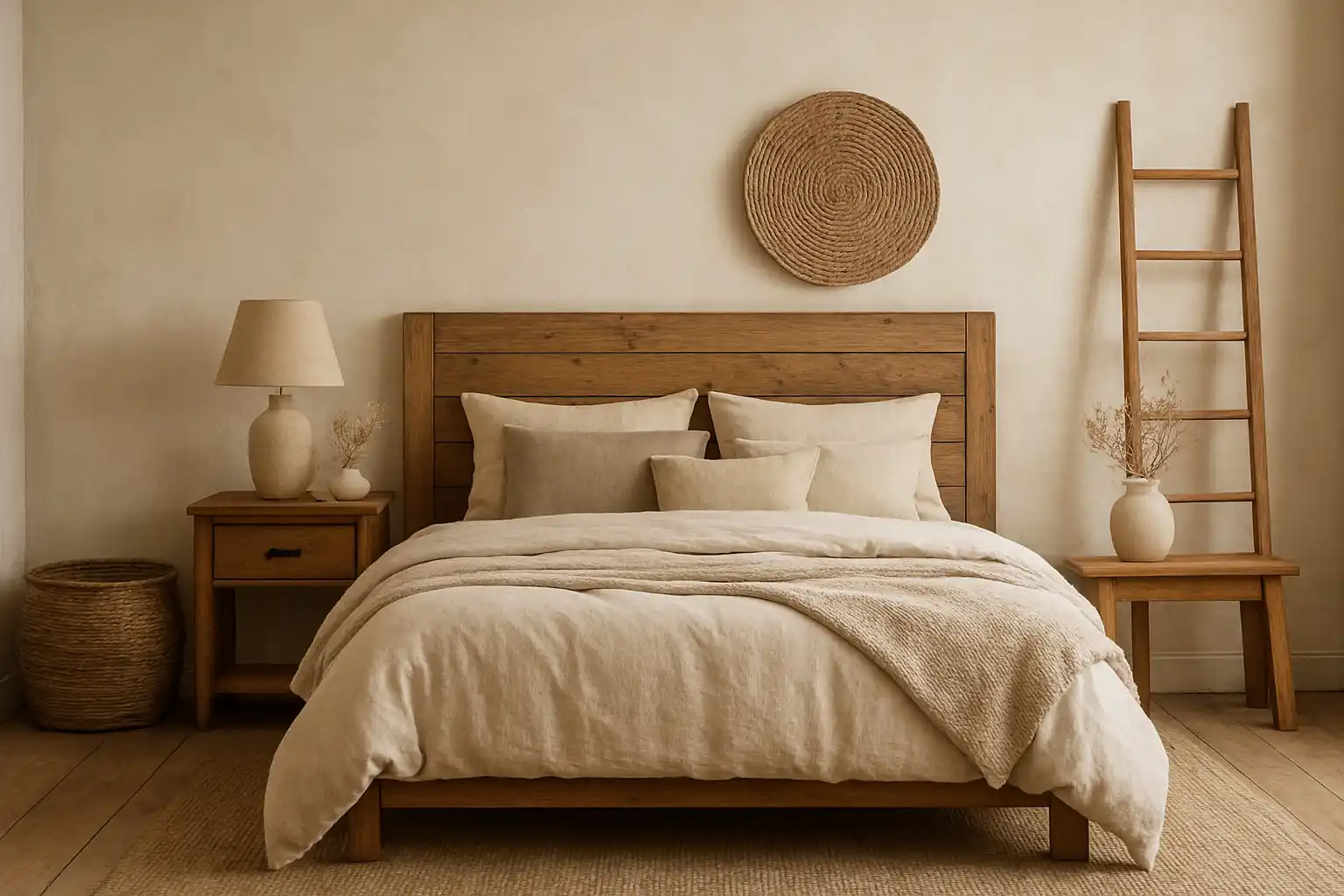
Ideas To Try For Rustic Bedroom Decor With Neutral Colors
Try one or two ideas first, then assess the room before adding more. Each of these choices can stand on its own, which helps keep the result personal and avoids buying decor simply to fill a space.
1. Make The Bed A Soft, Layered Focal Point
A layered bed gives the room an inviting center without relying on bold color. Begin with simple sheets in white, cream, or pale beige. Add a coverlet or duvet in a slightly deeper neutral, then finish with a textured throw at the foot of the bed. A restrained mix of stripes, checks, or subtle woven patterns can add interest, but keep their colors close to the bedding.
Pro tip: Collect a few paint, fabric, and wood samples, then compare them in the bedroom at different times of day. Natural and artificial light can make the same neutral look noticeably warmer or cooler.
This works in nearly any bedroom, especially one with plain walls or limited architectural detail. Use fewer pillows if you want a tidy bed or need to clear the surface each night. Rustic bedroom decor with neutral colors feels more relaxed when fabrics are touchable and varied, not when every layer is perfectly matched.
2. Add Wood Where It Has A Clear Purpose
A wood headboard, bedside table, or bench can provide the natural character that anchors a neutral palette. Choose a piece with visible grain or a gently worn finish, then let it be the main wood feature in that part of the room. A headboard creates a strong focal point; a small table adds warmth without taking up much floor space.
Look at the scale before choosing a piece. A broad, heavy headboard may overwhelm a narrow room, while a slim wood frame can preserve a sense of openness. If the room already has several wood finishes, aim for tones that share a similar warmth instead of trying to make every piece an exact match.
3. Use Woven And Natural Textures In Small Doses
Rattan, jute, cane, and woven cotton introduce texture without adding another strong color. A basket can hold spare blankets, a woven shade can soften a bedside lamp, or a natural-fiber rug can define the bed area. These details work particularly well in rooms with smooth walls and simple furniture.
Consider comfort and upkeep before choosing a material. A coarse rug may not feel good under bare feet, and an open-weave basket can collect dust. In a compact bedroom, one or two woven pieces are often enough to create a tactile contrast without crowding the view.
4. Bring In Aged Details With Restraint: Rustic Bedroom Decor With Neutral Colors
Small touches of blackened metal, ceramic, or vintage-inspired hardware can give the room a sense of history. Try a metal reading lamp, a simple ceramic vase, or a frame with a muted finish. These details work best when they connect to something already in the room, such as a dark bed frame or a warm wood surface.
Pro tip: Before buying accent pieces, remove anything that feels out of place and live with the simpler arrangement for a few days. You may find that better spacing, rather than another object, is what the room needs.
Restraint matters: too many distressed finishes can make a bedroom feel like a themed display. Choose useful objects where possible, and avoid adding decor that blocks a walkway or takes up needed bedside space.
Bringing It Together
Start with the largest surfaces, then work toward the smaller details. Walls, flooring, bed linens, and substantial furniture have the strongest effect on the overall mood. Once those pieces feel cohesive, add lighting, a rug, and only a few accents. This order makes it easier to spot what the room actually needs.
Think about how the colors relate rather than trying to match everything. Warm white bedding can soften dark flooring, while pale wood can make a gray room feel less cool. Repeating a shade in two or three places, such as cream in the bedding, curtains, and a small cushion, helps the room feel connected. Rustic bedroom decor with neutral colors can still have depth when the palette includes light, medium, and dark values.
Lighting is part of the composition. A bedside lamp with a warm-toned shade can make neutral fabrics feel cozy in the evening, while a task light helps with reading. If you use overhead lighting, choose a fixture that suits the room’s scale and does not compete with the bed. Keep cords and switches accessible, especially if you are changing the furniture layout.
Finish by checking the bedroom from the doorway and from the bed. Notice whether the eye lands on a clear focal point, whether there is enough light for everyday tasks, and whether you can move around without squeezing past furniture. A comfortable layout is as important as a coordinated palette.
Budget And Space Adaptations
When money is limited, refresh the pieces that have the most visual impact first. New pillow covers or a throw can change the look of a bed without replacing the mattress or frame. If the walls feel stark, consider a warm neutral paint color after testing a sample. Rearranging furniture, clearing surfaces, and swapping in a lamp you already own can also make the room feel more settled.
Secondhand shopping can be useful for finding wood furniture or small characterful accents, but inspect each item carefully. Check stability, drawers, odors, and the condition of the finish. A piece that needs extensive repairs may not be a practical saving. Rustic bedroom decor with neutral colors does not depend on rare antiques; a sturdy, simple piece with visible natural texture can serve the same role.
In a small bedroom, prioritize clear floor space and storage. Choose a bed with a visually light frame, use wall-mounted lighting where suitable, and keep the number of display items low. A storage basket or under-bed container can handle extra linens without adding another large piece of furniture. In a larger bedroom, use a rug or bench to give the sleeping area a defined center, but leave enough room to open doors and drawers comfortably.
Key takeaways:
- Build the palette from a few warm or cool neutrals that suit the room’s existing finishes.
- Use wood and tactile fabrics for character, then limit smaller rustic accents.
- Prioritize a comfortable layout, useful lighting, and storage before decorative extras.
Your Next Step
Begin with a quick room review rather than a shopping list. Note the colors and materials you already have, identify the feature you want to emphasize, and decide what is genuinely missing. If the bed feels flat, start with a textured layer. If the room lacks warmth, consider one wood element or a softer lamp shade. If it feels crowded, edit before adding anything.
Write down your palette and measure the space for any larger item you plan to buy. Check the width of walkways, the swing of doors, and the clearance around the bed. Bring fabric or finish samples home when possible, and compare them with existing flooring and furniture. These small checks make it easier to choose pieces that work together and fit your daily routine.
With a restrained palette, useful layers, and a few natural materials, rustic bedroom decor with neutral colors can feel warm without becoming busy. Make one thoughtful change, live with it, and let the next decision follow from what the room still needs.