Affiliate disclosure: We may earn a commission when you buy through links in this post.
A rug can make a living room feel warmer, more settled and more connected to the rest of your home. The best rustic living room rugs bring in texture and natural-looking color without making the space feel overly themed. Think about the room’s palette, furniture and daily use first; then choose a pattern and material that support the character you already have.
There is no single right rustic look. A worn-in traditional pattern, a simple flatweave or a plush neutral rug can each work, provided the scale and colors suit the room. The ideas below offer practical ways to create that balance, whether you are starting with a bare floor or refreshing a room that already has plenty of wood, stone or vintage pieces.
The look to aim for with rustic living room rugs
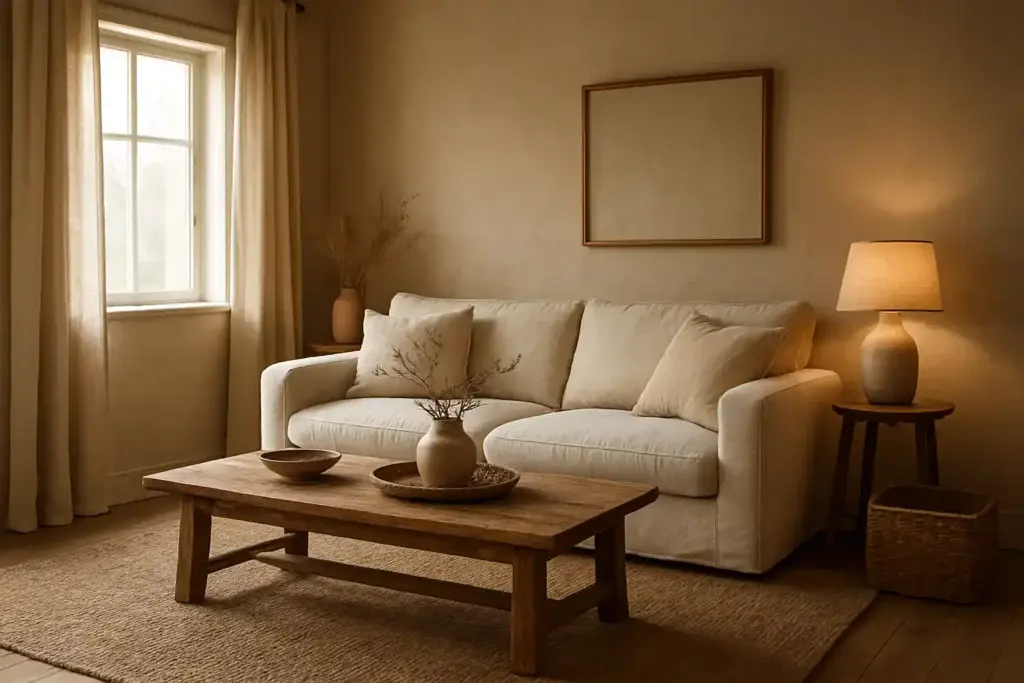
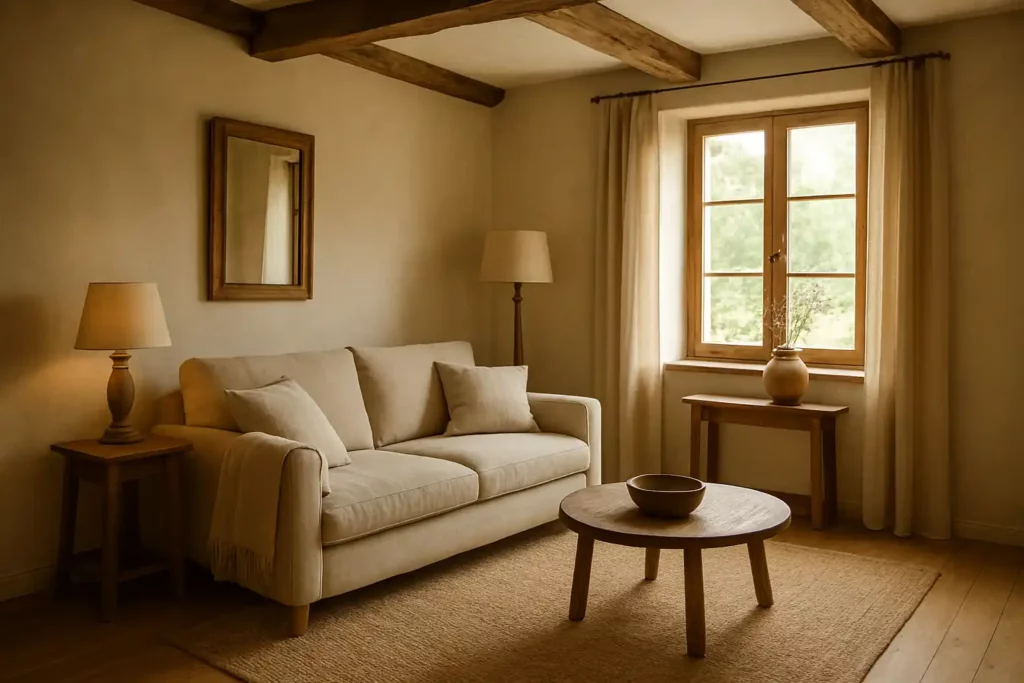
A cohesive rustic room often mixes textures rather than matching every finish. A rug can soften hard flooring, define a seating area and introduce a little pattern among wood grain, woven baskets, leather or linen. Rustic living room rugs do not need to look old or rough; a clean, well-kept design can still feel at home when its colors and materials have an earthy, relaxed quality.
Explore rustic living room decor for options to consider.
Begin with the feeling you want the room to have. Muted colors and low-contrast patterns tend to feel calm, while stronger motifs can make the floor a focal point. Look at the largest fixed or difficult-to-change elements, such as flooring, a sofa and a fireplace surround. Use those as your guide, and let the rug add a related tone or texture instead of competing with them.
Consider the room’s practical needs at the same time. A busy shared space may call for a forgiving pattern and a construction that is easy to maintain. A quieter sitting area can accommodate a softer surface or a more delicate design. Check care instructions and rug dimensions before buying, and plan for a suitable pad if the rug needs extra grip or cushioning.
Ideas to try with rustic living room rugs
1. Layer a natural texture under a patterned rug
A larger, quiet base layer can give a smaller patterned rug a relaxed, collected look. Jute-like or other woven textures bring visible depth, while a flat, subdued pattern on top can make the seating area feel intentional. This approach works especially well when furniture feels spread out across a large floor. Keep the top rug large enough to relate to the seating, and check that both layers lie flat. A thick pile over an uneven weave can shift or create a tripping edge, so use a compatible pad and avoid layering in a busy walkway.
2. Use a faded motif to add history without visual clutter
A softly distressed floral, geometric or medallion pattern can suggest age without requiring a room full of antiques. Choose a design with a limited palette that picks up one or two colors already present in the room. For rustic living room rugs, a faded motif is a useful option when timber furniture and exposed beams already provide strong visual detail. It adds interest while leaving the wood grain in view. If the pattern looks too busy beside a printed sofa or patterned curtains, try a less intricate design or a more muted colorway.
3. Choose stripes or checks for a simpler country feel
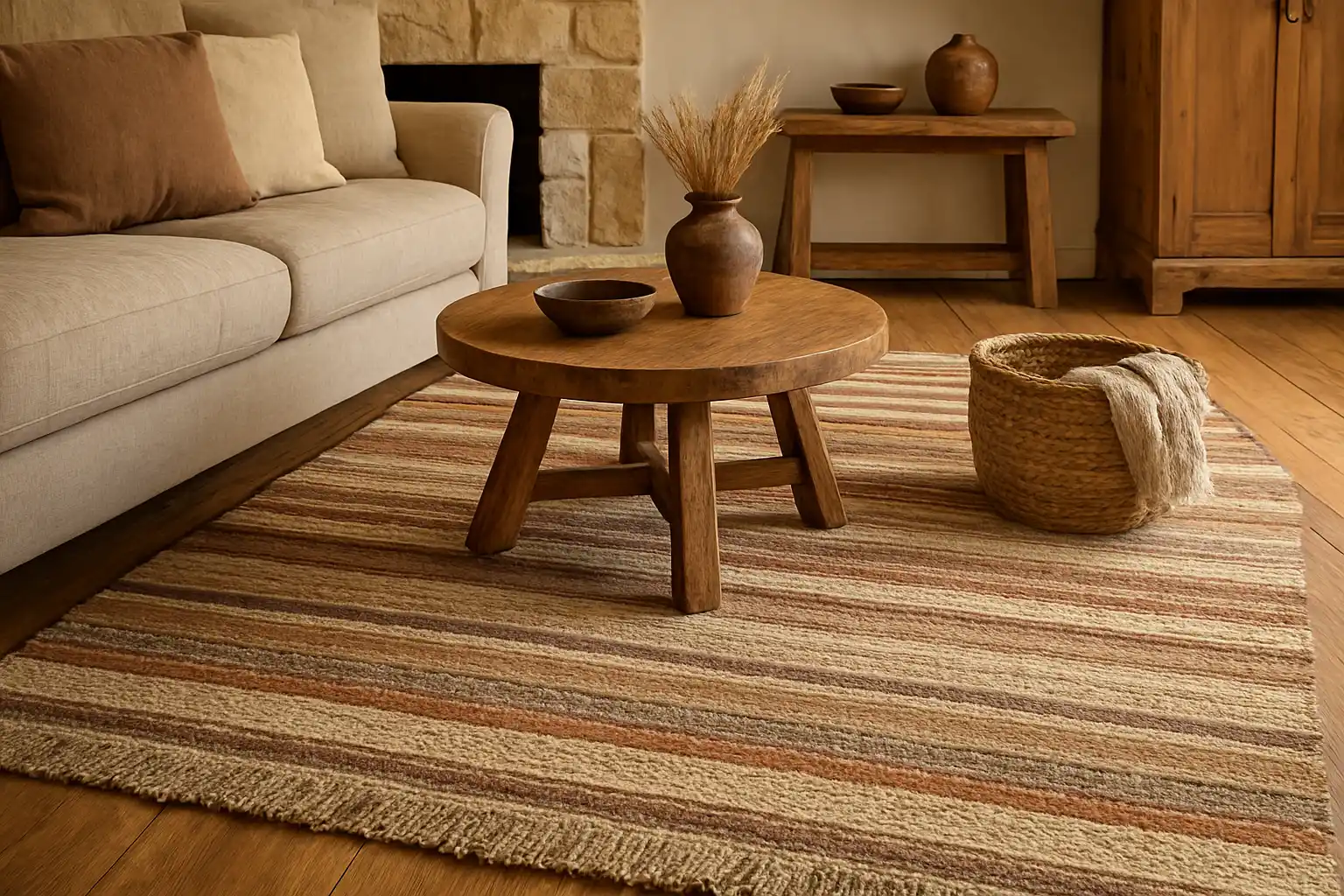
Stripes and checks can feel rustic without leaning on a traditional ornate motif. A broad stripe brings a sense of order to an informal room, while a small check can add a homely note under a simple coffee table. Try a pattern in two related neutrals, or combine one quiet accent color with a natural base. This idea suits rooms where the furniture is mostly solid-colored. Keep the pattern scale in proportion to the room: very small repeats may look busy over a large floor, while oversized checks can dominate a compact seating area.
4. Let a solid, textured rug calm a characterful room
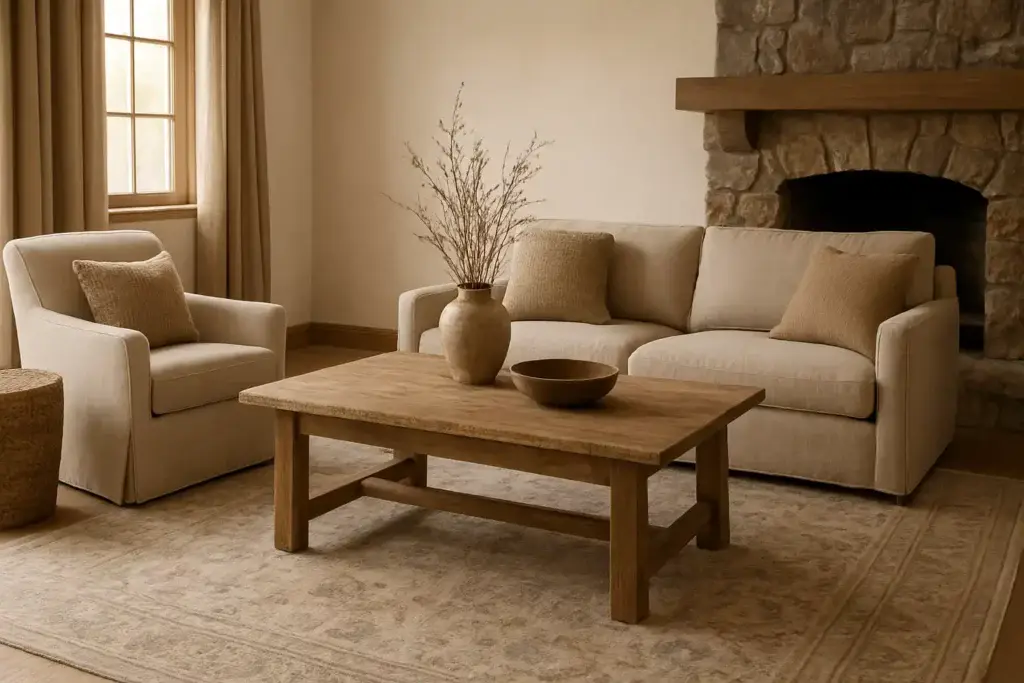
If the room already has a stone fireplace, reclaimed-looking furniture or several decorative objects, a solid rug with a noticeable weave can provide welcome breathing space. Texture gives the floor depth without adding another competing motif. Pick a shade that relates to the room’s warm or cool undertones; “neutral” can mean anything from creamy beige to charcoal gray. This is a strong choice beneath a patterned armchair or a gallery wall. One constraint: a solid, pale surface may show marks more readily, so consider the room’s traffic and cleaning routine.
5. Bring in a restrained accent color — rustic living room rugs
A rug can introduce a quiet color that makes a rustic palette feel fresh. Soft blue, muted green, rust or ochre can sit comfortably alongside natural wood when the shade is repeated elsewhere, perhaps in a cushion, artwork or ceramic piece. For rustic living room rugs, repeating just one accent keeps the effect connected rather than overly coordinated. Use a sample or compare colors in the room’s actual light if possible. A color that looks subdued in a shop or on a screen may read much brighter at home.
Bringing it together
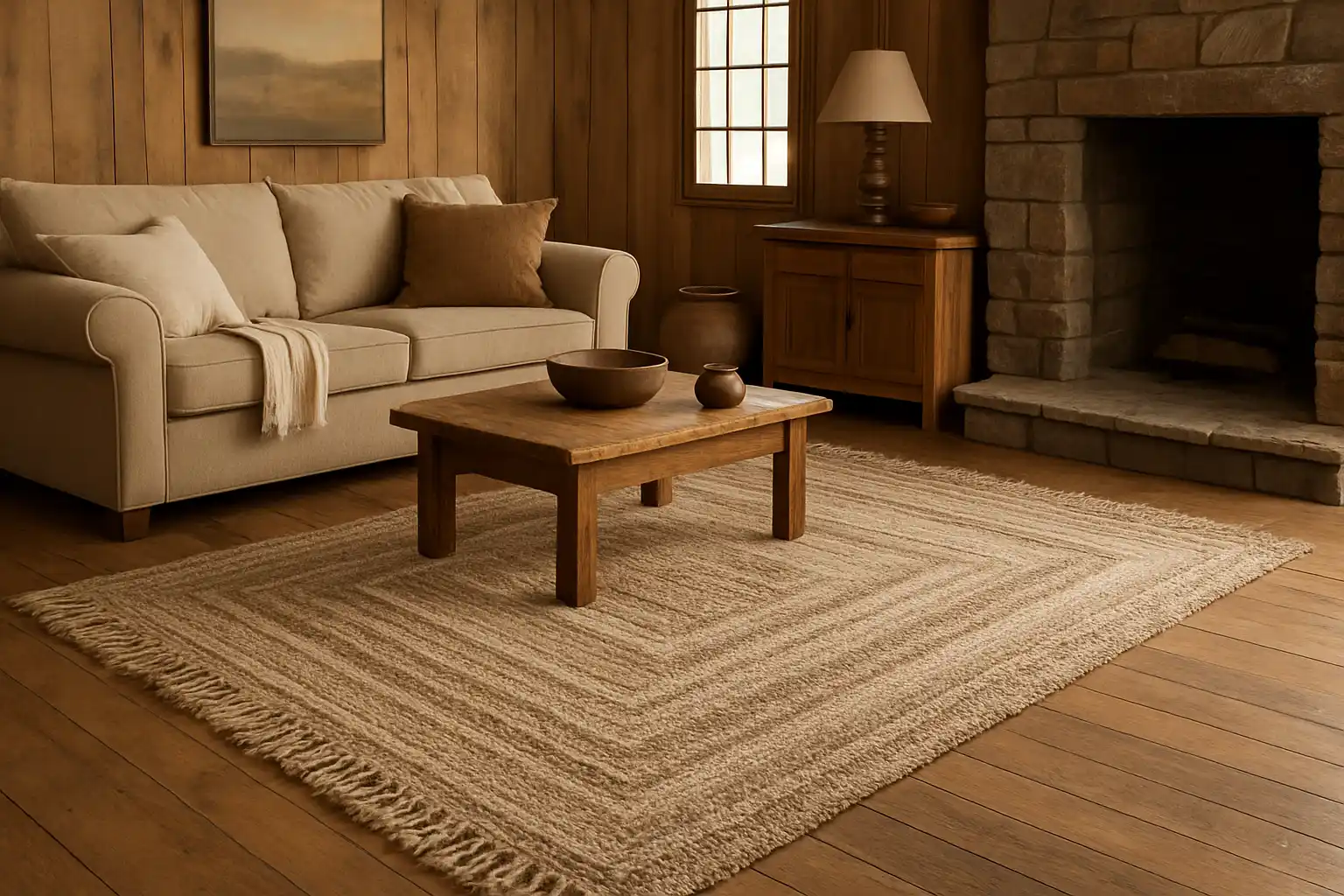
Once you have a style direction, settle the size before deciding on the final pattern. In many seating areas, the rug looks more connected when at least the front legs of the main seats rest on it. A smaller rug placed only beneath a coffee table can still work in a compact room, but make sure it does not appear like an isolated mat. Measure the seating arrangement, then mark the proposed rug edges on the floor with painter’s tape or another removable guide.
Use the rug to connect finishes rather than match them exactly. If the floor is warm-toned wood, a rug with a related earthy note can feel cohesive, while a cooler accent adds contrast. For rustic living room rugs in rooms with several wood tones, look for a color that bridges them instead of trying to find an exact match. Repeat one shade elsewhere in a small way so the floor feels part of the scheme.
Pay attention to the outline and furniture arrangement, too. A rectangular rug often suits a conventional sofa grouping; a round rug can soften a space with curved chairs or a round table. Leave a visible border of floor where it helps the rug feel intentional, but avoid a narrow sliver that makes the size seem accidental. Door swings, vents and pathways should remain clear.
Pro tip: Before settling on a rug size, tape its outline on the floor and live with the marked area for a day. Check the edges from the doorway and every seat, and make sure doors and walkways still work.
Budget and space adaptations
A smaller room does not have to rely on a tiny rug. Choose a size that anchors the principal seating without blocking doors or crowding the route through the room. If a standard shape does not fit, consider turning a rectangle, shifting the furniture or using a smaller rug in a clearly defined reading nook. Avoid placing a rug edge where people naturally pivot or walk.
When the budget is limited, prioritize the right dimensions, a color that works with the room and construction suited to how the space is used. A simple, durable rug may be a better fit than a more elaborate option that needs extra care. Compare materials and cleaning guidance, and check whether the rug can be used with a pad. If you are considering a secondhand rug, inspect its condition, smell and backing in person where possible, and factor cleaning into your decision.
For a rental or a room you expect to rearrange, a versatile neutral or restrained pattern can move with changing furniture. Rustic living room rugs with a flexible palette are easier to carry into a different scheme than a design tied to one exact accent color. In a tight budget, build the look gradually: let the rug establish the texture and bring in smaller coordinating details over time rather than replacing several furnishings at once.
Key takeaways:
- Choose a rug that relates to the room’s existing colors and textures.
- Measure the seating area and test the outline before committing to a size.
- Balance pattern with the visual detail already in the room.
- Check care needs, grip and pathways as well as appearance.
Your next step
Start by noting the room’s main colors, flooring, traffic level and seating layout. Then measure the area, shortlist a few patterns or textures, and compare them against those practical details. Rustic living room rugs work best when they feel natural in the room rather than added as a theme. A considered size, a compatible palette and one appealing texture are often enough to make the space feel warmer while preserving its character.