Affiliate disclosure: We may earn a commission when you buy through links in this post.
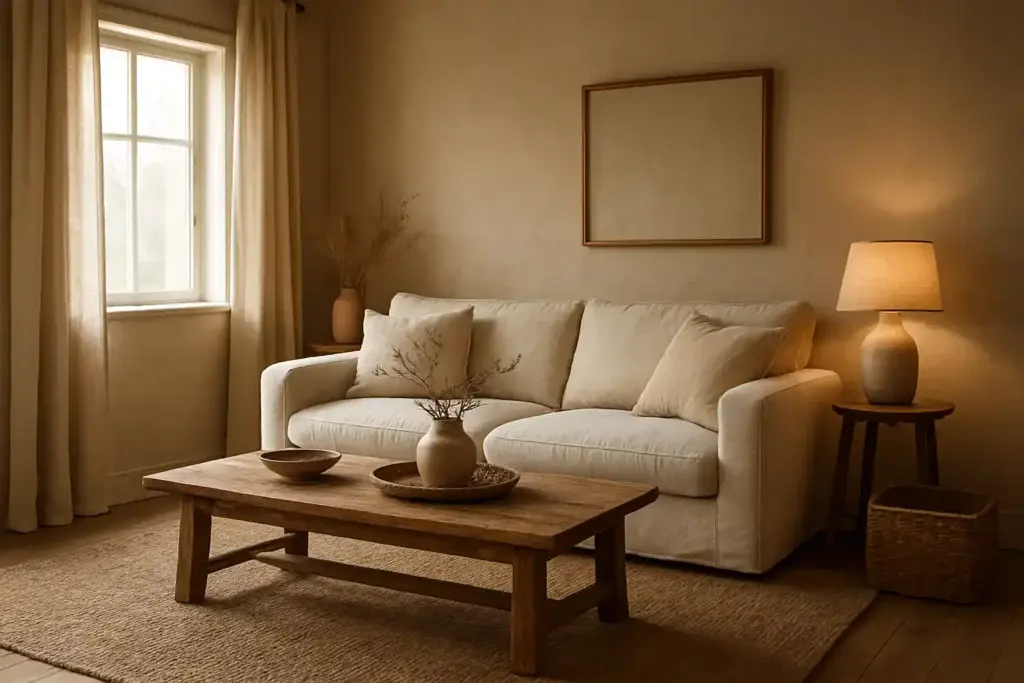
A rustic living room accent wall can make a room feel warmer and more personal without requiring a full renovation. The best approach is to choose one wall, settle on a material or finish that suits the room, then repeat its colors and textures elsewhere. Think natural wood, softly aged paint, stone, or a restrained mix of rustic details—not a collection of competing features.
Start by looking at the room’s natural focal point: often the wall behind a sofa, fireplace, or media unit. Consider the light, the wall’s size, and what is already there before buying materials. A clear plan helps the feature feel connected to the home rather than like a standalone display.
The look to aim for
Rustic style draws on natural materials, visible texture, and signs of age. It can feel polished or relaxed, but it usually avoids finishes that look overly uniform or glossy. For a rustic living room accent wall, aim for a surface with warmth and character that still gives the eye somewhere to rest.
Explore rustic living room decor for options to consider.
Begin with the room’s existing palette. Warm white, cream, earthy brown, muted green, and charcoal can all work with rustic materials. Pick one or two colors already present in the furniture, rug, or flooring, then use the wall to reinforce them. The goal is harmony, not a perfect color match.
Scale matters, too. A heavily textured wall may dominate a small room, while a subtle painted finish can add definition without making the space feel crowded. Look at the wall from the main seating area and check what it will sit beside. A feature should complement the room’s architecture and furnishings, not compete with every focal point at once.
Ideas to try for a rustic living room accent wall
1. Use reclaimed wood for a rustic living room accent wall
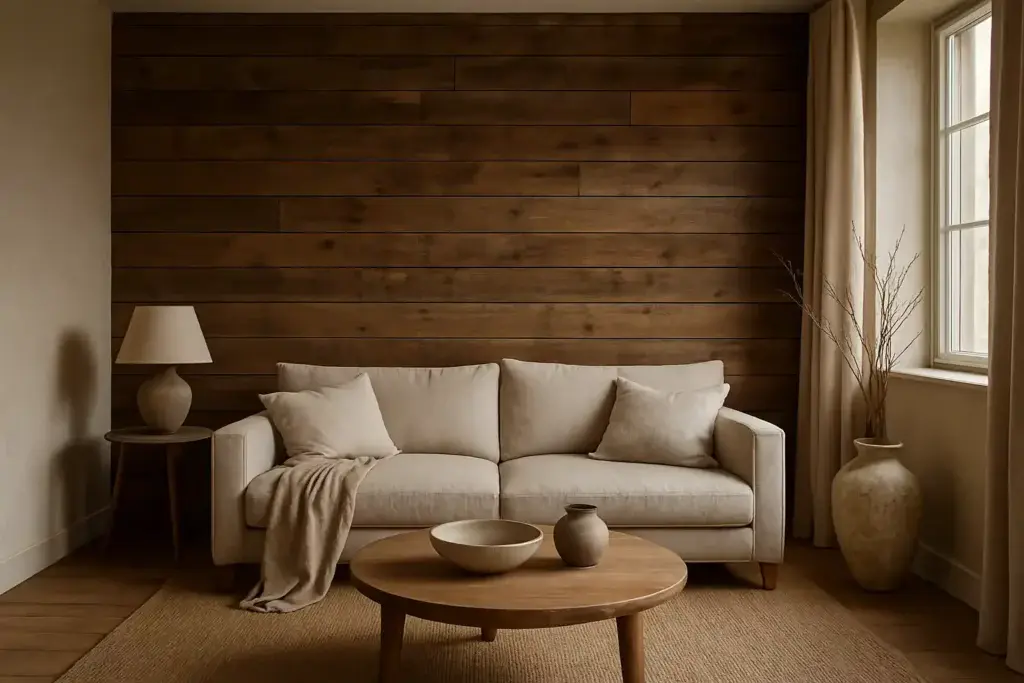
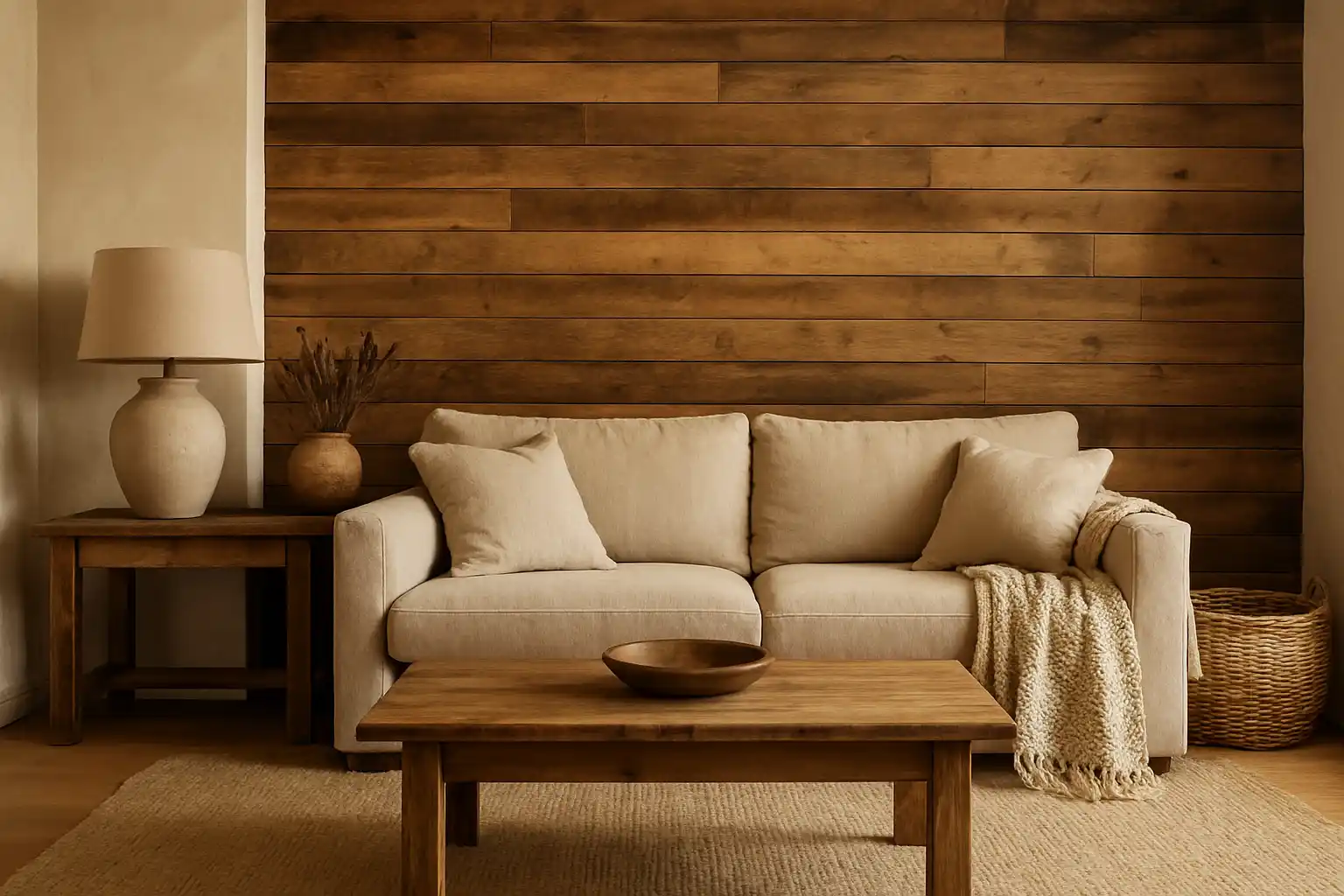
Wood boards bring visible grain, variation, and a sense of age. They work particularly well behind a sofa or around a fireplace when the rest of the room has relatively simple finishes. Choose boards with a consistent general tone, even if their grain and marks vary. Check that the material is suitable for interior use and that the wall can support the installation. Reclaimed boards may vary in thickness or condition, so allow time to sort and prepare them.
2. Add a muted, textured paint finish
Paint is a flexible way to create a rustic mood without covering the wall in another material. Consider a warm, earthy shade or a limewash-style finish with gentle tonal variation. It can define a seating area, especially in a rental or a room where permanent changes are not practical. Test a sample in the actual space and look at it in morning and evening light. Decorative techniques can be less forgiving than a flat coat, so follow the product directions and practice on a spare board first.
3. Frame a stone or brick feature
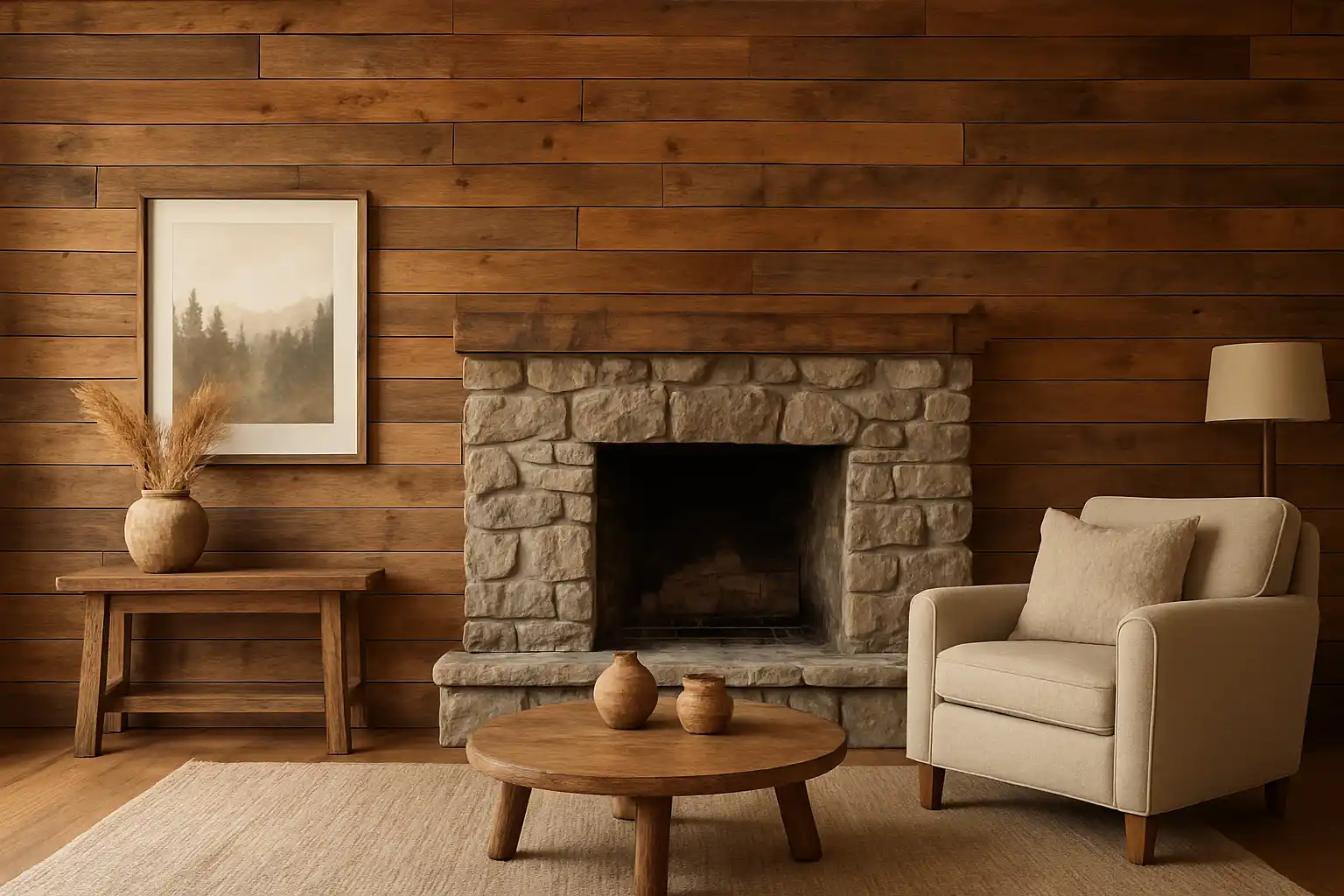
Exposed brick or stone can give a living room an established, grounded feel. If the home already has an original masonry wall, cleaning and highlighting it may be more effective than adding a new feature. Where there is no existing surface, consider a suitable veneer or a smaller fireplace surround rather than covering a large area. A rustic living room accent wall in stone or brick can feel visually heavy, so balance it with lighter textiles and avoid crowding it with shelves and art.
4. Use board-and-batten or simple paneling
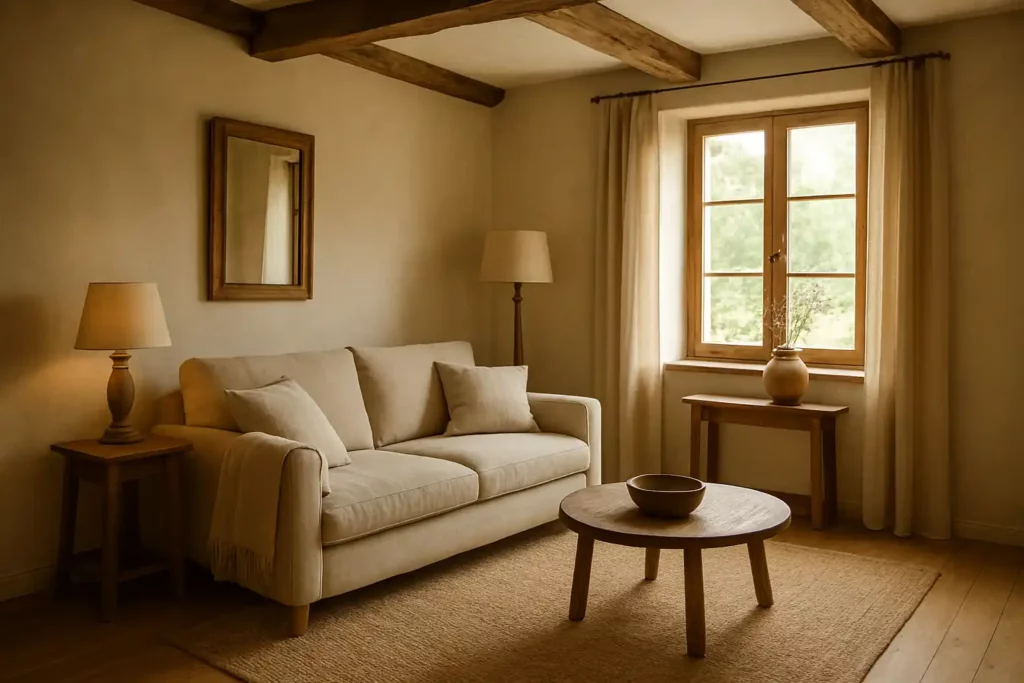
Paneling adds depth and a handcrafted look while keeping the surface orderly. It can suit a cottage-inspired room, a narrow wall, or a space where reclaimed materials would feel too rough. Paint it in a muted color or a soft neutral, and keep the spacing consistent. Measure carefully before cutting, particularly around outlets, trim, and doors. In a small room, use a restrained profile so the pattern does not overwhelm the wall.
5. Layer a restrained collection of natural details — rustic living room accent wall
If a permanent finish is not right for your home, create a softer accent with a large woven wall hanging, a substantial framed landscape, or a few wood-framed pieces. This is easy to adjust and can work in an apartment or a room with limited renovation options. Keep the arrangement grouped and give each object breathing room. A mix of small decorations scattered across the wall can look cluttered rather than intentional.
Pro tip: Before committing, make a simple mock-up with paint samples, board offcuts, or paper shapes in the intended location, then view it from the doorway and seating area.
Bringing it together
A feature wall looks finished when the rest of the room quietly supports it. Repeat its main material or color in a few places: a wooden frame, a woven basket, a cushion, or a side table can be enough. Avoid matching every accessory exactly; related tones and textures feel more natural than a coordinated set.
Think about lighting and furniture placement before arranging the final details. A lamp can bring out the grain of wood or the texture of a painted surface, while a sofa placed too close may hide the feature. Leave some open wall when possible. If you add art or shelving, choose pieces that fit the wall’s scale and do not obscure its most interesting details.
For a rustic living room accent wall that feels calm, decide what the main feature is and let it lead. If the wall has a strong texture, keep nearby patterns and accessories simpler. If it is mostly painted, you have more room to introduce patterned textiles or layered artwork. This balance makes the room feel lived in without turning every surface into a focal point.
Key takeaways:
- Choose a wall that already has a natural connection to the room’s layout.
- Match the finish to the room’s scale, light, and existing materials.
- Repeat a few colors or textures elsewhere to make the feature feel integrated.
- Test samples and plan around outlets, trim, and furniture before starting.
Budget and space adaptations
A rustic living room accent wall can be adapted to different budgets and room sizes. Paint and removable art generally involve fewer materials than wood, masonry, or paneling, though preparation and installation still take time. Compare the full scope of each option—including surface preparation, tools, trim, and any professional work needed—rather than considering the visible material alone.
In a compact room, a single painted wall or a narrow panel detail may add character without making the space feel enclosed. Choose a finish with a level of contrast that suits the light: a dark tone can look striking, but it may make a dim room feel smaller. In an open-plan space, use the feature to define the living area, and repeat its colors in adjoining areas to maintain a sense of flow.
For rented homes or uncertain plans, lean on reversible changes such as framed art, textiles, or freestanding furniture in natural finishes. If you are considering boards, heavy decor, or masonry, check wall construction and any permission requirements first. Avoid covering vents, switches, or access panels, and use installation methods appropriate to the wall and material.
Your next step
Choose the wall, then write down the effect you want: warmer, more textured, more defined, or simply more personal. Pick one main treatment and two supporting details, then gather samples and test them in place. This keeps the project manageable and gives you a chance to notice problems before work begins.
When you are ready to plan a rustic living room accent wall, measure the surface, note obstacles, and decide what you can complete yourself. Keep the surrounding decor simple while you make those choices. A thoughtful feature does not need to fill the entire room; it needs to feel at home there.